1. Uvod
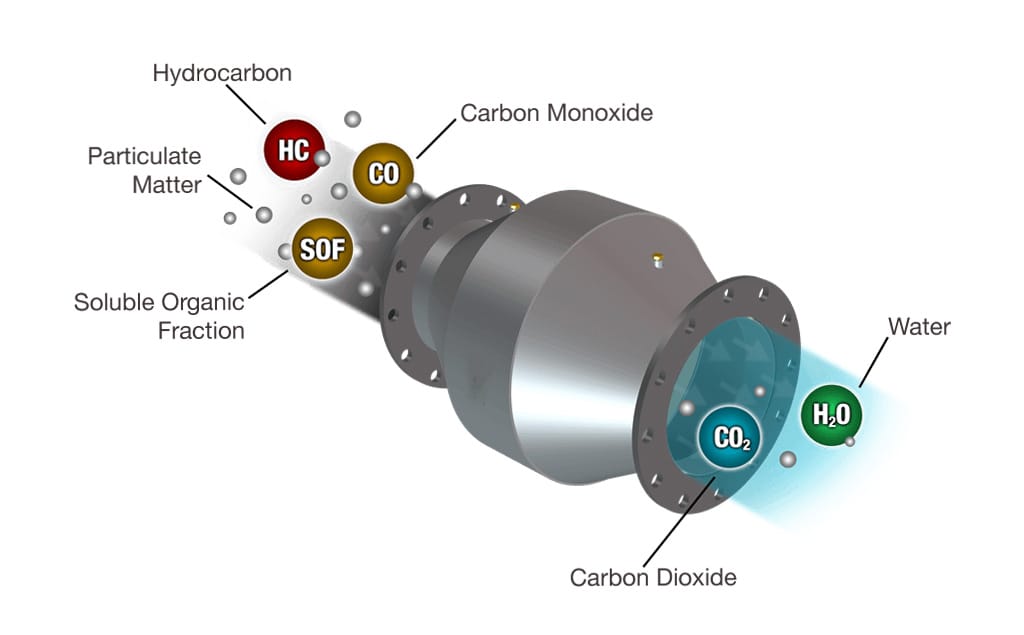
The trosmjerni katalizator stands as a cornerstone of modern automotive emission control. It performs a vital task. It converts toxic exhaust gases into harmless substances. These gases include carbon monoxide (CO), hydrocarbons (HC), and nitrogen oxides (NOx). Engineers rely on coating loading to dictate the efficiency of these reactions. Coating loading refers to the density of the washcoat and the concentration of precious metals. This parameter determines how the trosmjerni katalizator interacts with engine exhaust.
A precise balance in coating loading is essential. If the loading is too low, the vehicle fails emission tests. If the loading is too high, costs skyrocket and engine performance suffers. This article provides a deep technical analysis of how coating loading affects every aspect of the trosmjerni katalizator. We will examine chemical activity, physical flow dynamics, and long-term durability.
2. Chemical Composition and the Role of the Washcoat
Every trosmjerni katalizator features a complex internal structure. The substrate serves as the skeleton. The washcoat acts as the skin. The precious metals function as the active cells.
2.1 The Purpose of the Washcoat
The washcoat is a porous ceramic layer. It typically consists of aluminum oxide ($Al{2}O{3}$), cerium oxide ($CeO{2}$), and zirconium oxide ($ZrO{2}$). Manufacturers apply this slurry to the substrate channels. The washcoat creates a massive internal surface area. A single trosmjerni katalizator can have a surface area equivalent to several football fields. This vast area provides a stage for chemical reactions.
2.2 Precious Metal Distribution
Precious metals reside within the washcoat structure. Palladium (Pd), Rhodium (Rh), and Platinum (Pt) are the primary players. Loading levels define the “active site” density. Each active site represents a location where a gas molecule can react. Higher loading means more active sites. However, the distribution must remain uniform. Poor distribution leads to “hot spots” and reduced efficiency.
3. How Loading Influences Conversion Efficiency
The primary goal of a trosmjerni katalizator is conversion. Loading directly impacts the speed and completeness of this process.
3.1 Analyzing Non-Linear Performance Gains
Increasing the precious metal loading improves the conversion rate. However, this relationship is not linear. In the early stages of loading, performance gains are rapid. As the concentration increases, the benefit begins to taper off.
- The Plateau Effect: Once the loading reaches a specific threshold (e.g., 80 g/$ft^{3}$), the system hits a plateau.
- Saturation Limits: At this point, the reaction is no longer “kinetically limited.” Instead, it becomes “diffusion limited.”
- Waste of Resources: Adding more metal beyond this point increases cost without improving air quality.
3.2 Cold Start and Light-Off Temperature
Cold starts generate the majority of a vehicle’s total emissions. The trosmjerni katalizator is cold when the engine starts. It cannot catalyze reactions until it reaches a “light-off” temperature (typically around $250^{\circ}C$ to $300^{\circ}C$).
- Loading Impact: Higher metal loadings lower the light-off temperature.
- Thermal Activation: A catalyst with high loading ignites the chemical reaction sooner.
- Emission Compliance: This rapid activation is crucial for meeting stringent environmental regulations.
4. Specific Roles of Palladium and Rhodium
A trosmjerni katalizator uses different metals for different tasks. The loading of each metal must be precisely tuned.
4.1 Palladium (Pd) and Hydrocarbon Control
Palladium is an oxidation specialist. It handles CO and HC.
- Oxygen Storage: High Pd loading enhances the Oxygen Storage Capacity (OSC).
- Chemical Buffering: It helps the trosmjerni katalizator survive brief periods of “rich” or “lean” fuel mixtures.
- Trajnost: Pd offers excellent thermal stability under high-heat conditions.
4.2 Rhodium (Rh) and NOx Reduction
Rhodium is the most expensive and critical metal for reducing NOx.
- The Reduction Process: Rhodium breaks the bonds of nitrogen oxides. It releases pure nitrogen and oxygen.
- High-Speed Performance: Increased Rh loading ensures the converter works during high-speed driving.
- Sensitivity: Rhodium is sensitive to the surrounding chemical environment. Proper loading protects its activity.
| Loading Component | Primarna funkcija | Performance Benefit |
|---|---|---|
| High Washcoat Amount | Increases Surface Area | Provides more space for metals |
| High Palladium (Pd) | HC/CO Oxidation | Lowers light-off temperature |
| High Rhodium (Rh) | NOx Reduction | Improves efficiency under high load |
| Oxygen Storage (OSC) | Air-Fuel Balancing | Stabilizes the “lambda” window |
5. Physical Dynamics: Pressure Drop and Backpressure
The trosmjerni katalizator is a physical barrier in the exhaust path. Coating loading changes the shape of this barrier.
5.1 Washcoat Thickness and Channel Diameter
As the manufacturer adds more washcoat, the layer on the channel walls grows thicker.
- OFA Reduction: This reduces the Open Frontal Area (OFA).
- Airflow Resistance: Thicker coatings narrow the “pipes” through which gas flows.
- Backpressure Rise: Narrower channels increase exhaust backpressure. This forces the engine to push harder to expel gas.
5.2 Impact on Engine Performance
High backpressure is an enemy of efficiency.
- Fuel Economy: Increased backpressure lowers the vehicle’s miles per gallon.
- Power Loss: The engine loses horsepower because it cannot “breathe” effectively.
- Turbocharger Stress: In turbocharged engines, high backpressure increases heat and wear on the turbine.
6. Mass Transfer and Internal Resistance
Exhaust gas must travel from the center of the channel into the pores of the washcoat. This is called mass transfer.
6.1 The “Wasted Material” Problem
If the washcoat loading is too high, the layer becomes too thick ($>30\ \mu m$).
- Diffusion Limits: Gas molecules cannot reach the bottom of a thick coating.
- Inactive Layers: The precious metals at the base of the coating never touch the exhaust.
- Economic Inefficiency: The manufacturer pays for metal that does no work.
6.2 Optimization of Pore Structure
Modern trosmjerni katalizator Dizajni se fokusiraju na arhitekturu pora. Inženjeri stvaraju "makropore" kako bi pomogli plinu da dopre do dubljih slojeva. Međutim, veliko opterećenje često začepljuje ove pore, negirajući arhitektonske prednosti.
7. Durability and Long-Term Stability
A trosmjerni katalizator mora funkcionirati 150.000 milja ili više. Nivoi opterećenja utječu na to kako katalizator podnosi starenje.
7.1 Mehanizam sinterovanja
Sinterovanje se dešava kada visoke temperature uzrokuju migraciju i zgrušavanje metalnih čestica.
- Gubitak površine: Grudiranje smanjuje ukupnu aktivnu površinu.
- Paradoks učitavanja: Dok određeno opterećenje poboljšava stabilnost, prekomjerno opterećenje potiče sinterovanje.
- Hidrotermalno starenje: Visoka vlažnost i toplota ubrzavaju ovu degradaciju.
7.2 Trovanje i onesposobljavanje
Izduvni gasovi sadrže "otrove" poput fosfora i sumpora.
- Blokada stranice: Ovi otrovi se vežu za aktivna mjesta.
- Učitavanje međuspremnika: Veće početno opterećenje pruža "tampon". Omogućava trosmjerni katalizator izgubiti neke lokacije, a istovremeno ispuniti standarde emisija.
8. Advanced Strategies: Zone Coating and cGPF
Da bi se riješio sukob između troškova, povratnog pritiska i efikasnosti, industrija koristi napredne strategije premazivanja.
8.1 Logika zonskog premazivanja
Proizvođači ne premazuju cijelu trosmjerni katalizator podlogu podjednako.
- Prednja zona: Nanose visoku količinu plemenitih metala na prvih 2,5-5 cm. To osigurava brzo gašenje.
- Zadnja zona: Na preostalu dužinu primjenjuju manje opterećenje. Ovo štedi novac, a istovremeno završava konverziju.
- Efikasnost: Zonski premaz pruža najbolje performanse po gramu plemenitog metala.
8.2 Filteri za čestice benzina s TWC premazom (cGPF)
Moderni motori s direktnim ubrizgavanjem proizvode čađ. cGPF hvata ovu čađ i koristi trosmjerni katalizator premaz za tretman gasova.
- Izazov utovara: Filteri imaju mnogo uže putanje od standardnih podloga.
- Rizici pritiska: Visoko opterećenje u cGPF-u može uzrokovati ekstremne padove pritiska.
- Delikatna ravnoteža: Engineers must use very low washcoat loadings (often $<100\ g/L$) to maintain engine health.
9. Conclusion: The Future of Coating Optimization
The trosmjerni katalizator ostaje najefikasniji alat za čist zrak. Punjenje premaza je najvažnija varijabla u njegovom dizajnu. Vidjeli smo da veće opterećenje poboljšava hemijsku aktivnost i snižava temperaturu gašenja. Također smo otkrili da prekomjerno opterećenje šteti motoru kroz povratni pritisak i povećava otpad materijala kroz otpor prijenosu mase.
U budućnosti će proizvođači koristiti još preciznije tehnike premazivanja. Fokusirat će se na distribuciju metala na atomskom nivou. To će omogućiti trosmjerni katalizator postići veću efikasnost s još manje plemenitih metala. Postizanje savršene ravnoteže opterećenja nije samo tehnički cilj. To je ekonomska i ekološka nužnost.