Uvod
Modern automotive engineering faces a massive challenge. Engines must produce power while minimizing environmental damage. Governments worldwide enforce strict standardna emisija. Manufacturers respond by installing advanced after-treatment systems. The two most common devices are the trosmjerni katalizator and the Diesel Particulate Filter. Both components reside in the exhaust path. However, they perform very different technical roles. The trosmjerni katalizator handles gaseous toxins in gasoline engines. The DPF captures solid soot particles in diesel engines. This article provides a comprehensive technical analysis of these systems. We will examine their chemical processes, structural designs, and maintenance requirements. Understanding these differences helps vehicle owners maintain engine health and ensure legal compliance.
The Core Purpose of the Three Way Catalytic Converter
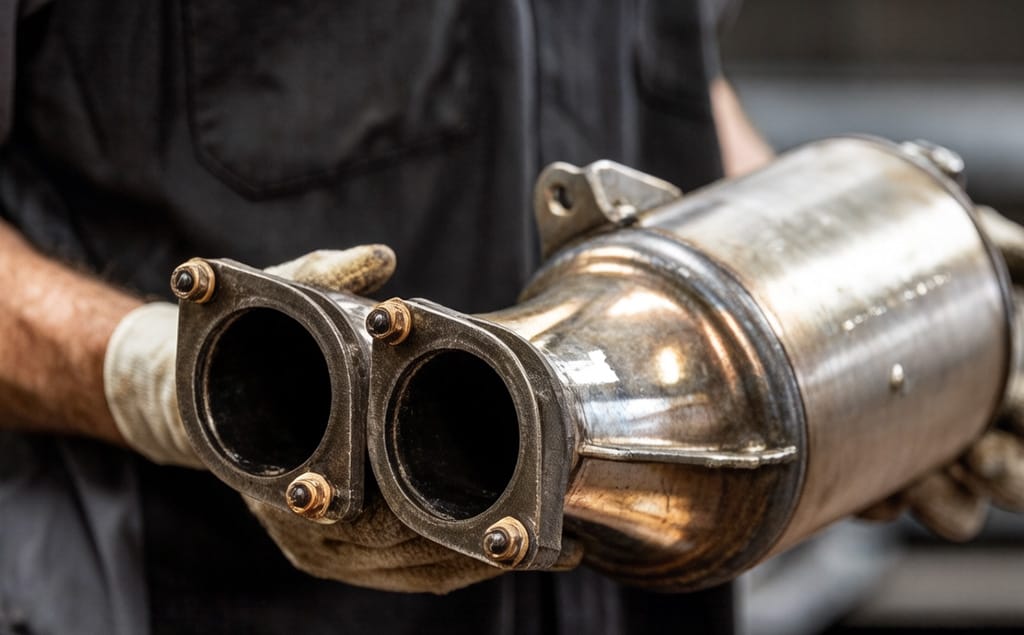
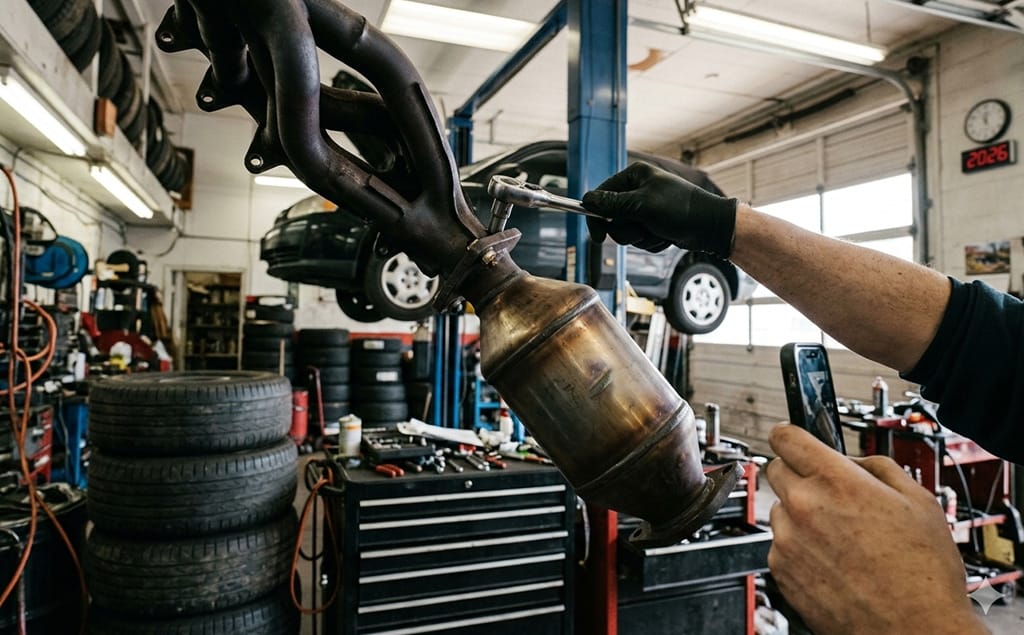
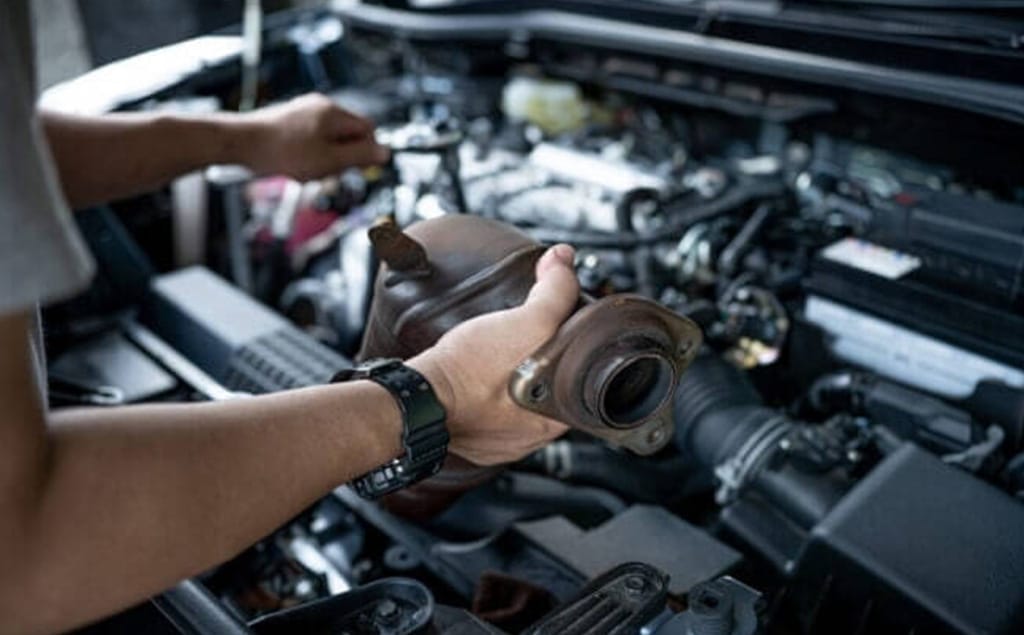
The trosmjerni katalizator acts as a chemical reactor. It sits between the engine and the muffler. Its primary job involves converting toxic gases into harmless substances. The “three way” name refers to the three specific pollutants it targets. These are Nitrogen Oxides (NOx), Carbon Monoxide (CO), and Unburnt Hydrocarbons (HC).
The trosmjerni katalizator utilizes a flow-through design. Exhaust gas enters the converter and passes through thousands of micro-channels. These channels feature a ceramic honeycomb structure. Engineers coat this structure with a washcoat. This washcoat contains precious metals. Platinum and Palladium handle the oxidation of CO and HC. Rhodium manages the reduction of NOx.
The trosmjerni katalizator performs two simultaneous chemical reactions. In the reduction reaction, the catalyst strips oxygen away from Nitrogen Oxides. This creates pure Nitrogen gas and Oxygen. In the oxidation reaction, the catalyst adds oxygen to Carbon Monoxide and Hydrocarbons. This produces Carbon Dioxide and water vapor. These reactions happen almost instantly. However, the trosmjerni katalizator requires a high operating temperature. Most units start working effectively at 400°C.

The Mechanics of the Diesel Particulate Filter (DPF)
Diesel engines operate differently than gasoline engines. Diesel fuel contains longer carbon chains. The combustion process often leaves behind solid carbon residue. We call this residue soot or particulate matter. A trosmjerni katalizator cannot stop these solid particles. Therefore, diesel vehicles require a DPF.
The DPF uses a wall-flow filtration design. Unlike the flow-through trosmjerni katalizator, the DPF channels have blocked ends. One channel is open at the entrance but closed at the exit. The next channel is closed at the entrance but open at the exit. This geometry forces the exhaust gas through the porous walls of the ceramic substrate.
The gas molecules pass through the microscopic pores. However, the soot particles are too large. They remain trapped inside the filter channels. Over time, these particles accumulate. This accumulation forms a “soot cake.” This cake actually improves filtration efficiency initially. But eventually, it restricts exhaust flow. This creates backpressure. High backpressure reduces engine power and increases fuel consumption.
Substrate Material Science in Exhaust Systems
Engineers select materials based on thermal stress and chemical stability. Most trosmjerni katalizator units use Cordierite. This is a synthetic ceramic material. It offers a low thermal expansion coefficient. This means the honeycomb structure does not crack under extreme heat changes.
DPF systems often use Silicon Carbide (SiC). This material handles much higher temperatures than Cordierite. This is vital because DPF regeneration creates intense heat. During regeneration, the soot burns off at temperatures exceeding 600°C. SiC has a higher melting point and better thermal conductivity. This helps distribute heat evenly and prevents “hot spots” that could melt the filter.
Comparison Table: Technical Specifications
The following table highlights the operational differences between the trosmjerni katalizator and the DPF.
| Technical Feature | Trosmjerni katalitički pretvarač (TWC) | Filter dizelskih čestica (DPF) |
|---|---|---|
| Primary Pollutant | Gaseous (NOx, CO, HC) | Solid (Soot, Particulate Matter) |
| Unutrašnji dizajn | Flow-Through Honeycomb | Wall-Flow Monolith |
| Reaction Type | Chemical Oxidation and Reduction | Physical Trapping and Combustion |
| Materijal podloge | Cordierite or Metallic Foil | Silicon Carbide or Aluminum Titanate |
| Maintenance Logic | Continuous Operation (Passive) | Periodic Regeneration (Active/Passive) |
| Typical Engine | Benzin / Benzin | Diesel / Heavy Duty |
| Major Failure | Chemical Poisoning / Melting | Clogging / Ash Accumulation |
The Regeneration Process: DPF vs TWC
A trosmjerni katalizator does not need a cleaning cycle. It functions continuously as long as the engine maintains the correct air-fuel ratio. It relies on a “stoichiometric” mixture. This means the engine burns 14.7 parts of air for every 1 part of fuel. If the mixture is correct, the trosmjerni katalizator stays clean.
The DPF is different. It is a storage device. It eventually fills up with soot. To clear the soot, the system performs “regeneration.” There are two main types of regeneration.
Passive regeneration happens during long highway drives. The exhaust gas temperature rises naturally to around 350°C. At this temperature, the nitrogen dioxide in the exhaust helps burn off the soot slowly. The driver never notices this process.
Active regeneration occurs when the vehicle detects a high soot load. If you drive only in the city, the exhaust never gets hot enough for passive cleaning. The engine control unit (ECU) then takes over. It injects extra fuel into the cylinders during the exhaust stroke. This fuel travels to the exhaust system and ignites. This raises the DPF temperature to over 600°C. This heat incinerates the soot and turns it into a tiny amount of ash.
Failure Modes: What Destroys These Components?
Both systems are expensive to replace. Understanding failure modes helps prevent costly repairs.
The trosmjerni katalizator suffers primarily from poisoning. Certain chemicals bind permanently to the precious metals. Phosphorus and Sulfur are the biggest enemies. These chemicals often come from engine oil or low-quality fuel. Once poisoned, the trosmjerni katalizator cannot trigger chemical reactions. It becomes a useless brick of ceramic. Physical damage also occurs. If an engine misfires, unburnt fuel enters the hot converter. It explodes inside, melting the honeycomb structure.
The DPF fails due to clogging. Short trips are the main cause. If the engine never reaches operating temperature, it cannot regenerate. The soot builds up until the filter is completely blocked. At this point, even active regeneration might fail. Another issue is ash accumulation. Regeneration burns soot, but it cannot burn ash. Ash comes from the metallic additives in engine oil. Over 100,000 miles, this ash fills the DPF pores. Only professional pneumatic cleaning can remove ash.
Diagnostic Codes and Symptoms
Modern vehicles use On-Board Diagnostics (OBD-II) to monitor these systems.
Neuspjeh trosmjerni katalizator usually triggers code P0420. This code means “Catalyst System Efficiency Below Threshold.” The ECU monitors the oxygen sensors before and after the converter. If the readings look too similar, the converter is dead. You might notice a “rotten egg” smell. This is hydrogen sulfide gas. It indicates the converter is not processing sulfur correctly.
A failing DPF triggers codes like P242F (Ash Accumulation) or P2463 (Soot Accumulation). You will see a DPF warning light on the dashboard. The car may enter “Limp Mode.” This limits the engine to low RPM to prevent turbocharger damage. You will also see a massive drop in fuel economy. This happens because the ECU keeps trying to start the regeneration cycle.
Impact of Engine Oil on After-treatment Health
The choice of engine oil determines the lifespan of your trosmjerni katalizator and DPF. Conventional oils contain high levels of Sulfated Ash, Phosphorus, and Sulfur (SAPS).
U trosmjerni katalizator, phosphorus coats the catalyst. This is called “chemical masking.” It hides the platinum from the exhaust gases. Even a small amount of oil consumption can kill a trosmjerni katalizator over time.
U DPF-u, metalni aditivi u ulju pretvaraju se u trajni pepeo. Ovaj pepeo ne možete spaliti. On ostaje u filteru zauvijek. Stoga, dizel automobili sa DPF-ovima moraju koristiti Low-SAPS ulja. Ova ulja imaju posebne hemijske markere. Ona štite dijelove motora bez oštećenja filtera. Uvijek provjerite ACEA C-grade na boci ulja. Ulja C1 i C4 imaju najniže SAPS nivoe. C3 je uobičajeno ulje sa srednjim SAPS nivoom za mnoge evropske automobile.
Uloga senzora kisika i senzora temperature
Oba sistema se oslanjaju na podatke iz različitih senzora. trosmjerni katalizator koristi dva senzora kisika. Uzvodni senzor govori motoru kako da prilagodi gorivo. Nizvodni senzor provjerava da li trosmjerni katalizator radi. Ako nizvodni senzor pokazuje fluktuirajuće nivoe kisika, pretvarač je otkazao.
DPF koristi senzore pritiska. Ovi senzori mjere "pad pritiska" na filteru. Jedna cijev mjeri pritisak na ulazu. Druga cijev mjeri pritisak na izlazu. Velika razlika u pritisku znači da je filter pun čađi. DPF također koristi temperaturne senzore. Oni osiguravaju da se filter ne zagrije previše tokom aktivne regeneracije. Ako temperatura pređe 800°C, filter se može otopiti.
Lista uobičajenih uzroka kvara auspuha
- Korištenje pogrešnog motornog ulja (visok SAPS).
- Česta vožnja na kratke relacije (sprečava nakupljanje toplote).
- Curenje injektora goriva (uzrokuje pregrijavanje).
- Istrošene svjećice (dovode do promašaja paljenja i topljenja TWC-a).
- Neispravni EGR ventili (povećavaju proizvodnju čađi).
- Curenje zaptivki turbopunjača (šalje ulje u izduv).
- Korištenje goriva niske kvalitete s visokim sadržajem sumpora.
Ekološki i pravni značaj
The trosmjerni katalizator i DPF nisu opcionalni. Većina zemalja zakonski nalaže da se ovi uređaji koriste. Njihovo uklanjanje je ozbiljan prekršaj. Automobil bez trosmjerni katalizator proizvodi 10 do 50 puta više otrovnog plina. Dizel bez DPF-a ispušta finu čađ. Ova čađ ulazi u ljudski krvotok i uzrokuje respiratorne bolesti.
Tokom godišnjih tehničkih pregleda vozila, tehničari provjeravaju ove sisteme. Koriste mjerače dima za dizel motore i analizatore plina za benzinske automobile. Ako trosmjerni katalizator nedostaje ili je pokvaren, automobil ne prolazi test. Ne možete legalno voziti vozilo dok ga ne popravite. Nadalje, brisanje ovih jedinica uništava vrijednost automobila prilikom preprodaje.
Budući trendovi: GPF i dalje
Tehnologija se nastavlja razvijati. Mnogi novi benzinski automobili sada imaju filter čestica benzina (GPF). Ovo je u suštini DPF za benzinske motore. Direktno ubrizgavanje pod visokim pritiskom u benzinskim motorima sada proizvodi male količine čađi. GPF radi zajedno s trosmjernim katalizatorom kako bi uhvatio ove čestice.
Hibridna vozila također predstavljaju nove izazove. Motor se često pali i gasi. To održava ispušni sistem hladnim. Inženjeri sada razvijaju zagrijane katalizatore. Oni koriste električnu energiju za prethodno zagrijavanje... trosmjerni katalizatorOvo osigurava da katalizator radi čak i tokom kratkih rada motora.
Zaključak
The trosmjerni katalizator i DPF su čuvari kvalitete našeg zraka. trosmjerni katalizator Koristi hemiju za neutralizaciju gasova. DPF koristi mehaničku filtraciju za hvatanje čađi. Oba sistema zahtijevaju specifične uslove rada da bi opstala. Morate koristiti ispravno Low-SAPS motorno ulje kako biste spriječili trovanje i nakupljanje pepela. Također morate osigurati da je vaš motor u dobrom mehaničkom stanju. Redovna vožnja autoputem pomaže da DPF ostane čist tokom regeneracije. Održavanjem ovih komponenti štitite okoliš i izbjegavate skupe troškove popravki. Uvijek vjerujte lampicama upozorenja na vašoj kontrolnoj tabli. One pružaju prvi znak da vašem ispušnom sistemu treba pažnja.