Zavedení
Global emission standards continue to tighten. Governments demand lower levels of CO, HC, and NOx. Urban air quality regulations grow stricter every year. In this environment, the three way catalytic converter remains a core technology for gasoline vehicles. Manufacturers must innovate constantly. They must increase efficiency, lower cost, and improve durability.
Today, třícestný katalyzátor manufacturers respond to new emission trends with advanced materials, intelligent control systems, compact designs, and sustainable catalyst strategies. They also prepare for hybrid vehicles, cold-start challenges, and future fuel transitions. This article explains how the industry evolves and why technological adaptation defines its survival.
The Role of the Three Way Catalytic Converter
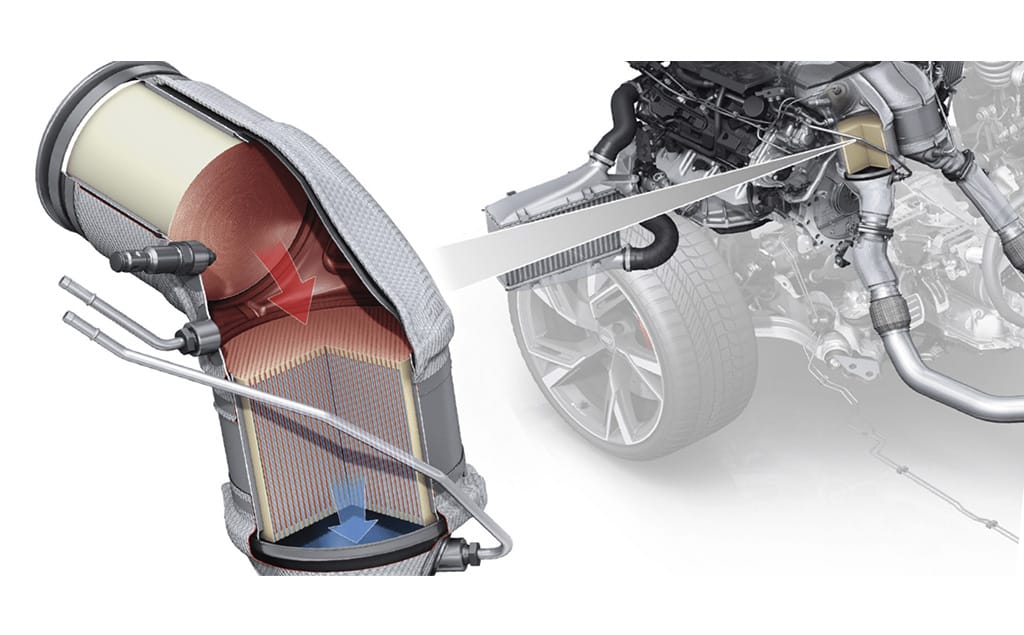
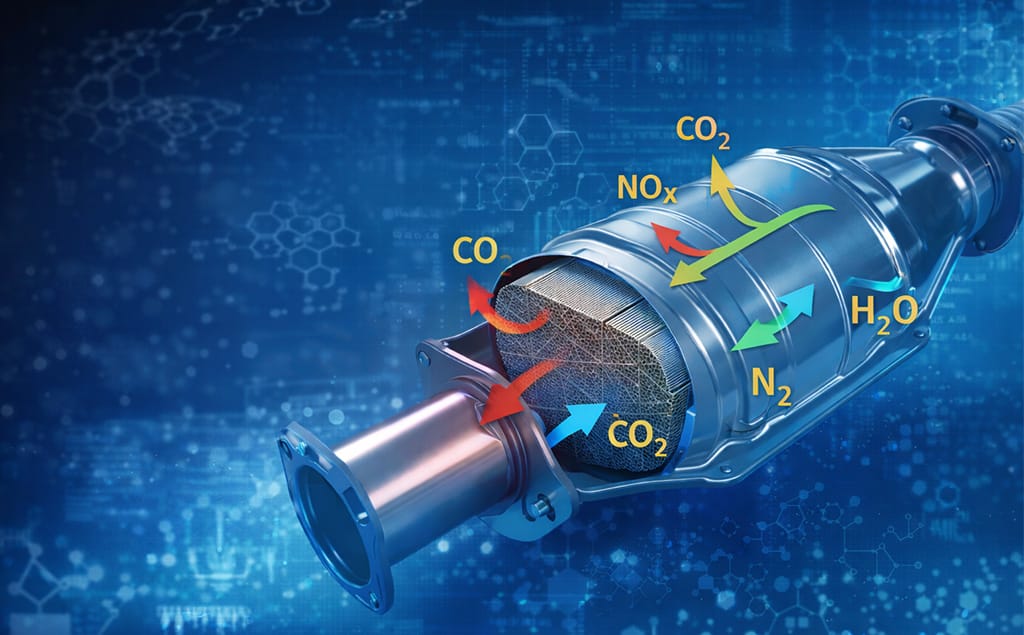
A třícestný katalyzátor performs three simultaneous reactions.
- Oxidation of carbon monoxide (CO) into carbon dioxide (CO2).
- Oxidation of hydrocarbons (HC) into CO2 and water (H2O).
- Reduction of nitrogen oxides (NOx) into nitrogen (N2).
Manufacturers use precious metals such as platinum (Pt), palladium (Pd), and rhodium (Rh) as active catalysts. The converter works most efficiently at a near-stoichiometric air-fuel ratio. Therefore, precise engine control plays a critical role.
Modern emission regulations such as Euro 6, China 6, and Tier 3 push performance limits. Cold-start emissions now represent a major share of total pollutants. Manufacturers must address this issue directly.

Why Emission Trends Are Changing So Fast
Governments now focus on real driving emissions rather than laboratory testing. Regulators measure emissions during urban driving, highway acceleration, and cold starts. This shift forces manufacturers to improve low-temperature performance.
Hybrid vehicles also change emission patterns. Engines in hybrids switch on and off frequently. Each restart creates a cold-start event. The třícestný katalyzátor must light off quickly and maintain high activity even at reduced exhaust temperatures.
At the same time, precious metal prices fluctuate significantly. Palladium and rhodium prices have reached historic highs in recent years. Manufacturers must reduce metal loading without sacrificing conversion efficiency. This economic pressure accelerates material innovation.
Nanotechnology and Nanostructured Catalysts
Manufacturers now design nanostructured catalysts to increase active surface area. Smaller particles create more reactive sites. More reactive sites improve pollutant conversion.
Engineers control particle size distribution carefully. They stabilize nanoparticles on advanced supports such as ceria-zirconia composites. These supports improve oxygen storage capacity. Higher oxygen storage stabilizes the air-fuel ratio during transient operation.
Nanostructured catalysts deliver several advantages.
- Rychlejší teplota zhasnutí světla
- Improved thermal stability
- Higher resistance to sintering
- Reduced precious metal loading
Laboratory studies report significant emission reduction improvements under optimized conditions. This progress allows manufacturers to meet stricter standards without excessive cost increases.
Advanced Washcoat Technology
The washcoat layer anchors catalytic materials to the ceramic or metallic substrate. Manufacturers now engineer low-temperature washcoats to enhance early activation.
Advanced washcoats feature high surface area alumina, improved oxygen storage materials, and enhanced thermal durability additives.
Low-temperature performance matters most in city driving. Vehicles operate at lower exhaust temperatures in congested traffic. A high-performance washcoat ensures the třícestný katalyzátor remains active even under these conditions.
Plasma-Assisted Catalysis
Plasma-assisted catalysis introduces external energy to activate chemical reactions. Plasma generates highly reactive species. These species accelerate pollutant breakdown.
When manufacturers combine plasma systems with a třícestný katalyzátor, they improve cold-start performance significantly. Plasma reduces light-off delay and enhances NOx reduction efficiency during low-temperature operation.
However, plasma systems increase system complexity and cost. Engineers must evaluate energy consumption carefully. The technology shows promise, but large-scale commercialization requires further optimization.
Intelligent System Integration
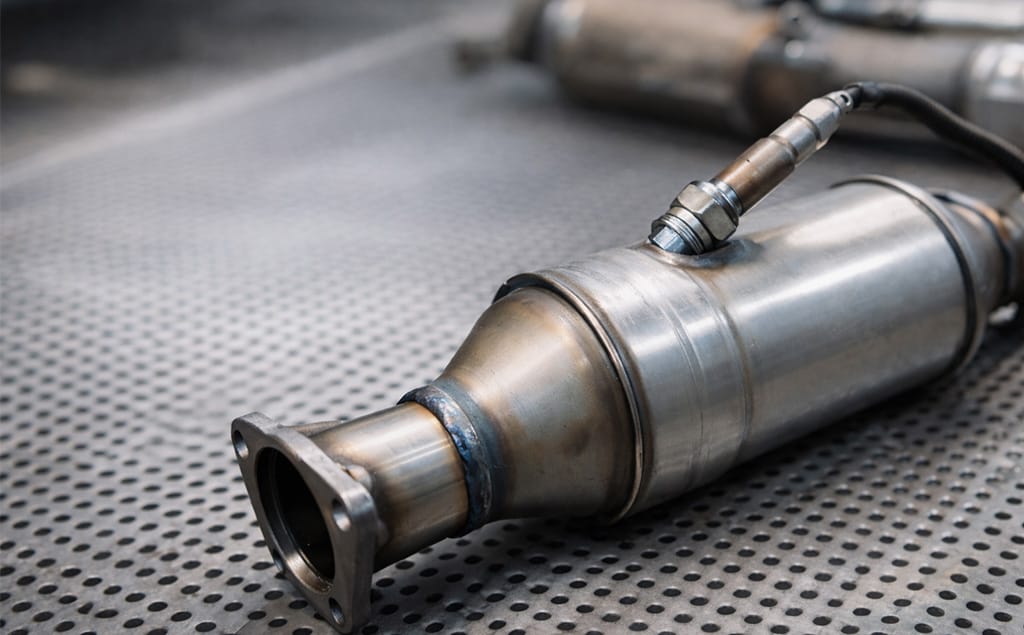
Moderní třícestný katalyzátor systems no longer operate independently. Manufacturers integrate them with oxygen sensors, temperature sensors, and advanced engine control units.
Oxygen sensors measure exhaust oxygen concentration continuously. The control unit adjusts fuel injection accordingly. This closed-loop control keeps the air-fuel ratio near stoichiometric levels. Stable stoichiometry ensures maximum catalyst efficiency.
Some manufacturers now apply artificial intelligence and machine learning algorithms. These algorithms analyze driving patterns and predict catalyst temperature behavior. The system adjusts fuel strategies proactively. This predictive control reduces emission spikes.
Integrated exhaust systems also improve onboard diagnostics. Real-time monitoring detects catalyst aging early. This feature helps vehicles maintain compliance throughout their lifespan.
Cost-Effective Design Strategies
Precious metals account for a large portion of converter cost. Manufacturers actively reduce metal loading while preserving activity.
They improve dispersion of platinum group metals. They use advanced supports to enhance metal utilization efficiency. They optimize substrate geometry to increase gas contact area. They develop thinner wall substrates to reduce material use.
Compact converter designs also reduce weight. Lower weight improves vehicle fuel efficiency. Engineers balance durability and pressure drop while shrinking system size.
Comparison of Traditional and Modern Designs
| Funkce | Traditional Design | Modern Optimized Design |
|---|---|---|
| Precious Metal Loading | Vysoký | Reduced through nano-dispersion |
| Teplota při vypnutí světla | Mírný | Spodní |
| Oxygen Storage Capacity | Norma | Enhanced materials |
| Hmotnost | Heavier | More compact |
| Sensor Integration | Basic oxygen sensor | Advanced multi-sensor control |
Evolution of Catalytic Converter Generations
First Generation Oxidation Catalysts
Early converters focused mainly on CO and HC oxidation. They lacked strong NOx reduction capability. Engineers quickly recognized this limitation.
Second Generation Three Way Catalytic Converter
The introduction of the třícestný katalyzátor transformed emission control. It addressed CO, HC, and NOx simultaneously. The integration of oxygen sensors allowed precise air-fuel ratio control. This innovation established the třícestný katalyzátor as the dominant gasoline emission solution worldwide.
Sustainable Catalyst Materials
Researchers explore non-precious metal catalysts and earth-abundant materials. They investigate perovskites, mixed metal oxides, and advanced ceramic formulations.
The goal remains clear. Reduce dependence on platinum group metals. Lower dependence improves supply chain stability and environmental sustainability.
Although precious metals still provide superior activity, ongoing research may unlock alternative materials that deliver comparable performance at lower cost.
Digitalization and Data-Driven Optimization
Manufacturers use simulation software and computational fluid dynamics extensively. Engineers simulate exhaust flow, temperature gradients, and reaction kinetics before physical prototyping.
Data-driven development shortens design cycles. It reduces material waste. It improves validation success rates.
Cloud-based monitoring allows fleet-level data analysis. Manufacturers evaluate real-world performance continuously. They refine catalyst formulations based on large datasets. This digital transformation strengthens the competitive advantage of advanced třícestný katalyzátor producers.

Key Technologies Comparison
| Technologie | Main Benefit | Application Focus |
|---|---|---|
| Nanostructured Catalyst | Higher surface area | Improved efficiency |
| Low-Temperature Washcoat | Faster light-off | Urban driving |
| AI-Based Control | Predictive optimization | Hybrid vehicles |
| Plasma Assistance | Enhanced cold start | Research stage |
| Sustainable Materials | Reduced precious metal reliance | Long-term development |
Závěr
Ten/Ta/To třícestný katalyzátor remains central to gasoline emission control. Emission trends evolve rapidly. Manufacturers respond with innovation, integration, and cost optimization.
They apply nanotechnology to enhance catalytic activity. They design advanced washcoats for cold-start performance. They integrate intelligent control systems for real-time optimization. They reduce precious metal dependence through material science breakthroughs. They prepare for hybridization and future fuels.
These adaptations ensure that the třícestný katalyzátor continues to meet global emission standards. As long as internal combustion engines operate worldwide, this technology will play a decisive role in protecting air quality and supporting environmental sustainability.