Oplev den fascinerende historie om katalysatoren, fra dens tidlige prototyper til nutidens yderst effektive trevejssystemerLær hvordan denne opfindelse revolutionerede emissionskontrol, videnskaben bag den og dens fremtid i en verden, der skifter mod elbiler.
Why Catalytic Converters Became Necessary
I midten af det 20. århundrede var biler blevet symboler på frihed og økonomisk vækst. Men med millioner af køretøjer på vejene opstod en anden virkelighed: giftige udstødningsgasser. Byer som Los Angeles led under så tæt smog, at beboerne sammenlignede den med tåge blandet med brændende gummi. Forskere opdagede, at kulbrinter, kulilte og nitrogenoxider kombineredes under sollys for at danne ozon ved jordoverfladen og fotokemisk smog. Sundhedseffekterne var alvorlige - astma, øjenirritation og kardiovaskulære risici. Regeringer, især i Californien, begyndte at søge efter en måde at reducere emissionerne ved kilden. Løsningen ville komme i form af katalysatorer, men først efter årtiers forsøg og fejl og videnskabelig vedholdenhed.
De første katalysatorer og eksperimenter (begyndelsen af det 20. århundrede)
Selvom bilkatalysatorer kom i masseproduktion i 1970'erne, strækker deres rødder sig meget længere tilbage. Den franske ingeniør Eugène Houdry, en pioner inden for katalytisk krakning til olieraffinering, erkendte katalysatorernes potentiale til at reducere udstødningsemissioner. I 1950'erne patenterede Houdry anordninger til at kontrollere forurenende stoffer fra industrielle skorstene og senere til benzinmotorer. Teknologien stod dog over for alvorlige begrænsninger. Tidlige katalysatorer manglede holdbarhed, og datidens benzin indeholdt tetraethylbly - et brændstoftilsætningsstof, der hurtigt "forgiftede" katalysatoroverflader og gjorde dem ubrugelige. Disse første eksperimenter var ikke kommercielt levedygtige, men de gav et fundament af kemisk viden, som forskere senere ville forfine til praktiske løsninger.
1970'ernes emissionskrise og regulatorisk pres
Vendepunktet kom med den amerikanske Clean Air Act fra 1970, som pålagde dramatiske reduktioner i køretøjers emissioner. Bilproducenter skulle reducere kulbrinte- og kulilteudledningen med 90 % i løbet af de næste fem år – en næsten umulig udfordring med eksisterende teknologi. Samtidig indførte California Air Resources Board (CARB) endnu strengere statslige standarder. For første gang skabte lovgivningen en reel nødvendighed for bilproducenter til at investere i udvikling af katalysatorer. Uden juridisk pres er det usandsynligt, at industrien ville have udviklet sig så hurtigt. Folkesundhedsmæssige bekymringer kombineret med politisk vilje banede vejen for en af historiens vigtigste miljøteknologier.
De første serieproducerede katalysatorer (fra 1975 og fremefter)
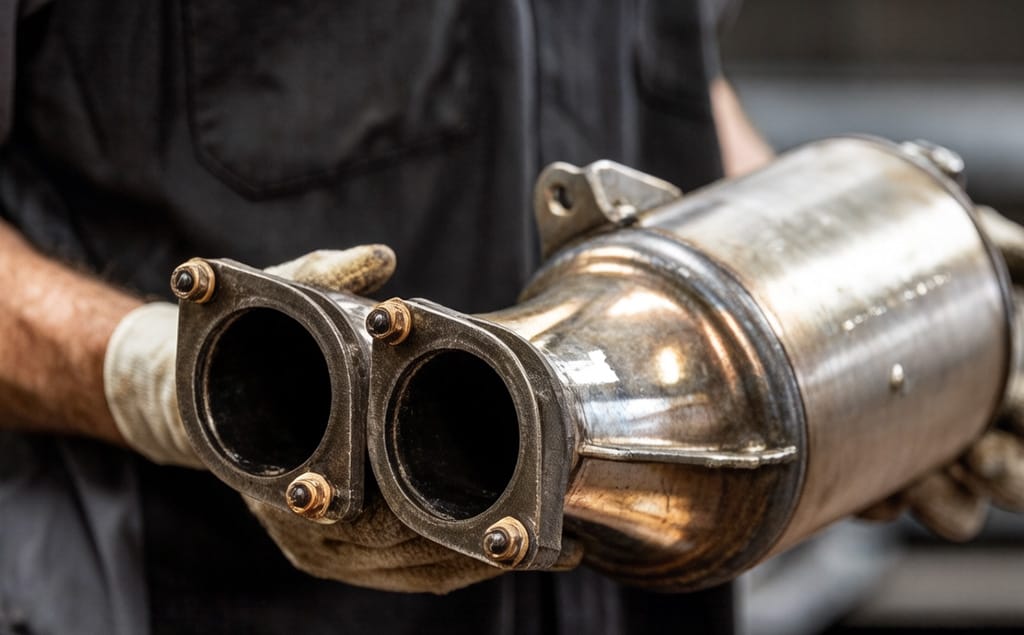
In 1975, American automakers such as General Motors and Ford introduced the first production vehicles equipped with catalytic converters. These early systems were “two-way” oxidation catalysts, designed to reduce carbon monoxide (CO) into carbon dioxide (CO₂) and hydrocarbons (HC) into water (H₂O). The key to their effectiveness was the use of precious metals — primarily platinum and palladium — deposited on a ceramic honeycomb substrate. While revolutionary, these converters had limitations. They could not reduce nitrogen oxides (NOx), one of the major contributors to smog. Still, they marked a new era in automotive design, proving that chemistry could solve real-world environmental problems.
The Shift to Unleaded Gasoline
One of the biggest barriers to catalytic converter adoption was leaded gasoline. Lead was widely used to improve engine performance and reduce knocking, but it coated and deactivated catalytic surfaces within weeks. To make catalytic converters viable, governments pushed fuel reformulation. Starting in the mid-1970s, the United States phased out leaded gasoline, and other countries followed. By the 1990s, unleaded fuel had become the global standard. This shift not only allowed catalytic converters to function properly but also eliminated one of the most toxic additives in fuel history, producing enormous health benefits worldwide.
Introduction of the Three-Way Catalyst (TWC) in the 1980s
The 1980s brought a game-changing innovation: the three-way catalytic converter. Unlike two-way systems, TWCs could simultaneously reduce hydrocarbons, carbon monoxide, and nitrogen oxides. This was achieved by combining platinum and palladium for oxidation reactions with rhodium for NOx reduction. The breakthrough was further enhanced by the addition of lambda (oxygen) sensors, which monitored exhaust oxygen levels and allowed precise fuel-air ratio control. With TWCs, automakers could meet stricter standards without sacrificing performance. Today, the three-way catalyst remains the backbone of global emissions control technology.
Materiale- og designforbedringer (1990'erne-2000'erne)
As emission standards grew tougher, catalytic converters evolved. Engineers optimized washcoats — the thin porous layer that holds precious metals — to increase surface area and efficiency. Substrates shifted from bulky pellets to lightweight ceramic honeycombs and, in some applications, metallic foils. Advances in thermal durability allowed converters to withstand extreme temperatures from modern high-performance engines. Manufacturers also improved resistance to “thermal aging,” a process that reduces catalyst activity over time. By the 2000s, converters had become smaller, lighter, and more effective than ever, while still delivering compliance across a wide range of vehicles.
Katalytiske omformere i en tid med strengere standarder
The 1990s and 2000s saw global harmonization of emissions laws. Europe introduced the Euro standards (Euro 1 in 1992 through Euro 6 in the 2010s), each step demanding significant emission reductions. The United States introduced Tier 1, Tier 2, and Tier 3 standards. These regulations required catalysts not just to meet limits when new, but to maintain performance over 100,000 miles or more. As a result, automakers invested in higher-loading of precious metals and more advanced designs. In markets worldwide, catalytic converters became a universal component, no longer optional but mandatory for compliance.
Udfordringer og innovationer i dag
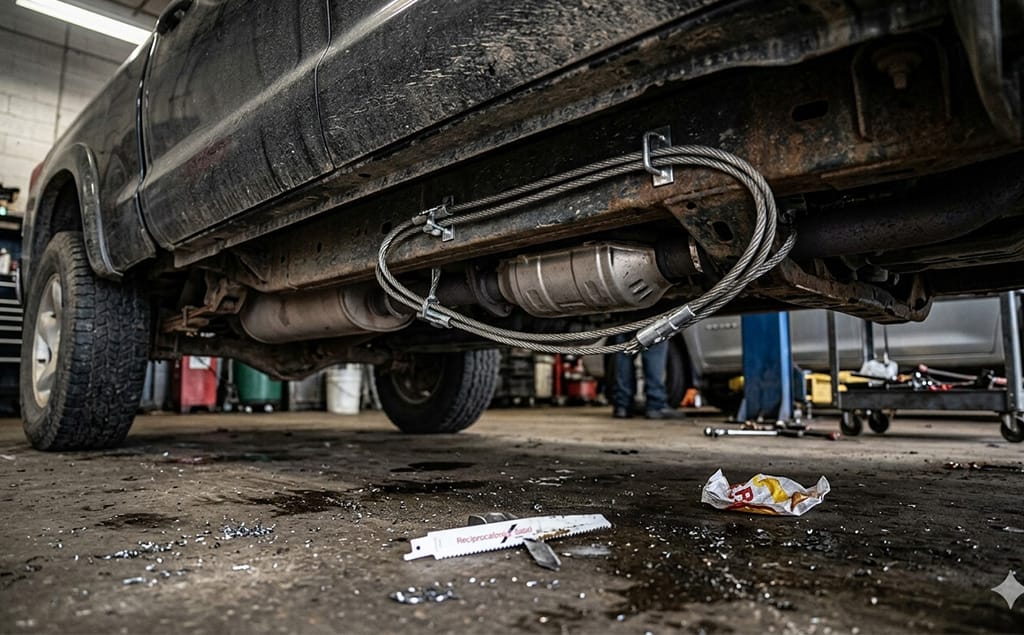
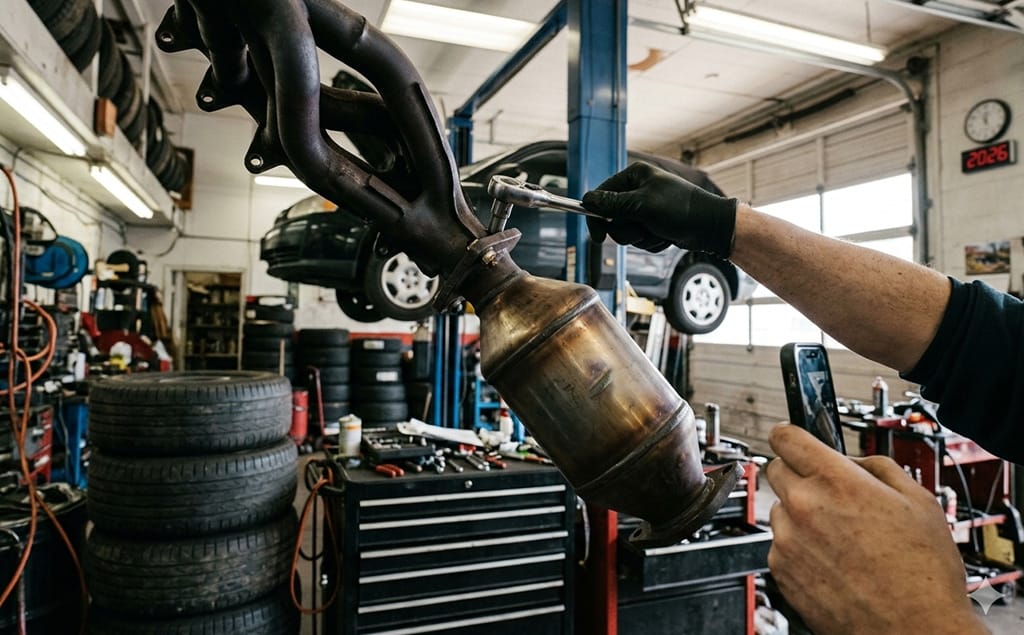
Despite decades of success, catalytic converters still face challenges. One is “cold-start emissions” — the high level of pollutants released before the converter reaches operating temperature. To address this, engineers are experimenting with electrically heated catalysts (EHCs), close-coupled converters near the engine, and advanced thermal insulation. Hybrid vehicles, which start and stop engines frequently, add complexity because converters cool down during engine-off phases. At the same time, theft of catalytic converters has surged due to the value of platinum, palladium, and rhodium, creating new security and supply chain issues. The technology continues to evolve to balance performance, durability, and safety.
Fremtidsudsigter: Ud over indre forbrænding
As the automotive industry shifts toward electrification, some question whether catalytic converters will become obsolete. While fully electric vehicles do not require them, hybrids and plug-in hybrids still depend heavily on advanced catalyst systems. Moreover, catalytic technology will continue to play a role in heavy-duty trucks, construction equipment, and industrial applications. Recycling of spent converters is also becoming critical, both to recover valuable precious metals and to support the circular economy. Looking ahead, catalytic converters may decline in passenger cars but remain vital in multiple sectors for decades to come.
Konklusion
Katalysatoren er mere end et stykke hardware – den er en milepæl inden for miljøteknik. Fra Houdrys tidlige eksperimenter til nutidens trevejskatalysatorer, this invention has saved millions of lives by reducing toxic emissions and cleaning the air we breathe. It stands as proof that regulation, innovation, and chemistry can work together to solve pressing global problems. As the world moves toward electric vehicles, the catalytic converter’s story is not over — it continues to inspire new approaches to cleaner mobility and sustainable industry.