Einführung
Modern automotive design places a huge emphasis on emissions control to make sure cars run as clean as possible.The Dreiwegekatalysator stands as the primary component in this system.This part cleans harmful emissions before they escape the tailpipe. When it fails, drivers face a classic dilemma: pay premium for an OEM replacement, or go with a cheaper aftermarket alternative. Both options offer specific advantages regarding cost, build quality, and chemical efficiency. This comprehensive technical guide analyzes the performance, chemistry, and compliance parameters of both categories. Drivers will learn how to select the optimal replacement for their specific vehicle requirements.
Die Wissenschaft hinter dem Drei-Wege-Katalysator
Internal combustion engines generate hazardous byproducts during the combustion cycle. A Dreiwegekatalysator simultaneously targets three primary pollutants. It treats hydrocarbons ($HC$), carbon monoxide ($CO$), and nitrogen oxides ($NO_x$). The device utilizes sophisticated chemical pathways to convert these toxic substances into safer gases like water vapor ($H_2O$), carbon dioxide ($CO_2$), and nitrogen ($N_2$).
Chemical Reduction and Oxidation Processes
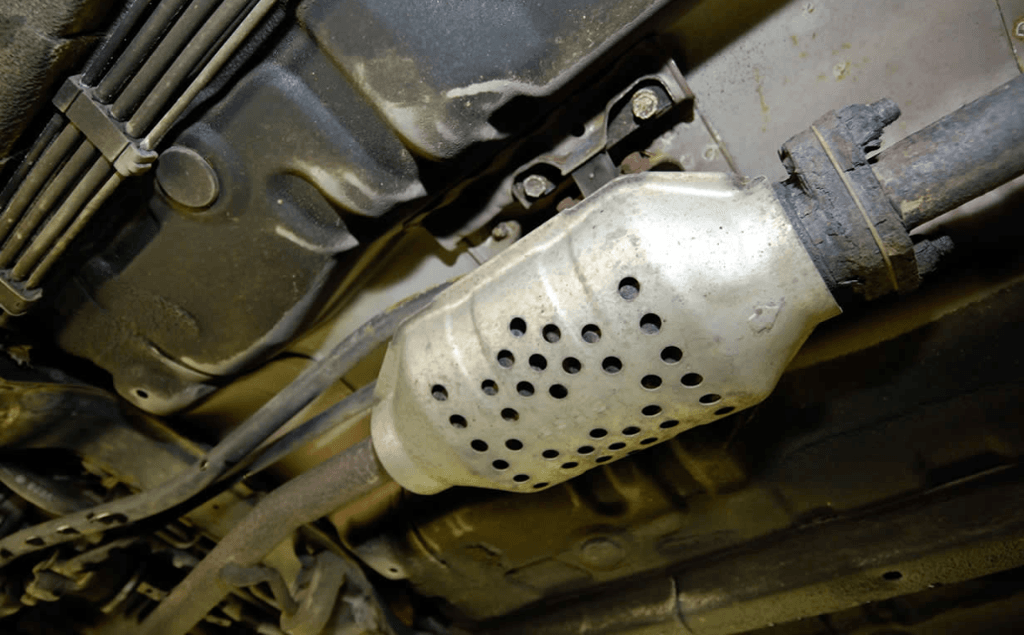
The internal architecture of the converter contains a dense keramisches oder metallisches Wabensubstrat. A highly specialized washcoat covers this substrate to maximize surface area. Inside the washcoat, you’ve got precious metals working behind the scenes to trigger two completely different chemical reactions.
First, the reduction catalyst targets nitrogen oxides ($NO_x$). This catalyst typically utilizes rhodium and platinum. When $NO_x$ molecules encounter these precious metals, the catalyst strips the nitrogen atom from the molecule. The reaction traps the nitrogen temporarily, allowing the oxygen to release as $O_2$. Then, the isolated nitrogen atoms bind together and exit the exhaust system as harmless nitrogen gas.
Second, the oxidation catalyst addresses hydrocarbons and carbon monoxide. This stage generally utilizes platinum and palladium.Here’s where the magic happens: the catalyst takes that remaining oxygen in the exhaust and slams it into the unburnt fuel and carbon monoxide to neutralize them.This process converts the hazardous materials into carbon dioxide and water.
The converter requires precise management to maintain high efficiency for both reactions. The ECU’s main job is keeping that air-fuel mix dead on stoichiometric for everything to run smoothly. If you’re unfamiliar with the complete conversion process, see our guide explaining how a three way catalytic converter works.On a gas engine, that means nailing that magic 14.7-to-1 ratio. Devitations from this point quickly degrade the performance of the Dreiwegekatalysator.
OEM vs Aftermarket: Structural and Material Variations
Automotive companies categorize replacement parts by their manufacturing source. This origin dictates the internal material volume and structural precision.
OEM Catalytic Converters
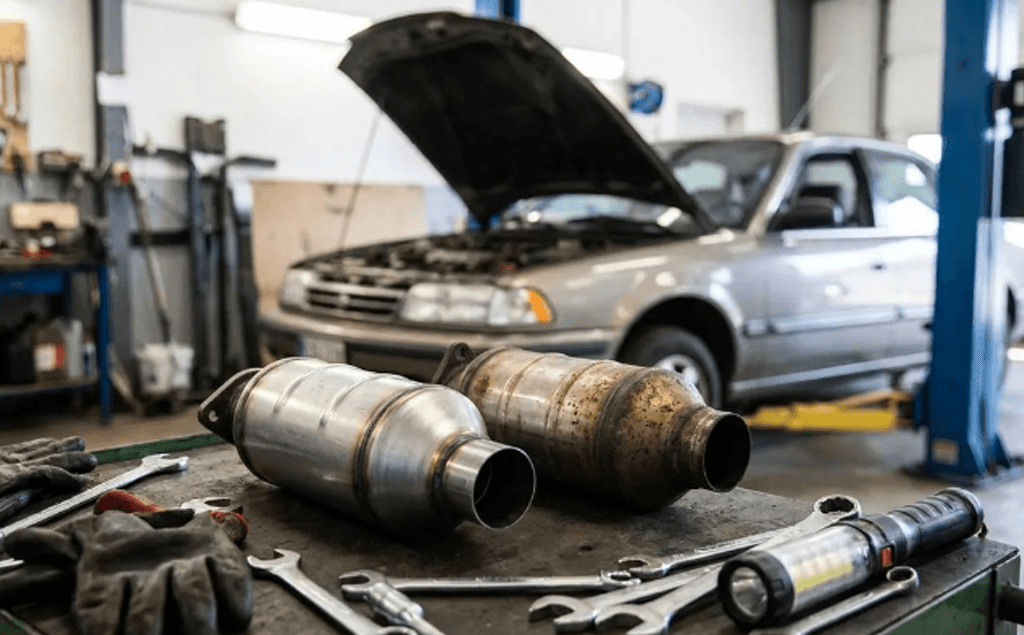
Vehicle manufacturers install OEM converters during initial vehicle assembly. Dealership parts departments sell these exact same units as replacements. These components match the precise blueprint of the original vehicle design. Engineers calibrate them for the specific engine displacement, backpressure requirements, and emission profiles of that vehicle model.
OEM units utilize high concentrations of Platinum Group Metals (PGMs). These metals include platinum ($Pt$), palladium ($Pd$), and rhodium ($Rh$). Thanks to that heavy dose of precious metals, the chemical reactions kick in instantly—even during a freezing cold start or when you’re flooring it. The heavy-duty steel housings prevent structural warping under intense thermal stress.
Aftermarket Catalytic Converters
Third-party manufacturers engineer aftermarket alternatives. These companies produce components that fit a wide range of vehicles. Aftermarket designs often prioritize cost reduction while meeting minimum regulatory Baselines.
To lower retail prices, aftermarket manufacturers alter the internal catalyst chemistry. They reduce the total volume of precious metals inside the washcoat. They may also alter the cell density of the internal ceramic substrate. This adjustment changes exhaust backpressure and alters the gas dwell time inside the catalyst core.
Washcoat Engineering and Precious Metal Concentrations
The true difference between these components lies beneath the metal shell. Washcoat formulation dictates how long a Dreiwegekatalysator will remain functional.
The washcoat consists of a porous slurry of aluminum oxide, silicon dioxide, and various oxygen-storage promoters like ceria and zirconia. This mixture creates an incredibly rough micro-surface inside the ceramic channels. The rough surface maximizes the contact area between the exhaust gas and the active catalyst sites.
OEM manufacturers apply a thick, uniform washcoat layer with high thermal stability. The addition of cerium oxide allows the catalyst to store oxygen during lean engine cycles. The system then releases this oxygen during rich cycles to complete the oxidation of carbon monoxide.
Aftermarket producers often apply a thinner washcoat layer with lower concentrations of ceria and precious metals. Under normal driving conditions, this configuration reduces the overall raw material cost. However, high exhaust temperatures cause the thin washcoat to degrade faster over time. The precious metal particles begin to clump together, a process known as sintering. Sintering permanently reduces the active surface area, which eventually degrades the efficiency of the Dreiwegekatalysator.
Comparative Data Analysis
The following table compares the physical, financial, and operational metrics of OEM and aftermarket units.
| Technical Parameter | OEM-Katalysator | Quality Aftermarket Converter | Budget Aftermarket Converter |
|---|---|---|---|
| Average Cost (Excluding Labor) | $1,000 – $2,500+ | $400 – $800 | 150 – 350 US-Dollar |
| PGM Loading Concentration | Hoch | Medium | Niedrig |
| Expected Service Life | 80,000 – 150,000+ Miles | 50,000 – 100,000 Miles | 10,000 – 30,000 Miles |
| Installation Method | Direct Bolt-on | Direct Fit or Universal | Universal (Requires Welding) |
| Scrap Value Recovery | High Retainable Value | Moderate Value | Negligible Value |
| Warranty Terms | 1 Year (Over-the-counter) | 2 to 5 Years Limited | 90 Days to 1 Year |
| Risk of P0420 OBD-II Code | Extrem niedrig | Niedrig bis mittel | Hoch |
Regulatory Frameworks and Emission Compliance
Emissions regulations heavily dictate which Dreiwegekatalysator you can legally install on a vehicle. Government agencies enforce strict standards to control urban air quality.
EPA Compliance Standards
The Environmental Protection Agency (EPA) governs vehicle emissions across most US states. EPA-compliant aftermarket converters must meet minimum efficiency targets over a designated mileage period. Manufacturers design these parts to satisfy federal clean air standards. They offer an affordable alternative for vehicles operating in states that follow standard federal guidelines.
CARB Mandates and Regional Rules
The California Air Resources Board (CARB) enforces the strictest emissions standards in the world. Several other states also adopt these regulations. CARB rules prohibit the use of standard EPA aftermarket converters.
A CARB-compliant Dreiwegekatalysator must feature a much higher concentration of precious metals. The washcoat formulation must match the durability of factory equipment. These units must undergo rigorous laboratory testing to obtain an Executive Order (EO) number. Technicians stamp this number directly onto the converter shell. Vehicles registered in CARB states will fail the visual and functional portions of a state smog inspection if they lack this official stamp.
Diagnostic Monitoring and the P0420 Fault Code
Modern vehicles utilize On-Board Diagnostics (OBD-II) systems to track emission control efficiency in real-time. The Engine Control Unit (ECU) monitors the Dreiwegekatalysator using two distinct oxygen sensors.
The upstream oxygen sensor measures the oxygen content of the exhaust gas right as it leaves the engine. This reading constantly fluctuates as the engine adjusts the fuel mixture. The downstream oxygen sensor sits directly behind the catalyst core.
A properly functioning converter consumes oxygen during the oxidation of $CO$ and $HC$. Therefore, the downstream sensor should display a flat, steady voltage signal. This flat line indicates high oxygen storage capacity within the washcoat.
If the washcoat lacks sufficient precious metals, the downstream sensor signal will begin to mirror the upstream sensor signal. This mirroring indicates that the converter is no longer storing oxygen or processing pollutants effectively. When the catalytic efficiency drops below a set threshold (typically 95%), the ECU triggers a P0420 diagnostic trouble code. This fault code turns on the Check Engine Light on the dashboard. Cheap aftermarket units frequently cause this code because they lack the raw material capacity to maintain high oxygen storage over extended periods.
Installation Mechanics: Direct-Fit vs. Universal Designs
Physical installation requirements vary drastically between different component designs. This variance influences both labor costs and overall system reliability.
Direct-Fit Architecture
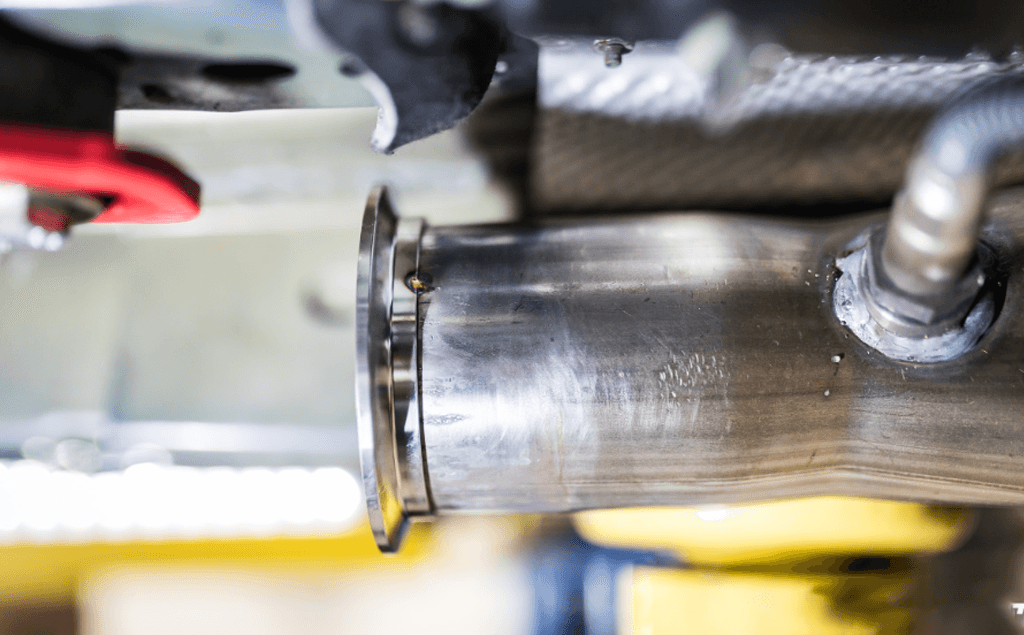
Direct-fit converters are tailor-made for your specific car model. They come with everything ready to go—factory flanges, hangers, and $O_2$ sensor bungs are all right there. Technicians can bolt these parts directly into place without cutting or altering the exhaust pipes. This precise fitment eliminates the risk of exhaust leaks and preserves the original geometry of the exhaust system. Both OEM units and high-tier aftermarket units utilize this convenient direct-fit layout.
Universal Component Challenges
Universal aftermarket converters consist of a standardized catalyst housing with straight pipe extensions on each end. They do not include vehicle-specific flanges or specialized bends.
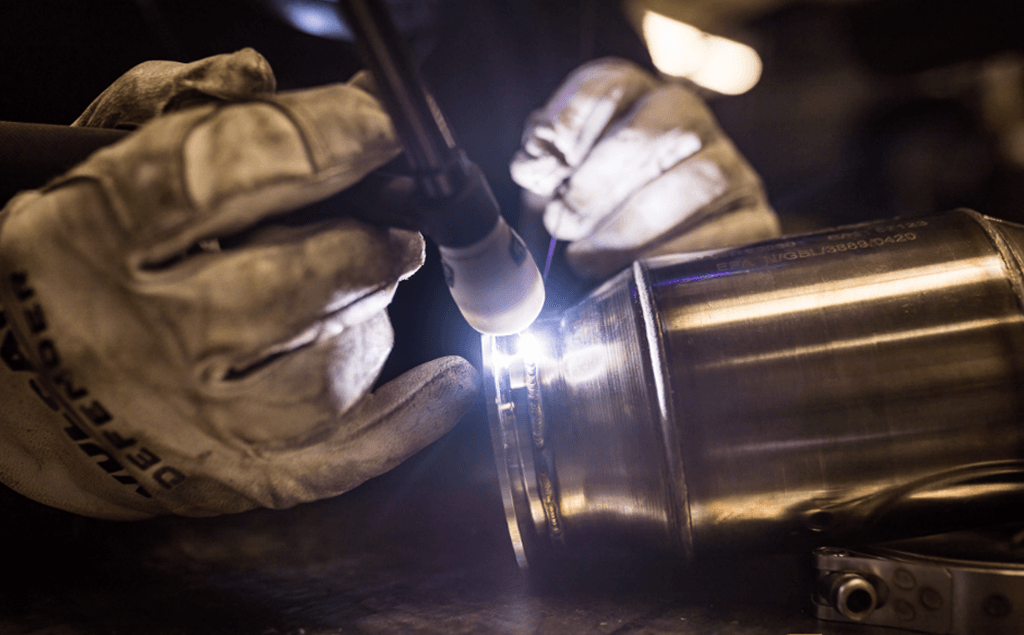
To install a universal component, a technician must cut the failed unit out of the exhaust system. The installer then welds the new universal converter into the existing piping. This installation method requires significant fabrication skill. Poor welding technique can introduce pinhole exhaust leaks. These leaks allow outside ambient air to enter the exhaust stream, which confuses the oxygen sensors and triggers false diagnostic error codes.
Selection Criteria: Choosing the Right Component
Selecting the ideal Dreiwegekatalysator requires a careful assessment of several vehicle factors. Before pulling the trigger on a new one, you’ll want to look at your budget, how old your car is, and what the local emissions laws say.
When to Prioritize an OEM Converter
Owners should select an OEM converter under the following conditions:
- The vehicle is relatively new and remains under its original factory powertrain warranty.
- The owner resides in a strict CARB-governed state and wants to guarantee a passing emissions test.
- The vehicle features a complex, high-performance engine that is highly sensitive to changes in exhaust backpressure.
- This is a long-term ownership deal. The goal here is simple: max out the car’s reliability over the years and get the best possible return when it’s time to sell.
When to Select a Quality Aftermarket Converter
An aftermarket converter represents a highly practical choice when:
- The vehicle has high mileage, and its total market value is close to the cost of an OEM dealer replacement part.
- Local laws only require standard EPA compliance rather than strict CARB testing.
- A reputable manufacturer like MagnaFlow produces a certified direct-fit alternative for that specific model.
- The owner requires an affordable, dependable repair that restores full vehicle driveability without breaking the bank.
Abschluss
Der Dreiwegekatalysator plays a vital role in reducing modern vehicle pollution. OEM units provide unmatched longevity, excellent PGM concentration levels, and guaranteed compliance, but they demand a significant financial investment. If you’re on a budget, good aftermarket parts are a great way to save some cash—just make sure they’ve got that EPA or CARB certification before you buy. Understanding the structural, chemical, and regulatory differences between these options allows vehicle owners to select a component that protects both their vehicle’s performance and the surrounding environment.