Discover the fascinating history of the catalytic converter, from its early prototypes to today’s highly efficient three-way systems. Learn how this invention revolutionized emissions control, the science behind it, and its future in a world shifting toward electric vehicles.
Warum Katalysatoren notwendig wurden
By the mid-20th century, cars had become symbols of freedom and economic growth. But with millions of vehicles on the road, another reality emerged: toxic exhaust fumes. Cities such as Los Angeles suffered from smog so dense that residents compared it to fog mixed with burning rubber. Scientists discovered that hydrocarbons, carbon monoxide, and nitrogen oxides were combining under sunlight to form ground-level ozone and photochemical smog. The health effects were severe — asthma, eye irritation, and cardiovascular risks. Governments, especially in California, began searching for a way to cut emissions at the source. The solution would come in the form of catalytic converters, but only after decades of trial, error, and scientific persistence.
Die ersten Katalysatoren und Experimente (Anfang des 20. Jahrhunderts)
Although automotive catalytic converters entered mass production in the 1970s, their roots stretch back much further. French engineer Eugène Houdry, a pioneer in catalytic cracking for oil refining, recognized the potential of catalysts in reducing exhaust emissions. In the 1950s, Houdry patented devices to control pollutants from industrial smokestacks and later for gasoline engines. However, the technology faced severe limitations. Early catalysts lacked durability, and gasoline of the era contained tetraethyl lead — a fuel additive that quickly “poisoned” catalyst surfaces, rendering them useless. These first experiments were not commercially viable, but they provided a foundation of chemical knowledge that researchers would later refine into practical solutions.
Die Emissionskrise der 1970er Jahre und der Regulierungsdruck
The turning point came with the U.S. Clean Air Act of 1970, which mandated dramatic reductions in vehicle emissions. Automakers were required to cut hydrocarbon and carbon monoxide emissions by 90% over the next five years — a nearly impossible challenge with existing technology. At the same time, California Air Resources Board (CARB) introduced even tougher state standards. For the first time, legislation created real urgency for automakers to invest in catalytic converter development. Without legal pressure, it is unlikely the industry would have advanced so rapidly. Public health concerns, combined with political will, set the stage for one of the most important environmental technologies in history.
Die ersten Serienkatalysatoren (ab 1975)
In 1975, American automakers such as General Motors and Ford introduced the first production vehicles equipped with catalytic converters. These early systems were “two-way” oxidation catalysts, designed to reduce carbon monoxide (CO) into carbon dioxide (CO₂) and hydrocarbons (HC) into water (H₂O). The key to their effectiveness was the use of precious metals — primarily platinum and palladium — deposited on a ceramic honeycomb substrate. While revolutionary, these converters had limitations. They could not reduce nitrogen oxides (NOx), one of the major contributors to smog. Still, they marked a new era in automotive design, proving that chemistry could solve real-world environmental problems.
Die Umstellung auf bleifreies Benzin
One of the biggest barriers to catalytic converter adoption was leaded gasoline. Lead was widely used to improve engine performance and reduce knocking, but it coated and deactivated catalytic surfaces within weeks. To make catalytic converters viable, governments pushed fuel reformulation. Starting in the mid-1970s, the United States phased out leaded gasoline, and other countries followed. By the 1990s, unleaded fuel had become the global standard. This shift not only allowed catalytic converters to function properly but also eliminated one of the most toxic additives in fuel history, producing enormous health benefits worldwide.
Einführung des Dreiwegekatalysators (TWC) in den 1980er Jahren
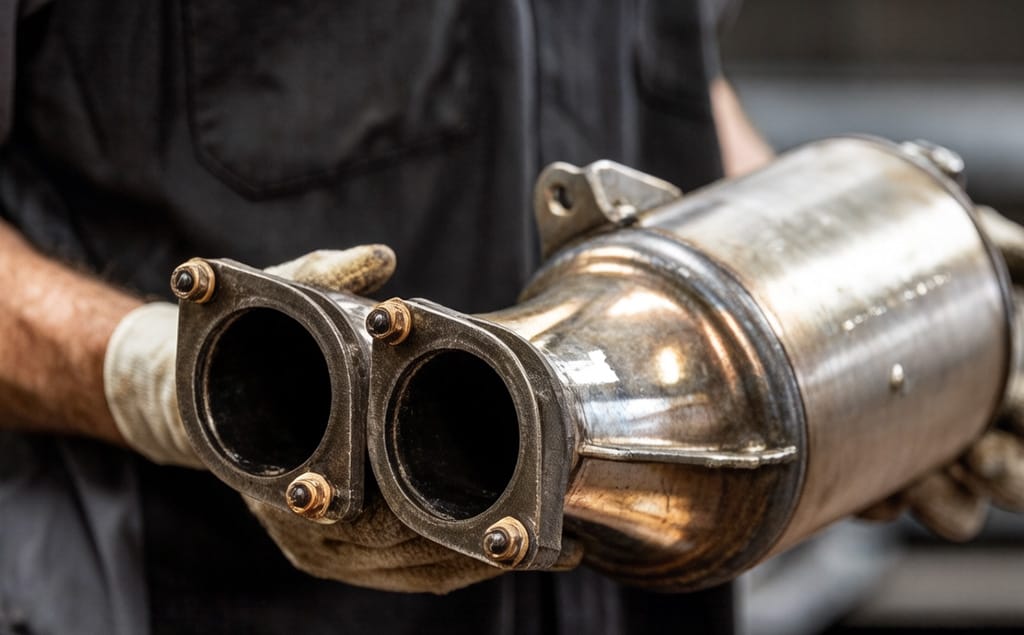
The 1980s brought a game-changing innovation: the three-way catalytic converter. Unlike two-way systems, TWCs could simultaneously reduce hydrocarbons, carbon monoxide, and nitrogen oxides. This was achieved by combining platinum and palladium for oxidation reactions with rhodium for NOx reduction. The breakthrough was further enhanced by the addition of lambda (oxygen) sensors, which monitored exhaust oxygen levels and allowed precise fuel-air ratio control. With TWCs, automakers could meet stricter standards without sacrificing performance. Today, the three-way catalyst remains the backbone of global emissions control technology.
Material & Design Improvements (1990s–2000s)
As emission standards grew tougher, catalytic converters evolved. Engineers optimized washcoats — the thin porous layer that holds precious metals — to increase surface area and efficiency. Substrates shifted from bulky pellets to lightweight ceramic honeycombs and, in some applications, metallic foils. Advances in thermal durability allowed converters to withstand extreme temperatures from modern high-performance engines. Manufacturers also improved resistance to “thermal aging,” a process that reduces catalyst activity over time. By the 2000s, converters had become smaller, lighter, and more effective than ever, while still delivering compliance across a wide range of vehicles.
Katalysatoren im Zeitalter strengerer Normen
The 1990s and 2000s saw global harmonization of emissions laws. Europe introduced the Euro standards (Euro 1 in 1992 through Euro 6 in the 2010s), each step demanding significant emission reductions. The United States introduced Tier 1, Tier 2, and Tier 3 standards. These regulations required catalysts not just to meet limits when new, but to maintain performance over 100,000 miles or more. As a result, automakers invested in higher-loading of precious metals and more advanced designs. In markets worldwide, catalytic converters became a universal component, no longer optional but mandatory for compliance.
Challenges & Innovations Today
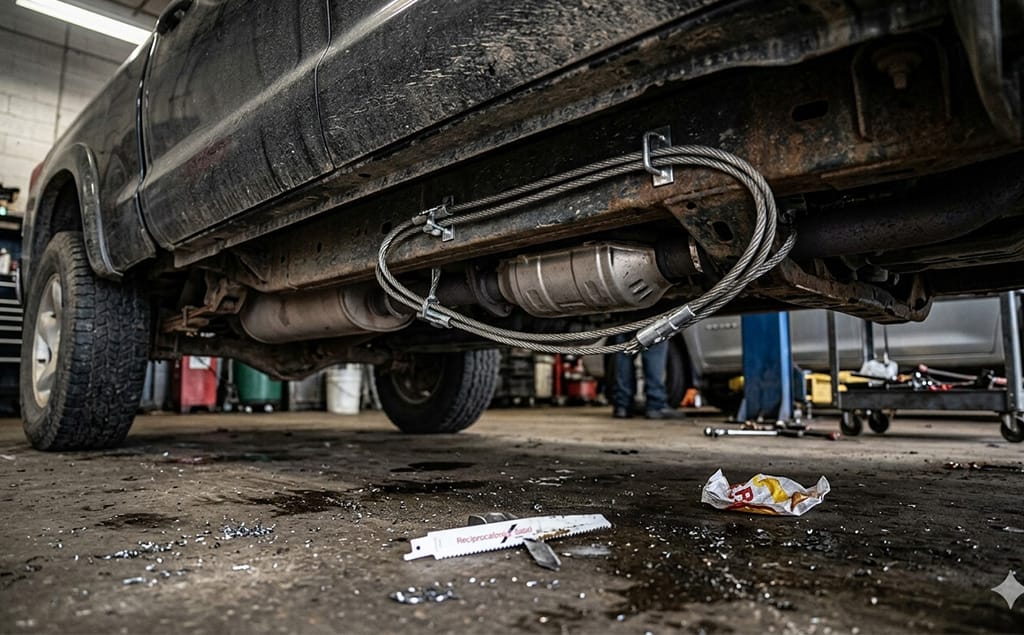
Despite decades of success, catalytic converters still face challenges. One is “cold-start emissions” — the high level of pollutants released before the converter reaches operating temperature. To address this, engineers are experimenting with electrically heated catalysts (EHCs), close-coupled converters near the engine, and advanced thermal insulation. Hybrid vehicles, which start and stop engines frequently, add complexity because converters cool down during engine-off phases. At the same time, theft of catalytic converters has surged due to the value of platinum, palladium, and rhodium, creating new security and supply chain issues. The technology continues to evolve to balance performance, durability, and safety.
Zukunftsausblick: Jenseits der Verbrennung
As the automotive industry shifts toward electrification, some question whether catalytic converters will become obsolete. While fully electric vehicles do not require them, hybrids and plug-in hybrids still depend heavily on advanced catalyst systems. Moreover, catalytic technology will continue to play a role in heavy-duty trucks, construction equipment, and industrial applications. Recycling of spent converters is also becoming critical, both to recover valuable precious metals and to support the circular economy. Looking ahead, catalytic converters may decline in passenger cars but remain vital in multiple sectors for decades to come.
Abschluss
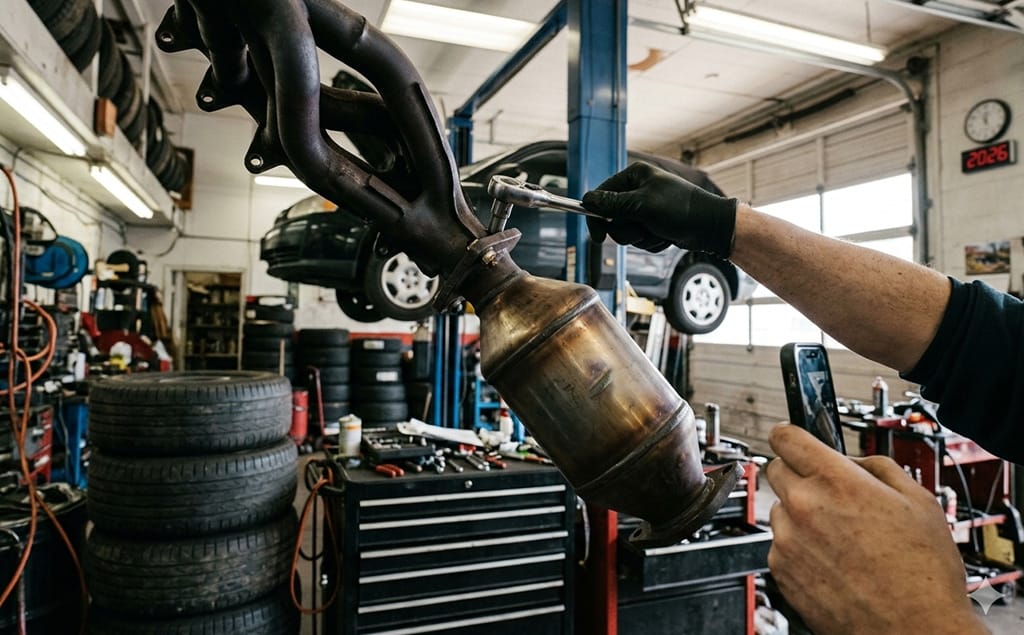
The catalytic converter is more than a piece of hardware — it is a milestone in environmental engineering. From Houdry’s early experiments to today’s Dreiwegekatalysatoren, this invention has saved millions of lives by reducing toxic emissions and cleaning the air we breathe. It stands as proof that regulation, innovation, and chemistry can work together to solve pressing global problems. As the world moves toward electric vehicles, the catalytic converter’s story is not over — it continues to inspire new approaches to cleaner mobility and sustainable industry.