Introduction
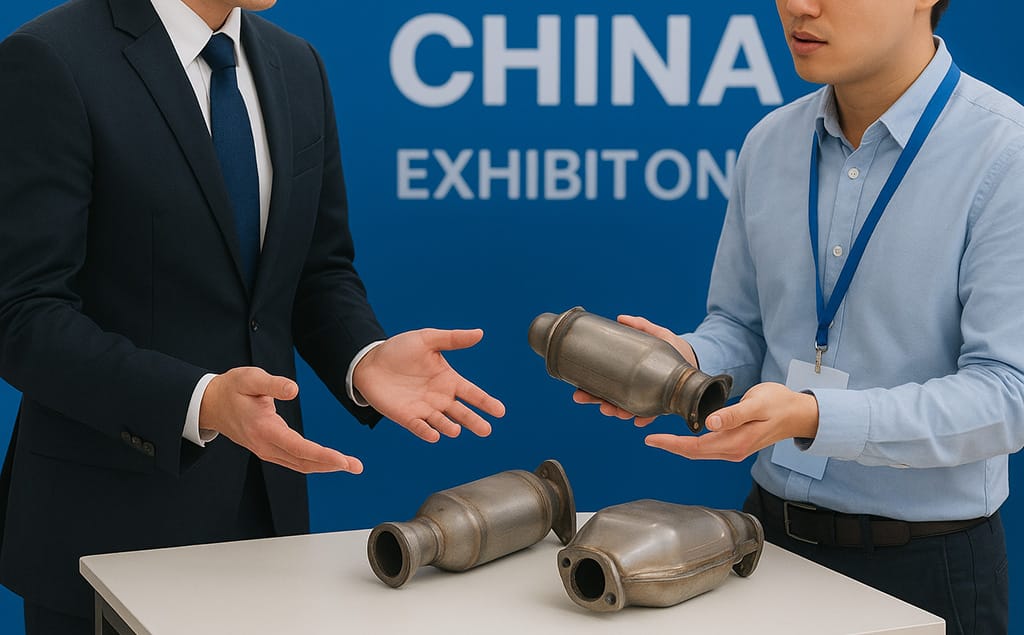
Sourcing convertidores catalíticos de tres vías from China has become a major strategy for global automotive companies, especially at trade exhibitions where suppliers display their latest emission control technologies. Exhibitions like the Canton Fair or Automechanika Shanghai allow buyers to explore hundreds of suppliers at once, but they also increase the risk of choosing unreliable partners. Many buyers are drawn by attractive prices and marketing displays, only to discover later that the products or suppliers fail to meet quality and compliance expectations.
This article explores the five common mistakes when sourcing convertidores catalíticos de tres vías from China at exhibitions. It highlights practical steps to avoid these issues and includes comparative data and examples. By understanding these challenges, buyers can make better decisions, ensure consistent quality, and maintain long-term supplier relationships that meet international emission standards.
1. Neglecting Supplier Due Diligence and Factory Audits
Trade fairs provide quick access to potential suppliers, but many importers fail to perform background checks beyond what they see at an exhibition booth. Choosing a supplier based only on samples or verbal claims can lead to significant risks.
A professional convertidor catalítico de tres vías supplier should have stable production capabilities, ISO/IATF certifications, and proven export experience. Without proper due diligence, buyers may end up with suppliers lacking real factory facilities or quality management systems.
Key Verification Steps
- Verify company registration: Check if the supplier’s business license is active and matches their claimed address.
- Confirm factory ownership: Some traders pretend to be manufacturers—ask for factory videos or arrange an on-site audit.
- Inspect production process: Confirm they use advanced coating and testing equipment for catalytic converters.
- Check certification: Request ISO 9001, IATF 16949, or CARB certificates for emission compliance.
| Verification Item | Objetivo | Acción |
|---|---|---|
| Factory Audit | Confirms production authenticity | Hire third-party inspection like SGS or TÜV |
| Quality Certificate | Ensures compliance | Verify with issuing authority |
| Export Experience | Confirms supplier reliability | Check customs export data |
A well-conducted audit reveals crucial information such as catalyst coating thickness, material sourcing, and employee technical expertise. It is always better to audit before placing a large order, not after a shipment problem occurs.
2. Skipping Product Samples and Technical Validation
Exhibition samples can be polished for display, but production units may differ. Skipping proper sampling and testing is a frequent and costly mistake. A convertidor catalítico de tres vías is a high-precision device—small changes in the ceramic substrate, washcoat, or noble metal ratios (platinum, palladium, rhodium) can drastically affect emission performance.
Why Sample Testing Matters
Samples allow buyers to check:
- Material quality: Shell thickness, weld seams, and corrosion resistance.
- Performance efficiency: Verify conversion rates for CO, HC, and NOx.
- Fitment and compatibility: Ensure design matches vehicle models.
- Durability: Evaluate resistance to heat, vibration, and backpressure.
| Test Type | Evaluation Parameter | Expected Result |
|---|---|---|
| XRF Test | Noble metal loading | Meets design specification |
| Gas Analysis | Conversion efficiency | ≥90% for CO at 400°C |
| Thermal Test | Heat resistance | No cracks after 1000°C exposure |
Skipping this stage invites major risks. Investing in sample validation prevents mass-production errors and establishes objective performance data for future reference.
3. Weak or Incomplete Manufacturing Agreement
A handshake at an exhibition booth is not a binding protection. Many importers skip formal contracts or use vague terms, leading to disputes later. A strong manufacturing agreement is the cornerstone of secure sourcing.
Essential Clauses to Include
- Detailed specifications: List substrate type, coating method, and material tolerance.
- Quality control requirements: Define test procedures and acceptance criteria.
- Payment and delivery: Use milestone payments tied to inspection results.
- Intellectual property clause: Protect proprietary designs and brand labels.
- Legal jurisdiction: Choose neutral arbitration, such as in Hong Kong or Singapore.
| Clause Type | Importance | Example |
|---|---|---|
| Product Specification | Ensures measurable quality | “Converter efficiency ≥ 90% CO removal” |
| Dispute Resolution | Prevents costly conflicts | “Arbitration under CIETAC rules” |
| Confidentiality | Protects proprietary info | “Design data may not be shared externally” |
Contracts must be reviewed by international trade lawyers. For convertidores catalíticos de tres vías, clarity about emission performance, precious metal ratios, and replacement liability is critical.
4. Ignoring Production Monitoring and Final Inspection
Once production begins, many buyers assume that everything will proceed according to plan. Without supervision, however, even experienced suppliers may adjust materials or processes to save costs.
Monitoring Practices That Work
- Pre-production inspection: Confirm substrate and catalyst material before coating begins.
- During-production inspection: Randomly test units to verify coating uniformity and backpressure levels.
- Final inspection: Perform functional tests before shipment.
Independent agencies like SGS, Intertek, or BV can conduct third-party inspections and issue objective reports. These inspections prevent issues such as:
- Reduced precious metal loading.
- Incorrect shell thickness.
- Inconsistent labeling or packaging.
Maintaining oversight ensures that the final batch matches the approved samples and contractual quality terms.
5. Overlooking Import Regulations and Logistics Planning
International sourcing of emission parts involves strict compliance with trade and environmental laws. Ignoring import requirements often results in shipment holds or fines.
Common Regulatory Issues
- HS Code Misclassification: Three way catalytic converters typically fall under HS 8421.39.
- Tariff and customs documents: Incomplete declarations delay clearance.
- Environmental standards: Check CARB, EPA, or Euro 6 conformity.
- Packaging compliance: Label properly if containing hazardous coatings.
Logistics Awareness
Plan shipments around major Chinese holidays:
- Chinese New Year: January–February downtime affects all factories.
- Golden Week: Early October logistics congestion.
Efficient scheduling avoids unnecessary demurrage or delay. Choose freight forwarders experienced in handling automotive components.
Additional Insight: Leveraging Exhibition Opportunities Wisely
While exhibitions offer fast supplier access, buyers should use them for initial contact and technical discussion, not immediate order placement. Collect business cards, take detailed notes on product displays, and request factory visits post-event. This structured approach helps verify credibility and production consistency.
Also, assess communication responsiveness, technical documentation quality, y after-sales support during the exhibition follow-up. These soft indicators often predict long-term reliability better than booth appearance alone.
Conclusion
Sourcing convertidores catalíticos de tres vías from China at exhibitions can unlock competitive advantages if done carefully. Avoiding common mistakes—such as ignoring audits, skipping samples, neglecting contracts, or overlooking compliance—ensures product quality and legal safety.
To succeed, importers should:
- Vet suppliers beyond exhibition claims.
- Validate product samples scientifically.
- Use robust manufacturing agreements.
- Maintain inspection throughout production.
- Stay informed about regulations and shipping timelines.
Applying these principles allows businesses to build efficient, compliant, and sustainable supply chains in the global emission control market.