Is your car acting strange? A failing catalytic converter might be the culprit. This guide will help you diagnose the issue, understand the causes, and know your options for repair. Don’t let a faulty converter leave you stranded—learn the signs and what to do next to protect your vehicle and the environment.
How to Spot Trouble in Your Exhaust System
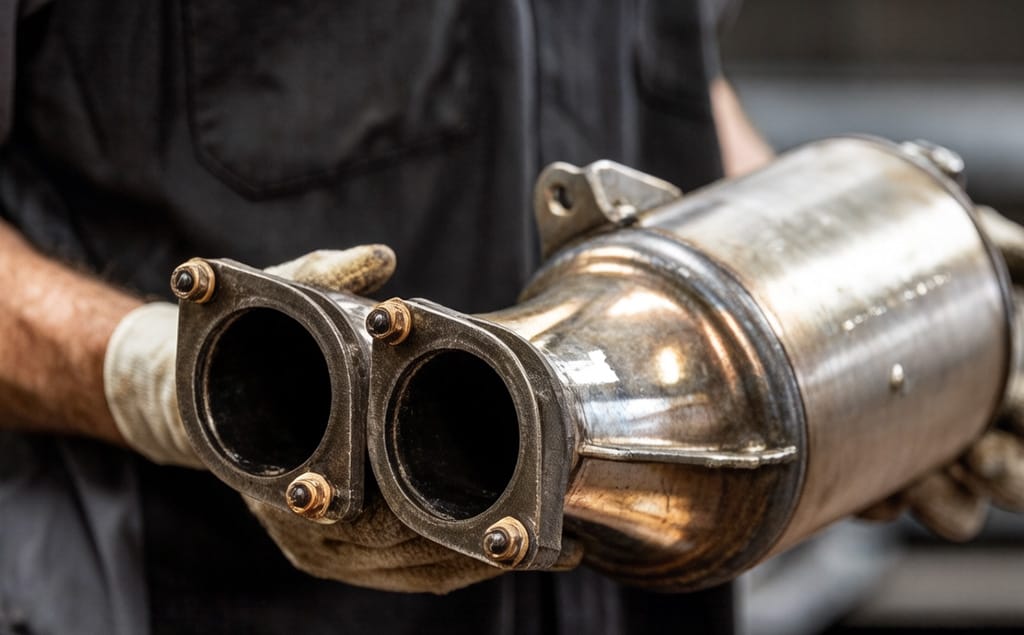
UN convertisseur catalytique Il s'agit d'un composant essentiel du système d'échappement d'un véhicule, conçu pour réduire les émissions nocives. Lorsque ce composant critique commence à tomber en panne, il peut produire plusieurs symptômes visibles qui peuvent alerter le conducteur d'un problème. Reconnaître ces signes tôt est crucial pour préserver les performances du véhicule et éviter des dommages plus graves aux autres composants du système. Un convertisseur catalytique défectueux peut entraîner une réaction en chaîne de problèmes ; comprendre les signes avant-coureurs est donc la première étape vers une solution.
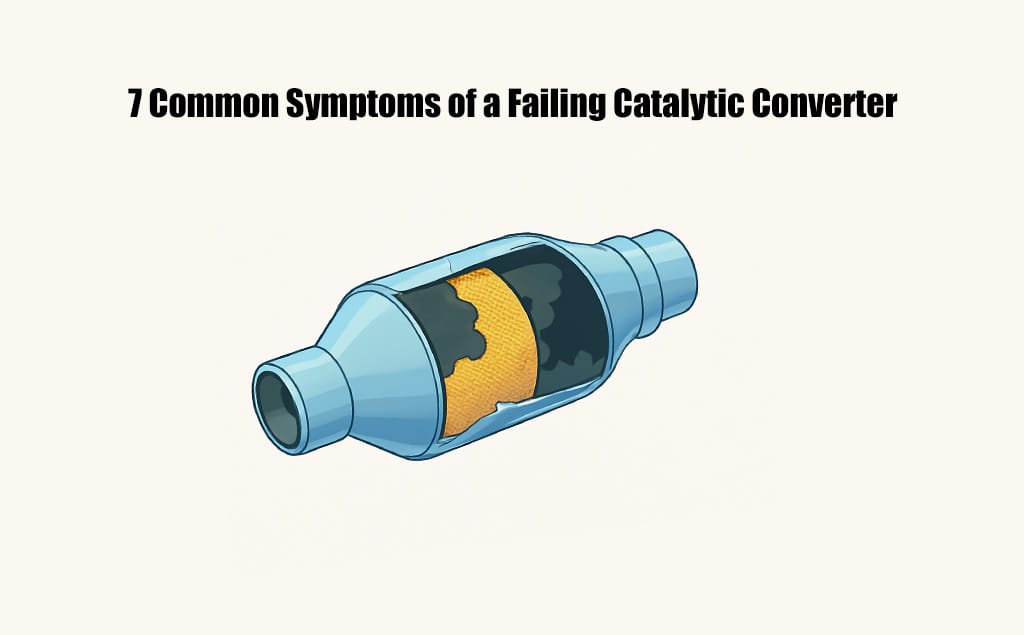
One of the most obvious signs is a dramatic change in how your vehicle sounds. The catalytic converter is a part of the exhaust system, and when it fails, it can become loose or clogged, leading to a loud, rattling noise, especially when the car is idling. This noise is often the result of the internal ceramic honeycomb structure breaking apart. Furthermore, a failing catalytic converter can restrict the flow of exhaust gases, leading to a significant loss of power and poor acceleration. This can make the car feel sluggish and unresponsive, particularly when trying to merge onto a highway or accelerate uphill.
1.Check Engine Light & P0420 Code
The most common and definitive sign of a problem with your catalytic converter is the illumination of the “check engine” light on your dashboard. This light is an indicator that the vehicle’s onboard diagnostic system has detected an issue with one of its many sensors, and a failing converter is a frequent cause. When a mechanic or an automotive enthusiast uses an OBD-II scanner, a specific code, such as P0420, often points directly to a catalytic converter that is operating below its efficiency threshold. The oxygen sensor upstream and downstream of the converter measures the oxygen content in the exhaust gases, and if the converter isn’t performing its chemical reaction properly, these readings will be out of sync, triggering the code.
The check engine light should never be ignored. While it can be triggered by a wide range of issues, from a loose gas cap to a misfiring cylinder, a P0420 code specifically means the vehicle’s computer has determined that the catalytic converter’s function is compromised. Ignoring this warning can lead to further damage to the engine, as the blocked exhaust system can cause a buildup of pressure and heat. It’s a clear signal that the converter is no longer effectively converting toxic gases into less harmful substances.
2.Loud Exhaust Noise or Loss of Power
A loud exhaust noise is often a telltale sign that your catalytic converter is breaking down internally. As the precious metals—platinum, palladium, and rhodium—coated on the ceramic substrate begin to break down, pieces of the internal matrix can become loose. This creates a rattling sound, particularly at idle or when the car is revved. A less common, but equally serious, symptom is a sudden loss of power. When the catalytic converter becomes clogged, it restricts the flow of hot exhaust gases from the engine. This back pressure can choke the engine, leading to reduced performance, poor acceleration, and a feeling that the car is struggling to breathe.
The loss of power is a direct result of the engine’s inability to expel its exhaust gases efficiently. The internal combustion engines need a clear path for exhaust, and a blocked catalytic converter acts like a cork in a bottle. This not only robs the car of horsepower and torque but can also cause the engine to overheat. The reduced ability to get rid of the carbon monoxide and hydrocarbons in the exhaust gases is a clear sign that the catalyst is no longer working.
3.Drop in Fuel Efficiency / Smell Issues
A noticeable drop in fuel efficiency is another strong indicator of a failing catalytic converter. When the converter is clogged or not functioning correctly, the engine has to work harder to expel exhaust gases. This increased workload directly translates to a decrease in fuel economy. You may find yourself filling up at the gas station more frequently, even if your driving habits haven’t changed. This is often an early sign that the catalyst is starting to fail, and the vehicle’s efficiency is being compromised.
In addition to poor fuel economy, a failing catalytic converter can also produce a distinct, unpleasant odor. The three-way catalytic converter works by converting harmful gases like nitrogen oxide, carbon monoxide, and unburned hydrocarbons into less harmful substances like nitrogen, oxygen, carbon dioxide, and water vapor. When this chemical reaction isn’t happening effectively, you might smell a sulfuric odor, often described as a “rotten egg” smell. This is due to unburnt sulfur in the exhaust gases, which the converter is no longer able to process.
Causes Behind Failure
Understanding why a catalytic converter fails is key to preventing future problems. A catalytic converter is a durable component, but it’s not indestructible. The failure of this complex piece of the exhaust system is often a symptom of another underlying issue with the vehicle. The delicate balance of heat, chemicals, and mechanical integrity must be maintained for the catalyst to function properly. Damage to the catalytic converter can be caused by external factors, but more often it is due to a problem with the vehicle’s engine or fuel system.
The most common reasons for a converter to fail include engine misfires, a faulty oxygen sensor, or a rich air-fuel mixture that causes it to overheat. These problems can introduce unburned fuel or other contaminants into the converter, leading to its destruction. A catalyst is a highly sensitive device, and the introduction of foreign substances can render it useless. The metals inside the converter, such as platinum, palladium, and rhodium, are the key to its function, and any damage to these components will diminish its ability to reduce emissions.
1.Thermal Shock & Sintering of Catalysts
One of the most common causes of catalytic converter failure is extreme heat, which can lead to thermal shock or sintering. Thermal shock occurs when a very hot catalytic converter comes into contact with cold water, such as driving through a puddle. The rapid change in temperature can cause the delicate ceramic honeycomb structure inside to crack or break apart. Sintering is a process where prolonged exposure to excessively high temperatures causes the small particles of the precious metals to clump together. This reduces the surface area available for the chemical reaction to take place, severely diminishing the converter’s effectiveness and its ability to reduce exhaust emissions.
This kind of damage is often the result of an engine issue, like a misfire that sends unburned fuel into the exhaust system. This fuel then ignites inside the catalytic converter, causing the temperature to skyrocket well beyond its operating range. The three-way catalytic converter is designed to handle a certain amount of heat, but these extreme conditions can cause irreversible damage. The result is a converter that can no longer perform its function of converting carbon monoxide to carbon dioxide and hydrocarbons to water.
2.Contamination & Poisoning (e.g. sulfur)
Contamination, or “poisoning,” is another major cause of catalytic converter failure. The precious metals inside the converter can be coated and rendered inactive by various contaminants found in the exhaust. For example, a “rotten egg” smell often indicates a high sulfur content in the exhaust gases, which can form a layer on the catalyst, blocking its ability to function. Other contaminants, such as lead from leaded gasoline or silicone from a leaking head gasket, can also coat the catalyst and make it ineffective.
This type of damage is particularly problematic because it’s a slow process that often goes unnoticed until the converter is completely poisoned. The catalytic converter is an essential part of the vehicle’s emissions control system, and when it is poisoned, it can no longer perform the necessary chemical reactions that transform harmful exhaust gases into less harmful substances. This not only leads to a check engine light but also means the vehicle is no longer meeting federal emission standards.
3.Physical Damage or Blockages
Physical damage or blockages are also significant threats to a catalytic converter’s health. The converter is located underneath the vehicle, making it vulnerable to impacts from road debris or speed bumps. A hard hit can crack the housing or break the internal ceramic matrix, leading to the rattling noises and reduced performance mentioned earlier. Blockages are also common, especially in older cars. A build-up of carbon deposits or oil can clog the honeycomb structure, restricting the flow of hot exhaust gases and causing a loss of power.
A clogged catalytic converter is a serious issue that needs immediate attention. The reduced flow of exhaust can cause back pressure, which can damage the engine. A physical blockage can be caused by a variety of issues, including a rich fuel mixture or a malfunctioning oxygen sensor. The function of a catalytic converter is to provide a clean path for the exhaust to exit the vehicle, and when that path is blocked, it can cause a host of performance issues and further damage to the exhaust system.
Immediate Actions for Businesses
For businesses with a fleet of vehicles, a failing catalytic converter is more than just a nuisance; it’s a financial and operational problem. Timely and correct diagnosis and repair are essential to minimize downtime and avoid costly repairs. A malfunctioning catalytic converter can cause a vehicle to fail emissions tests, which can lead to fines and a vehicle being taken out of service. Having a clear plan of action for when a catalytic converter fails is a critical part of fleet management.
When a check engine light comes on, it’s important to have a protocol for diagnostics. This should involve a professional mechanic who can use diagnostic tools to accurately determine the cause. The decision to replace or clean the converter is also an important one, as it can significantly impact costs. Finally, businesses must consider the source of their replacement parts, as there are significant differences between OEM and aftermarket solutions.
1.Diagnostic Workflow & Test Methods
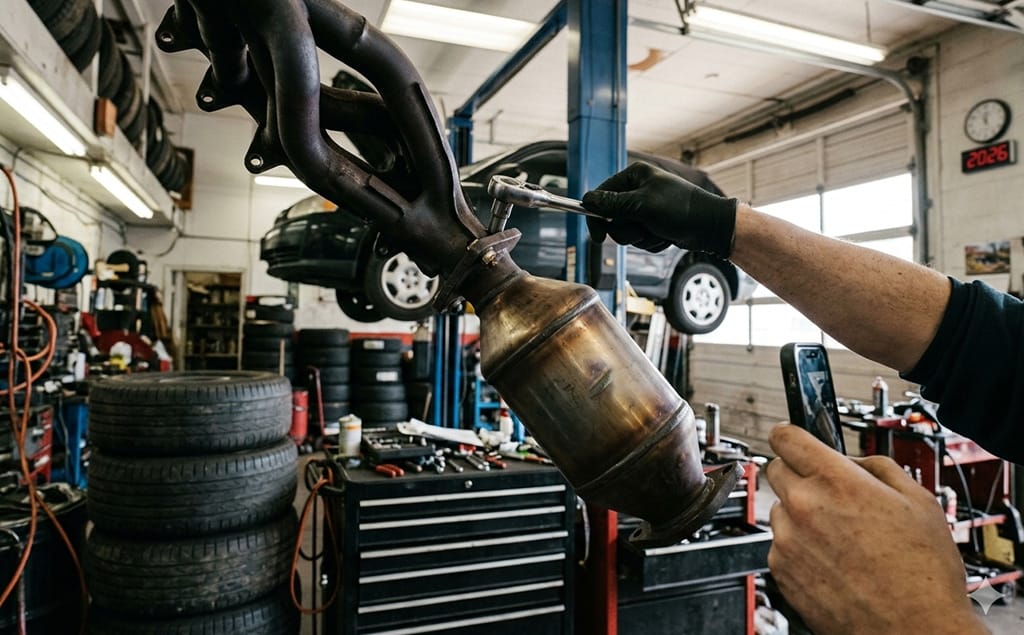
The first step in addressing a potential catalytic converter issue is a thorough diagnostic workflow. This should start with a scan of the vehicle’s onboard computer for diagnostic trouble codes. A P0420 code is a strong indicator of a converter issue. However, a good technician won’t stop there. They will also perform a visual inspection of the converter and the exhaust system for any signs of physical damage. A back pressure test is another effective method to check for a clogged converter. This involves installing a pressure gauge into the oxygen sensor port to measure the pressure of the exhaust gases. High pressure is a clear sign of a blockage.
Cette approche globale est essentielle, car les symptômes d'un convertisseur catalytique défaillant peuvent souvent être confondus avec d'autres problèmes. Par exemple, un moteur qui a des ratés peut entraîner une perte de puissance et une baisse de consommation de carburant, mais la cause profonde est une bougie défectueuse, et non le convertisseur lui-même. Le processus de diagnostic permet d'identifier et de corriger le véritable problème, évitant ainsi des réparations et des coûts inutiles.
2. Quand remplacer ou nettoyer
La décision de remplacer ou de nettoyer un convertisseur catalytique dépend de la nature et de la gravité du problème. Si le convertisseur est endommagé, fondu ou complètement obstrué, son remplacement est la seule option. En revanche, s'il est partiellement obstrué ou contaminé par des dépôts de carbone, un nettoyage professionnel peut être une solution viable. Il existe des services de nettoyage spécialisés et des agents chimiques conçus pour dissoudre ces dépôts et restaurer partiellement le fonctionnement du convertisseur.
Bien que le nettoyage puisse être une solution économique dans certains cas, il ne constitue pas une solution définitive. Il faut résoudre le problème sous-jacent à l'origine du blocage ou de la contamination. Si le moteur tourne encore riche ou si un capteur est défectueux, le convertisseur risque de se colmater à nouveau. Le remplacement est une solution plus durable et constitue souvent le seul moyen de garantir que le véhicule respecte les normes d'émissions.
3. Solutions de service OEM et après-vente
Pour remplacer un convertisseur catalytique, les entreprises ont deux options principales : les pièces d'origine (OEM) ou les solutions de rechange. Les convertisseurs catalytiques d'origine sont identiques à ceux d'origine. Ils sont fabriqués selon les spécifications exactes du constructeur et sont garantis conformes aux normes d'émissions. Cependant, ils constituent généralement l'option la plus coûteuse.
Les convertisseurs catalytiques de rechange constituent une alternative plus abordable. Ils se déclinent en deux types principaux : universels et à montage direct. Les convertisseurs universels sont moins chers, mais nécessitent des soudures et des modifications pour leur montage, ce qui peut être long. Les convertisseurs à montage direct de rechange sont conçus pour se visser directement sur le système d'échappement du véhicule, ce qui en fait un bon compromis entre prix et facilité d'installation. Il est important de noter que tous les convertisseurs de rechange ne se valent pas ; certains peuvent ne pas être aussi efficaces ou durables que les pièces d'origine. Pour les entreprises, le choix entre les pièces d'origine et les pièces de rechange se résume souvent à un équilibre entre coût, fiabilité et conformité aux normes d'émissions.
Protéger le convertisseur catalytique de votre véhicule
Prévenir le vol de convertisseur catalytique
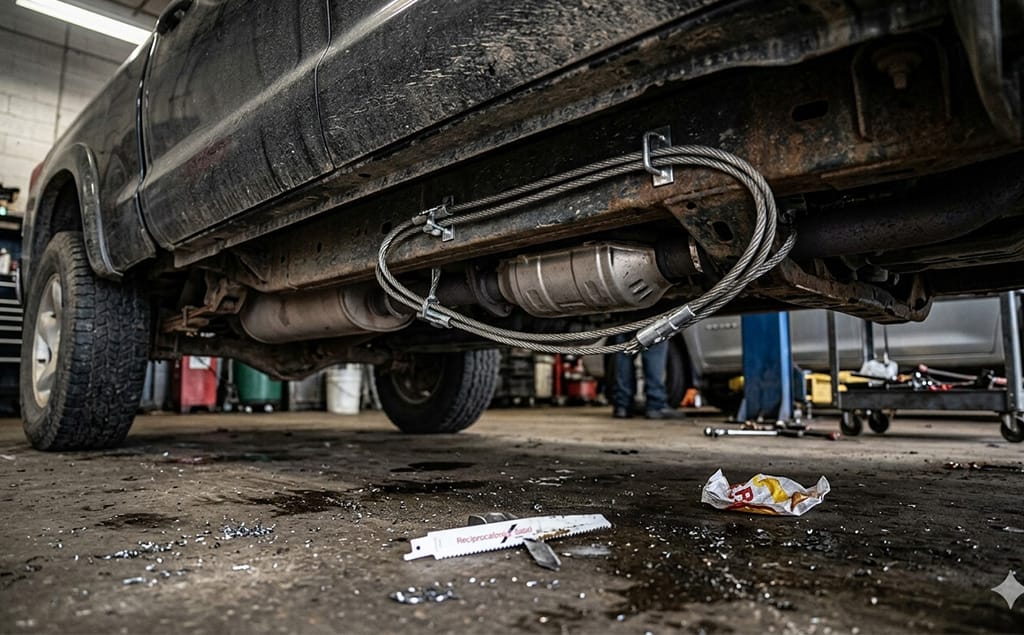
En raison de la valeur métaux précieux (tel que rhodium, platine, et palladium) à l'intérieur du convertisseur, le vol est une préoccupation croissante. Pour protéger votre véhicule, pensez à installer un bouclier de convertisseur catalytique ou en utilisant un verrouillage. Marquer votre convertisseur avec un identifiant unique, tel que votre numéro d'identification du véhicule, peut également dissuader les voleurs.
Résumé à puces :
- Témoin de contrôle du moteur : Un code P0420 est le signe le plus définitif d’un convertisseur catalytique défaillant.
- Problèmes de performances : Recherchez une perte de puissance, une mauvaise accélération et une baisse du rendement énergétique.
- Bruits et odeurs étranges : Un bruit de cliquetis ou une odeur d’« œuf pourri » sont des indicateurs clés.
- Le diagnostic est la clé : Utilisez des outils de diagnostic professionnels et des tests de contre-pression pour confirmer le problème.
- Nettoyer ou remplacer : Le nettoyage est une option pour certains problèmes, mais le remplacement est souvent une solution plus permanente.
- OEM vs marché secondaire : Choisissez entre des pièces OEM coûteuses et fiables et des convertisseurs de rechange plus abordables, mais potentiellement moins efficaces.