Discover the fascinating history of the catalytic converter, from its early prototypes to today’s highly efficient three-way systems. Learn how this invention revolutionized emissions control, the science behind it, and its future in a world shifting toward electric vehicles.
Why Catalytic Converters Became Necessary
By the mid-20th century, cars had become symbols of freedom and economic growth. But with millions of vehicles on the road, another reality emerged: toxic exhaust fumes. Cities such as Los Angeles suffered from smog so dense that residents compared it to fog mixed with burning rubber. Scientists discovered that hydrocarbons, carbon monoxide, and nitrogen oxides were combining under sunlight to form ground-level ozone and photochemical smog. The health effects were severe — asthma, eye irritation, and cardiovascular risks. Governments, especially in California, began searching for a way to cut emissions at the source. The solution would come in the form of catalytic converters, but only after decades of trial, error, and scientific persistence.
The First Catalysts and Experiments (Early 20th Century)
Although automotive catalytic converters entered mass production in the 1970s, their roots stretch back much further. French engineer Eugène Houdry, a pioneer in catalytic cracking for oil refining, recognized the potential of catalysts in reducing exhaust emissions. In the 1950s, Houdry patented devices to control pollutants from industrial smokestacks and later for gasoline engines. However, the technology faced severe limitations. Early catalysts lacked durability, and gasoline of the era contained tetraethyl lead — a fuel additive that quickly “poisoned” catalyst surfaces, rendering them useless. These first experiments were not commercially viable, but they provided a foundation of chemical knowledge that researchers would later refine into practical solutions.
The 1970s Emissions Crisis and Regulatory Push
The turning point came with the U.S. Clean Air Act of 1970, which mandated dramatic reductions in vehicle emissions. Automakers were required to cut hydrocarbon and carbon monoxide emissions by 90% over the next five years — a nearly impossible challenge with existing technology. At the same time, California Air Resources Board (CARB) introduced even tougher state standards. For the first time, legislation created real urgency for automakers to invest in catalytic converter development. Without legal pressure, it is unlikely the industry would have advanced so rapidly. Public health concerns, combined with political will, set the stage for one of the most important environmental technologies in history.
The First Production Catalytic Converters (1975 Onwards)
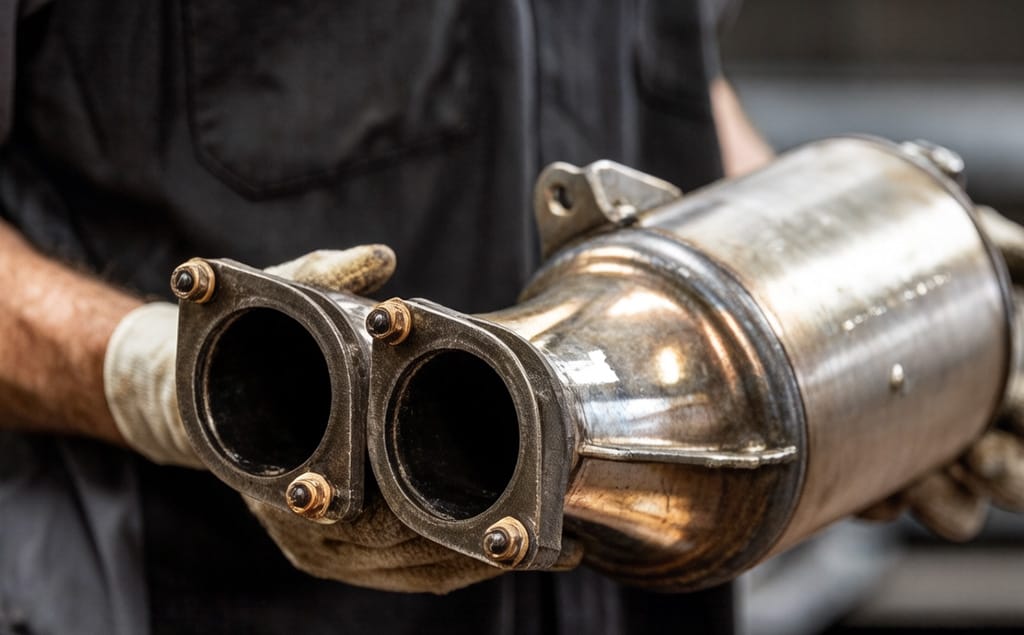
In 1975, American automakers such as General Motors and Ford introduced the first production vehicles equipped with catalytic converters. These early systems were “two-way” oxidation catalysts, designed to reduce carbon monoxide (CO) into carbon dioxide (CO₂) and hydrocarbons (HC) into water (H₂O). The key to their effectiveness was the use of precious metals — primarily platinum and palladium — deposited on a ceramic honeycomb substrate. While revolutionary, these converters had limitations. They could not reduce nitrogen oxides (NOx), one of the major contributors to smog. Still, they marked a new era in automotive design, proving that chemistry could solve real-world environmental problems.
The Shift to Unleaded Gasoline
One of the biggest barriers to catalytic converter adoption was leaded gasoline. Lead was widely used to improve engine performance and reduce knocking, but it coated and deactivated catalytic surfaces within weeks. To make catalytic converters viable, governments pushed fuel reformulation. Starting in the mid-1970s, the United States phased out leaded gasoline, and other countries followed. By the 1990s, unleaded fuel had become the global standard. This shift not only allowed catalytic converters to function properly but also eliminated one of the most toxic additives in fuel history, producing enormous health benefits worldwide.
Introduction of the Three-Way Catalyst (TWC) in the 1980s
The 1980s brought a game-changing innovation: the three-way catalytic converter. Unlike two-way systems, TWCs could simultaneously reduce hydrocarbons, carbon monoxide, and nitrogen oxides. This was achieved by combining platinum and palladium for oxidation reactions with rhodium for NOx reduction. The breakthrough was further enhanced by the addition of lambda (oxygen) sensors, which monitored exhaust oxygen levels and allowed precise fuel-air ratio control. With TWCs, automakers could meet stricter standards without sacrificing performance. Today, the three-way catalyst remains the backbone of global emissions control technology.
Material & Design Improvements (1990s–2000s)
As emission standards grew tougher, catalytic converters evolved. Engineers optimized washcoats — the thin porous layer that holds precious metals — to increase surface area and efficiency. Substrates shifted from bulky pellets to lightweight ceramic honeycombs and, in some applications, metallic foils. Advances in thermal durability allowed converters to withstand extreme temperatures from modern high-performance engines. Manufacturers also improved resistance to “thermal aging,” a process that reduces catalyst activity over time. By the 2000s, converters had become smaller, lighter, and more effective than ever, while still delivering compliance across a wide range of vehicles.
Catalytic Converters in the Era of Stricter Standards
Tahun 1990-an dan 2000-an menyaksikan harmonisasi global undang-undang emisi. Eropa memperkenalkan standar Euro (Euro 1 pada tahun 1992 hingga Euro 6 pada tahun 2010-an), yang setiap tahapannya menuntut pengurangan emisi yang signifikan. Amerika Serikat memperkenalkan standar Tier 1, Tier 2, dan Tier 3. Peraturan ini mewajibkan katalis tidak hanya untuk memenuhi batas emisi saat baru, tetapi juga untuk mempertahankan kinerjanya di atas 100.000 mil atau lebih. Akibatnya, produsen mobil berinvestasi dalam penggunaan logam mulia yang lebih tinggi dan desain yang lebih canggih. Di pasar global, konverter katalitik menjadi komponen universal, tidak lagi opsional tetapi wajib untuk kepatuhan.
Tantangan & Inovasi Saat Ini
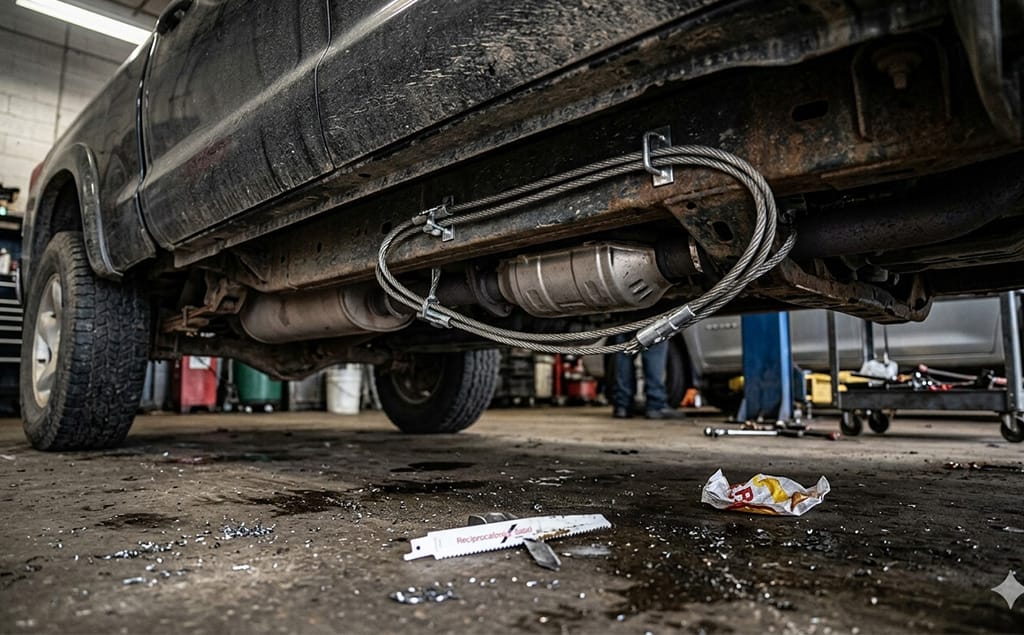
Meskipun telah sukses selama puluhan tahun, konverter katalitik masih menghadapi tantangan. Salah satunya adalah "emisi start-dingin" — tingginya tingkat polutan yang dilepaskan sebelum konverter mencapai suhu operasi. Untuk mengatasi hal ini, para insinyur bereksperimen dengan katalis yang dipanaskan secara elektrik (EHC), konverter kopling dekat di dekat mesin, dan insulasi termal canggih. Kendaraan hibrida, yang sering menyalakan dan mematikan mesin, menambah kompleksitas karena konverter mendingin selama fase mati mesin. Di saat yang sama, pencurian konverter katalitik telah melonjak karena nilai platinum, paladium, dan rhodium, yang menciptakan masalah keamanan dan rantai pasokan baru. Teknologi ini terus berkembang untuk menyeimbangkan kinerja, daya tahan, dan keamanan.
Prospek Masa Depan: Melampaui Pembakaran Internal
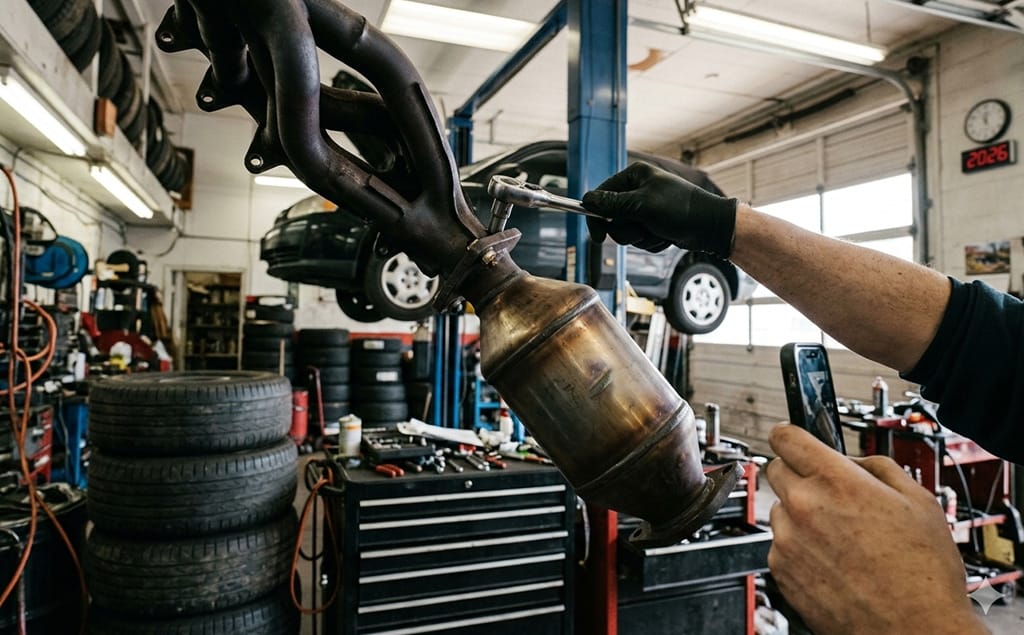
Seiring industri otomotif beralih ke elektrifikasi, beberapa pihak mempertanyakan apakah konverter katalitik akan menjadi usang. Meskipun kendaraan listrik sepenuhnya tidak memerlukannya, mobil hibrida dan hibrida plug-in masih sangat bergantung pada sistem katalis canggih. Lebih lanjut, teknologi katalitik akan terus berperan dalam truk tugas berat, peralatan konstruksi, dan aplikasi industri. Daur ulang konverter bekas juga menjadi krusial, baik untuk memulihkan logam mulia maupun untuk mendukung ekonomi sirkular. Ke depannya, konverter katalitik mungkin akan menurun penggunaannya pada mobil penumpang, tetapi tetap vital di berbagai sektor selama beberapa dekade mendatang.
Kesimpulan
Konverter katalitik lebih dari sekadar perangkat keras — ia merupakan tonggak sejarah dalam rekayasa lingkungan. Dari eksperimen awal Houdry hingga penemuannya saat ini, katalis tiga arahPenemuan ini telah menyelamatkan jutaan nyawa dengan mengurangi emisi beracun dan membersihkan udara yang kita hirup. Penemuan ini menjadi bukti bahwa regulasi, inovasi, dan kimia dapat bekerja sama untuk memecahkan masalah global yang mendesak. Seiring dunia beralih ke kendaraan listrik, kisah konverter katalitik belum berakhir — ia terus menginspirasi pendekatan baru menuju mobilitas yang lebih bersih dan industri yang berkelanjutan.