Introduction: The Invisible High-Value Component
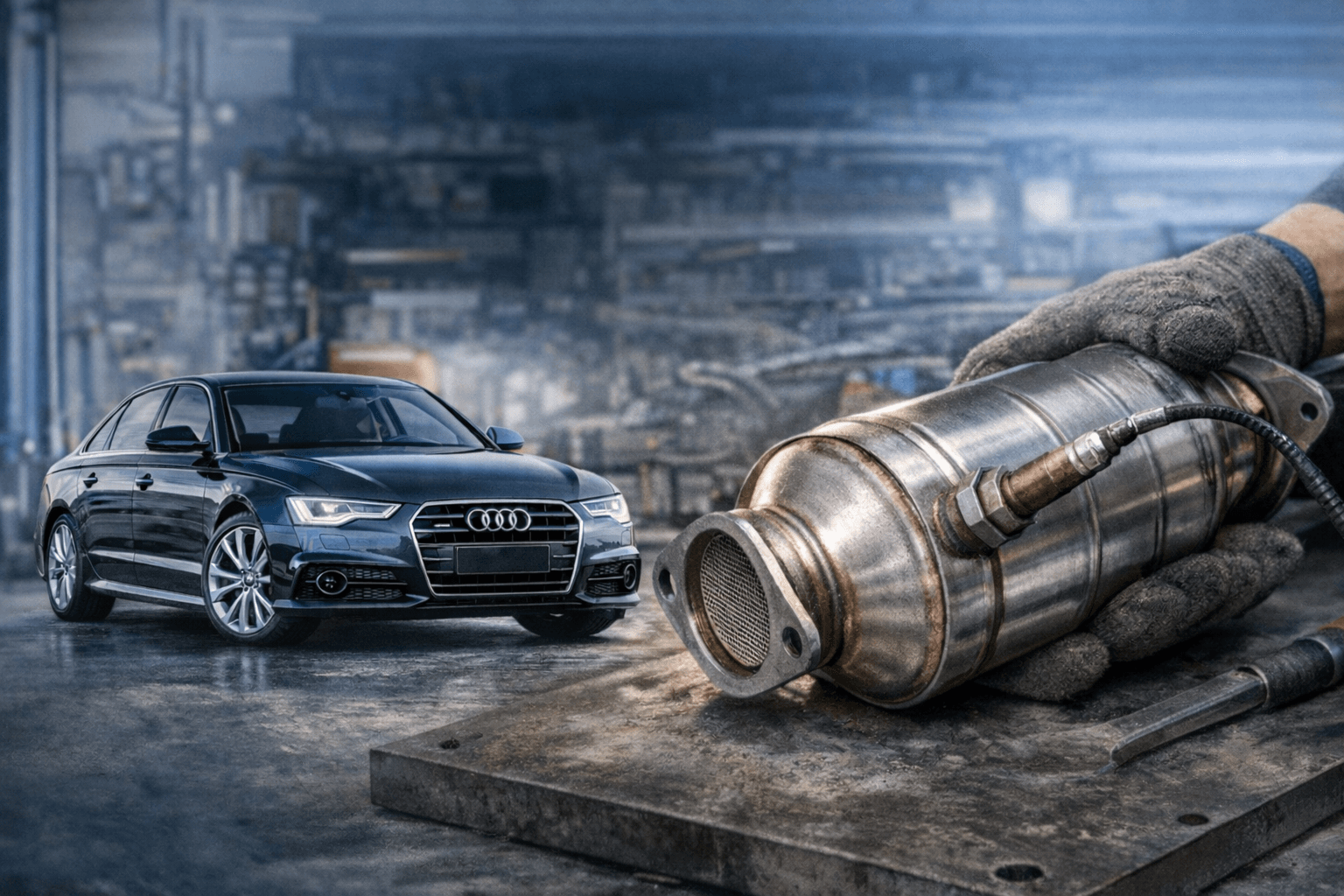
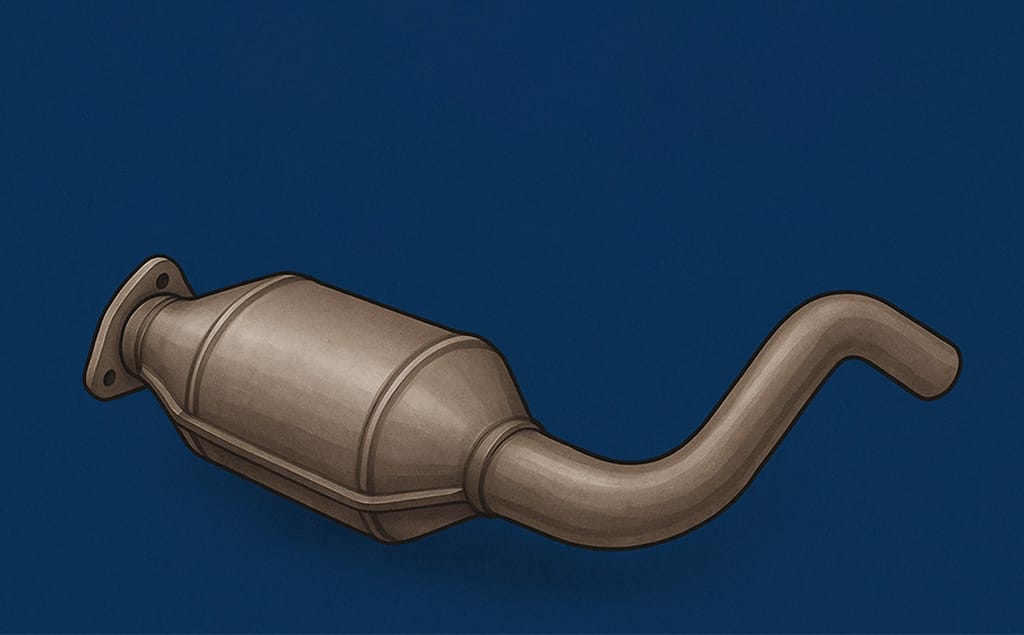
The exhaust system of a modern vehicle remains a mystery to most drivers until a dashboard warning light flickers. At the heart of this system sits the konverter katalitik tiga arah. This component represents one of the most technologically advanced parts of an internal combustion engine. It serves as a mobile chemical laboratory. It transforms toxic engine byproducts into breathable air through complex reactions.
However, when this part fails, vehicle owners face a massive financial decision. Replacing a konverter katalitik tiga arah requires navigating a landscape of regional laws, metal markets, and mechanical designs. This guide explains exactly what you are paying for. We provide the data you need to avoid the common “mechanic’s markup” on your next repair bill.
The Internal Science: How a Three Way Catalytic Converter Works
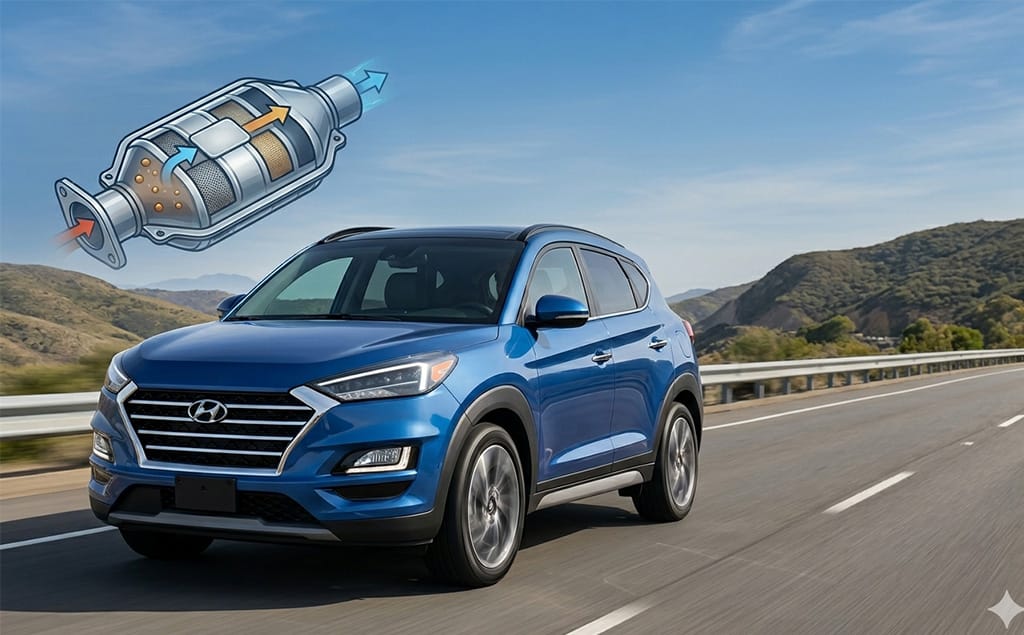
A konverter katalitik tiga arah performs three critical chemical tasks simultaneously. First, it utilizes “reduction” to pull oxygen away from nitrogen oxides ($NOx$). This process leaves behind harmless nitrogen gas. Second, it employs “oxidation” to turn carbon monoxide ($CO$) into carbon dioxide ($CO_2$). Third, it oxidizes unburnt hydrocarbons ($HC$) into water vapor.
To achieve these reactions at high temperatures, manufacturers use a ceramic honeycomb structure. They coat this “substrate” with a wash-coat of precious metals. These metals—Platinum, Palladium, and Rhodium—act as the catalysts. They do not wear out during the reaction itself. However, they can become “poisoned” by engine oil, coolant, or leaded fuel. When the surface area of these metals degrades, the konverter katalitik tiga arah loses its efficiency.

Understanding the Cost Gap: Why Some Units Cost $3,000
The price of a konverter katalitik tiga arah depends on design and precious metal density.
1. Manifold-Integrated Assemblies
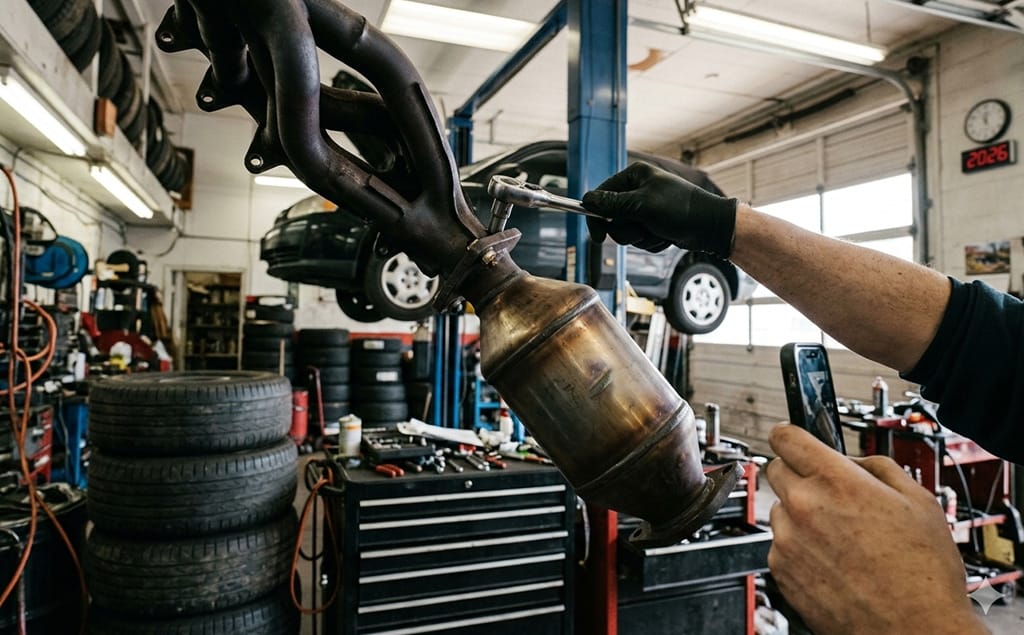
Many modern vehicles, such as the Mazda 3 or various V6 SUVs, use “manifold-integrated” units. In this design, the manufacturer welds the konverter katalitik tiga arah directly into the exhaust manifold.
- The Cost Factor: You cannot simply replace the internal filter. You must buy the entire heavy cast-iron or stainless-steel assembly.
- Price Range: These often range from $600 to $3,000.
2. Direct-Fit vs. Universal Units
If your car uses a “mid-pipe” konverter katalitik tiga arah, you have two main choices:
- Pas Langsung: These units match original factory geometry exactly. They include specific flanges and sensor bungs. You can often install these yourself with basic tools.
- Universal: These are generic canisters. A specialized muffler shop must cut your old pipes and weld the new konverter katalitik tiga arah in place. While the part is cheaper, high-quality welding labor pushes the final bill higher.
Regional Regulations: The “California Tax” Explained
Geography dictates your repair bill more than your car’s brand. The United States maintains two primary emission categories: Federal (Badan Perlindungan Lingkungan (EPA)) and California (KARBOHIDRAT).
If you live in California, New York, Colorado, or Maine, you must install a CARB-compliant konverter katalitik tiga arah. These units require a much higher “loading” of precious metals. This ensures they remain efficient for over 100,000 miles.
- Federal Unit Average: $400 – $600
- CARB Unit Average: $1,000 – $1,600
| Vehicle Model | Standar Emisi | Part Type | Estimated Total Cost (2026) |
|---|---|---|---|
| 2020 Toyota Camry SE | Federal (NC, TX) | Pas Langsung | $1,255 – $1,795 |
| 2019 Chevrolet Equinox | Federal (FL, GA) | Pas Langsung | $1,505 – $1,840 |
| 2021 Volkswagen Passat | CARB (CA, NY) | Manifold-Unit | $2,386 – $2,529 |
| 2018 Ford F-150 Raptor | Federal (AL, TN) | Dual-Cat Set | $1,800 – $3,474 |
| 2015 Honda Civic | Universal | Weld-In | $450 – $750 |
Troubleshooting: Is Your Converter Actually Broken?
Mechanics often misdiagnose konverter katalitik tiga arah failure. Because the repair yields high profits, some shops skip proper testing. Follow these diagnostic steps first:
1. Check Oxygen Sensors
Modern cars use two oxygen sensors per konverter katalitik tiga arah. One sits before the unit (upstream) and one sits after (downstream). The computer compares data between the two. If an upstream sensor sends bad data, it triggers a “P0420” efficiency code. Replacing a $100 sensor often saves a $2,000 converter job.
2. Inspect for Exhaust Leaks
Even a tiny pinhole leak in the manifold can suck in fresh air. This extra oxygen confuses the downstream sensor. The computer then assumes the konverter katalitik tiga arah has failed. Always check for soot marks around the gaskets before buying new parts.
3. The Back-Pressure Test
Ask your technician to perform a back-pressure test. They remove the upstream sensor and install a pressure gauge. If the pressure exceeds 1.5 PSI at 2,500 RPM, the konverter katalitik tiga arah is physically clogged. If the pressure is normal, the unit might just be “chemically tired.” Some specialized cleaning treatments can occasionally restore these units.
The Global Scrap Market and Theft Prevention
Itu konverter katalitik tiga arah is currently the most stolen automotive part globally. This stems from the “scrap value” of the internal metals.
- Platinum: Crucial for various industrial applications.
- Paladium: Essential for high-end electronics.
- Rodium: The rarest of the three. Market prices for Rhodium have historically spiked as high as $20,000 per ounce.
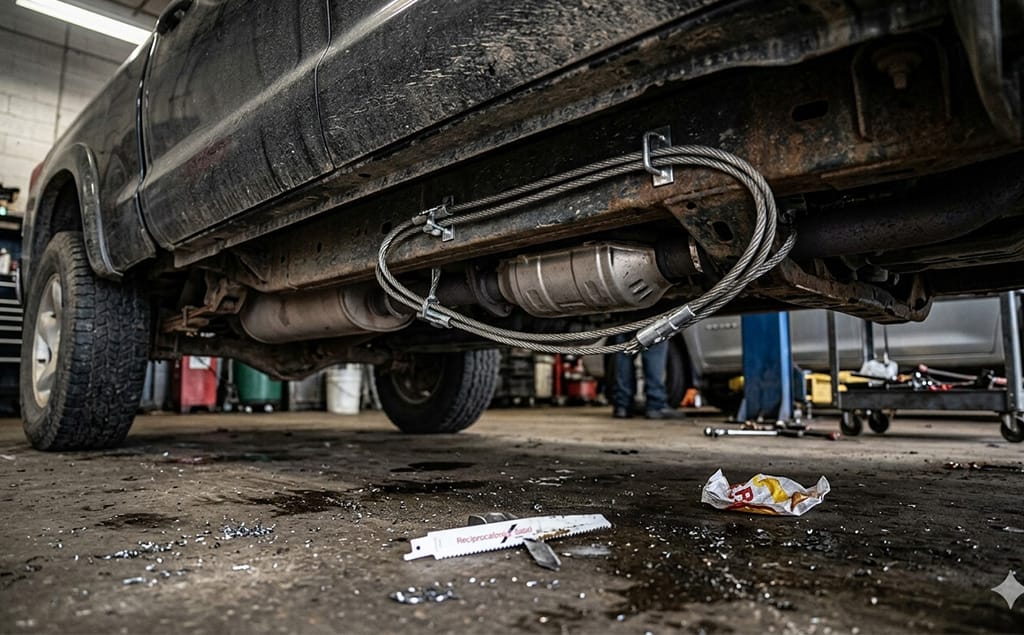
Thieves can remove a konverter katalitik tiga arah in under 60 seconds with a battery-powered saw. To protect your vehicle, we recommend these steps:
- Etch the VIN: Engrave your Vehicle Identification Number onto the metal shell.
- Install a Shield: Purchase a “Cat Cage” or a thick skid plate to block access.
- Park Strategically: Park in well-lit areas or close to walls to limit undercarriage access.

Kesimpulan
Replacing a konverter katalitik tiga arah is a significant financial event. However, research and grit can reduce your costs. Start by verifying the failure with a back-pressure test. Confirm whether you need a CARB-compliant unit or a Federal one. If you drive an older vehicle, the universal weld-on path offers the best value. For newer vehicles, stick to direct-fit units to maintain engine performance. Always shop for reputable parts and ask for a second opinion.