소개
그만큼 3원 촉매 변환기 serves as the heart of a vehicle’s emissions control system. For Hyundai Tucson owners, this component remains vital for both engine health and environmental compliance. However, when this part fails, drivers often encounter a massive range of repair quotes. Replacing a 3원 촉매 변환기 on a Hyundai Tucson involves more than just a simple part swap.According to official EPA emissions guidelines, maintaining a functional three way catalytic converter is mandatory for vehicle compliance.
A high-quality replacement ensures that your SUV meets strict air quality standards while maintaining optimal fuel efficiency. This article breaks down the complex pricing structures, technical requirements, and labor factors that define the cost of a new 3원 촉매 변환기 for your Hyundai Tucson. We provide the clarity you need to navigate dealership quotes and independent shop estimates with confidence.
삼원 촉매 변환기의 과학적 원리
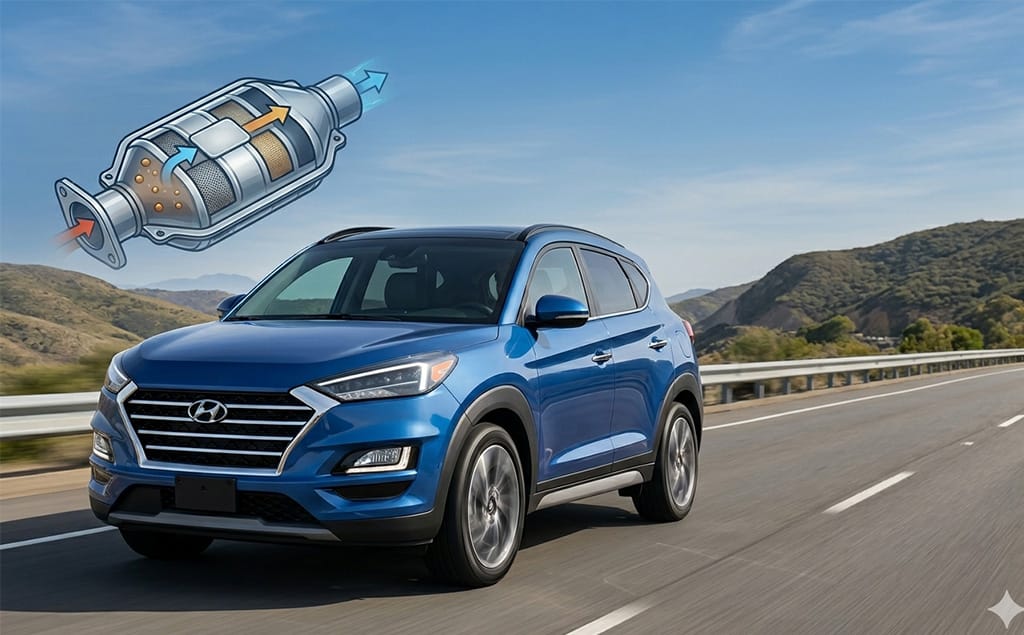
Every modern Hyundai Tucson equipped with an internal combustion engine utilizes a 3원 촉매 변환기. This device sits within the exhaust stream to neutralize toxic byproducts of combustion. It earns the name “three way” because it simultaneously addresses three specific pollutants:
- 질소산화물(NOx): The converter reduces these into harmless nitrogen and oxygen.
- 일산화탄소(CO): The device oxidizes this poisonous gas into carbon dioxide.
- Unburned Hydrocarbons (HC): The catalyst converts raw fuel vapors into water vapor and carbon dioxide.
Inside the unit, a ceramic honeycomb structure hosts a coating of precious metals. Platinum, palladium, and rhodium act as the catalysts for these chemical reactions. Because these metals trade at high commodity prices, the raw material cost of a 3원 촉매 변환기 remains inherently high.
Comprehensive Cost Breakdown for Hyundai Tucson
The total expense for a Hyundai Tucson 3원 촉매 변환기 replacement fluctuates based on the part source and the complexity of the installation. In 2026, owners should expect the following price ranges for parts and professional services.
Replacement Cost Comparison Table
| 구성 요소 유형 | Part Price (USD) | Total Installed Cost | 최상의 사용 사례 |
|---|---|---|---|
| Universal Aftermarket | $170 – $650 | $500 – $1,200 | Older models (10+ years) |
| Direct-Fit Aftermarket | $650 – $1,350 | $1,100 – $1,900 | Balance of quality and price |
| OEM (Genuine Hyundai) | $1,850 – $3,500+ | $2,500 – $4,500+ | Newer models / Warranty |
| CARB-Compliant Unit | $1,200 – $2,800 | $1,850 – $3,800 | CA, NY, CO, ME residents |
Labor and Diagnostic Fees
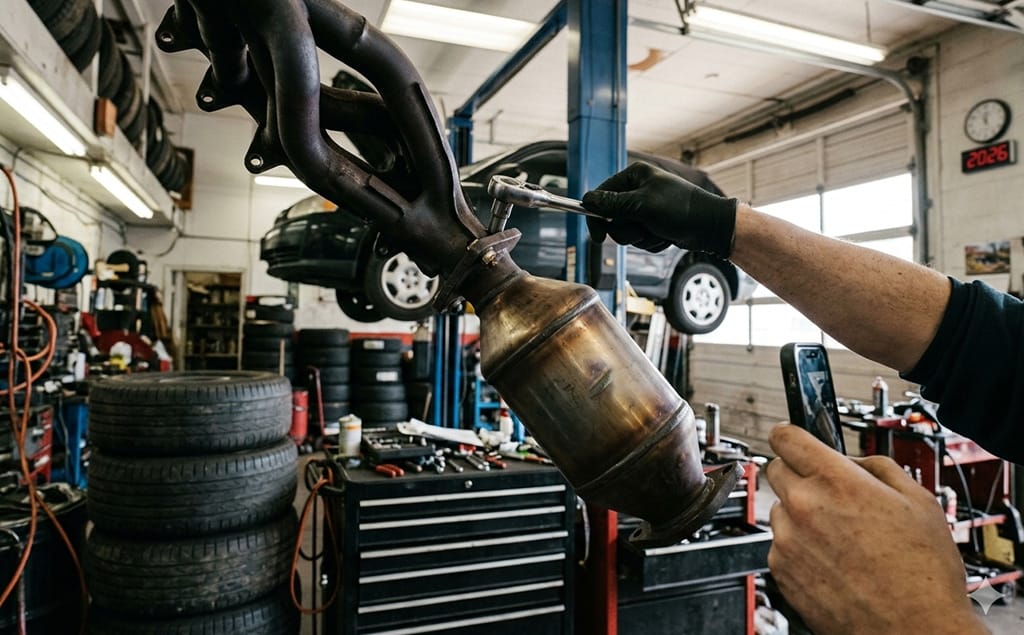
Professional technicians typically charge between $150 and $450 for the physical installation. However, labor costs rise if the 3원 촉매 변환기 has rusted onto the exhaust manifold. Technicians must also perform extensive diagnostic tests to identify why the original unit failed.
Why Tucson Owners Face Quotes Over $4,000
Many Hyundai Tucson owners express shock when a dealership presents a quote exceeding $4,000. Several technical factors justify these high figures.
First, the 2.0L and 2.4L engines often feature an integrated design. In these models, the manufacturer welds the 3원 촉매 변환기 directly to the exhaust manifold. You cannot buy the catalyst alone. You must purchase the entire heavy-cast manifold assembly.
Second, regional regulations play a massive role. States following California Air Resources Board (CARB) standards require converters with higher precious metal loads. A “46-state legal” part may cost $400. The CARB-compliant equivalent for the same Tucson may cost $1,500. Finally, dealerships use Original Equipment Manufacturer (OEM) parts. These parts carry a significant premium but offer a guaranteed fit and longer lifespan.
Critical Symptoms of a Failing Catalyst
A malfunctioning 3원 촉매 변환기 creates distinct performance issues. Recognizing these early can prevent a total engine breakdown.
- Sulfuric Odor: A “rotten egg” smell indicates the catalyst no longer converts hydrogen sulfide.
- Restricted Power: A clogged internal honeycomb creates backpressure. This makes the Tucson feel sluggish during acceleration.
- Rattling Noises: A shattered ceramic substrate bounces inside the metal housing. This creates a metallic rattling sound at idle.
- 엔진 점검 표시등: The vehicle’s computer monitors the 3원 촉매 변환기 via oxygen sensors. A P0420 code almost always points to a degradation in catalyst efficiency.
The Importance of System-Wide Diagnostics
에이 3원 촉매 변환기 rarely dies of old age. Usually, an upstream engine problem kills it. If your Tucson burns oil or has a persistent engine misfire, raw fuel enters the converter. This causes the internal temperature to spike. The extreme heat melts the precious metal coating.
Mechanics often recommend replacing the Oxygen (O₂) sensors 그리고 Mass Air Flow (MAF) sensor during the repair. This increases the upfront cost by $300 to $600. However, it protects your new investment. Installing a new 3원 촉매 변환기 on a car that still misfires will destroy the new part within weeks.
Legal and Environmental Implications
Federal and state laws strictly regulate emissions components. Operating a Hyundai Tucson without a functioning 3원 촉매 변환기 is illegal on public roads. Beyond the risk of heavy fines, a faulty converter releases significant amounts of smog-forming pollutants. Most regions require a passed emissions test to renew vehicle registration. A faulty converter ensures a failing grade on these tests.
Strategies to Reduce Replacement Expenses
Savvy owners can minimize the financial impact through several strategies:
- Verify the Federal Emissions Warranty: Many owners forget that the 3원 촉매 변환기 carries a mandatory federal warranty. For many Tucson models, this lasts 8 years or 80,000 miles.
- Consult Independent Muffler Shops: Specialty exhaust shops can often weld in a universal 3원 촉매 변환기. This saves thousands of dollars compared to replacing the entire manifold.
- Choose Direct-Fit Aftermarket Parts: Brands like MagnaFlow or Walker offer “Direct-Fit” units. These parts bolt on exactly like OEM parts but cost significantly less.
결론
The cost of a 3원 촉매 변환기 for a Hyundai Tucson represents a significant but necessary investment. While prices range from $1,000 to over $4,000, your engine type and local laws dictate the final bill. Always prioritize a technician who identifies the root cause of the failure. By balancing the choice between OEM and aftermarket parts, you can restore your Tucson’s performance and remain compliant with environmental standards.