Wstęp
Modern automotive engineering prioritizes the reduction of harmful atmospheric pollutants. The katalizator trójdrożny serves as the cornerstone of this environmental mission. This sophisticated device transforms toxic engine byproducts into safer gases before they exit the tailpipe. However, the system is not infallible. Vehicle owners frequently encounter diagnostic trouble codes (DTCs) such as P0420 and P0430. These specific alerts indicate that the catalyst efficiency has dropped below the required operating threshold. Understanding these codes is essential for maintaining vehicle performance and environmental compliance.
The Historical Context of Emissions Control
The journey toward the modern katalizator trójdrożny began in the early 1970s. Before this era, automobiles released significant amounts of unrefined pollutants. The United States passed the Clean Air Act in 1970, which mandated a 90% reduction in emissions. This legislation forced the automotive industry to innovate rapidly. Early solutions included the two-way catalytic converter, which only handled hydrocarbons and carbon monoxide. However, nitrogen oxides remained a significant challenge.
In 1973, engineers at the Engelhard Corporation developed the first katalizator trójdrożny. John J. Mooney and Carl D. Keith led this groundbreaking project. Their design utilized a combination of precious metals to address all three major pollutants simultaneously. By 1975, most new vehicles in the United States featured these devices. This technological shift marked the beginning of a new era in environmental protection. Over the decades, the design has evolved. Modern converters are more efficient and durable than their predecessors. They now incorporate advanced oxygen storage materials and improved washcoat technologies.
The Science of the Three Way Catalytic Converter
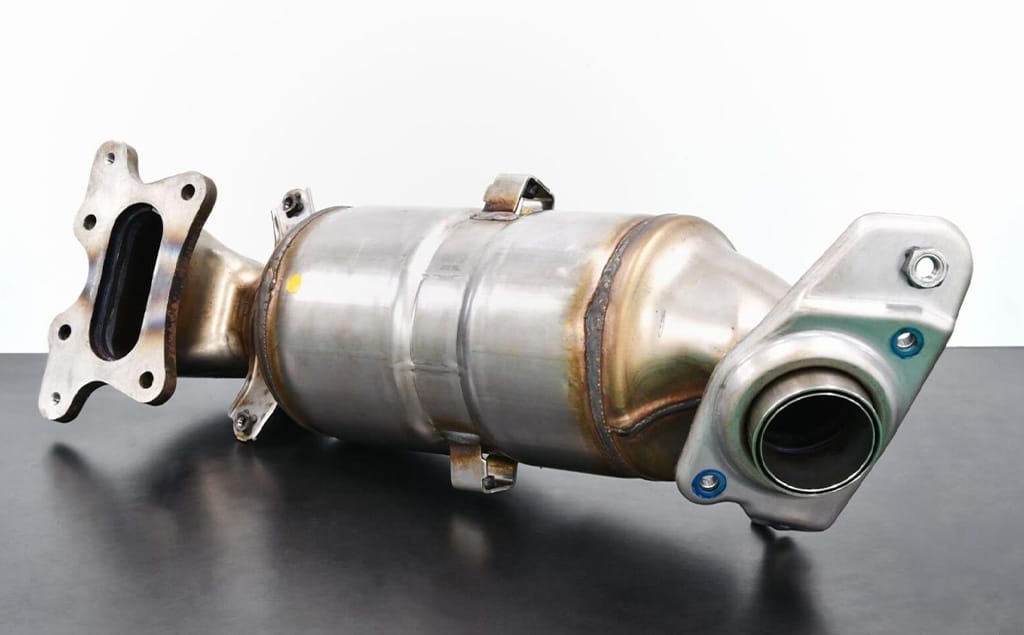
Ten katalizator trójdrożny is a marvel of chemical engineering. It performs three distinct chemical reactions simultaneously. First, it handles the reduction of nitrogen oxides (NOx) into elemental nitrogen and oxygen. This step removes the primary components of smog. Second, it facilitates the oxidation of carbon monoxide (CO) into carbon dioxide (CO2). Third, it oxidizes unburnt hydrocarbons (HC) into water vapor and carbon dioxide. These processes occur within a ceramic or metallic honeycomb structure. Manufacturers coat this substrate with a “washcoat” containing precious metals. Platinum, palladium, and rhodium act as the active catalysts in these reactions.
The device requires a precise environment to function correctly. It must reach a “light-off” temperature, typically between 400 and 600 degrees Fahrenheit. Once active, the internal temperatures can exceed 1,200 degrees Fahrenheit. The engine control module (ECM) maintains a stoichiometric air-fuel ratio of 14.7:1 to optimize these reactions. If the mixture is too rich, the converter cannot oxidize the excess fuel. If the mixture is too lean, it cannot reduce nitrogen oxides effectively. Chemical poisoning also threatens the catalyst. Lead, phosphorus, and silicone can coat the precious metals. This coating prevents the exhaust gases from contacting the catalyst material.

Detailed Chemical Equations
To understand the efficiency of the katalizator trójdrożny, we must look at the chemistry. The reduction reaction for nitrogen oxides follows this general path: 2NO -> N2 + O2 2NO2 -> N2 + 2O2 In these reactions, the rhodium catalyst strips the nitrogen atoms from the oxygen. The nitrogen atoms then pair up to form stable N2 gas.
The oxidation reactions for carbon monoxide and hydrocarbons are equally vital: 2CO + O2 -> 2CO2 CxH2x+2 + [(3x+1)/2]O2 -> xCO2 + (x+1)H2O Platinum and palladium facilitate these reactions by providing a surface for oxygen to react with the pollutants. The presence of oxygen storage components, like cerium oxide, helps maintain these reactions during brief periods of lean or rich operation.
The Role of Cerium and Oxygen Storage
A critical component of the katalizator trójdrożny is the oxygen storage capacity (OSC). Manufacturers add cerium oxide (CeO2) to the catalyst washcoat for this purpose. Cerium acts as a buffer for oxygen. When the engine runs lean (excess oxygen), the cerium absorbs the extra oxygen. When the engine runs rich (excess fuel), the cerium releases the stored oxygen to facilitate the oxidation of CO and HC.
The ECM monitors the OSC to determine the health of the catalyst. A new converter has a high storage capacity, which results in a very steady downstream oxygen sensor signal. As the converter ages or suffers damage, its ability to store oxygen decreases. This loss of storage capacity is exactly what triggers the P0420 and P0430 codes. If the cerium material becomes contaminated or thermally damaged, the converter loses its buffering ability. This leads to rapid fluctuations in the downstream sensor voltage, signaling the ECM that the catalyst is no longer efficient.
Understanding OBD-II Codes: P0420 and P0430
The On-Board Diagnostics II (OBD-II) system monitors the exhaust system in real-time. It specifically evaluates the storage capacity and conversion efficiency of the katalizator trójdrożny. The P0420 code refers to “Catalyst System Efficiency Below Threshold (Bank 1).” Bank 1 is the side of the engine that contains the number one cylinder. The P0430 code refers to the same issue on Bank 2. This code appears in vehicles with V-type or boxer engines that utilize dual exhaust paths.
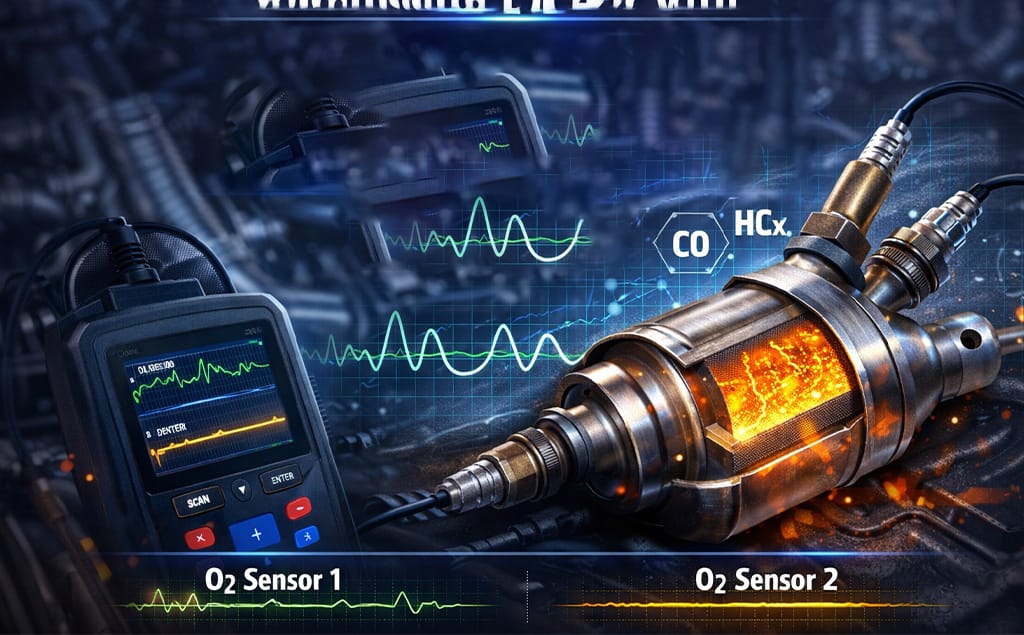
The ECM uses two oxygen sensors to perform this evaluation. The upstream sensor (Sensor 1) measures oxygen levels before the converter. The downstream sensor (Sensor 2) measures oxygen levels after the converter. In a functional system, the upstream sensor cycles rapidly. This cycling reflects the ECM’s constant adjustment of the fuel mixture. Conversely, the downstream sensor should remain relatively stable. A steady downstream voltage indicates that the katalizator trójdrożny is successfully storing and using oxygen. If the downstream sensor mimics the upstream sensor’s fluctuations, the ECM triggers a fault code.
Symptoms of a Failing Catalyst System
The most common symptom is the illumination of the Check Engine Light (CEL). The ECM stores the P0420 or P0430 code as soon as it detects a failure during two consecutive driving cycles. Drivers may also notice a significant drop in fuel economy. A failing katalizator trójdrożny often increases backpressure in the exhaust system. This restriction forces the engine to work harder to expel gases. Consequently, the vehicle may feel sluggish or hesitate during heavy acceleration.
A strong sulfur or “rotten egg” smell is a classic warning sign. This odor indicates that the catalyst is failing to process hydrogen sulfide. In some cases, the converter may become physically clogged. A clogged unit can cause the engine to stall or refuse to start. You might also hear a rattling noise from under the vehicle. This sound suggests that the internal ceramic honeycomb has shattered. Physical damage often results from road debris or extreme thermal shock. Technicians must investigate these symptoms to prevent secondary engine damage.
Root Causes of Efficiency Loss
Several mechanical issues can destroy a katalizator trójdrożny. Engine misfires are the most frequent culprit. Unburnt fuel enters the exhaust stream and ignites inside the converter. This internal combustion creates extreme heat that melts the substrate. Exhaust leaks also cause false efficiency codes. A leak before the downstream sensor allows ambient air to enter the exhaust. This extra oxygen tricks the sensor into reporting a failure.
Contamination from engine fluids poses a silent threat. Leaking head gaskets allow coolant into the combustion chamber. Burning coolant produces silicates that coat the catalyst. Similarly, worn piston rings or valve seals allow engine oil into the exhaust. Phosphorus in the oil “poisons” the precious metals. Even using the wrong type of fuel or silicone-based sealants can cause damage. Technicians must fix these underlying engine problems before replacing the converter. A new unit will fail quickly if the original cause remains unaddressed.
The Impact of Lead and Silicone Poisoning
Chemical poisoning is a permanent form of damage for the katalizator trójdrożny. Lead was the most common poison in the past. Even a single tank of leaded gasoline can destroy a modern catalyst. Lead coats the precious metals and prevents chemical reactions. Today, silicone is a more common threat. Silicone can enter the exhaust from certain engine sealants or low-quality fuel additives.
Silicone forms a glassy coating over the catalyst surface. This coating is extremely durable and cannot be burned off. Phosphorus from engine oil is another major concern. Modern “low-SAPS” oils are designed to reduce this risk. However, if an engine burns excessive oil, the phosphorus will eventually overwhelm the catalyst. Technicians can sometimes identify poisoning by looking at the color of the catalyst substrate. A white or orange tint often suggests chemical contamination.
The Critical Role of Oxygen Sensors
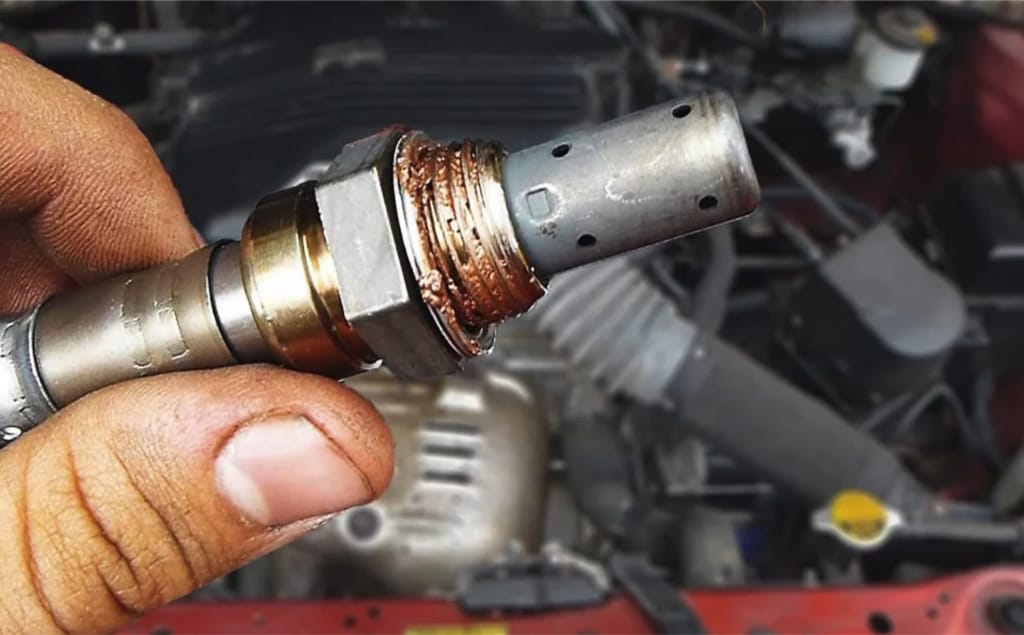
Oxygen sensors are the primary diagnostic tools for the exhaust system. They do not last forever. Most manufacturers recommend replacing them every 60,000 to 100,000 miles. Over time, sensors become “lazy” or slow to respond to changes. A lazy downstream sensor might trigger a P0420 code even if the converter is healthy. This happens because the ECM expects a specific response time that the old sensor cannot provide.
Technicians often find that replacing oxygen sensors solves the problem. It is a much cheaper alternative to replacing the entire katalizator trójdrożny. You should always test the sensors before condemning the catalyst. Use a scan tool to monitor the “cross-counts” of the sensors. If the sensors are slow, replace them first. Always use high-quality, original equipment manufacturer (OEM) sensors for the best results. Universal sensors often have different resistance values that can cause further issues.
Substrate Materials: Ceramic vs. Metallic
The internal structure of the katalizator trójdrożny comes in two primary types: ceramic and metallic. Ceramic substrates are the most common in passenger vehicles. They are cost-effective and provide a high surface area for the catalyst washcoat. However, they are brittle and susceptible to physical damage from road impacts or thermal shock.
Metallic substrates use thin foils of stainless steel. They are much more durable and can withstand higher temperatures. Performance vehicles often use metallic converters because they offer less exhaust restriction. The thinner walls of the metallic honeycomb allow for better airflow. However, metallic units are more expensive to manufacture. Choosing the right substrate depends on the vehicle’s performance requirements and the owner’s budget.

The Economics of Precious Metals
The high cost of a katalizator trójdrożny stems from the precious metals inside. Platinum, palladium, and rhodium are some of the rarest elements on Earth. Rhodium, in particular, can reach prices of tens of thousands of dollars per ounce. This high value makes catalytic converters a frequent target for theft. Thieves can remove a converter in seconds using a cordless saw.
The recycling industry for these metals is massive. Old converters are crushed and processed to recover the precious metals. This recycling loop is essential for meeting the global demand for new converters. When you buy a new converter, you are paying for the market value of these metals. This is why “cheap” converters often fail; they simply contain less of the expensive catalyst material.

Advanced Diagnostic Techniques
Professional diagnostics require more than just reading codes. Technicians use high-end scan tools to view live data streams. They observe the voltage patterns of both oxygen sensors simultaneously. A healthy downstream sensor should produce a flat line around 0.45 to 0.6 volts. If the line mirrors the upstream sensor, the catalyst is likely dead. You can also perform a “snap throttle” test. This test checks how quickly the sensors react to a sudden change in the fuel mixture.
A digital storage oscilloscope (DSO) provides even more detail. It allows the technician to see the actual waveform of the sensor signal. This tool can detect “glitches” that a standard scan tool might miss. Another method involves measuring the temperature of the katalizator trójdrożny. Use an infrared thermometer to check the inlet and outlet temperatures. A functional converter should be hotter at the outlet than the inlet. This temperature difference confirms that the exothermic chemical reactions are occurring.
Badanie przeciwciśnienia wydechu
If a vehicle suffers from a lack of power, technicians perform a backpressure test. This test determines if the katalizator trójdrożny is physically clogged. The technician removes the upstream oxygen sensor and installs a pressure gauge. At idle, the pressure should be near zero. At 2,500 RPM, the pressure should typically be less than 1.5 PSI.
High backpressure indicates that the internal honeycomb has melted or collapsed. This restriction prevents the engine from breathing properly. In extreme cases, high backpressure can cause exhaust valves to overheat. It can also force exhaust gases back into the intake manifold through the EGR system. Physical clogging is usually the result of long-term engine misfires or excessive oil consumption.
Repair Strategies: From Sensors to Converters
When facing a P0420 or P0430 code, you must choose the right repair strategy. Replacing the katalizator trójdrożny is the most expensive option. It should be the last resort after confirming other components are functional. The following table compares the common repair paths and their typical impacts.
| Repair Action | Szacowany koszt | Success Rate | Primary Target |
|---|---|---|---|
| Replace O2 Sensors | Low to Medium | High (if sensors are old) | False readings |
| Fix Exhaust Leaks | Low | Umiarkowany | Air intrusion |
| Clean Fuel System | Low | Low | Carbon deposits |
| Replace Converter | Wysoki | Bardzo wysoki | Physical/Chemical failure |
| Fix Engine Misfires | Średni | Essential for longevity | Uszkodzenia termiczne |
Technicians recommend replacing both the upstream and downstream sensors together. This ensures the ECM receives balanced data from both sides of the catalyst. If you must replace the converter, choose a high-quality unit. Cheap aftermarket converters often contain fewer precious metals. They may satisfy the ECM for a few months but often fail again quickly. Ensure the new unit meets the specific emissions standards for your region, such as CARB or EPA requirements.
CARB vs. Federal Emissions Standards
In the United States, emissions standards are divided into two main categories: Federal (EPA) and California (CARB). California has the authority to set stricter standards than the federal government. Several other states, known as “Section 177 states,” have adopted California’s rules. If you live in a CARB state, you must use a CARB-compliant three way catalytic converter.
CARB-compliant converters are more expensive because they contain higher loadings of precious metals. They also undergo more rigorous testing to ensure long-term durability. Using a federal-spec converter in a CARB state is illegal and will likely cause the Check Engine Light to return. Always check the emissions label under your vehicle’s hood before ordering parts. This label specifies whether the vehicle was built to federal or California standards.
The Impact of Engine Health on Catalyst Longevity
Ten katalizator trójdrożny is a passive device. Its lifespan depends entirely on the health of the engine. Regular maintenance is the best way to protect your exhaust system. Change your spark plugs according to the manufacturer’s schedule. Worn plugs cause subtle misfires that heat up the converter. Monitor your oil and coolant levels closely. Any sudden drop in these fluids suggests an internal leak that could poison the catalyst.
Avoid using low-quality fuel additives. Some “octane boosters” contain chemicals that damage the washcoat. Stick to Top Tier gasoline to keep the fuel injectors clean. Clean injectors provide a better spray pattern, which ensures complete combustion. If your Check Engine Light flashes, stop driving immediately. A flashing light indicates a severe misfire that can melt a katalizator trójdrożny in minutes. Proactive care saves you thousands of dollars in exhaust repairs over the life of the vehicle.
Hybrid Vehicles and Catalyst Management
Hybrid vehicles present unique challenges for the katalizator trójdrożny. Because the engine cycles on and off, the catalyst can cool down below its light-off temperature. To combat this, hybrid ECMs use aggressive ignition timing to heat the exhaust quickly when the engine restarts. Some hybrids also feature insulated exhaust pipes to retain heat.
As the engine stops, the converter is exposed to a rush of fresh air. This can lead to oxygen saturation of the cerium storage material. Engineers must carefully tune the fuel control algorithms to manage these transitions. If a hybrid vehicle develops a P0420 code, it is often due to a failure in this complex thermal management system. Technicians must ensure that the engine is running long enough to maintain catalyst temperature during diagnostic testing.
Cold Start Emissions and Pre-heaters
The most critical time for emissions is during the first few minutes of engine operation. A cold katalizator trójdrożny cannot perform chemical reactions. This period is known as the “cold start” phase. Engineers have developed several strategies to solve this problem. Some vehicles use “close-coupled” converters located directly on the exhaust manifold. This proximity allows the unit to heat up rapidly.
Other advanced systems use electric pre-heaters. These heaters warm the catalyst before the engine even starts. This technology significantly reduces the amount of unrefined pollutants released during the first minute of driving. As emissions standards become stricter, these pre-heating systems will become more common. They ensure that the vehicle remains compliant even during short trips in cold climates.
Common Misconceptions about P0420/P0430
Many drivers believe that a P0420 code always means the converter is bad. This is a costly misconception. As we have discussed, oxygen sensors and exhaust leaks are frequent culprits. Another myth is that “premium” gas can fix a failed catalyst. While high-octane fuel can prevent some misfires, it cannot repair a physically damaged converter.
Some people also try “cat-cleaning” additives. While these products can remove some surface deposits, they cannot restore a poisoned or melted catalyst. The only permanent fix for a failed katalizator trójdrożny is replacement. However, the most important step is finding out why it failed. Simply replacing the part without fixing the engine will lead to another failure in the future.
Global Emissions Standards and the Future
Governments worldwide continue to tighten emissions regulations. The Environmental Protection Agency (EPA) in the United States and the European Union have implemented strict standards. These rules force manufacturers to produce more efficient three way catalytic converters. Modern units must last for 150,000 miles or 15 years under federal law. This durability requirement protects consumers and the environment.
The future of exhaust technology involves even more complex systems. Some vehicles now use “heated” catalysts to reduce cold-start emissions. Others utilize selective catalytic reduction (SCR) to handle nitrogen oxides in diesel engines. As we move toward hybridization, the role of the katalizator trójdrożny remains vital. Hybrid engines cycle on and off frequently, which creates unique thermal challenges for the catalyst. Engineers continue to develop new materials to meet these demands.
Wniosek
The P0420 and P0430 error codes are more than just a nuisance. They indicate a critical failure in the vehicle’s emissions control system. The katalizator trójdrożny plays a vital role in keeping our air clean. While these codes often suggest a failed converter, technicians must perform a thorough diagnosis. Oxygen sensors, exhaust leaks, and engine misfires are frequent contributors to these faults. By addressing the root cause, you can save money and extend the life of your vehicle. Regular maintenance and high-quality parts are the keys to a healthy exhaust system. Always consult a professional if you are unsure about the diagnostic results.