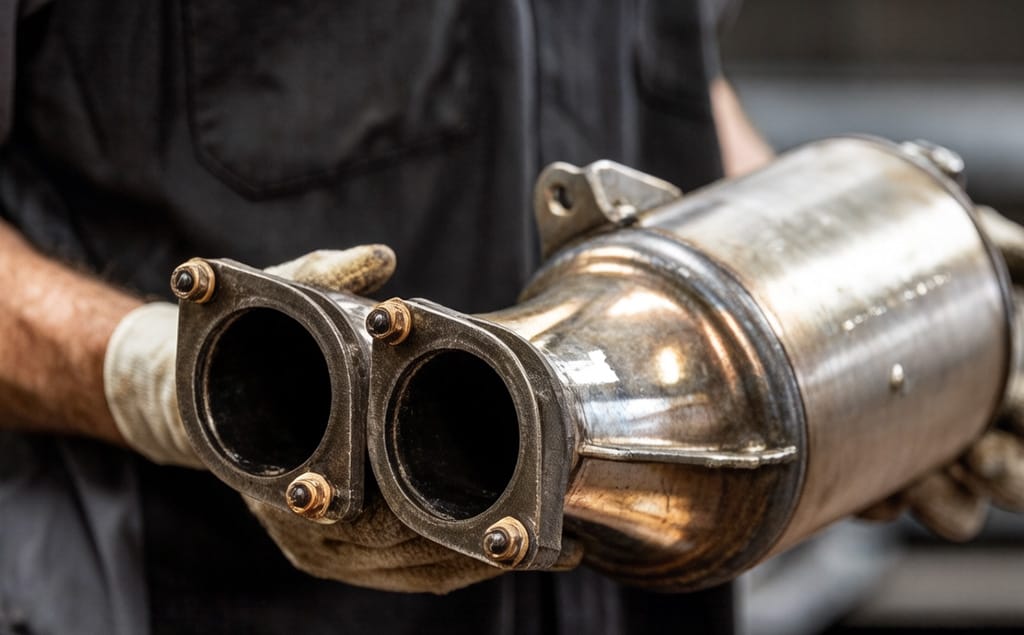
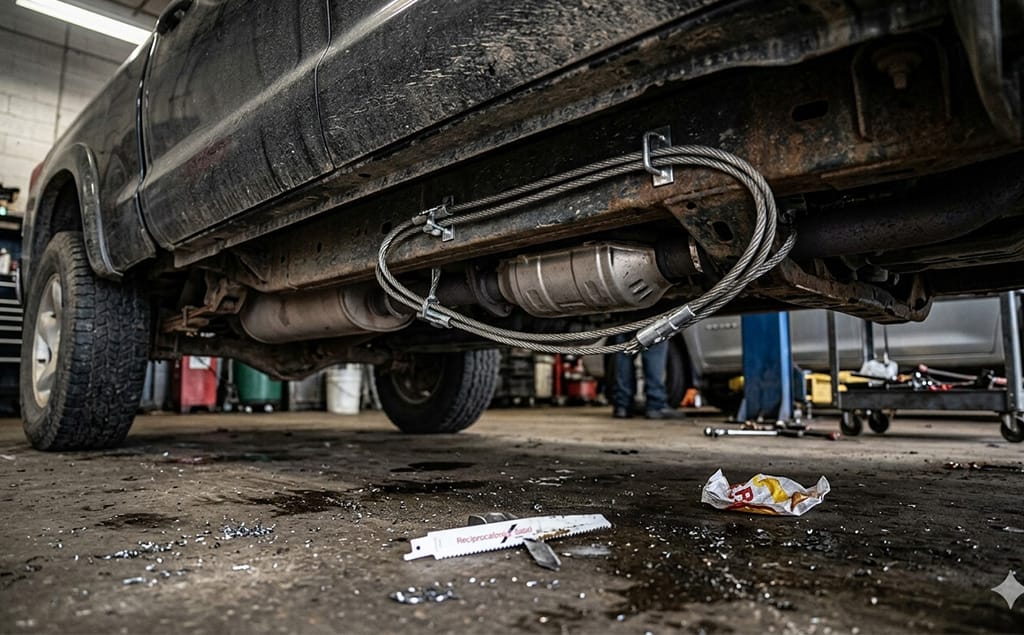
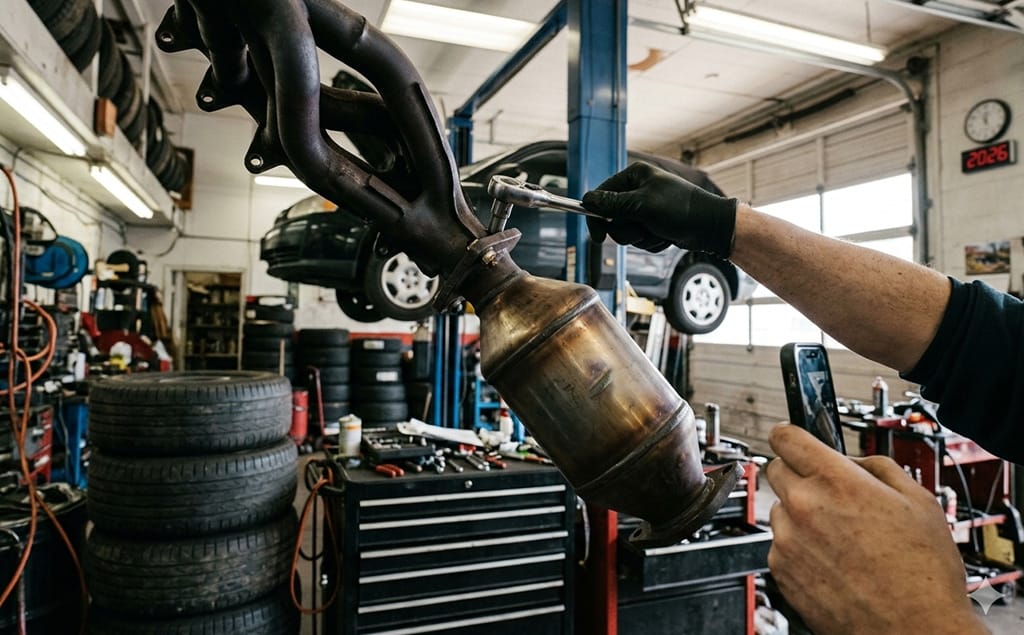
Rhodium (Rh) is one of the rarest and most valuable precious metals found inside catalytic converters. Though it’s only present in very small amounts, it plays a huge role in cleaning vehicle exhaust gases — and it’s a big reason why catalytic converters are often targeted for theft. In this article, we’ll explore how much rhodium is in a catalytic converter, what affects its quantity, and why it’s so important.
1. What Is Rhodium?
Rhodium is a platinum group metal (PGM), along with platinum (Pt) and palladium (Pd). It’s known for its exceptional ability to reduce nitrogen oxides (NOₓ) — one of the most harmful pollutants emitted by internal combustion engines.
- Symbol: Rh
- Melting Point: 1,964°C (3,567°F)
- Color: Silvery-white
- Main Use: Automotive catalysts (over 80% of global demand)
Rhodium is extremely rare — found in just 0.000037 parts per million in the Earth’s crust — making it about 100 times rarer than gold.
2. The Role of Rhodium in a Catalytic Converter
In a katalizator trójdrożny (TWC), rhodium works with platinum and palladium to perform critical chemical reactions:
| Funkcjonować | Gas Treated | Reaction |
|---|---|---|
| Zmniejszenie | Nitrogen Oxides (NOₓ) | NOₓ → N₂ + O₂ |
Rhodium specifically targets NO and NO₂, converting them into harmless nitrogen (N₂) and oxygen (O₂). Without rhodium, vehicles would emit large amounts of nitrogen oxides — major contributors to smog and acid rain.
3. How Much Rhodium Is Actually Inside a Catalytic Converter?
The exact amount of rhodium in a catalytic converter varies depending on:
- Vehicle type (small car vs. truck)
- Normy emisji (Euro 3, Euro 6, EPA Tier 3)
- Manufacturer and model
| Vehicle Type | Estimated Rhodium Content |
|---|---|
| Small Car | 0.05 – 0.10 grams |
| Medium Vehicle | 0.10 – 0.20 grams |
| Large SUV or Truck | 0.20 – 0.30 grams |
| Industrial or Diesel Applications | 0.30 – 0.50 grams |
Even at just 0.1 gram per unit, the value can be substantial. With rhodium prices exceeding $400 per gram (and having peaked above $25,000 per ounce in recent years), it’s easy to see why converters are valuable.
4. Rhodium Content vs. Other Precious Metals
| Metal | Typical Amount (per converter) | Average Price (USD/g) | Main Function |
|---|---|---|---|
| Platyna (Pt) | 1–2 grams | $30–40 | Oxidation (CO, HC) |
| Pallad (Pd) | 2–7 grams | $25–35 | Oxidation (CO, HC) |
| Rod (Rh) | 0.05–0.3 grams | $400–500 | Reduction (NOₓ) |
While rhodium content is much lower, it contributes the highest value percentage of the total precious metal load.
5. Factors Affecting Rhodium Quantity
- Emission Regulations: Stricter standards (e.g., Euro 6, EPA Tier 3) require more rhodium for NOₓ reduction.
- Vehicle Type: Larger engines need more catalyst surface area and thus more rhodium.
- Converter Design: Modern converters often use optimized ratios (Pd:Rh or Pt:Rh) to balance cost and performance.
- Manufacturer Strategy: Some automakers use more palladium or platinum to reduce rhodium costs.
6. Why Rhodium Is So Valuable
Rhodium’s price is driven by extreme rarity, high demand in emission control, I limited mining supply — mostly from South Africa and Russia.
- It’s not mined directly; it’s a byproduct of platinum and nickel extraction.
- Global annual production is less than 30 tons, compared to over 3,000 tons of gold.
- Industrial demand (automotive + chemical catalysts) keeps prices volatile.
7. Rhodium Recovery and Recycling
When old converters are recycled, specialized refiners extract precious metals through smelting and chemical separation. A single ton of spent catalytic converters can yield:
- Platinum: ~1,500–2,000 grams
- Palladium: ~2,000–3,000 grams
- Rhodium: ~200–300 grams
Because of this, recycling is an essential source of rhodium — helping reduce the need for new mining.

8. Real-World Value Example
Let’s assume an average catalytic converter contains 0.15 g of rhodium I rhodium is $450 per gram:
0.15 g × $450 = $67.50 in rhodium value (just from rhodium alone!)
Add in platinum and palladium, and the total metal value could easily exceed $150–$300 per converter.
9. Future Trends in Rhodium Usage
To reduce costs, manufacturers are:
- Increasing the use of paladium as a substitute.
- Developing rhodium-free catalysts using base metals or perovskite materials.
- Optimizing catalyst layer designs to achieve higher efficiency with less Rh.
Still, rhodium remains indispensable for high-performance and low-emission engines.
Wniosek
Rhodium may only make up a fraction of a catalytic converter by weight, but its impact — both environmentally and economically — is massive. With less than a quarter gram of rhodium, each converter helps reduce harmful NOₓ emissions and contributes to cleaner air. Understanding rhodium’s role and value highlights why catalytic converters are both technological marvels I high-value assets.