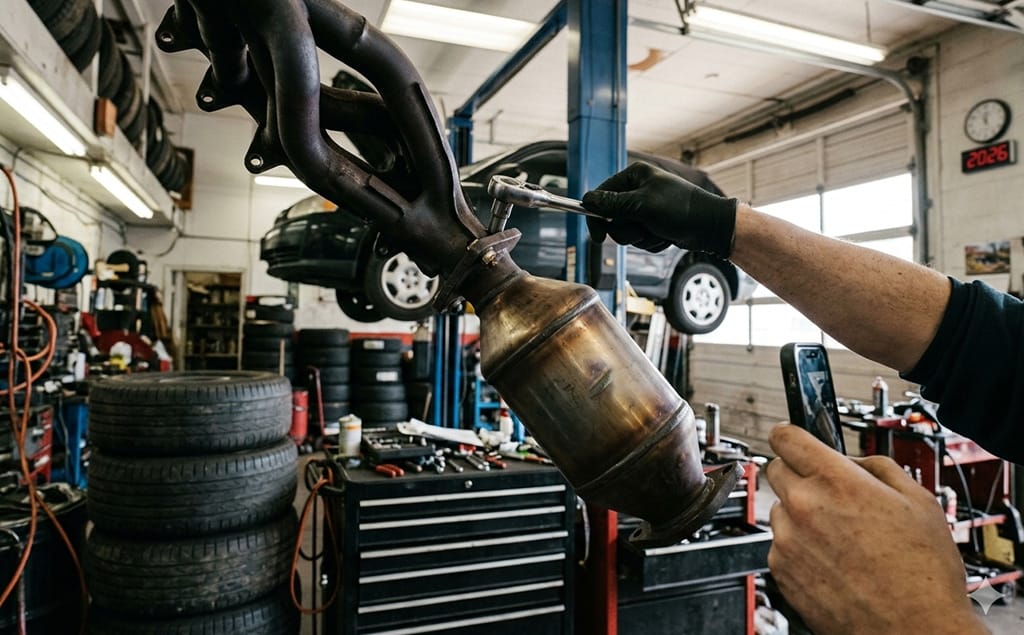
A catalytic converter may look like a simple metal can from the outside, but inside lies a complex world of chemistry and engineering. It’s one of the most important components in modern vehicles for reducing toxic exhaust gases. In this article, we’ll uncover what’s actually inside a catalytic converter, what each part does, and why the precious metals inside make it so valuable.
1. The Outer Shell – The Protective Layer
The outer shell of a catalytic converter is usually made of нержавеющая сталь, designed to withstand high temperatures and road debris.
- It serves as a protective barrier for the delicate components inside.
- The shell is welded shut and built to resist corrosion from moisture and exhaust gases.

2. The Substrate – The Core Structure
Inside the shell lies the субстрат, often made from ceramic (cordierite) или metallic (stainless steel foil) materials.
- It has a сотовая структура that maximizes the surface area for reactions.
- The honeycomb allows exhaust gases to flow smoothly while coming in contact with the catalyst-coated surfaces.
Ceramic substrates are light and resist heat, while metallic substrates conduct heat faster, useful for quick light-off in cold starts.
3. The Washcoat – Increasing the Surface Area
Over the substrate is a thin layer called the моющийся плащ, made from alumina (Al₂O₃) and sometimes mixed with ceria (CeO₂) или zirconia (ZrO₂).
- The washcoat acts like a sponge, providing a huge surface area for the catalytic reactions.
- It helps the precious metal catalysts stick firmly to the substrate.
Think of it as a bridge between the physical structure and the chemical magic.
4. The Catalysts – Precious Metals That Do the Work
The heart of the catalytic converter lies in its precious metal catalysts, usually a mix of:
| Precious Metal | Symbol | Функция |
|---|---|---|
| Платина | Pt | Reduces nitrogen oxides (NOₓ) |
| Палладий | Pd | Oxidizes carbon monoxide (CO) |
| Родий | Rh | Reduces nitrogen oxides (NOₓ) |
These metals speed up reactions that convert harmful gases into harmless ones:
- CO → CO₂
- УВ → CO₂ + H₂O
- NOₓ → N₂ + O₂
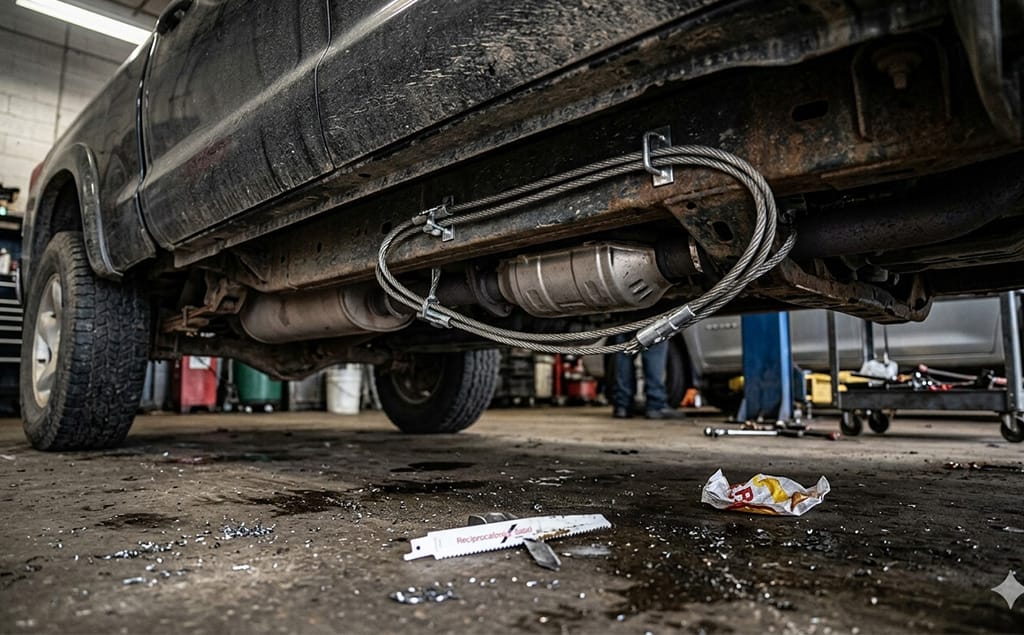
Even a few grams of these metals make a catalytic converter worth hundreds of dollars — that’s why converter theft is such a growing problem worldwide.

5. The Insulation and Matting – Keeping It All Together
Between the substrate and outer shell, there’s a thermal insulation mat (often made of ceramic fiber).
- It protects the ceramic core from vibration and thermal shock.
- It also helps seal the exhaust flow through the catalyst, preventing leaks.
This layer ensures long-term durability even under the harshest engine conditions.
6. The Exhaust Flow Path – How Gases Move Through
When exhaust gases enter the converter, they pass through:
- Inlet cone – distributes gases evenly.
- Catalyst core – where chemical reactions occur.
- Outlet cone – directs the cleaned gases to the exhaust pipe.
Each section is designed to minimize backpressure while maximizing reaction efficiency.
7. Why Precious Metals Make Catalytic Converters Valuable
The presence of platinum, palladium, and rhodium makes catalytic converters both essential and expensive.
- Prices of these metals can fluctuate significantly with global demand.
- Recycling companies extract these metals from scrap converters for reuse.

8. Modern Developments – Beyond the Traditional Design
Newer technologies are exploring:
- Rare-metal-free catalysts using base metals like copper or manganese.
- Dual-layer substrates to improve thermal stability.
- Hybrid catalysts combining GPF (Gasoline Particulate Filter) with TWC (Three-Way Catalyst).
These advancements aim to reduce costs while meeting stricter emission regulations (Euro 6, Euro 7, EPA Tier 3, etc.).
Заключение
A catalytic converter is a carefully engineered device combining mechanical design, material science, и химические реакции. Inside its steel casing lies a sophisticated system that turns harmful exhaust gases into cleaner emissions — thanks to the power of драгоценные металлы и modern catalyst technology.