This report provides a comprehensive analysis of catalytic converter selection, sizing, and installation considerations for various automotive projects, including OEM replacement, custom builds, performance upgrades, and classic car restorations. It synthesizes current research on catalytic converter technologies, emissions regulations, and best practices for integration, aiming to guide optimal decision-making for performance, compliance, and longevity.
1. Project Context and Objectives
The initial and most critical step in selecting a catalytic converter is a clear definition of the automotive project’s nature and primary objectives. This foundational understanding dictates the fundamental requirements for catalytic converter selection, influencing everything from cost to performance and regulatory compliance.
Automotive projects typically fall into several categories, each with distinct priorities:
- OEM Replacement: The primary goal here is to restore the vehicle to its original factory specifications, ensuring seamless fitment, emissions compliance, and expected longevity. OEM (Original Equipment Manufacturer) catalytic converters are produced by the same manufacturer as the vehicle’s original part, guaranteeing a perfect fit and performance 41. They typically contain a higher concentration of precious metals like rhodium, platinum, and palladium, leading to superior efficiency and durability, albeit at a higher cost 41. OEM converters also come with warranties, often mandated by the EPA 41. The decision to opt for an OEM replacement prioritizes direct fitment and adherence to original vehicle specifications, with the expectation that the higher upfront cost will be offset by longer lifespan and guaranteed compliance 43.
- Custom Build: For custom builds, the focus shifts to integrating a catalytic converter into a unique or highly modified vehicle. This requires careful matching of the converter to the engine’s specific performance characteristics, including horsepower, torque, and exhaust flow. Significant consideration must be given to packaging and space limitations within the custom chassis, as well as material compatibility with other bespoke exhaust components and the overall vehicle design.
- Performance Upgrade: Projects aimed at performance enhancement prioritize maximizing exhaust flow to reduce backpressure and improve engine output. This often involves selecting high-flow catalytic converters designed to withstand higher exhaust gas temperatures and pressures. While OEM converters are generally larger due to their precious metal content, aftermarket performance converters often achieve higher flow rates through different substrate designs and lower cell densities 43. Upgrading to a 200-cell catalytic converter, for instance, can significantly improve power, throttle response, and exhaust tone, potentially yielding an additional 20-22 brake horsepower 8. However, aftermarket converters, especially those with lower cell counts, may intermittently trigger an engine light due to less stringent emissions control compared to OEM units 44.
- Classic Car Restoration: In classic car restoration, the objective is often to maintain visual authenticity and period-correctness. This means the catalytic converter selection might prioritize an appearance that aligns with the vehicle’s original production year, even if it means some compromise on modern performance or efficiency. Meeting the emissions standards applicable during the vehicle’s original production year is crucial for historical accuracy. The decision may involve rebuilding the original converter, if feasible, or sourcing a modern equivalent that closely mimics the original’s form and function. All OEM catalytic converters have a distinct stamp, such as the manufacturer’s logo followed by the serial number, which can be important for authenticity in restoration projects 41.
The main objective—whether it’s maximum performance, strict emissions compliance, or a balance of both—fundamentally dictates the requirements for catalytic converter selection. For instance, a race-only vehicle might forgo a catalytic converter entirely or use a minimal, high-flow unit, whereas a street-legal vehicle in California would require a CARB-compliant converter with specific efficiency ratings.
2. Engine and Exhaust System Specifications
Detailed knowledge of the engine and exhaust system specifications is paramount for proper catalytic converter sizing and fitment. These parameters directly influence the volume and temperature of exhaust gases, which in turn dictate the required capacity and thermal resilience of the converter.
Key engine parameters include:
- Displacement and Estimated Power Output: Larger engine displacements and higher horsepower outputs generate a greater volume of exhaust gases, necessitating larger catalytic converters to handle the increased flow 5. A general rule of thumb for exhaust pipe diameter is approximately 1 inch for every 100 horsepower 5. For high-horsepower forced induction engines, the factory catalytic converter can become a significant bottleneck, creating excessive exhaust backpressure and hindering performance 5.
- Fuel Type: Gasoline engines typically utilize three-way catalytic converters (TWCs) that perform both oxidation and reduction functions simultaneously, often with two substrates for each process 1. Diesel engines, on the other hand, commonly use two-way catalytic converters designed primarily for the oxidation of carbon monoxide (CO), hydrocarbons (HC), and particulate matter (PM), as their high NOxx emissions require additional techniques like Exhaust Gas Recirculation (EGR) and Selective Catalytic Reduction (SCR) systems 1.
- Forced Induction: Engines equipped with turbochargers or superchargers produce significantly higher exhaust gas temperatures and flow rates. This demands catalytic converters with enhanced thermal resistance and higher flow capacity to prevent restriction and ensure optimal turbocharger spooling 6. If the catalytic converter is blocked or restricted, the turbocharger’s effectiveness will be severely compromised 6.
- Existing Exhaust Pipe Diameter: The diameter of the catalytic converter’s inlet and outlet should ideally match the existing exhaust pipe diameter to prevent restrictions in exhaust flow, which can negatively impact engine performance 5. While reducing exhaust restriction generally improves power and fuel economy, going too large with the exhaust pipe diameter can lead to over-scavenging, potentially decreasing engine output and fuel efficiency 6. Some degree of backpressure is often necessary for the engine to operate optimally 6.
- Available Physical Space for Installation: The physical dimensions of the catalytic converter must fit within the available space in the vehicle’s undercarriage or engine bay. This is particularly critical for close-coupled converters, which are positioned near the exhaust manifold to achieve rapid light-off, but are also exposed to increased vibrational energy from the engine 25. For longevity, some installations might prefer mounting the converter further from the engine to mitigate excessive heat exposure, though this can delay light-off 25. The Gross Vehicle Weight (GVW) is also a significant factor in determining catalytic converter size, sometimes even more so than engine displacement or cylinder count 5.
3. Emissions Standards and Regulatory Compliance
Adherence to specific emissions regulations is a non-negotiable aspect of catalytic converter selection, directly influencing the required catalyst efficiency, substrate type, and precious metal loading. Global emissions standards are continuously tightening, driving the demand for more advanced catalytic technologies 15.
Key regulatory frameworks include:
- United States (EPA and CARB): The Environmental Protection Agency (EPA) sets national standards and regulates emissions, including the installation and operation of catalytic converters 11. The EPA also defines National Ambient Air Quality Standards (NAAQS) for pollutants such as carbon monoxide, nitrogen dioxide, sulfur dioxide, particulate matter, hydrocarbons, and photochemical oxidants 11. In December 2021, the EPA issued new greenhouse gas standards for passenger cars and light trucks, effective for the 2023 model year 12. California, through the California Air Resources Board (CARB), has been granted a waiver to set even stricter emission standards, which other states can also adopt 14. The Clean Air Act Amendments of 1990 defined two tiers of emission standards for light-duty vehicles: Tier I (phased in 1994-1997) and Tier II (phased in 2004-2009), with Tier II including sub-rankings (BIN 1-10) where lower numbers indicate cleaner vehicles 14. Tier II regulations also imposed restrictions on sulfur content in gasoline and diesel fuel, as sulfur can interfere with advanced exhaust treatment systems 14.
- European Union (Euro Standards): The EU has its own stringent standards for catalytic converter manufacturing, focusing on efficiency and environmental safety 11. Manufacturers must obtain approval based on factors like material, catalytic activity, dimensions, thermal protection, and material content 11. The first EU-wide standard, Euro 1, introduced in 1992, mandated catalytic converters on new cars and the use of unleaded petrol 13. The latest standard, Euro 6, introduced in September 2014, has multiple versions, with Euro 6d becoming mandatory in January 2021 13. Euro 6 standards require diesel cars to emit no more than 0.08 g/km of NOxx, while petrol cars should not exceed 0.06 g/km 13. The evolution of Euro standards has led to significant reductions in carbon monoxide, hydrocarbons, nitrogen oxide, and particulate matter emissions 13. The EU also set average CO22 emission targets for new passenger cars, aiming for 95 grams per kilometer from 2021 12.
- China Emission Standards: China has rapidly adopted stricter emission standards. As of January 1, 2018, all new vehicles had to comply with China 5 (similar to Euro 5). By January 1, 2021, China 6a (similar to Euro 6) was required, and from July 1, 2023, China 6b (stricter than Euro 6) became mandatory 12.
The legal requirement to have a catalytic converter in the U.S. means its removal can render a vehicle unroadworthy 21. Therefore, selecting a converter that meets the specific standards of the project’s intended operating region is paramount. The tightening of global emission standards, particularly for NOxx and particulate matter, is a major driver for the demand for advanced catalytic technologies and the continuous innovation in catalyst design 15.
4. Catalytic Converter Technologies and Selection Criteria
The selection of a каталітичний нейтралізатор involves a deep understanding of its underlying technologies, including catalyst types, substrate materials, cell densities, and precious metal loadings. These technical specifications must align precisely with the project’s objectives, engine characteristics, and emissions compliance needs.
Catalyst Types:
- Двосторонні каталітичні нейтралізатори: Primarily used in diesel engines, these converters are designed for oxidation reactions, converting carbon monoxide (CO) into carbon dioxide (CO22) and unburnt hydrocarbons (HC) into CO22 and water (H22O). They also play a role in reducing particulate matter (PM) 1.
- Three-Way Catalytic Converters (TWCs): Predominantly used in gasoline engines, TWCs are capable of simultaneously performing both oxidation and reduction reactions. They convert CO and HC into CO22 and H22O, and reduce nitrogen oxides (NOxx) into nitrogen (N22) and oxygen (O22) 1. This dual functionality is achieved through a precise air-fuel ratio control and the use of specific precious metals 1.

Substrate Materials:
The substrate provides the structural support for the catalytic washcoat and precious metals. Two primary materials are used:
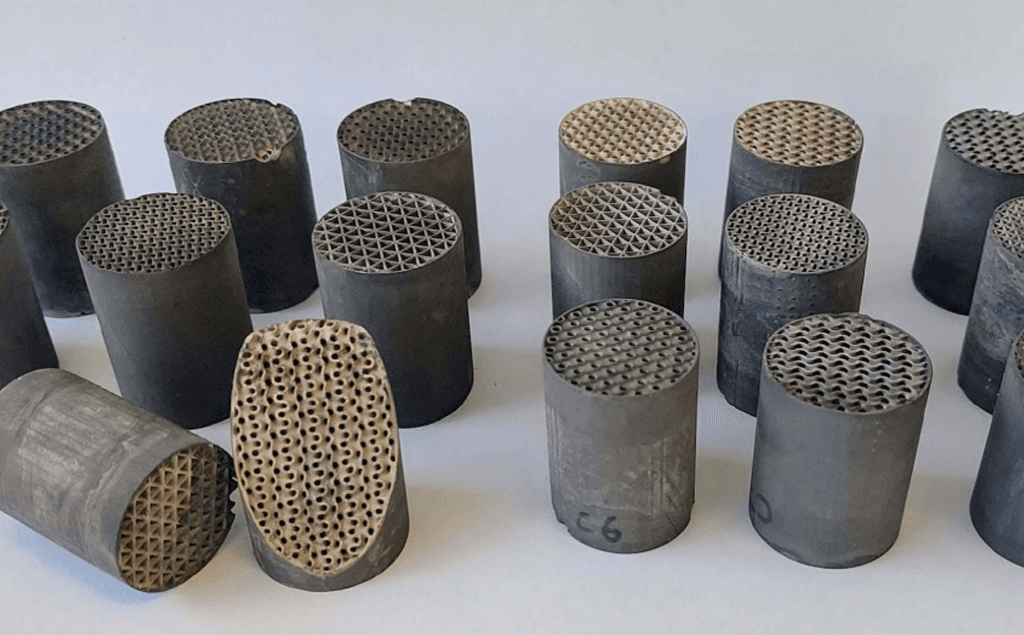
- Ceramic (Cordierite): Historically prevalent, ceramic substrates are cost-effective and offer good thermal stability. They are typically honeycomb structures that maximize surface area for reactions 4. However, they can be brittle and susceptible to physical damage or thermal shock. Ceramic substrates mounted with standard intumescent mats can survive severe hot vibration conditions 34.
- Metallic (Stainless Steel Foil): Metallic substrates, often made from stainless steel foil, offer superior durability, higher thermal conductivity, and lower backpressure compared to ceramic substrates of the same size due to their higher open frontal area 19. They are more resistant to physical impact and thermal shock, making them suitable for high-performance or close-coupled applications. Nippon Steel has developed an ‘α film coated substrate’ with a special oxide film on the stainless steel surface, providing excellent acid corrosion resistance, beneficial in SCR systems 17.
Cell Densities (CPSI – Cells Per Square Inch):
Cell density refers to the number of flow channels per square inch of the substrate’s cross-section. This parameter significantly impacts both catalytic efficiency and exhaust gas flow resistance:
- Higher Cell Density (e.g., 600-1200 cpsi): Increased cell density leads to a higher geometric surface area (GSA), providing more active sites for catalytic reactions and thus improving efficiency 1. This is particularly beneficial for close-coupled catalysts to improve cold-start behavior by reducing the time required to reach operating temperature 16. However, higher cpsi also increases flow resistance (Rff) and backpressure 7. While increasing cell density can saturate light-off conversion efficiency due to increased thermal mass, this can be mitigated by increasing precious metal loading 19.
- Lower Cell Density (e.g., 200-400 cpsi): Lower cell densities reduce backpressure and restriction per unit area, making them suitable for performance applications where maximizing exhaust flow is critical 9. They are also often used for retrofit diesel applications to minimize the risk of plugging by soot 7. An “offset substrate” with a cell density of 400 cpsi (OS-400) exhibits 40% higher pressure loss than a conventional metal substrate with the same cell density (Metal-400) 17. However, offset substrates demonstrate better space velocity (SV) toughness, showing less deterioration in catalytic reaction as gas flow rate increases 17.
The historical progression of catalytic converter design shows an increase in cell density from 200 cpsi in 1974 to 1200 cpsi currently, accompanied by a significant reduction in wall thickness from 12 mil to approximately 2 mil 16. This development of strong, ultra-thin wall substrates has dramatically increased catalyst efficiency by reducing thermal mass, allowing the substrate to reach light-off temperature faster 16.
Precious Metal Loadings and Washcoats:
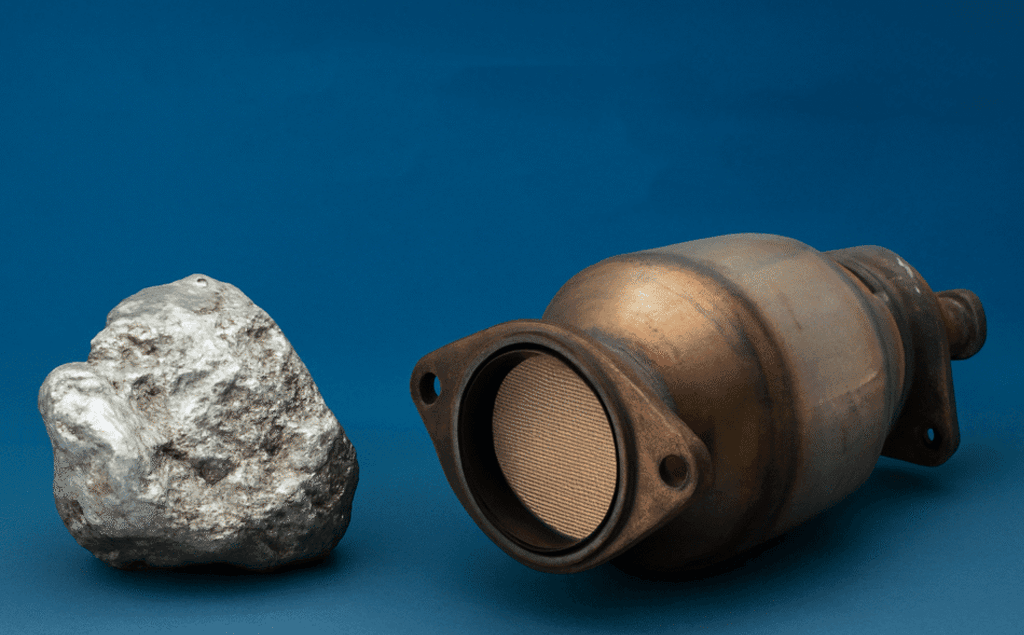
- Precious Metals (PGMs): The active catalyst materials are typically Platinum Group Metals (PGMs) such as palladium (Pd), platinum (Pt), and rhodium (Rh). Palladium and platinum primarily enable the oxidation of hydrocarbons and carbon monoxide, while rhodium is crucial for the reduction of nitrogen oxides 118. High precious metal loading increases the price of a catalytic converter and can lead to sintering at high temperatures, which deactivates the catalyst 1. The demand for platinum, in particular, has been increasing 3.
- Washcoats: A porous layer, known as the washcoat, is applied to the substrate. This layer, often composed of ceria-based oxides, enhances the surface area and acts as an oxygen storage agent, which is vital for the three-way catalyst’s ability to function effectively across varying air-fuel ratios 1. Nanotechnology in catalytic coatings involves stabilized crystallites, washcoat materials that maintain high surface area at temperatures around 1000°C, improved oxygen storage components, and novel coating processes to optimize coating distribution 16.
- Alternative Catalysts: Research is actively being conducted on alternative, less expensive catalysts like Pervoskite, spinel, monel, and hopcalite to substitute noble metals in automotive catalytic converters, driven by the high cost and price volatility of PGMs 2.
Other Factors Influencing Performance:
- Catalyst Deposition: The specific process used for depositing the catalyst materials onto the substrate significantly affects the overall efficiency of the catalytic converter 1.
- Reaction Rate Factors: The rate of chemical reactions inside the catalytic converter is influenced by the temperature of the reaction, pressure, the concentration of reactants, surface area, and the presence of catalysts 4.
- Light-Off Temperature: Catalytic converters are only effective after reaching their “light-off” temperature, typically around 250-300°C 10. Positioning the converter closer to the exhaust manifold is an efficient way to achieve rapid light-off 10. Technologies like PCI’s Microlith® use wire mesh-type substrates, specialized coatings, and unique reactor designs to achieve quick light-off through very high rates of heat and mass transfer 10.
- Modeling and Optimization: Computational Fluid Dynamics (CFD) simulations are extensively used to analyze and optimize exhaust after-treatment systems, evaluating the effect of exhaust manifold design on fluid flow uniformity at the converter entrance 19. CFD can help maintain uniform flow, keep pressure drop within critical limits, and maintain catalyst temperatures within the required range 19. The catalyst substrate is often modeled as a porous medium in CFD, defined by viscous and inertial resistance properties 19. One-dimensional (1-D) steady-state plug-flow catalyst models are used to predict performance, while zero-dimensional (0-D) models are employed for catalyst sizing and performance prediction 19.
5. Installation and Integration Considerations
Proper installation and integration of the catalytic converter are as crucial as its selection for ensuring optimal performance, longevity, and regulatory compliance. This section addresses the practical aspects of mounting, sensor placement, heat management, and ensuring proper exhaust gas flow and structural integrity.
Mounting and Placement:
- Proximity to Engine: For optimal emissions performance, especially during cold starts, placing the catalytic converter closer to the engine helps it reach its “light-off” temperature (typically 250-300°C) more rapidly 10. Some modern engines even integrate the converter directly into the exhaust manifold 25. However, close-coupled converters are exposed to higher temperatures and increased vibrational energy from the engine, which can impact durability 34.
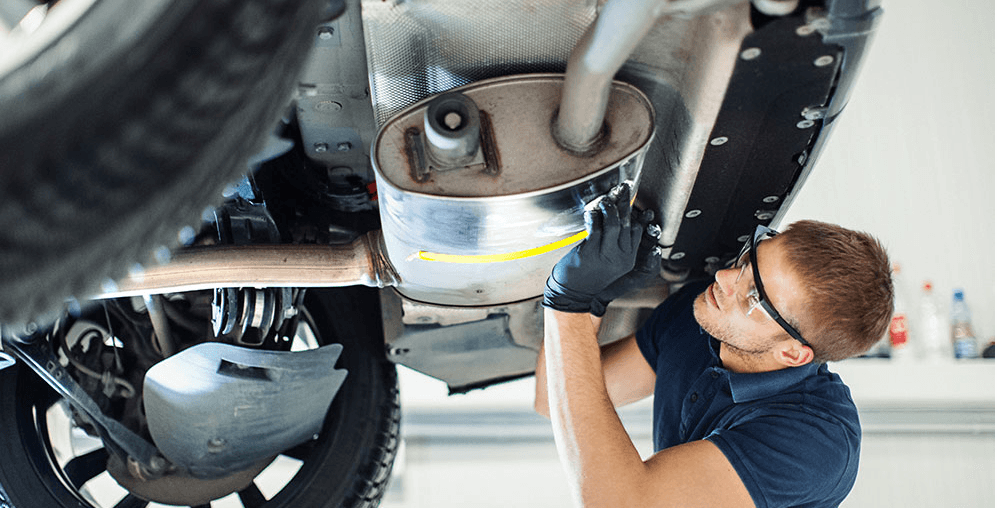
- Mid-Pipe and Under-Vehicle Location: Typically, the catalytic converter is located in the mid-pipe section of the exhaust system, between the engine and the muffler 26. Under-vehicle mounting is common for space efficiency and heat dissipation 26.
- Orientation: The converter must be installed in the correct direction, matching the exhaust gas flow, which is usually indicated by an arrow on the converter body 26.
- Weld-in vs. Bolt-on:
- Bolt-on: Offers easier installation and replacement, often preferred for direct OEM replacements.
- Weld-in: Provides a more secure and often higher-flow connection, common in custom or performance exhaust systems. MIG welding is commonly used for exhaust fabrication 21. Custom exhaust systems often utilize mandrel-bent pipes for improved airflow and reduced backpressure 33.
O2 Sensor Bung Placement:
Oxygen (O2) sensors are vital for monitoring engine performance and catalytic converter efficiency. Their correct placement is critical:
- Upstream O2 Sensor: Positioned before the catalytic converter, this sensor monitors the engine’s air-fuel ratio and performance. For naturally aspirated engines, it should be within 12-18 inches of the exhaust manifold or header collector. For turbocharged engines, it must be placed downstream of the turbocharger 27.
- Downstream O2 Sensor: Located after the catalytic converter, this sensor assesses the converter’s efficiency by comparing oxygen levels before and after the catalyst 27.
- Dual Sensor Systems: Many modern vehicles utilize dual O2 sensors, with the upstream sensor managing engine performance and the downstream sensor monitoring the converter’s efficiency 27.
- Installation Angle: O2 sensor bungs should be installed at a 10-45 degree angle above horizontal to prevent condensation from pooling on the sensor tip, which can damage it 27. Ensure the O2 sensor tip is fully exposed to the exhaust flow 27. Apply anti-seize compound to sensor threads if they are not pre-coated, and tighten sensors to the specified torque to avoid damage 37.
Heat Management:
Catalytic converters operate at extremely high temperatures (often exceeding 538°C or 1000°F) 29, making effective heat management crucial for component longevity and vehicle safety:
- Heat Shields: Essential for protecting nearby components (wiring, plastic parts, fuel lines, transmissions) and the vehicle’s interior from radiant heat 29. Heat shields can be made from materials like basalt fabric, ceramic insulation, and silica inner layers, capable of withstanding continuous temperatures up to 1,000°C 30.
- Catalytic Converter Blankets: These provide thermal insulation to maintain optimal operating temperatures within the converter, improving efficiency and reducing heat radiation to surrounding areas 29.
- Ceramic Coatings: Applying ceramic coatings to exhaust system components can aid in thermal management by reducing heat transfer 29.
- Air Gaps: Incorporating air gaps into the exhaust design can provide additional insulation 29.
- Heat Retention Technologies: For enhanced cold-start emissions reduction, technologies like vacuum insulation and phase-change thermal storage can be employed to retain heat within the converter 31.
- Temperature Limits: It is crucial to maintain catalyst temperature within safe limits, typically around 1000°C, to prevent thermal degradation and premature failure 29.
- Fuel System Safety: Fuel pumps should not be placed within 12 inches of a catalytic converter, and fuel lines must be routed away from the converter’s high-heat zone to prevent fire hazards 29.
Exhaust Gas Flow and Structural Integrity:
- Smooth Flow: Ensuring smooth exhaust gas flow is critical to minimize turbulence and backpressure, which can negatively impact engine performance 32. The diameter and shape of exhaust pipes significantly influence flow rate and pressure drop 32.
- Minimizing Backpressure: Optimizing the substrate design and overall exhaust system configuration is key to minimizing pressure drop across the converter 32. While some backpressure is needed for engine tuning, excessive backpressure from a clogged or improperly designed converter can reduce engine power 21.
- Vibration Management: Exhaust systems are subject to significant vibrations from the engine. Proper mounting is essential to withstand thermo-mechanical stress and vibration 34. Damper connections or strategically placed mufflers can compensate for engine vibrations, preventing their transmission to the car body 34.
- EGT Sensors: Exhaust Gas Temperature (EGT) sensors monitor exhaust gas temperature at various points (before/after turbocharger, catalytic converter, DPF) to protect components from thermal overload 35. Data from EGT sensors is sent to the Engine Control Unit (ECU) to adjust fuel injection, ignition timing, or boost pressure, thereby controlling temperatures 35. Faulty EGT sensors can trigger the “Check Engine” light and store diagnostic codes 37. In diesel engines, EGT sensors are crucial for monitoring DPF temperature for regeneration processes 37.
General Installation Practices:
- Direct-Fit vs. Universal-Fit: Choose between direct-fit converters, designed for specific vehicle models, and universal-fit converters, which require modifications for installation 39.
- Pre-Installation Checks: Before replacing a catalytic converter, it is imperative to diagnose and rectify the root cause of the original failure (e.g., engine misfires, faulty O2 sensors, exhaust leaks) to prevent premature damage to the new unit 40.
- Safety and Tools: Always use appropriate tools (car jack, jack stands, wrenches) and safety gear (safety glasses). Ensure the vehicle is cool before beginning work 39.
- Proper Fitment: Use new fitting kits to ensure proper nuts and bolts 40. Do not apply sealant or exhaust paste to the converter, as it can damage the catalyst 40. Never hit the converter with a mallet or hammer to force it into place 40.
- Post-Installation: After installation, check thoroughly for exhaust leaks 37. Ensure all sensor cables are secure and not in contact with the hot exhaust system 40. Finally, clear any associated fault codes from the ECU 40. If unsure about safe and correct installation, seek professional help 39.
A rattling noise from underneath the vehicle can indicate a collapsed honeycomb structure inside the catalytic converter, signaling a need for replacement 23. A malfunctioning catalytic converter can also trigger the “Check Engine” light due to detected emissions issues 24, and lead to degraded engine performance, shaking, stalling, and reduced fuel efficiency 24.
Proactive Considerations:
Looking ahead, the automotive industry is continuously evolving. While Battery Electric Vehicle (BEV) adoption has seen a slowdown due to infrastructure and supply chain challenges 3, internal combustion engine (ICE) vehicles will remain prevalent for the foreseeable future. This necessitates ongoing innovation in catalytic converter technology. Future considerations for automotive projects should include:
- Anticipating Stricter Regulations: Even if current project objectives meet existing emissions standards, it is prudent to consider potential future tightening of regulations (e.g., Euro 7, stricter CARB mandates) to ensure long-term compliance and avoid costly retrofits.
- Advanced Materials and Manufacturing: Explore emerging technologies such as additive manufacturing for creating novel internal geometries, like diamond-based lattice substrates, which have shown significant improvements in light-off temperatures for CO, THC, and NOxx compared to conventional designs 18.
- Розумні каталізатори: Speculatively, the integration of smart sensors and AI/ML models could enable predictive maintenance for catalytic converters, optimizing their performance and lifespan by dynamically adjusting engine parameters based on real-time catalyst health and efficiency data. This could also lead to more precise control over precious metal loading and distribution.
- Recycling and Sustainability: Given the limited global supply and price volatility of PGMs, innovation in catalyst recycling is gaining traction 15. Projects could proactively consider the end-of-life recycling potential of the chosen catalytic converter.
By meticulously considering these factors, automotive project managers and engineers can make informed decisions regarding catalytic converter selection and integration, ensuring optimal performance, regulatory compliance, and long-term reliability for their specific applications.