Вступ
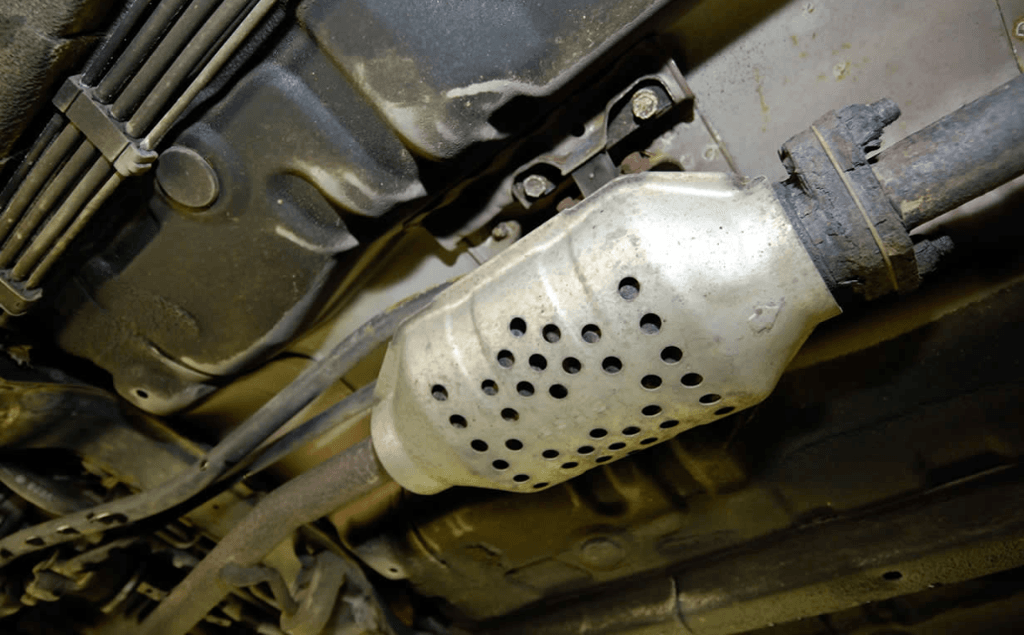
When it comes to keeping car emissions in check, the трикомпонентний каталітичний нейтралізатор is hands down one of the biggest game-changers we’ve ever seen.This tech tackles CO, HC, and NOx all at once, essentially giving gasoline engines rely on catalytic converter the green light when up against brutal emissions laws. From Brussels to Washington and across Asia, tailpipe rules are getting brutal. For automakers, advanced catalysis isn’t just an option anymore—it’s their primary survival gear:
- Two way catalytic converter (oxidation catalyst)
- Three way catalytic converter (TWC)
Precious metal catalysts are the common denominator here, but the alignment stops there. Chemically, structurally, and from a regulatory standpoint, these two setups operate in entirely different realms. The two way catalytic converter focuses only on oxidation reactions. In contrast, the трикомпонентний каталітичний нейтралізатор performs oxidation and reduction reactions simultaneously. This difference defines their application range, efficiency, and compliance capability.
We conduct a granular technical assessment of both setups, benchmarking their performance across critical dimensions: reaction chemistry, advanced materials, oxygen control, structural engineering, degradation pathways, and global compliance implications.
1. Automotive Emission Fundamentals
Internal combustion engines wrap up a simple idea—burning fuel in air to cook up power. But out here in the real world, that burn is never quite perfect. This leads to harmful exhaust gases.
1.1 Main Pollutants in Exhaust Gas
Modern emission control systems target three major pollutants:
Чадний газ (CO)
CO forms when fuel burns incompletely. It is highly toxic and reduces oxygen transport in the human body.
Вуглеводні (ВГ)
HC consists of unburned fuel molecules. These compounds contribute to smog formation and ground-level ozone.
Оксиди азоту (NOx)
Born out of the sheer violence of combustion heat, NOx is an unwanted byproduct, created only when nitrogen and oxygen are dragged into a reaction under absolute extreme conditions.Once in the air, it’s a double threat—fueling acid rain and wreaking havoc on human lungs.
1.2 Chemical Conversion Reactions
Catalytic converters transform these gases:
- CO + O₂ → CO₂
- HC + O₂ → CO₂ + H₂O
- NOx → N₂ + O₂
These reactions require precise temperature and oxygen control.
1.3 Role of Catalytic Converters
Catalytic converters accelerate these reactions using precious metal surfaces. Without catalysts, these reactions occur too slowly to be effective in real driving conditions.
2. Two Way Catalytic Converter Technology
The two way catalytic converter is also called an oxidation catalyst. It performs only two functions: CO oxidation and HC oxidation.
2.1 Working Mechanism
The system relies on oxygen-rich exhaust gas. It supports:
- Oxidation of CO into CO₂
- Oxidation of HC into CO₂ and H₂O
However, it does not reduce NOx emissions.
This limitation makes it unsuitable for modern gasoline engines.
2.2 Structural Design
A typical two way catalytic converter includes:
- Stainless steel housing
- Ceramic or metallic honeycomb substrate
- High-surface-area washcoat layer
- Platinum (Pt) and Palladium (Pd) catalysts
The honeycomb structure maximizes surface area while minimizing exhaust resistance.
2.3 Catalyst Functionality
Платина (Pt)
- Enhances oxidation reactions
- Improves CO conversion efficiency
Паладій (Pd)
- Strong HC oxidation performance
- Cost-effective compared to platinum
2.4 Advantages of Two Way Catalytic Converter
- Lower manufacturing cost
- Simple chemical structure
- High durability under oxygen-rich conditions
- Suitable for diesel oxidation catalyst (DOC) systems
- Stable performance at high temperatures2.5 Limitations
Despite its advantages, the system has clear limitations:
- No NOx reduction capability
- Cannot meet Euro 5/6 gasoline requirements
- Limited application in modern passenger vehicles
- Low overall emission control efficiency
3. Three Way Catalytic Converter Technology
The трикомпонентний каталітичний нейтралізатор is the global standard for gasoline engines. It controls all three major pollutants simultaneously.
3.1 Working Principle
The system performs three reactions at the same time:
- CO → CO₂ (oxidation)
- HC → CO₂ + H₂O (oxidation)
- NOx → N₂ + O₂ (reduction)
This dual-function system makes it significantly more advanced than a two way converter.
3.2 Key Challenge: Oxygen Balance
The biggest challenge for трикомпонентні каталітичні нейтралізатори is oxygen control.
If oxygen is too high:
- NOx reduction fails
If oxygen is too low:
- CO and HC oxidation fails
Therefore, precise air-fuel control is essential.
3.3 Engine System Requirements
Трикомпонентні каталітичні нейтралізатори require:
- Stoichiometric air-fuel ratio (14.7:1)
- Oxygen sensors (O2 sensors)
- Electronic fuel injection system
- ECU closed-loop feedback control
These systems continuously adjust combustion conditions.
3.4 Catalyst Composition
Трикомпонентні каталітичні нейтралізатори use advanced materials:
Родій (Rh)
- Primary catalyst for NOx reduction
- One of the rarest and most expensive metals
Платина (Pt)
- Supports CO oxidation
Паладій (Pd)
- Посилює окислення HC
Oxygen Storage Materials
- Cerium oxide stabilizers
- Maintain oxygen balance during transient driving conditions
3.5 Advantages
- Controls CO, HC, and NOx simultaneously
- Required for modern emission regulations
- High conversion efficiency (>95% under optimal conditions)
- Compatible with advanced engine control systems
3.6 Limitations
- Higher cost due to rhodium content
- Requires precise engine calibration
- Sensitive to air-fuel imbalance
- Performance depends on temperature window
4. Technical Comparison (Deep Engineering View)
Table 1: Functional Differences
| Параметр | Two Way Catalytic Converter | Трикомпонентний каталітичний нейтралізатор |
|---|---|---|
| Тип реакції | Oxidation only | Oxidation + Reduction |
| CO Control | Так | Так |
| HC Control | Так | Так |
| NOx Control | Ні | Так |
| Control System Needed | None / basic | ECU + O2 sensors |
| Ефективність | Середній | Високий |
Table 2: Material Engineering Comparison
| Компонент | Two Way | Three Way |
|---|---|---|
| Платина | Medium usage | High usage |
| Паладій | Medium usage | High usage |
| Родій | Not used | Critical material |
| Мочалка | Simple layer | Multi-layer structured |
| Oxygen storage | Жоден | Cerium-based system |
5. Engine Compatibility Analysis
5.1 Two Way Converter Applications
- Дизельні двигуни
- Lean-burn engines
- Industrial combustion systems
- Older vehicle platforms
These systems naturally operate in oxygen-rich environments.
5.2 Three Way Converter Applications
- Modern gasoline passenger cars
- Hybrid vehicles
- Light-duty trucks
- OEM global vehicle platforms
Most gasoline vehicles worldwide now depend on трикомпонентні каталітичні нейтралізатори.
6. Emission Regulation Impact
Стандарти викидів directly determine catalytic converter design.
Major Global Standards:
Key Impact:
- Two way systems are no longer sufficient for gasoline compliance
- Трикомпонентні каталітичні нейтралізатори are mandatory for modern gasoline engines
Diesel Aftertreatment Note
Diesel engines typically use:
- Diesel Oxidation Catalyst (DOC)
- Фільтр твердих частинок (DPF)
- SCR systems
In this system, DOC behaves similarly to a two way catalytic converter.
7. Failure Mechanisms and Diagnostics
7.1 Three Way Catalytic Converter Failure
Common symptoms:
- Reduced engine power
- Increased fuel consumption
- Check engine light (Код P0420)
- Rotten egg smell (sulfur compounds)
Causes:
- Catalyst poisoning (lead, sulfur, oil contamination)
- Overheating (>900°C)
- Fuel mixture imbalance
7.2 Two Way Converter Failure
- Carbon buildup
- Reduced oxidation efficiency
- Physical clogging
8. Selection Guide for Industry Use
8.1 Selection Logic
- Diesel engine → Two way converter
- Gasoline engine → Three way converter
- Strict emission regulation → Three way required
- Low-cost industrial system → Two way acceptable
8.2 OEM vs Aftermarket Decision
OEM Systems
- High precision
- Vehicle-specific calibration
- Higher cost
Aftermarket Systems
- Flexible design
- Cost-effective
- Used in fleet replacement markets
9. Industry Trends and Future Technology
The catalytic converter industry is evolving toward:
9.1 Precious Metal Optimization
- Lower rhodium usage
- Higher palladium efficiency
9.2 Thermal Stability Improvement
- Advanced washcoat structures
- Higher heat resistance up to 1000°C
9.3 Hybrid Vehicle Integration
- Швидше вимкнення світла
- Reduced cold-start emissions
9.4 Electrification Impact
Even electric vehicles still use hybrid catalytic systems in range-extender engines.
Висновок
The real divide between two-way and трикомпонентні каталітичні нейтралізатори isn’t just a label. They pull apart drastically when it comes to their emissions coverage, their internal chemistry, and system complexity.
The two way catalytic converter provides basic oxidation control and works in oxygen-rich environments, but it cannot meet modern gasoline emission standards.
The трикомпонентний каталітичний нейтралізатор represents a complete emission control solution. It reduces CO, HC, and NOx simultaneously and has become the global standard for gasoline engines.
As emission regulations continue tightening, the трикомпонентний каталітичний нейтралізатор will remain the core technology in automotive exhaust aftertreatment systems.