تعارف
The year 2026 marks a massive crossroads for American automotive standards. We are witnessing a direct collision between federal easing and localized environmental crackdowns. This “war of the giants” forces the industry to choose sides between basic compliance and the strict requirements of green states.
For anyone in the automotive aftermarket, especially if you deal with the three way catalytic converter, these changes aren’t just red tape—they are the new baseline for survival. California and its “Section 177” allies are doubling down on air quality, pushing technology to its absolute limit.
The Heavy Hitters: Which States Are Toughest in 2026?
In 2026, the U.S. is essentially split into two markets: the federal standard and the “کارب” standard. California’s air regulator, CARB, has set a high bar: 35% of every automaker’s new fleet must be zero-emission. This is the core of the ACC II rule, pushing the industry faster into an all-electric future.
Market entry here is high-stakes. To sell in these ten states, you must hit the highest emission bar in the U.S. Every step of the way—from supply chain logistics to final sales—is bound by a strict regulatory framework that leaves zero room for error.
- California: The undisputed heavyweight. If California moves, the industry follows.
- نیویارک: Matches California’s ZEV quotas almost point-for-point.
- Massachusetts: A long-time enforcer of ultra-strict criteria pollutant limits.
- Washington: Recently codified these standards into state law with zero wiggle room.
- Oregon: Targets both greenhouse gases and traditional tailpipe soot aggressively.
- New Jersey: Famous for its rigorous, no-nonsense vehicle inspection (I/M) programs.
- Colorado: A high-altitude state that fully embraced CARB standards for the 2026 model year.
- Connecticut: Pushes heavy-duty and light-duty fleets toward maximum efficiency.
- Vermont: Ensures that even rural driving doesn’t get a pass on emission quality.
- Maryland: Maintains a hawk-eye focus on nitrogen oxides ($NO_x$) and smog-forming chemicals.
With such a massive chunk of the U.S. economy in their hands, these states set the pace. Even the mechanics are feeling the heat—knowing the ins and outs of complex emission systems is the only way to keep their customers street-legal.
Technical Reality: The Evolution of the Three Way Catalytic Converter
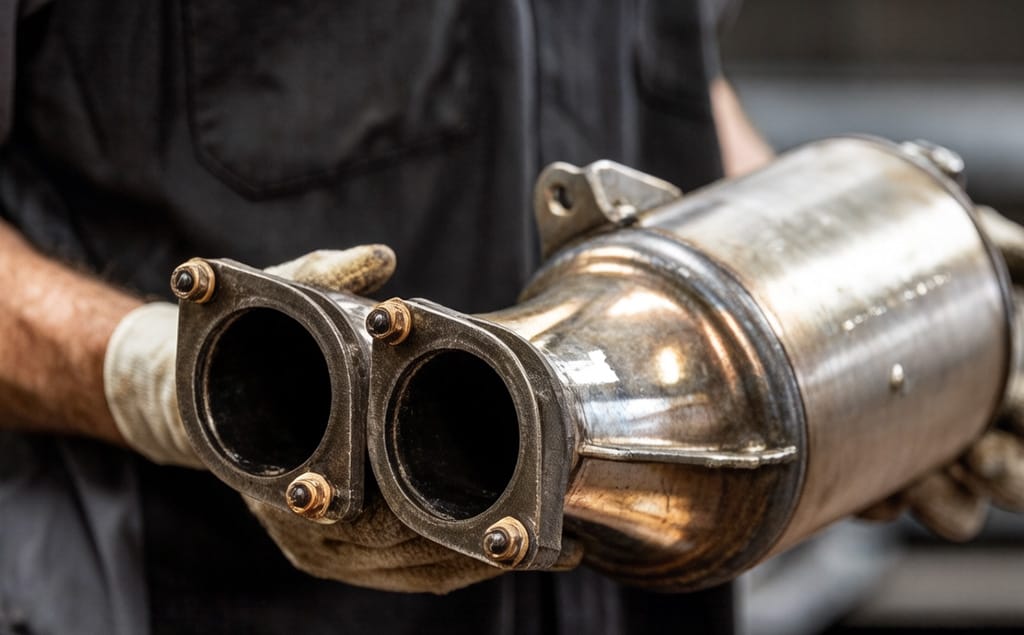
EVs might be grabbing all the headlines, but the reality on the ground in 2026 is different. We’re still looking at millions of gas-powered and hybrid engines roaming the roads. This is where the three way catalytic converter becomes the real MVP. To meet the new LEV IV (Low-Emission Vehicle) standards, a “good enough” converter won’t cut it anymore.
Why the “Three Way” Matters More Than Ever
The device must neutralize three primary pollutants with near-perfect efficiency:
- Reduces Nitrogen Oxides ($NO_x$): Turning toxic gas into breathable nitrogen. In dense metro areas like New York and L.A., this is the only thing standing between clean air and a persistent smog crisis.
- Oxidizes Carbon Monoxide ($CO$): Converting poisonous $CO$ into carbon dioxide ($CO_2$).
- Oxidizes Unburnt Hydrocarbons: Incinerating raw fuel vapors that escaped the combustion chamber.
The Precious Metal Crisis: Rhodium
Engineers face a massive challenge: روڈیم. To meet 2026 standards, the catalyst loading (the amount of precious metal inside) must increase. Rhodium is the most effective element for $NO_x$ reduction, but its price volatility makes manufacturing an expensive game. Cheap aftermarket parts often skimp on these metals, leading to immediate “Check Engine” lights in strict states.

Cold Start: The 30-Second Battle
Most pollution happens in the first 30 to 60 seconds before the three way catalytic converter reaches its “light-off” temperature (400°C to 600°C). Strict states now require advanced thermal management, such as electrically heated catalysts, to ensure the conversion starts almost instantly.
2026 Compliance: Federal vs. CARB States
| Regulatory Metric | Primary Target | 2026 CARB Requirement (Top 10 States) |
|---|---|---|
| ZEV Sales Quota | Fleet Composition | 35% of new cars must be Zero-Emission |
| LEV IV Criteria | Tailpipe Pollutants | Extreme reduction in $NMOG + NO_x$ |
| TZEV Efficiency | Hybrid Standards | Must reach SULEV 20/30 (Super-Ultra Low) |
| PM Standards | Particulate Matter | Drastic cuts to physical soot/smoke emissions |
| Warranty Mandate | Durability | 15 years / 150,000 miles for emission parts |
Aftermarket Challenges: OBD II and Replacement Parts
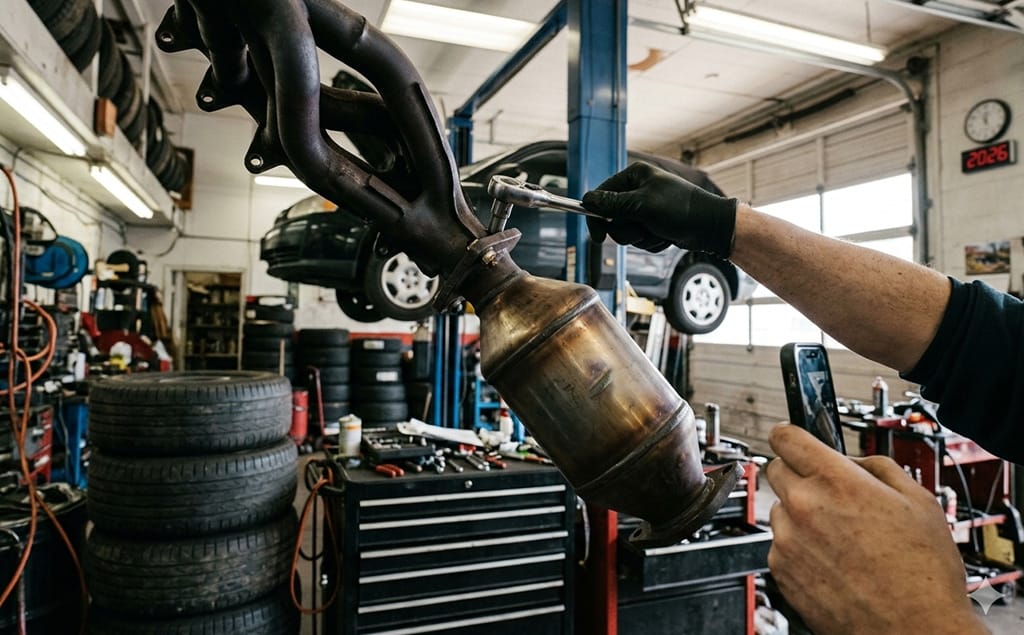
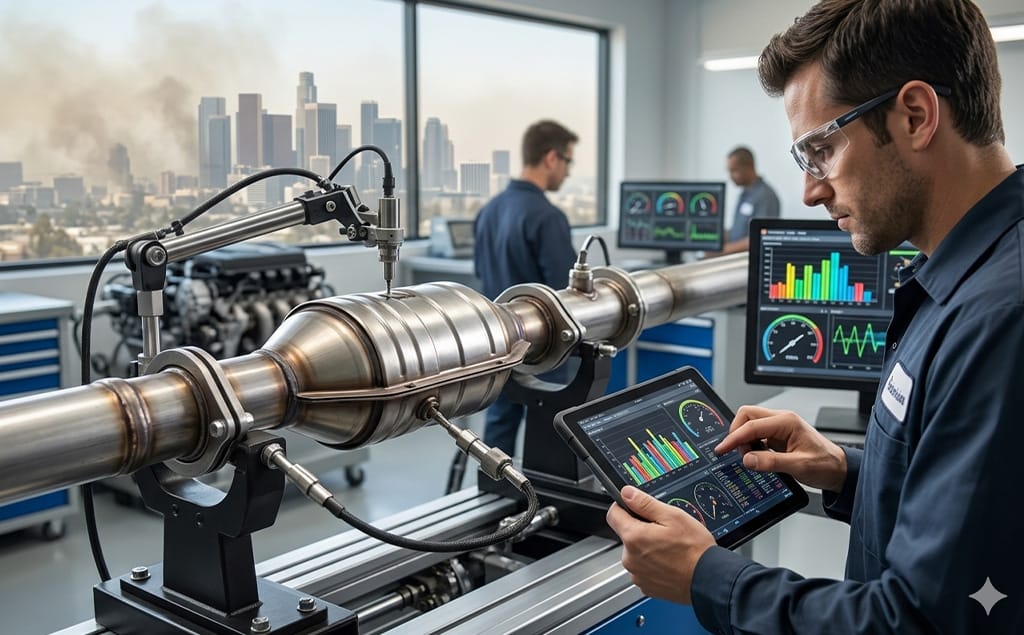
For e-commerce merchants and repair shops, 2026 is a year of precision. Modern OBD II systems in CARB states monitor the oxygen storage capacity of the three way catalytic converter in real-time.
Your ECU is incredibly picky. If your new converter isn’t perfectly calibrated to the factory engine mapping, expect a P0420 light to hit your dash. It’s all about the data—anything less than a 1:1 match will get flagged for low efficiency. In states like California or New Jersey, a car cannot pass inspection with this code. This has led to a surge in demand for “CARB-Compliant” converters, which feature higher-grade ceramic substrates and denser wash-coats.
The Long Game: What Happens After 2026?
While 2035 marks the official pivot to zero emissions, we’re looking at a very ‘long goodbye’ for the combustion engine. The legacy fleet of used cars ensures a massive, long-tail demand for high-performance exhaust parts that simply won’t quit.
Expect a robust aftermarket for the three way catalytic converter as long as there’s a tailpipe left on the road. As standards get tighter, the demand for premium, high-efficiency replacement parts will only go up. We are moving toward a “clean ICE” era where the exhaust is often cleaner than the ambient air in a polluted city.
نتیجہ
Navigating 2026 is a multidimensional game of law and engineering. For engineers and merchants alike, a deep-dive into three way catalytic converter technology isn’t just helpful—it’s the definitive roadmap for staying competitive in a tightening market.