Catalytic converters are essential devices for reducing toxic gas emissions from internal combustion engines. However, with increasing demand and increasingly stringent emission standards, counterfeit and substandard catalytic converters have flooded the market. This guide will explain how to identify fake or inferior تین طرفہ کیٹلیٹک کنورٹرز, the importance of compliance, and the measures drivers and mechanics can take to ensure proper emission control. If you are concerned about engine health, exhaust flow, or compliance with the Clean Air Act, this article is worth reading.
1. What is a catalytic converter and why is compliance important?
A catalytic converter is a device used to reduce harmful gases in the exhaust system. It transforms carbon monoxide, hydrocarbon (HC), and nitrogen oxides (NOx) into less harmful carbon dioxide and water through oxidation and catalytic reduction. Genuine converters are tested under strict emission control standards, while counterfeit parts often bypass these requirements.
Compliance ensures that the converter actually oxidizes carbon monoxide and hydrocarbons effectively and reduces nitrogen oxides. Non-compliant units may allow toxic gases to pass through, resulting in harmful emissions and potential failure during inspections.
2. How does a three-way catalytic converter actually work?
The تین طرفہ کیٹلیٹک کنورٹر handles three pollutants simultaneously: carbon monoxide, hydrocarbons, and oxides of nitrogen. It sits close to the engine, where high temperature helps trigger chemical reaction.
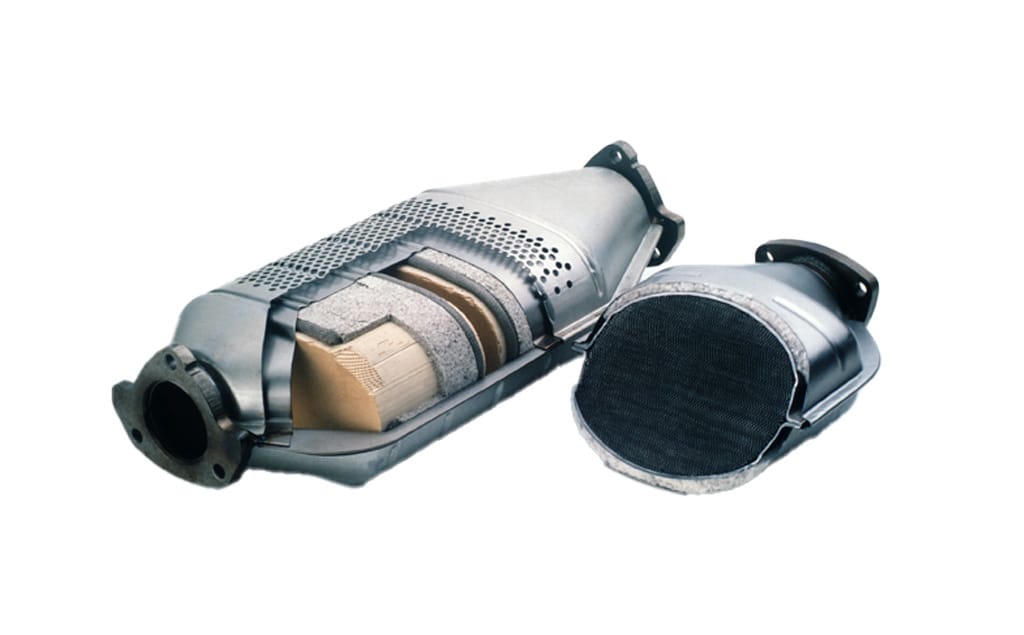
Inside the converter, a ceramic honeycomb structure is coated with precious metal catalysts like platinum, palladium, and rhodium. These metals oxidize HC and CO into carbon dioxide and water, while simultaneously reducing NOx to harmless nitrogen. This balance only works when the air to fuel ratio is close to stoichiometric, which is managed by the oxygen sensor in the exhaust stream.

3. Why counterfeit catalytic converters are on the rise
The demand for converters has risen due to emission laws and the high value of precious metal. Criminals exploit this by producing counterfeit catalytic converters that contain little or no platinum, palladium, or rhodium.
These fake converters may look identical from the outside, but their internal catalyst system lacks the catalytic coating necessary for proper oxidation and reduction reactions. With the increase of gasoline cars requiring emission control, counterfeit parts have become a global issue.
4. Signs your catalytic converter may be non-compliant
One clear sign is poor emission test results. A non-compliant catalytic converter may fail to reduce carbon monoxide and hydrocarbons, allowing harmful emissions into the exhaust stream. Another warning is check-engine lights triggered by P0420 “catalyst system efficiency below threshold.”
If your converter was introduced without certification labels or documentation, it may not meet Clean Air Act requirements. Weight can also be a clue: genuine converters are heavier due to more precious metal coating, while counterfeit units use cheaper metal and thin ceramic substrates.
5. Differences between genuine and fake converter features
Authentic converter features include embossed serial numbers, manufacturer logos, and compliance stamps. Counterfeit or two-way converters falsely sold as three-way often lack proper identification.
Genuine converters have ceramic honeycomb structures that increase the surface area for catalytic reactions. Counterfeit products may use simple metal tubes with little catalytic coating. Always check for CARB or EPA compliance markings, especially when buying aftermarket catalytic converters.
| Feature | Genuine Catalytic Converter | Counterfeit Catalytic Converter |
|---|---|---|
| Appearance & Welding | Smooth welding, solid metal shell, clear labels and markings. | Rough welds, thin metal shell, blurry or missing markings. |
| Internal Structure | Honeycomb ceramic design, evenly coated with precious metal catalyst. | Poor or missing honeycomb structure, little or no catalyst coating. |
| Materials Used | Contains Platinum, Palladium, and Rhodium, enabling proper oxidation and reduction. | Lacks or has very little precious metal, cannot fully oxidize carbon monoxide and hydrocarbons. |
| Performance & Emissions | Meets emission control standards, effectively reduces NOx, HC, and CO. | Fails emissions tests, engine exhaust contains high levels of pollutants. |
| وزن | Heavier due to solid ceramic and sufficient metal materials. | Noticeably lighter because of cost-cutting in materials. |
| قیمت | Higher cost but ensures engine longevity and reliable exhaust system performance. | Cheap upfront, but can damage the engine and lead to legal issues. |
| تعمیل | Certified under the Clean Air Act, comes with serial numbers and labels. | No certification, often fails inspection or regulatory checks. |
6. How counterfeit catalysts affect exhaust emissions and pollutants
When the catalyst is missing or insufficient, exhaust gas leaves the combustion chamber carrying carbon monoxide, HC, and NOx. A genuine three-way catalyst oxidizes CO and HC and reduces nitrogen oxides.
Counterfeit converters do not oxidize effectively, leading to more pollutants in the engine exhaust. Not only do they increase exhaust emissions, but they can also damage the internal combustion engine by creating improper backpressure. The result: reduced performance, higher fuel consumption, and long-term damage.
7. Testing converter efficiency: oxygen sensor and exhaust flow checks
A quick way to test a catalytic converter is through the oxygen sensor readings. When functioning correctly, the downstream oxygen sensor shows reduced fluctuations compared to the upstream sensor. A counterfeit catalyst converter will not stabilize the exhaust flow, and both readings may appear similar.
Another method is checking exhaust gas temperature. Inside the converter, oxidation and reduction reactions release heat. If exhaust temperature remains unchanged before and after the converter, it signals the unit may be fake or clogged.
8. حقیقی کنورٹرز میں قیمتی دھاتوں (پلاٹینم، پیلیڈیم، روڈیم) کا کردار
Precious metal catalysts are at the heart of emission control. Platinum promotes oxidation of hydrocarbons into carbon dioxide, palladium enhances oxidation reactions, and rhodium helps reduce nitrogen oxides.
Counterfeit converters often cut costs by minimizing or eliminating these precious metals, leading to poor catalytic reaction and excessive pollutants. That is why converters are used with high-value materials—without them, the three basic functions of a three-way converter are lost.
9. Legal risks: Clean Air Act, emission control and non-compliant parts
In the United States Clean Air Act, selling or installing non-compliant catalytic converters is illegal. The Environmental Protection Agency (EPA) and state agencies like CARB enforce strict standards on converter features and labeling.
Using counterfeit catalytic converters can result in fines, failed inspections, and loss of low emission vehicle certification. Mechanics and automotive shops must ensure converters have the required compliance markings, or they risk penalties as well.
10. Best practices when buying or replacing a catalytic converter
When purchasing, always verify compliance stamps and check that converters are used in vehicle models approved by EPA or CARB. Be cautious of unusually low prices, as precious metal costs ensure that genuine converters are never cheap.
Ask for documentation and confirm part numbers with manufacturer databases. Avoid generic two-way catalytic converters being misrepresented as three-way catalytic converters. For diesel exhaust, confirm the converter is specifically designed and not a mismatched type.
خلاصہ: یاد رکھنے کی اہم چیزیں
- A catalytic converter is a device designed to reduce harmful emissions by oxidizing HC and CO and reducing NOx.
- Counterfeit or non-compliant converters often lack platinum, palladium, or rhodium.
- Signs of fake converters: no compliance label, lighter weight, failing emission tests, or identical oxygen sensor signals.
- Genuine converter features include ceramic honeycomb, catalytic coating, serial numbers, and CARB/EPA markings.
- Legal risks include fines under the United States Clean Air Act for selling or installing non-compliant parts.
- Best practice: always buy from trusted suppliers, verify markings, and confirm part numbers before installation.