تعارف
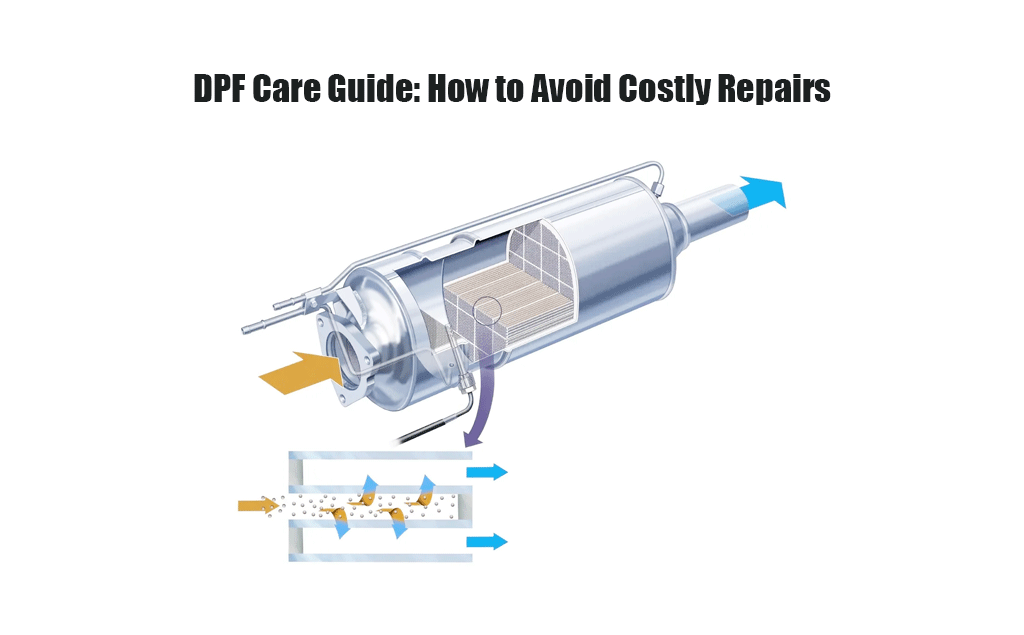
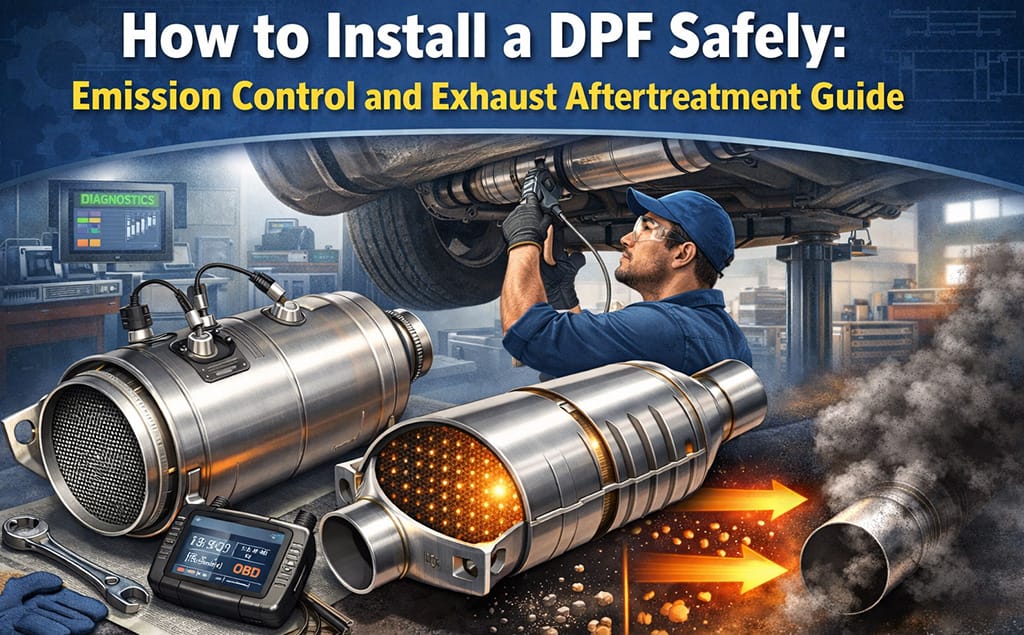
Automotive emission control represents a critical frontier in modern mechanical engineering. Two primary components lead this effort: the Diesel Particulate Filter (DPF) and the three way catalytic converter. While gasoline engines rely on the three way catalytic converter to neutralize gases, diesel engines use the DPF to trap solid soot. Precise installation of these units ensures vehicle longevity and maintains air quality standards. Incorrect handling causes immediate mechanical failure or expensive engine damage. This guide provides a comprehensive technical roadmap for the safe installation and diagnosis of these critical emission components. We emphasize precision, safety, and the essential role of electronic calibration. Technicians must understand the delicate nature of these ceramic-based units to achieve professional results.
1. Preparation and Essential Safety Protocols
Safety serves as the foundation of any professional exhaust repair. You must prioritize personal protection and vehicle stability before touching the exhaust system.
Disconnect the Power Supply Always disconnect the earth terminal of the battery. Modern Engine Control Units (ECUs) monitor the exhaust system constantly. An active power supply during sensor removal can trigger permanent fault codes. It also prevents accidental electrical shorts while you work near the starter motor or alternator.
Ensure Vehicle Stability Lift the vehicle using a professional-grade hydraulic jack. Place the vehicle on high-quality jack stands. You must work on a flat, level surface. Never rely solely on a jack to support the vehicle weight while you are underneath it. Shake the vehicle slightly to confirm it sits securely on the stands.
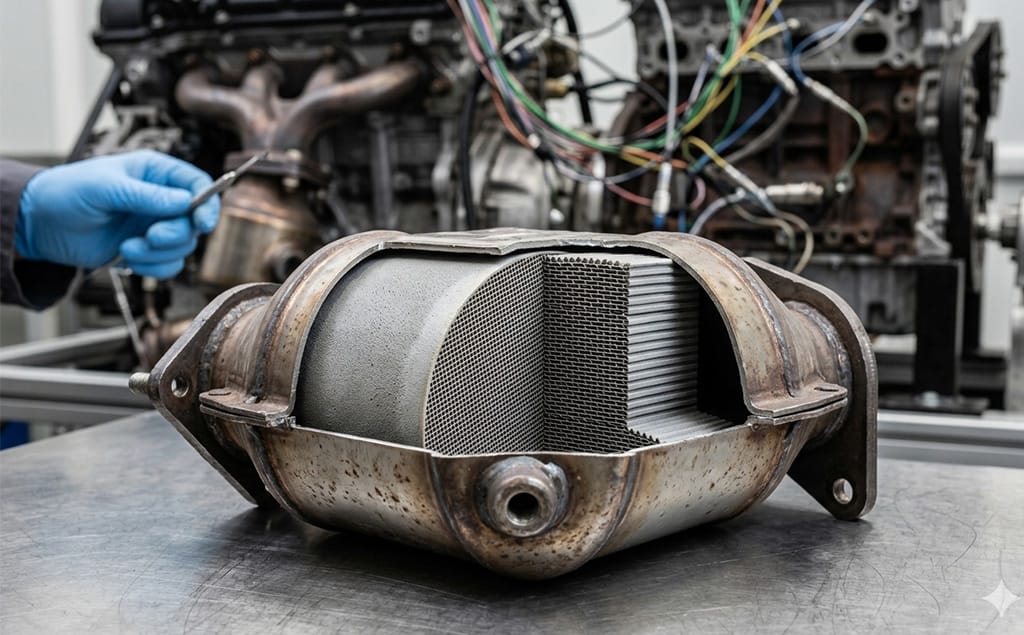
Handle Components with Extreme Care Both the DPF and the three way catalytic converter contain fragile internal structures. These units often use ceramic honeycombs or silicon carbide substrates. Internal cracks occur easily if you drop or bang the unit. These microscopic fractures void warranties and lead to premature filtering failure. Handle every unit with the same care you would give to glass.
2. The Chemical Engineering of the Three Way Catalytic Converter
The three way catalytic converter performs a complex chemical balancing act. It manages three specific pollutants simultaneously to reduce environmental impact.
First, the unit targets Nitrogen Oxides (NOx). The reduction catalyst uses platinum and rhodium to strip nitrogen atoms from the molecules. This process releases clean nitrogen and oxygen into the atmosphere. Second, the converter addresses Carbon Monoxide (CO). The oxidation catalyst adds oxygen to the CO molecules to create Carbon Dioxide (CO2). Third, the system oxidizes unburnt Hydrocarbons (HC). This reaction converts raw fuel remnants into water vapor and CO2.
کی کارکردگی a three way catalytic converter depends on the “Stoichiometric” ratio. The engine must maintain an air-to-fuel ratio of exactly 14.7:1. If the mixture deviates, the catalyst cannot perform all three reactions effectively. This precision makes the upstream oxygen sensor a vital partner to the converter.
3. Removal of the Legacy Unit and Surface Preparation
Successful installation begins with a clean slate. You must remove the old component without damaging surrounding harnesses or pipes.
Document the Original Orientation Take high-resolution photos of the original installation. Note the specific routing of sensor wires. Pay attention to the orientation of the oxygen sensors and temperature probes. Proper documentation ensures you replicate the factory layout exactly during the final assembly.
Clean the Mating Flanges Corrosion and carbon deposits accumulate on exhaust flanges. Use a wire brush or a specialized cleaning tool to strip these surfaces to bare metal. A smooth surface ensures a leak-free seal. Even a minor gap allows exhaust gases to escape. This leak confuses the pressure sensors and triggers the engine management light.
Inspect Peripheral Systems Check the condition of the rubber pressure sensor hoses. These hoses often become brittle or crack due to high heat. Examine the Exhaust Gas Recirculation (EGR) valve for carbon blockages. A faulty EGR valve will quickly ruin a new DPF or a three way catalytic converter.
4. Detailed Installation Steps
Precision during the physical mounting of the unit prevents mechanical stress and exhaust leaks.
Verify Flow Direction Examine the metal tag or the body of the unit. Manufacturers usually stamp an arrow indicating the direction of exhaust flow. Ensure the arrow points toward the rear of the vehicle. Reversing the unit renders the filtration process useless and may block the exhaust flow entirely.
The Loose Fit Technique Always fit the DPF or three way catalytic converter loosely at first. Use new gaskets and high-quality fitting kits. Hand-tighten the clamps and bolts. This approach allows you to align the unit with the rest of the exhaust pipework. It prevents the unit from touching the chassis, which causes noise and vibration issues.
Strictly Avoid Exhaust Sealants Never use exhaust paste or liquid sealants on a DPF or a three way catalytic converter. These substances can migrate into the filter substrate. Once inside, they harden and block the microscopic pores. This blockage causes immediate high backpressure and permanent damage to the catalyst or filter.
Apply Final Torque Consult the manufacturer service manual for specific torque settings. Use a calibrated torque wrench to tighten all fasteners. Proper torque prevents the bolts from loosening due to thermal expansion and contraction. Secure the wiring harnesses away from hot exhaust surfaces.
5. Technical Comparison: DPF vs. Three Way Catalytic Converter
| Feature | ڈیزل پارٹیکیولیٹ فلٹر (DPF) | تھری وے کیٹلیٹک کنورٹر (TWC) |
|---|---|---|
| Primary Function | Traps solid soot and particulates | Converts CO, HC, and NOx gases |
| Internal Structure | Wall-flow honeycomb (blocked ends) | Flow-through honeycomb (open ends) |
| Cleaning Method | Regeneration (Burning off soot) | Continuous chemical catalysis |
| Common Substrate | Silicon Carbide or Cordierite | Ceramic or Metallic Monolith |
| انجن کی قسم | Diesel engines exclusively | Gasoline (Petrol) engines |
| Key Failure Mode | Ash and soot clogging | Catalyst poisoning from oil or fuel |
| Operational Temp | Requires 600°C for cleaning | Effective at 250°C to 500°C |
6. Diagnostic Insights for Failure Prevention
A DPF or three way catalytic converter rarely fails on its own. It is usually the victim of an upstream engine fault.
The Impact of Driving Style Short city trips prevent the exhaust from reaching high temperatures. The DPF needs heat to perform “regeneration.” If the engine never gets hot, soot accumulates until the filter chokes. Vehicles driven primarily in urban environments require occasional long-distance highway trips to clear the filter. Gasoline vehicles also suffer if the three way catalytic converter never reaches its “light-off” temperature.
Oil Specification Matters You must use “Low SAPS” (Sulphated Ash, Phosphorus, and Sulphur) oil in DPF-equipped vehicles. Regular oil creates non-combustible ash when it burns. This ash stays in the DPF forever. Eventually, the ash occupies so much space that the filter can no longer hold soot. This leads to a permanent failure of the component.
The Role of the Three Way Catalytic Converter in Gasoline Systems In gasoline systems, the three way catalytic converter relies on a precise air-fuel ratio. If the engine runs too “rich,” unburnt fuel enters the converter. This fuel ignites on the catalyst surface. Temperatures then soar beyond the design limits. These extreme temperatures melt the ceramic substrate and block the exhaust flow.
7. Post-Installation Calibration and ECU Integration
Modern vehicles are sophisticated computers. You cannot simply swap a part and expect it to work without electronic “introduction.”
Leak Verification Start the engine and let it idle. Do not rev the engine immediately. Inspect all joints for soot streaks or the sound of escaping air. A leak before the DPF or three way catalytic converter will provide false data to the oxygen sensors. This false data causes the ECU to adjust fuel incorrectly.
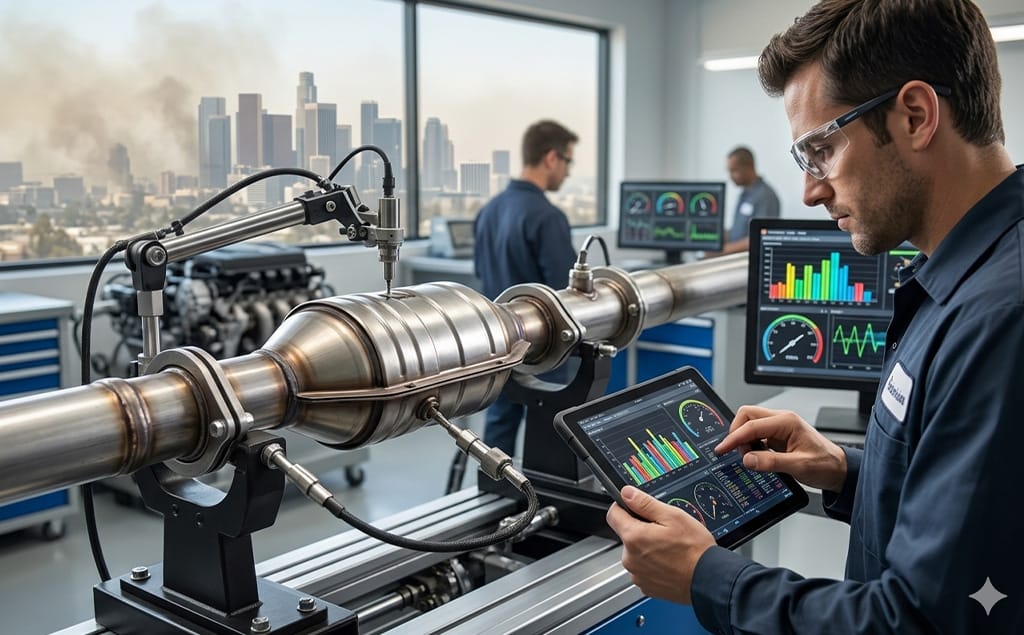
ECU Programming Use a professional diagnostic tool to communicate with the vehicle. You must tell the ECU that you installed a “New Part.” This action resets the ash counter. The ECU maintains a mathematical model of how much soot and ash are in the filter. If you do not reset this, the car will still act as if the old, blocked filter is present.
Calibrate the Differential Pressure Sensor This sensor measures the pressure before and after the DPF. It tells the ECU when the filter is full. You must calibrate the new sensor to ensure the readings are accurate. Erase all historical fault codes from the engine module. If the “Limp Mode” persists, the vehicle will not initiate the regeneration process.
8. Advanced Troubleshooting for Exhaust Systems
Before you blame the DPF or the three way catalytic converter, check these critical parts.
Glow Plug System Many technicians overlook glow plugs. In some vehicles, the DPF regeneration will not start if a glow plug is faulty. The ECU uses glow plugs to increase the combustion temperature during the cleaning cycle. A faulty controller can also prevent the entire system from operating.
The Engine Thermostat The engine must reach a specific operating temperature to allow regeneration. If the thermostat stays open, the engine runs too cool. The ECU will never trigger the DPF cleaning cycle. This leads to a blocked filter within a few hundred miles.
Fuel Vaporizers Some modern engines use a dedicated fuel injector in the exhaust. This “vaporizer” sprays fuel directly onto the catalyst to generate heat. If this injector clogs with carbon, the DPF will never get hot enough to burn off soot. Always test the vaporizer functionality when replacing the DPF.
9. Maintenance Strategies for Long-Term Performance
Longevity for a three way catalytic converter or DPF requires proactive maintenance. Owners should avoid cheap fuel additives that contain lead or silicone. These chemicals “poison” the precious metals inside the catalyst. Once poisoned, the chemical reactions stop, even if the unit looks perfect on the outside.
Monitor the health of the ignition system. A single misfiring spark plug can destroy a three way catalytic converter in minutes. Raw fuel entering the hot catalyst causes a thermal meltdown. For diesel owners, ensuring the turbocharger does not leak oil into the exhaust is vital. Oil contamination creates a thick, sticky residue that prevents regeneration.
نتیجہ
Installing a DPF or a three way catalytic converter is a high-stakes task. It requires a blend of mechanical skill and electronic expertise. By following the steps outlined in this guide, you ensure the longevity of the emission system. Always remember that these filters are symptoms of the engine health. A clean engine produces a clean filter. Maintain the sensors, use the correct oil, and perform regular highway drives to keep the system operational. Proper installation protects the environment, the vehicle, and the owner investment. Professional precision remains the only way to handle these advanced technological components.