Giới thiệu
Drivers often face a frustrating situation when their đèn kiểm tra động cơ turns on, and diagnostic tests reveal a P0420 code. The code usually points to reduced efficiency in the bộ chuyển đổi xúc tác, leading many people to wonder if catalytic converter cleaners can solve the problem. These cleaners promise to remove soot, carbon deposits, and contaminants from the exhaust system — but do they really work, or can they make things worse?
In this article, we’ll take a closer look at how bộ chuyển đổi xúc tác ba chiều function, the science behind catalytic converter cleaners, their potential benefits and drawbacks, and when professional repair or replacement becomes the smarter choice. Our goal is to provide a clear, science-based explanation for everyday car owners who want to make an informed decision.
Understanding the Function of a Three-Way Catalytic Converter
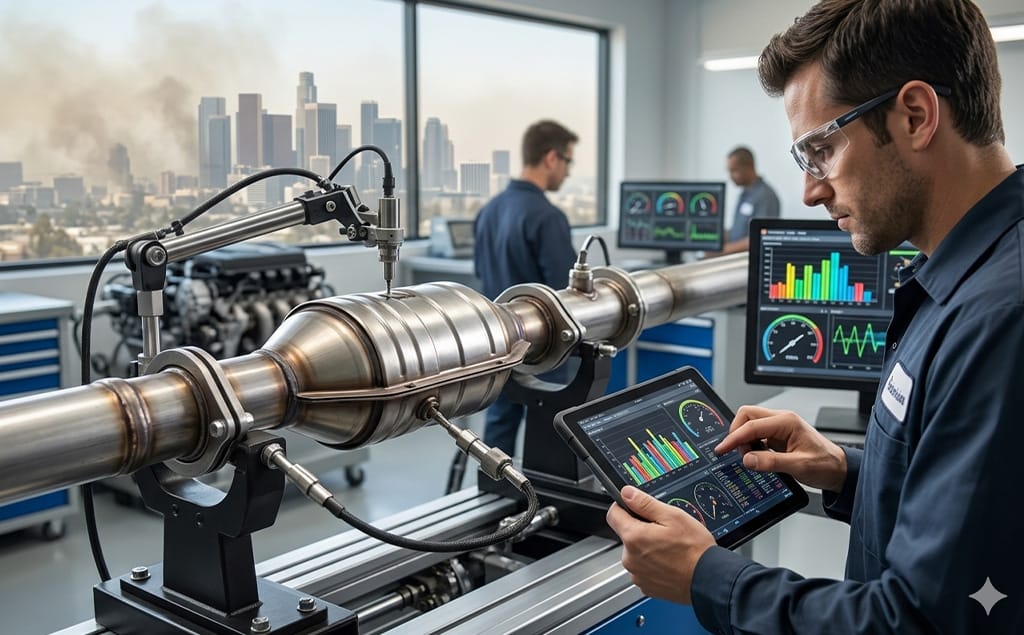
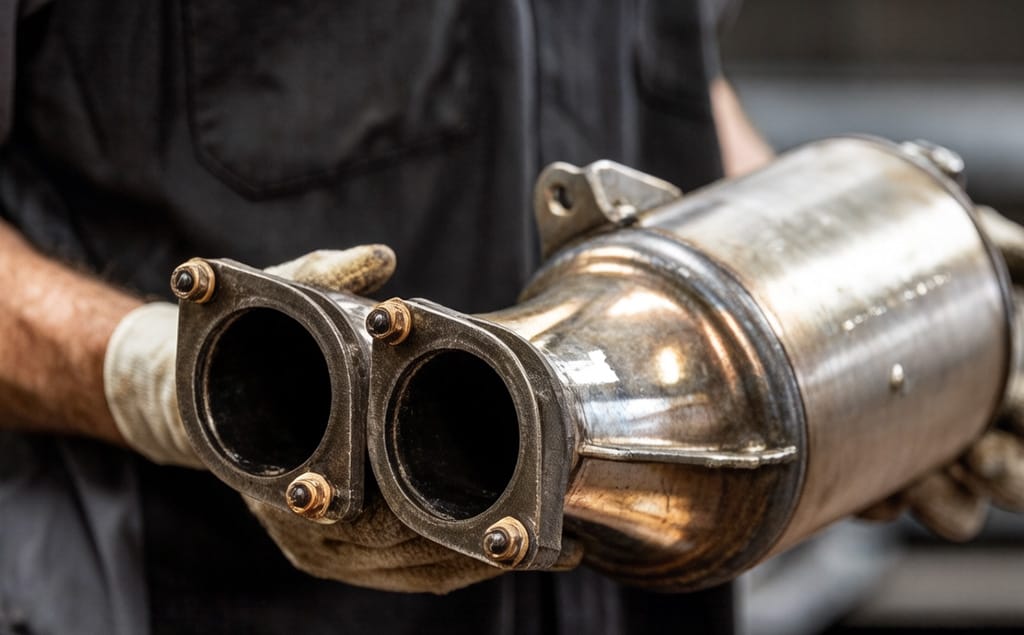
MỘT bộ chuyển đổi xúc tác ba chiều is an essential component in the vehicle’s exhaust system. Its purpose is to convert harmful gases into các chất ít gây hại hơn before they are released into the atmosphere. Specifically, it transforms cacbon monoxit, oxit nitơ, Và hydrocarbon vào trong khí cacbonic, nitơ, Và hơi nước.
The converter consists of a ceramic or metallic honeycomb substrate phủ bằng kim loại quý giống bạch kim, paladi, Và rhodi. These act as catalysts for three key reactions:
- Oxidation of carbon monoxide (CO) → carbon dioxide (CO₂)
- Oxidation of hydrocarbons (HC) → carbon dioxide (CO₂) and water (H₂O)
- Reduction of nitrogen oxides (NOₓ) → nitrogen (N₂) and oxygen (O₂)
Các bộ chuyển đổi ba chiều gets its name because it facilitates all three reactions simultaneously when the air–fuel ratio is balanced (around λ = 1). This precise balance is managed by the cảm biến oxy, which continuously measures exhaust gases and adjusts the mixture.

What Do Catalytic Converter Cleaners Actually Do?
Catalytic converter cleaners are fuel additives designed to dissolve carbon and soot deposits inside the exhaust system. They contain specialized solvents that pass through the fuel injectors, combustion chamber, and eventually the bộ chuyển đổi itself. The chemical reactions loosen carbon buildup and burn it off during normal engine operation.
These products target issues like:
- Slight mất điện hoặc reduced acceleration
- Poor fuel economy
- Check engine lights caused by minor inefficiencies
They can sometimes improve the efficiency of a partially clogged converter and clean other connected parts of the exhaust system.
Potential Benefits of Using a Converter Cleaner
When used correctly, catalytic converter cleaners can provide several benefits. They are especially useful for vehicles that experience light clogging or carbon buildup.
| Potential Benefit | Sự miêu tả |
|---|---|
| Improved Efficiency | Restores a functioning catalytic converter’s ability to convert gases efficiently. |
| Better Fuel Economy | Removes buildup that causes incomplete combustion and poor mileage. |
| Smoother Acceleration | Cleans injectors and sensors, reducing lag during acceleration. |
| Emission Compliance | Helps vehicles meet tiêu chuẩn khí thải temporarily by improving exhaust flow. |
Example Scenario:
A driver with a P0420 code adds a bottle of cleaner to their fuel tank and drives for 100 miles. The check engine light disappears temporarily, and fuel economy improves by 5%. However, after a few hundred miles, the code reappears — suggesting deeper mechanical wear.
Limitations and Risks of Catalytic Converter Cleaners
Despite their popularity, converter cleaners have limitations. They cannot reverse physical or chemical damage inside the bộ chuyển đổi xúc tác ba chiều.
1. Ineffective for Severe Blockages
If the converter is heavily clogged, the cleaner cannot reach or dissolve the buildup. A completely blocked converter restricts khí thải flow, causing high backpressure, overheating, and loss of engine power.
2. Incompatible with Some Engines
Some products are unsuitable for động cơ diesel or certain high-compression automotive systems. Using them incorrectly may cause động cơ bị lỗi đánh lửa hoặc sensor damage.
3. Potential Side Effects
Reports from car owners on forums such as Reddit Và Pakwheels show that cleaners sometimes cause:
- Persistent check engine lights
- Reduced performance after use
- Fuel system corrosion if overused
Diagnosing the Real Problem Before Using a Cleaner
Before adding a cleaner, always perform a proper diagnosis. A P0420 code doesn’t always mean the converter is bad. It could be triggered by:
- Faulty cảm biến oxy
- Fuel mixture running too rich or lean
- Động cơ đánh lửa không đúng
- Oil leaks hoặc coolant contamination
Fixing these issues first can sometimes clear the code without touching the converter.
| Possible Cause | Related Component | Recommended Action |
|---|---|---|
| Rich/lean mixture | Fuel injectors | Clean or replace injectors |
| Sensor error | Oxygen sensor | Replace faulty sensor |
| Misfire | Ignition coil or plug | Repair ignition system |
| Oil leak | Valve cover gasket | Seal leaks to prevent contamination |
Why Catalytic Converters Rarely Plug Up Completely
Contrary to popular belief, catalytic converters rarely become completely clogged. The most common reasons for failure are sự ô nhiễm Và thiệt hại nhiệt, not soot buildup.
When excess unburned fuel enters the converter, it ignites inside and raises internal temperatures above 1,000°C. This can melt or damage the catalyst coating on the ceramic surface, a process known as thermal deactivation. Once this happens, the converter may look intact externally but no longer functions.
Catalyst Poisoning
Another issue is ngộ độc chất xúc tác, caused by chemicals such as lead, phosphorus, hoặc silicone. These elements coat the catalyst, preventing proper phản ứng hóa học. Even a cleaner cannot reverse this kind of damage.
When to Replace Instead of Clean
If your catalytic converter has reached the end of its lifespan (usually 80,000–150,000 km), no cleaner will restore it. A replacement is the only effective solution.
You can choose between:
- OEM converters — designed by the automaker for exact fit and performance.
- Aftermarket converters — often cheaper, but may not meet all tiêu chuẩn khí thải.
- Direct-fit three-way converters — offer easy installation and reliable compatibility.
Consulting a cửa hàng sửa chữa hoặc exhaust specialist ensures correct diagnosis and part selection.
Comparing Converter Cleaner and Professional Replacement
| Diện mạo | Cleaner Additive | Professional Replacement |
|---|---|---|
| Trị giá | $20–$40 per bottle | $300–$1,500 per converter |
| Effectiveness | Temporary improvement | Permanent solution |
| Ease of Use | Simple, pour-in fuel tank | Requires professional tools |
| Risk | May not solve underlying issue | Restores full performance |
Professional Cleaning Services: An Alternative Option
If your converter shows mild to moderate clogging, professional ultrasonic or chemical cleaning can help. These services disassemble the exhaust system and clean the converter more thoroughly than fuel additives. They are more expensive but far safer for your vehicle’s long-term performance.
The Science Behind Cleaner Effectiveness
Cleaners can work only if chemical conditions are right. The solvent must reach the metal catalyst surface and burn off contaminants at proper temperatures. In most cases, this requires sustained highway driving to heat the converter to 400–800°C.
However, if the converter is already thermally damaged hoặc poisoned, no chemical reaction will reactivate it. Therefore, while some drivers experience improvement, others see no difference.
Real-World Examples and Case Studies
Case 1: Slight Efficiency Loss A 2013 Focus with 150,000 miles displayed a P0420 code. After using a fuel cleaner and cleaning the MAF sensor, acceleration improved, and the check engine light disappeared. The improvement lasted a few hundred miles.
Case 2: Severe Blockage A 2007 van with 300,000 miles and a clogged converter showed no improvement after cleaning. A full converter replacement restored performance immediately.
These examples highlight that converter cleaners are not universal fixes. They only help when the converter’s internal structure is still intact.
Conclusion: Should You Use a Catalytic Converter Cleaner?
Catalytic converter cleaners can be helpful maintenance tools for vehicles with minor efficiency loss or carbon buildup. They can clean injectors, remove soot, and temporarily improve emissions. However, they cannot repair mechanical or chemical damage inside a bộ chuyển đổi xúc tác ba chiều.
Use them as a preventive measure, not a cure. Always diagnose engine problems first, fix misfires, and ensure the fuel system is functioning correctly. For aged or contaminated converters, replacement is the only reliable solution.
Key Takeaways
- Cleaners help only if the converter is still functional.
- Avoid cleaners for diesel or heavily clogged converters.
- Diagnose all related components before use.
- Professional cleaning or replacement is more effective.