Introduction
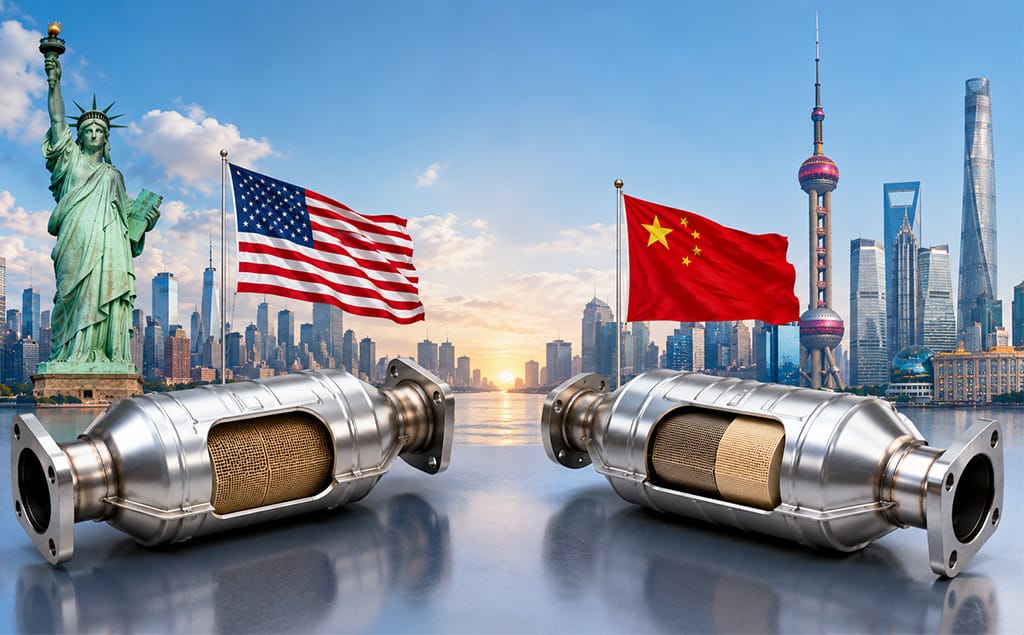
The three-way catalytic converter is an essential component of modern vehicles. Its primary role is to reduce harmful emissions and maintain optimal engine performance. Removing this device may seem tempting to improve engine output or change exhaust sound, but it comes with serious consequences. This article provides a detailed scientific and technological analysis of the effects of removing a three-way catalytic converter, exploring mechanical, legal, and environmental impacts.
1. How a Three-Way Catalytic Converter Works
A three-way catalytic converter (TWC) operates through a series of chemical reactions that convert harmful gases into less dangerous compounds. Specifically, it targets:
- Carbon monoxide (CO) – oxidized into carbon dioxide (CO₂)
- Unburned hydrocarbons (HC) – converted into water (H₂O) and CO₂
- Nitrogen oxides (NOx) – reduced into nitrogen (N₂) and oxygen (O₂)
Modern TWCs use a ceramic or metallic honeycomb coated with precious metals such as platinum, palladium, and rhodium. These metals act as catalysts, promoting chemical reactions without being consumed. The converter must reach a high operating temperature to function efficiently, which is why engineers position it close to the engine.
Table 1: Comparison of Catalytic Converter Types
| Type | Function | Efficiency | Typical Lifespan |
|---|---|---|---|
| Two-Way Converter | Reduces CO and HC | Medium | 50,000 – 70,000 km |
| Three-Way Converter (TWC) | Reduces CO, HC, NOx | High | 100,000 – 150,000 km |
| Diesel Oxidation Catalyst | Reduces CO and HC in diesel engines | Medium | 80,000 – 120,000 km |

2. Engine Performance Impacts
Your car’s engine management system (ECM) is calibrated with the presence of a TWC in mind. Removing it can create several mechanical issues:
- Backpressure Changes: TWCs produce slight backpressure. Removing the converter reduces this resistance, which may initially increase horsepower. However, modern engines are tuned to optimize airflow with the converter installed. A sudden removal may cause misfires, rough idling, and decreased fuel efficiency until the ECU is re-tuned.
- Oxygen Sensor Malfunction: The ECM relies on upstream and downstream oxygen sensors to maintain the ideal air-fuel ratio of 14.7:1. Removing the converter alters sensor readings, potentially causing a rich or lean mixture. Prolonged operation in a lean state can overheat and damage the engine.
- Exhaust Noise: The converter also acts as a muffler. Removing it increases noise, sometimes creating a harsh or unpleasant sound depending on engine type. Inline-4 engines may sound harsh, while straight-6 engines may produce a deeper tone.
Table 2: Engine Impact of Removing TWC
| Impact | Description |
|---|---|
| Horsepower | Slight increase due to less backpressure, varies by engine type |
| Fuel Efficiency | Can decrease due to inaccurate oxygen sensor readings |
| Engine Longevity | Risk of overheating or detonation if running lean |
| Exhaust Noise | Increased; varies by exhaust system design |
| ECM Error Codes | Check Engine Light likely; may require ECU re-tuning |
3. Legal and Regulatory Consequences
Tampering with or removing a TWC is illegal in most countries due to strict emissions regulations. Key consequences include:
- European Union: Removing the converter voids type approval. Vehicles without a functioning catalytic converter are not road-legal. Insurance may be canceled, and fines or vehicle impoundment can occur.
- United States: The Environmental Protection Agency (EPA) requires all vehicles to maintain emissions controls. Tampering with the TWC can lead to hefty fines and penalties.
- Other Countries: Many countries enforce similar rules. Vehicles with altered exhaust systems often fail safety and emissions inspections.
It is important to understand that legality is not just a formality; it can have serious financial and criminal consequences.
4. Environmental Impact
Removing a three-way catalytic converter significantly increases environmental pollutants:
- Carbon monoxide: Toxic gas that impairs oxygen transport in humans.
- Hydrocarbons: Contribute to smog and respiratory issues.
- Nitrogen oxides: Cause acid rain, ozone formation, and respiratory problems.
A functioning TWC reduces these emissions by up to 90% in many modern vehicles. Even temporary removal can increase your environmental footprint drastically.
5. Alternative Approaches
For enthusiasts seeking better performance or sound without compromising legality, alternatives exist:
- Cat-back Exhaust Systems: Replacing only the exhaust after the catalytic converter. Improves sound and slight performance gains without affecting emissions.
- High-Flow Catalytic Converters: Reduce backpressure while maintaining legal emission levels.
- ECU Tuning: Properly reprogramming the ECU to optimize performance while keeping the TWC in place.
These approaches offer a safer, legal, and environmentally responsible way to enhance performance.
6. Chemical and Technical Explanation
To understand the TWC function at a molecular level, consider the combustion of gasoline:
Equation: C₈H₁₈ + 12.5 (O₂ + 3.76 N₂) → 8 CO₂ + 9 H₂O + 47 N₂
- C₈H₁₈: Hydrocarbon fuel
- O₂: Oxygen
- N₂: Nitrogen from air
The converter ensures that residual CO, HC, and NOx are chemically converted to less harmful products. Any removal disrupts this balance, sending pollutants directly into the atmosphere.
7. Summary of Risks
Removing a TWC affects:
- Engine performance
- Fuel efficiency
- Sensor operation
- Legal compliance
- Environmental safety
While short-term horsepower gains may appear attractive, the long-term consequences far outweigh potential benefits.
Conclusion
The three-way catalytic converter is a critical component for modern vehicles, ensuring reduced emissions, optimal engine function, and legal compliance. Removing it introduces mechanical, environmental, and legal risks. For enthusiasts, high-flow catalytic converters or cat-back systems provide a safe alternative for performance and sound improvements. Preserving the TWC is not only a legal obligation but also a technical necessity for engine longevity and environmental responsibility.