مقدمة
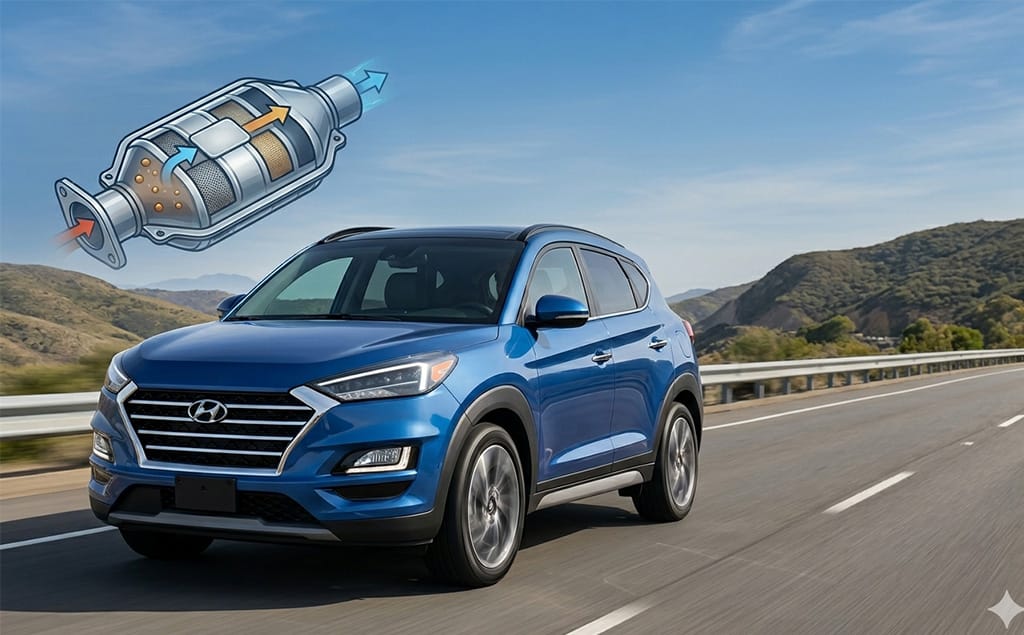
أ المحول الحفاز ثلاثي الاتجاهات (TWC) plays a central role in modern emission-control systems. It transforms hydrocarbons, carbon monoxide, and nitrogen oxides into cleaner components. A TWC achieves this through three coordinated reactions, all of which depend on stable activity of precious metal sites and the structural integrity of the washcoat. Over time, however, the converter loses efficiency. The decline results from several aging mechanisms that interact with thermal, chemical, and mechanical stress. This article explains these aging pathways in scientific detail. It also compares their effects and discusses how aging influences long-term emission performance.
The following analysis uses short, precise sentences. It adopts an explanatory scientific style. It also emphasizes active-voice statements to improve clarity. The primary focus remains the محول حفاز ثلاثي الاتجاهات and its long-term degradation behavior.
1. Overview of TWC Aging
أ محول حفاز ثلاثي الاتجاهات ages due to thermal exposure, chemical poisoning, mechanical stress, and coking. Each factor weakens catalytic activity. The converter then loses surface area, oxygen storage capacity (OSC), and the ability to maintain efficient redox reactions. This process occurs progressively. The aging rate depends on engine temperature, driving style, fuel quality, and lubricant additives.
Why Aging Matters
A TWC must balance air-fuel ratios accurately. It must also store and release oxygen continuously. These functions depend on a fresh washcoat and stable noble metal dispersion. Once aging begins, active sites disappear, chemical reactions slow down, and emissions rise. Engineers therefore study aging pathways to develop converters with longer service life.
2. Thermal Aging: The Dominant Mechanism
Thermal stress produces the most severe long-term aging effects. A TWC operates near 800–900°C during high-load conditions. Misfires push temperatures even higher. Repeated exposure to these extremes accelerates sintering and structural collapse.
2.1 Causes of Thermal Aging
- Prolonged operation above 850°C.
- Frequent high-load driving.
- Unburned fuel ignition in the exhaust.
- Malfunctioning ignition systems.
2.2 Effects of Thermal Aging
Thermal aging causes several distinct phenomena.
Sintering of Precious Metals
The precious metal particles—platinum, palladium, and rhodium—migrate and combine. They form larger particles with lower surface-to-volume ratios. The converter loses active sites. Reaction rates drop.
Washcoat Structural Degradation
The washcoat (typically γ-alumina combined with ceria-zirconia composites) loses surface area. High temperature triggers phase transitions from γ-Al₂O₃ to α-Al₂O₃. The new phase has very low porosity. Oxygen-storage materials also lose their capacity due to reduction of Ce⁴⁺ to Ce³⁺. This impairs redox buffering.
Reduced Oxygen Storage Capacity
The converter cannot maintain lean-rich oscillation control. Emission spikes occur when the engine transiently shifts between fueling modes.
3. Chemical Poisoning: Surface Deactivation
Chemical poisoning results from contaminants in fuel and lubricants. Additives form deposits that coat the active surface.
3.1 Common Chemical Poisons
| Poison | مصدر | Effect |
|---|---|---|
| Phosphorus (P) | Engine oil additives | Covers active sites; forms glassy films |
| Zinc (Zn) | Lubricants | Blocks noble metals |
| Lead (Pb) | Contaminated fuel | Permanently deactivates catalyst |
| Sulfur (S) | Low-quality gasoline | Reduces OSC; forms sulfates |
3.2 Effects of Poisoning
Poisoning interferes with catalytic reactions. Deposits isolate precious metals from exhaust gases. Washcoat pores clog. Chemical films form stable compounds that resist removal. Oxidation and reduction reactions slow sharply.
Engineers classify poisoning as the primary cause of chemical aging. Even low concentrations accumulate over thousands of kilometers. Oil consumption intensifies the problem.
4. Mechanical Damage: Structural Failure
Mechanical damage develops from vibration, impact, or thermal shock. The honeycomb substrate of the TWC is sensitive to abrupt changes.
4.1 Causes of Mechanical Damage
- Engine vibration.
- Road impacts.
- Mishandling during installation.
- Rapid temperature changes (thermal shock).
4.2 Effects of Mechanical Damage
Mechanical damage leads to cracks, broken cells, or complete substrate collapse. Exhaust gases bypass damaged sections. Flow resistance increases. Conversion efficiency falls. Detached fragments may move downstream and block muffler components.
5. Coking: Carbon Accumulation and Surface Blocking
Coking occurs when carbon deposits accumulate in the exhaust passage.
5.1 Causes of Coking
- Rich-burn operation.
- Oil-burning engines.
- Low-speed driving with incomplete combustion.
- Cold-start cycles.
5.2 Effects of Coking
Coking blocks access to active sites. It forms a physical barrier around precious metals. The converter cannot initiate reactions until the deposit burns off. Severe coking requires replacement of the unit.
6. Consequences of TWC Aging
Aging leads to predictable performance losses.
6.1 Reduced Conversion Efficiency
The TWC loses its ability to convert CO, HC, and NOx. Emissions increase even when the engine operates correctly.
6.2 Loss of OSC Function
The three-way function depends on steady oxygen buffering. Aging reduces ceria’s ability to switch between oxidized and reduced states. Closed-loop control becomes unstable.
6.3 Higher Light-Off Temperature
Light-off temperature is the point where catalytic reactions reach 50% conversion efficiency. Aging pushes this temperature higher. The engine produces more emissions during cold start.
7. Scientific Studies on Accelerated Aging
Researchers develop laboratory methods to simulate years of aging within a short period.
7.1 Engine-Based Accelerated Aging
Ruetten et al. created a rapid aging cycle. They raised temperature under controlled engine conditions. The method reproduced real-world sintering effects.
7.2 Laboratory Oven and Reactor Aging
Other studies used high-temperature ovens or chemical reactors. These tests expose the catalyst to sulfur, phosphorus, and high heat. They simulate worst-case degradation to generate “full useful life” components.
7.3 Purpose of Accelerated Testing
- Evaluate long-term stability.
- Improve OSC materials.
- Optimize precious metal dispersion.
- Develop more durable washcoat structures.
8. Additional Insight: Interaction Between Aging Mechanisms
Aging mechanisms rarely occur in isolation. High temperature accelerates chemical poisoning. Poison deposits increase thermal stress. Mechanical cracks expose new surfaces and increase sintering rate. Coking traps heat and aggravates substrate weakening. Understanding these interactions helps engineers develop longer-lasting المحولات الحفازة ثلاثية الاتجاهات.
9. Additional Section: How Modern TWCs Mitigate Aging
9.1 Advanced Materials
Manufacturers now use thermally stable alumina, rare-earth stabilizers, and improved ceria-zirconia composites. These materials maintain surface area at higher temperatures.
9.2 Engine Control Strategies
Modern ECUs manage air-fuel ratios precisely. They prevent prolonged rich or lean operation. This slows poisoning and coking.
9.3 Coating and Dispersion Improvements
Engineers design washcoats that disperse precious metals more uniformly. They also anchor nanoparticles more strongly to delay sintering.
10. Future Trends in Three-Way Catalyst Durability
Researchers now explore new catalyst formulations that maintain high activity under extreme thermal cycles. Nanostructured precious metal particles show stronger resistance to sintering. Stabilized ceria-zirconia composites also retain higher oxygen storage capacity after repeated redox cycling. These improvements extend catalyst life and reduce long-term emissions.
11. Role of Engine Diagnostics in Slowing TWC Aging
Modern vehicles rely on advanced diagnostic systems to protect the TWC. Oxygen sensors, knock sensors, and real-time air-fuel ratio monitoring work together to prevent harmful conditions such as sustained rich operation or misfires. These systems reduce thermal shock and prevent rapid poisoning accumulation. As electronics evolve, the reliability of TWC protection will continue to improve.
Additional Comparison Table
| Aging Mechanism | Primary Cause | Main Impact | Reversibility |
|---|---|---|---|
| Thermal Aging | High exhaust temperature | Sintering, OSC loss | Irreversible |
| Chemical Poisoning | Fuel/oil additives | Surface blockage | Partially reversible |
| Mechanical Damage | Vibration, impact | Crack, substrate failure | Irreversible |
| Coking | Carbon buildup | Active site blockage | Reversible by regeneration |
خاتمة
TWC aging results from thermal, chemical, mechanical, and carbon-related mechanisms. These processes reduce catalytic activity, washcoat effectiveness, and oxygen storage capability. As aging progresses, conversion efficiency declines, light-off temperatures rise, and emissions increase. Understanding these mechanisms helps engineers design longer-lasting المحولات الحفازة ثلاثية الاتجاهات and helps technicians diagnose emission failures more accurately. Continuous research in materials, control strategies, and accelerated aging tests will further improve converter durability in future automotive emission systems.