مقدمة
Catalytic converter theft has become a serious issue for car owners around the world. Vehicles like the Toyota Prius are especially targeted because their converters contain a high concentration of valuable metals such as platinum, palladium, and rhodium. When your catalytic converter is stolen, you face an immediate problem: your car becomes loud, polluting, and unable to pass emissions tests.
In this situation, some mechanics may suggest installing a straight pipe as a temporary fix to get the vehicle back on the road. While this may seem like a quick and inexpensive solution, it carries significant technical, legal, and environmental risks.
This article explores in detail what happens when a catalytic converter is replaced with a straight pipe, how it affects your car’s engine and emission systems, and why the محول حفاز ثلاثي الاتجاهات remains an essential part of modern vehicles.
1. Understanding the Role of a Three Way Catalytic Converter
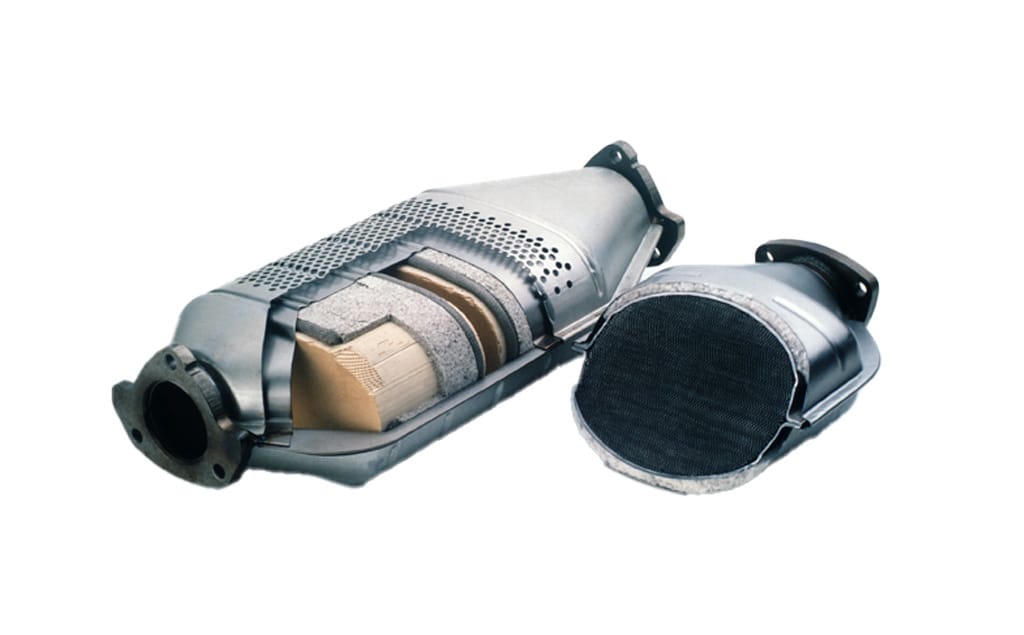
أ محول حفاز ثلاثي الاتجاهات (TWC) is a core component of your car’s exhaust system. It converts three major pollutants — carbon monoxide (CO), hydrocarbons (HC), and nitrogen oxides (NOx) — into less harmful gases such as carbon dioxide (CO₂), nitrogen (N₂), and water vapor (H₂O).
This process occurs through three simultaneous chemical reactions:
- أكسدة أول أكسيد الكربون into carbon dioxide.
- أكسدة الهيدروكربونات into carbon dioxide and water.
- اختزال أكاسيد النيتروجين into nitrogen and oxygen.
The converter contains a ceramic or metallic honeycomb substrate coated with a catalyst layer made from precious metals. These metals speed up the reactions that clean the exhaust gases before they exit the tailpipe.
When a straight pipe replaces this converter, all these reactions stop — leading to higher emissions and possible engine complications.
Table 1. Comparison Between Three Way Catalytic Converter and Straight Pipe
| ميزة | المحول الحفاز ثلاثي الاتجاهات | Straight Pipe |
|---|---|---|
| التحكم في الانبعاثات | Converts harmful gases | No conversion, releases pollutants |
| Engine Performance | Optimized for balanced flow | May slightly increase exhaust flow but affects sensors |
| Legal Status | Required by emission laws | Illegal in most regions |
| Sound Level | Moderate | Louder, raw exhaust note |
| ضوء فحص المحرك | Normal operation | Usually triggered due to O₂ sensor errors |
2. Why Mechanics Suggest Straight Pipes
Mechanics often suggest straight pipes because they’re cheap, quick, and simple to install. A straight pipe can be welded where the catalytic converter used to be, restoring a complete exhaust pathway so the car can operate temporarily.
This option appeals to drivers who:
- Need immediate transportation.
- Don’t want to pay thousands for a replacement converter.
- Live in regions without strict emissions testing.
However, this “temporary” solution can cause more harm than good in the long term. The exhaust system is designed to work مع the catalytic converter. Removing it changes how exhaust gases flow and how sensors communicate with the engine control module (ECM).
3. Engine and Sensor Reactions to a Missing Converter
Modern vehicles, including hybrid cars like the Prius, rely on multiple أجهزة استشعار الأكسجين placed before and after the catalytic converter. These sensors monitor the oxygen levels in exhaust gases and send feedback to the ECM, which then adjusts the fuel-air ratio to maintain efficient combustion.
When a straight pipe is installed, the downstream O₂ sensor detects abnormal oxygen readings. The ECM interprets this as a malfunction, triggering a Check Engine Light (CEL) and storing diagnostic trouble codes (DTCs).
The ECM may then enter open-loop mode, ignoring sensor feedback and using default parameters for fuel injection and ignition timing. This can lead to:
- ضعف الاقتصاد في استهلاك الوقود
- Increased engine knocking or pre-ignition
- Rough idling
- Higher emissions
Essentially, your car’s electronic brain becomes confused because it expects to find a working محول حفاز ثلاثي الاتجاهات in the exhaust stream.
4. Legal and Environmental Risks
Driving without a catalytic converter is illegal in most U.S. states and many other countries. Federal laws under the قانون الهواء النظيف prohibit tampering with or removing emission control devices.
If an inspector, mechanic, or police officer notices that your converter has been replaced with a straight pipe, you could face:
- Fines or penalties ranging from $500 to $2,500 per incident.
- Vehicle registration failure during emissions testing.
- Insurance claim denials in case of accidents.
In states like كاليفورنيا و New York, where CARB (California Air Resources Board) standards apply, the enforcement is even stricter. Vehicles must pass both visual و tailpipe inspections. A straight pipe will fail both.
Table 2. Penalties for Catalytic Converter Removal by Region
| منطقة | Enforcement Agency | Possible Fine | Smog Test Requirement |
|---|---|---|---|
| كاليفورنيا | مجلس موارد الهواء في كاليفورنيا | Up to $2,500 | Visual + Tailpipe |
| Texas | State DMV | $1,000 | Tailpipe only |
| Florida | وكالة حماية البيئة | $500 | No regular testing |
| New York | مجلس موارد الهواء في كاليفورنيا | Up to $2,000 | Both required |
Even if your region has no mandatory testing, driving without a converter contributes to local air pollution, releasing unfiltered CO, HC, and NOx — all of which are harmful to human health.
5. Technical Consequences of Straight Piping a Prius
A Prius or other hybrid vehicles rely heavily on precise engine management for smooth transitions between electric and gasoline modes. Removing the converter disrupts this balance.
When the catalytic converter is missing:
- ال نسبة الهواء إلى الوقود becomes unstable.
- ال hybrid control system struggles to maintain efficiency.
- ال battery assist may work less effectively because the engine cycles become erratic.
- Long-term wear on the exhaust manifold and oxygen sensors increases.
In short, even though the car can still “run,” the damage accumulates over time. The performance may feel fine at first, but efficiency, emissions, and reliability suffer in the long term.
6. Why Thieves Target Catalytic Converters
Catalytic converter theft is motivated by the value of precious metals. Platinum, palladium, and rhodium prices have skyrocketed due to limited global supply.
A single converter can contain metals worth $100 to $500, while new OEM replacements can cost $1,000 to $3,000. Prius converters, in particular, have some of the highest metal content, making them prime targets.
Interestingly, in some countries, road dust is now being collected to extract trace amounts of these metals — effectively turning streets into “urban mines.”

7. Alternatives to Straight Pipes
If you cannot afford a full OEM replacement, consider these legal and safer options:
A. Federal-Compliant Aftermarket Catalytic Converters
These converters meet EPA standards but may not be certified by CARB. They’re less expensive and can be legally installed in most states outside California and New York.
B. Used OEM Converters
Some auto recyclers sell used converters that still function properly. Be sure they are tested and verified before installation.
C. Catalytic Converter Shields
Installing a shield or cage can help prevent future thefts. These devices cover the converter and make it much harder to cut or remove.
D. Insurance and Theft Prevention
Comprehensive car insurance often covers converter theft. Installing security cameras or parking in well-lit areas can further reduce risk.
8. The Science Behind Exhaust Flow and “Back Pressure”
Mechanics sometimes mention “back pressure” when discussing straight pipes. Back pressure refers to the resistance exhaust gases encounter as they exit the engine.
Too much back pressure reduces engine efficiency, but too little can also be harmful. The catalytic converter helps maintain an optimal balance by regulating exhaust flow. Removing it entirely with a straight pipe can cause scavenging issues, where exhaust pulses disrupt the smooth removal of gases from the cylinders.
The result? Loss of low-end torque, uneven acceleration, and potentially higher fuel consumption.
9. Ethical and Environmental Responsibility
While it’s understandable that car owners want a cheap, fast solution after a theft, driving without a converter has environmental consequences. A single car without a catalytic converter can emit ten times more pollutants than one with a functioning converter.
Even though industrial sources produce far more emissions globally, individual responsibility still matters. Replacing or repairing the converter maintains cleaner air, protects public health, and supports sustainable driving practices.
10. الخاتمة
Replacing a catalytic converter with a straight pipe might seem like a reasonable temporary solution, but it brings technical, legal, and ethical problems.
Without a محول حفاز ثلاثي الاتجاهات, your vehicle will produce higher emissions, experience unstable engine performance, and risk failing inspections or receiving fines.
While the immediate cost savings may be tempting, a proper replacement — even a certified aftermarket converter — ensures compliance, protects your car’s engine, and contributes to cleaner air for everyone.
In short, if your converter is stolen, resist the straight pipe shortcut. Instead, explore legal and environmentally responsible options that keep your car efficient and compliant.