1. Uvod u trostruke katalitičke konvertore u benzinskim vozilima
The automotive industry’s relentless pursuit of reduced environmental impact has positioned the 3-way catalytic converter (TWC) as a cornerstone technology for controlling harmful emissions from gasoline internal combustion engines. This report delves into the intricate material science and engineering behind these critical components, focusing specifically on their application in gasoline vehicles. The TWC is a sophisticated chemical reactor designed to simultaneously mitigate three primary pollutants found in engine exhaust: carbon monoxide (CO), unburnt hydrocarbons (HC), and nitrogen oxides (NOx) [1][5].
Operating within a tightly controlled environment, the TWC functions optimally when the engine’s air-fuel ratio is maintained near the stoichiometric point, precisely regulated by a lambda sensor in a closed-loop feedback system [5]. This precise control is crucial because the catalyst must facilitate both oxidation (for CO and HC) and reduction (for NOx) reactions concurrently. The evolution of TWCs has progressed from simpler oxidation catalysts to dual-bed systems, culminating in the highly efficient single-bed TWCs prevalent today, which are designed for thermal stability and rapid activation, often mounted close to the exhaust manifold [1][3]. The continuous tightening of global emission standards for CO, HC, NOx, and particulate matter is a primary driver for ongoing advancements in catalyst design and material innovation [1][6].
2. Materijali i svojstva katalitičkih supstrata
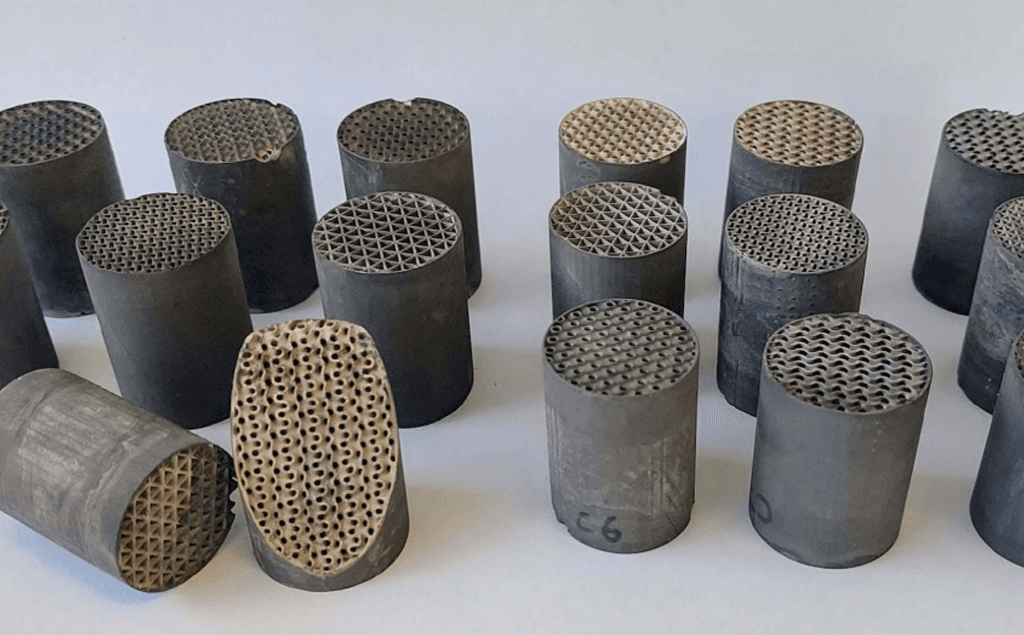
The foundation of a 3-way catalytic converter is its monolithic substrate, which provides the structural support for the catalytically active materials. While metallic substrates are also used, ceramic honeycomb structures, primarily made from cordierite, are the most common choice due to their advantageous properties [6]. Cordierite is a magnesium iron aluminum cyclosilicate mineral with the chemical formula (Mg,Fe)₂Al₄Si₅O₁₈.
Njegova jedinstvena kristalna struktura omogućava formiranje visoko porozne matrice nalik saću sa hiljadama paralelnih kanala. Fizička struktura kordieritne podloge je ključna za njenu funkciju. Obično ima visoku gustinu ćelija (ćelije po kvadratnom inču, cpsi), što se prevodi u veliku geometrijsku površinu unutar kompaktnog volumena. Ovo maksimizira kontakt između izduvnih gasova i katalitičkog premaza.
Ključna svojstva koja čine kordierit idealnim materijalom za podlogu uključuju:
- Termička stabilnost: Odlična otpornost na termalne udare, podnosi brze promjene od sobne temperature do preko 1000°C.
- Nisko termičko širenje: Sprečava naprezanje i pucanje usljed temperaturnih gradijenata.
- Mehanička čvrstoća: Dovoljno robustan da podnese vibracije i udarce.
- Velika površina: Podržava efikasno nanošenje premaza za pranje.
- Nizak pad pritiska: Ravni kanali čuvaju performanse motora minimiziranjem otpora protoku izduvnih gasova.
Design parameters like length and cell density are often optimized using simulation software such as Solidworks [7].
3. Formulacije premaza za pranje i funkcionalne uloge
Premaz za pranje je porozni oksidni sloj nanesen na podlogu, što omogućava visoku disperziju i stabilnost plemenitih metala.
- Gama-alumina (γ-Al2O3)Velika površina (100–200 m²/g), podržava disperziju plemenitih metala.
- cerije-cirkonijum (CeO₂-ZrO₂):Ceria (CeO₂) is indispensable for its remarkable oxygen storage capacity (OSC)[1][2]. It undergoes reversible redox reactions:2CeO₂ ⇌ Ce₂O₃ + ½O₂The addition of zirconia (ZrO₂) forms a solid solution, CeO₂-ZrO₂, enhancing thermal stability and oxygen mobility. Ceria-zirconia-yttria mixed oxides (CZY) are considered the industry standard .
- Ostali stabilizatoriLantan oksid (La₂O₃), barijum oksid (BaO) i neodimijum oksid (Nd₂O₃) poboljšavaju površinsku stabilnost i otpornost na otrove.
The washcoat is applied as a slurry and then calcined, forming a highly porous, rough surface that maximizes the contact area for the exhaust gases and provides a stable platform for the precious metals. Some advanced TWC designs utilize double-layer washcoats, where different precious metals (e.g., Pd/Pt in one layer and Rh in another) are supported on specific ceria- or zirconia-based oxides to prevent sintering and optimize their individual catalytic functions [1][3]. The development of mesoporous oxide supports with optimal pore geometries is an ongoing area of research, aiming to reduce catalyst size and weight while significantly decreasing the required precious metal loadings [7].
4. Katalizatori od plemenitih metala: Sastav i mehanizmi
Katalitičko srce TWC-a oslanja se na metale platinske grupe (PGM):
- Platina (Pt): Katalizuje oksidaciju:
- CO + ½O₂ → CO₂
- CₓHᵧ + (x + y/4)O₂ → xCO₂ + y/2 H₂O
- Paladijum (Pd): Katalizira i oksidaciju i umjerenu redukciju NOx. Dobro se ponaša na nižim temperaturama i ima kapacitet skladištenja kisika.
- Rodij (Rh): Ključno za smanjenje NOx:
- 2NO + 2CO → N₂ + 2CO₂
- 2NO₂ + 4CO₂ → N₂ + 4CO₂
- 2NOₓ → N₂ + xO₂
The typical ratios of these PGMs vary depending on the specific application, engine type, and emission targets, but a common formulation might involve a higher proportion of palladium, followed by platinum, and a smaller but critical amount of rhodium. For instance, the platinum-based segment alone held over 40% of the market share in 2024 [6]. The chemical forms of these metals on the washcoat are typically highly dispersed nanoparticles, which maximize the active surface area for reactions. Modified impregnation procedures, such as using toluene, can produce well-dispersed Pt nanoparticles on various hydrophobic materials, showing good activity for CO and propane oxidation [1][2].
The reliance on PGMs presents significant cost and supply chain challenges due to their scarcity and price volatility [1][6]. This has driven extensive research into reducing PGM content or developing entirely PGM-free alternatives. While iridium, ruthenium, and osmium are also PGMs, they are generally not suitable for TWC conditions due to the volatility or toxicity of their oxide forms under exhaust conditions, effectively limiting the choice to Pt, Pd, and Rh [1].
5. Kućište i materijali za pakovanje
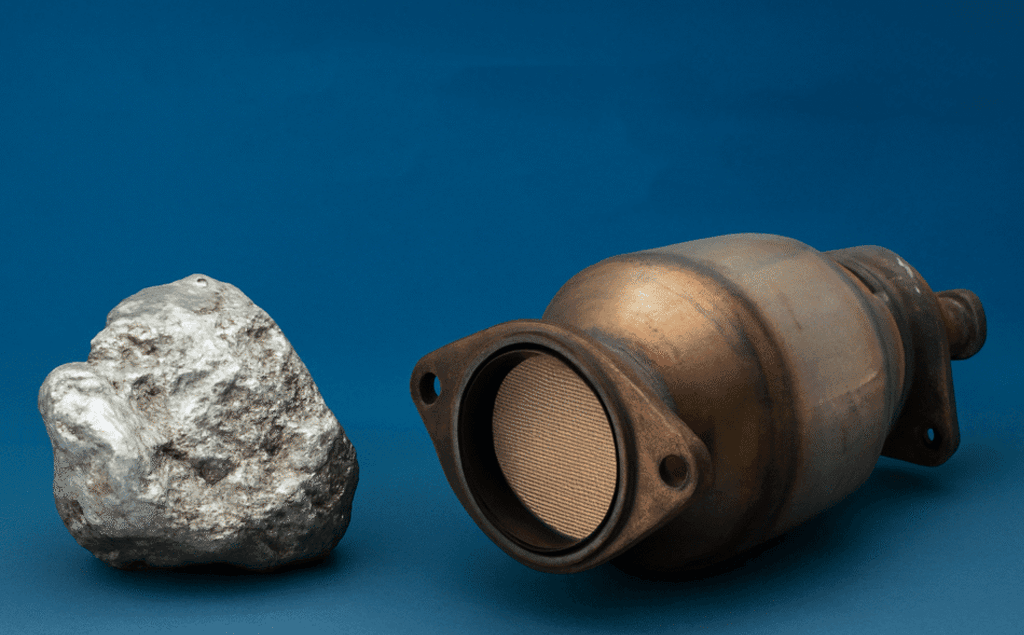
Pored katalitičke jezgre, strukturni integritet i termalno upravljanje trosmjernog katalitičkog pretvarača osigurani su njegovim kućištem i materijalima za pakovanje. Ove komponente su dizajnirane da zaštite krhku keramičku podlogu, izoluju je od ekstremnih temperatura i obezbijede sigurnu tačku montaže unutar izduvnog sistema vozila.
- Vanjsko kućište (školjka): Vanjsko kućište je obično izgrađeno od nehrđajući čelik, often featuring a double-layered design with an integrated heat shield [9]. Stainless steel is chosen for its excellent corrosion resistance, particularly against the corrosive exhaust gases and external environmental factors, and its ability to withstand high temperatures. The double-layered shell serves multiple functions:
- Strukturni integritet: Pruža robusnu mehaničku zaštitu za unutrašnju blok katalizatora, štiteći ga od otpadaka s ceste, udaraca i vibracija.
- Termička izolacija: Zračni prostor između dvostrukih slojeva, ili prisustvo toplotnog štita, pomaže u smanjenju toplotnog zračenja sa vrućeg katalizatora, štiteći okolne komponente vozila i smanjujući rizik od opekotina.
- Sprečavanje oksidne kože: It prevents the formation of an oxide skin on the catalyst surface, which could otherwise block the catalytic sites and reduce efficiency [9].
- Montaža: Obezbjeđuje potrebne prirubnice i spojeve za integraciju u ispušni sistem.
- Unutrašnja intumescentna prostirka: Između keramičke podloge i kućišta od nehrđajućeg čelika, intumescentna podloga Materijal je pakiran. Ova podloga je obično napravljena od keramičkih vlakana (npr. vlakana aluminij-silikat) koja su dizajnirana da se značajno prošire prilikom zagrijavanja. Njene funkcije su ključne za trajnost i performanse pretvarača:
- Mehanička zaštita i amortizacija: Djeluje kao amortizer, ublažavajući vibracije i mehanička naprezanja na krhku keramičku podlogu usljed kretanja vozila i pulsiranja izduvnih gasova. To sprečava pucanje ili lomljenje podloge.
- Termička izolacija: Prostirka pruža dodatnu toplinsku izolaciju, smanjujući gubitak topline iz katalizatora i pomažući mu da brže dostigne radnu temperaturu (temperaturu gašenja).
- Sigurna montaža: Kako se širi zagrijavanjem, intumescentna podloga vrši kompresijsku silu na keramičku ciglu, sigurno je držeći na mjestu unutar čeličnog kućišta i sprječavajući pomicanje ili zveckanje.
- Zaptivanje: It also provides a seal, preventing exhaust gases from bypassing the catalyst brick and ensuring that all gases flow through the active catalytic channels. Other vibration damping layers, such as metal mesh pads or ceramic gaskets, may also be used [9].
Pažljiv odabir i integracija ovih materijala za kućište i pakovanje su neophodni za dugoročnu pouzdanost i performanse trosmjernog katalitičkog konvertora, osiguravajući da može izdržati teške radne uslove automobilskog izduvnog sistema.
6. Integrisana razmatranja performansi, trajnosti i troškova materijala
Efikasnost trostrukog katalitičkog konvertora je direktna posljedica sinergijske interakcije između svih njegovih sastavnih materijala: podloge, premaza, plemenitih metala i kućišta. Njihove zajedničke performanse diktiraju ukupnu katalitičku aktivnost, termičku izdržljivost, mehaničku robusnost i, u konačnici, isplativost cijelog sistema.
Katalitička aktivnost i efikasnost: The primary goal is to achieve high conversion efficiency for CO, HC, and NOx across a wide range of operating conditions. This is largely driven by the precious metals (Pt, Pd, Rh) and their dispersion on the high-surface-area washcoat [1]. The washcoat’s oxygen storage capacity, provided by ceria-zirconia, is crucial for maintaining high efficiency under fluctuating air-fuel ratios, acting as an oxygen buffer [1][2]. Computer models are extensively used to optimize catalyst loadings and layouts, enabling high performance even with reduced PGM content [1][3].
Termička izdržljivost: Temperature izduvnih gasova automobila mogu doseći preko 1000°C, što termičku izdržljivost čini izuzetno važnom.
- Podloga: Cordierite’s low thermal expansion and high thermal shock resistance prevent cracking and structural degradation [6].
- Mantil za pranje: The incorporation of zirconia into ceria (CeO₂-ZrO₂) significantly enhances the thermal stability of the oxygen storage component, preventing sintering and loss of surface area [7]. Advanced washcoat designs, such as double layers, can also help prevent sintering of PGMs at high temperatures [1][3].
- Plemeniti metali: PGM sintering (agglomeration of nanoparticles into larger, less active particles) is a major cause of catalyst deactivation at high temperatures. The washcoat’s ability to disperse and stabilize PGMs is critical. Novel perovskite-based catalysts, for example, have shown superior thermal stability and resistance to activity loss even after hydrothermal aging at 1273K(1000°C), compared to standard dispersed metal catalysts [3][8]. This enhanced stability is often attributed to the substitution of palladium into the perovskite structure, which makes it less prone to sintering [8].
Mehanička robusnost: Pretvarač mora izdržati značajna mehanička naprezanja, uključujući vibracije motora i ceste, kao i fizičke udare.
- Smještaj: The stainless steel shell provides the primary structural integrity and protection [9].
- Intumescentna prostirka: This material is vital for cushioning the brittle ceramic substrate, absorbing vibrations, and securely holding the catalyst brick in place, preventing mechanical damage [9].
Isplativost: Trošak je glavni pokretač u automobilskoj proizvodnji. Najznačajniji faktor troškova u TWC-u je sadržaj plemenitih metala [6]. The market for automotive three-way catalytic converters was valued at USD 11.2 billion in 2024, with the platinum-based segment alone projected to exceed USD 7 billion by 2034 [6].
- Volatilnost cijene PGM-a: The fluctuating prices and secure supply of platinum, palladium, and rhodium directly impact manufacturing costs [6].
- Tehnološke inovacije: Manufacturers are continuously innovating to enhance fuel economy and reduce PGM loadings while maintaining or improving conversion efficiency and durability [6]. Projects like PROMETHEUS aim to reduce PGM content, potentially cutting production costs by up to 50% while maintaining or enhancing performance [1][4].
- Optimizacija proizvodnog procesa: The design and preparation techniques for catalyst supports, such as cost-effective methods for creating mesoporous materials, also contribute to overall cost reduction [7].
- Izdržljivost u odnosu na cijenu: There is a constant trade-off between achieving high durability (which often requires more robust, sometimes more expensive, materials or higher PGM loadings) and managing production costs. The development of more thermally stable catalysts, like perovskites, can extend the converter’s lifespan, offering long-term cost benefits despite potentially higher initial material costs [3][8].
The overall market growth for TWCs is driven by increasing vehicle sales, stricter emissions regulations, and the demand for fuel-efficient vehicles, all of which necessitate continuous material and process innovation [6]. On-road monitoring of TWC performance, often via oxygen storage capacity measurements, further ensures that these complex material systems meet real-world emission targets throughout their operational life [3].
7. Novi materijali i budući pravci
The landscape of catalytic converter technology is continuously evolving, driven by increasingly stringent global emission standards and the imperative to reduce reliance on expensive and scarce Platinum Group Metals (PGMs) [1][6]. Future directions in 3-way catalytic converters focus on novel materials, advanced manufacturing techniques, and integrated systems to achieve superior performance, enhanced durability, and improved sustainability.
Smanjenje ovisnosti o PGM-u i katalizatorima koji nisu PGM: The high cost and limited supply of Pt, Pd, and Rh are major motivators for research into PGM-free or low-PGM alternatives [1][6].
- Oksidi prelaznih metala: Materijali poput zeolit, nikl oksid i drugi metalni oksidi are being extensively explored as potential replacements for PGMs [1]. These materials offer lower cost and greater abundance.
- Katalizatori na bazi perovskita: Kompleksni metalni oksidi sa perovskitnim strukturama (npr. ABO3 su obećavajuća klasa katalizatora koji nisu PGM. Na primjer, dopirano bakrom LaCo₁−xCuxO₃ perovskiti are under investigation as PGM-free catalysts for TWCs [1][4]. These materials can exhibit high thermal stability and catalytic activity, sometimes even surpassing traditional PGM catalysts in specific conditions [3][8]. Mechanochemical synthesis, including high-energy ball milling, is being used to create such perovskites [1].
- Integracija nanotehnologije: Projects like NEXT-GEN-CAT have focused on incorporating low-cost transition metals into advanced ceramic substrates using nanotechnology to develop efficient catalysts [1][5]. Prototypes with low-PGM and no-PGM formulations have demonstrated compliance with Euro III emission standards, showcasing the viability of these approaches [1][5].
Razvoj naprednog premaza za pranje: Washcoat and catalyst development remain critical focus areas [1].
- Nosaci od mezoporoznog oksida: Research continues into developing mesoporous oxide supports with optimized pore geometries. These structures can significantly increase the active surface area and improve the dispersion of catalytic components, potentially allowing for further reductions in metal loadings while maintaining or enhancing performance [7].
- Nove metode pripreme: Istražuju se napredne metode pripreme kako bi se stvorili efikasniji i trajniji katalizatori. To uključuje:
- Ultrazvučni tretman u kombinaciji s galvanizacijom: Za precizno nanošenje i disperziju aktivnih materijala.
- Metoda citrata: Uobičajena sol-gel metoda za sintezu miješanih metalnih oksida s visokom homogenošću.
- Plazma elektrolitička oksidacija (PEO): For creating porous oxide layers on metallic substrates, which can then be functionalized with catalytic materials [1].
Rješavanje budućih propisa o emisijama: Global emission standards are becoming progressively stricter, pushing the boundaries of current TWC technology [1][6].
- Emisije pri hladnom startu: Značajan izazov predstavlja period "hladnog starta", gdje katalizator još nije dostigao svoju temperaturu gašenja i uglavnom je neefikasan. Buduća istraživanja materijala imaju za cilj razvoj katalizatora koji se aktiviraju na mnogo nižim temperaturama ili se integriraju s električno grijanim katalizatorima (EHC) ili ugljikovodičnim hvatačima kako bi se ublažile emisije hladnog starta.
- Emisije u stvarnim uslovima vožnje (RDE): Regulations are increasingly focusing on real-world driving emissions rather than just laboratory tests. This necessitates catalysts that perform robustly and efficiently across a wider range of temperatures, speeds, and load conditions. On-road monitoring of oxygen storage capacity is already a step in this direction [3].
- Kontrola čestica (PM): Iako se TWC-i prvenstveno fokusiraju na gasovite zagađivače, budući propisi mogu zahtijevati integrirana rješenja za PM, što bi potencijalno moglo dovesti do šire primjene filtera za čestice benzina (GPF) u kombinaciji s TWC-ima ili razvoja katalizatora s inherentnim sposobnostima smanjenja PM čestica.
Održivost i cirkularna ekonomija: The transition to “green” mobility and the increasing focus on sustainability are driving efforts in recyclability and life cycle assessment (LCA) [1][5].
- Reciklabilnost: The NEXT-GEN-CAT project, for instance, investigated the recyclability of TWCs, examining end-of-life scenarios and using LCA to determine the environmental impact of developed materials [1][5]. Pyro-metallurgical treatment (smelting in an inert atmosphere) was explored for efficient PGM recovery from spent catalysts [1][5]. Future research will likely focus on more energy-efficient and environmentally friendly recycling processes for both PGMs and base metals.
Proaktivna rješenja i spekulacije: Pored trenutnog istraživanja, budući pravci bi mogli uključivati:
- Pametni katalizatori: Katalizatori koji mogu dinamički prilagođavati svoja svojstva (npr. površinsku strukturu, kapacitet skladištenja kisika) kao odgovor na uvjete ispušnih plinova u stvarnom vremenu, potencijalno korištenjem ugrađenih senzora i kontrolnih sistema vođenih umjetnom inteligencijom.
- Integrisani sistemi za naknadnu obradu izduvnih gasova: Prelazak na kompaktnije, multifunkcionalne ispušne sisteme koji kombiniraju funkcionalnost TWC-a s drugim tehnologijama kontrole emisija (npr. selektivna katalitička redukcija za NOx, napredni filteri čestica) u jednu, visoko optimiziranu jedinicu.
- Aditivna proizvodnja: Upotreba 3D štampanja ili drugih tehnika aditivne proizvodnje za stvaranje visoko prilagođenih i optimizovanih struktura supstrata i premaza, omogućavajući neviđenu kontrolu nad raspodjelom veličine pora, geometrijom kanala i postavljanjem katalizatora. Ovo bi moglo dovesti do značajno poboljšanog prenosa mase i katalitičke efikasnosti.
- Bioinspirisana kataliza: Istraživanje katalitičkih mehanizama pronađenih u biološkim sistemima radi dizajniranja novih, visoko efikasnih i potencijalno održivijih katalizatora.
Kontinuirane inovacije u nauci o materijalima i hemijskom inženjerstvu će nastaviti da pomeraju granice performansi trosmernih katalitičkih konvertora, osiguravajući da benzinska vozila mogu da ispune sve strože ekološke ciljeve uz minimiziranje svog ekološkog otiska.