1. Введение в трехкомпонентные каталитические нейтрализаторы в бензиновых автомобилях
The automotive industry’s relentless pursuit of reduced environmental impact has positioned the 3-way catalytic converter (TWC) as a cornerstone technology for controlling harmful emissions from gasoline internal combustion engines. This report delves into the intricate material science and engineering behind these critical components, focusing specifically on their application in gasoline vehicles. The TWC is a sophisticated chemical reactor designed to simultaneously mitigate three primary pollutants found in engine exhaust: carbon monoxide (CO), unburnt hydrocarbons (HC), and nitrogen oxides (NOx) [1][5].
Operating within a tightly controlled environment, the TWC functions optimally when the engine’s air-fuel ratio is maintained near the stoichiometric point, precisely regulated by a lambda sensor in a closed-loop feedback system [5]. This precise control is crucial because the catalyst must facilitate both oxidation (for CO and HC) and reduction (for NOx) reactions concurrently. The evolution of TWCs has progressed from simpler oxidation catalysts to dual-bed systems, culminating in the highly efficient single-bed TWCs prevalent today, which are designed for thermal stability and rapid activation, often mounted close to the exhaust manifold [1][3]. The continuous tightening of global emission standards for CO, HC, NOx, and particulate matter is a primary driver for ongoing advancements in catalyst design and material innovation [1][6].
2. Материалы и свойства каталитических субстратов
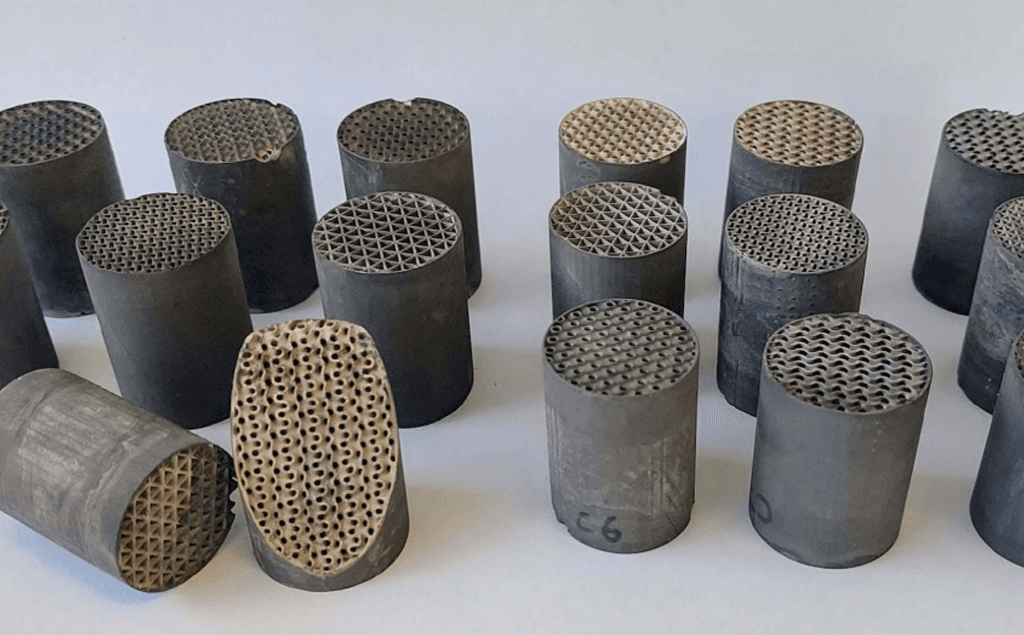
The foundation of a 3-way catalytic converter is its monolithic substrate, which provides the structural support for the catalytically active materials. While metallic substrates are also used, ceramic honeycomb structures, primarily made from cordierite, are the most common choice due to their advantageous properties [6]. Cordierite is a magnesium iron aluminum cyclosilicate mineral with the chemical formula (Mg,Fe)₂Al₄Si₅O₁₈.
Его уникальная кристаллическая структура позволяет формировать высокопористую сотовую матрицу с тысячами параллельных каналов. Физическая структура кордиеритовой подложки критически важна для её функционирования. Она, как правило, отличается высокой плотностью ячеек (ячеек на квадратный дюйм, cpsi), что обеспечивает большую геометрическую площадь поверхности в компактном объёме. Это обеспечивает максимальный контакт между выхлопными газами и каталитическим покрытием.
Ключевые свойства, которые делают кордиерит идеальным материалом для подложки, включают в себя:
- Термическая стабильность: Отличная стойкость к тепловым ударам, выдерживает быстрые перепады температур от температуры окружающей среды до более чем 1000°C.
- Низкое тепловое расширение: Предотвращает возникновение напряжений и трещин из-за перепадов температур.
- Механическая прочность: Достаточно прочный, чтобы выдерживать вибрации и удары.
- Большая площадь поверхности: Обеспечивает эффективное нанесение грунтовочного покрытия.
- Низкий перепад давления: Прямые каналы сохраняют производительность двигателя, сводя к минимуму сопротивление потоку выхлопных газов.
Design parameters like length and cell density are often optimized using simulation software such as Solidworks [7].
3. Составы и функциональные роли покрытий Washcoat
Покрытие представляет собой пористый оксидный слой, нанесенный на подложку, который обеспечивает высокую дисперсию и стабильность драгоценных металлов.
- Гамма-оксид алюминия (γ-Al2O3): Высокая площадь поверхности (100–200 м²/г), способствует дисперсии драгоценных металлов.
- Церий-Цирконий (CeO₂-ZrO₂):Ceria (CeO₂) is indispensable for its remarkable oxygen storage capacity (OSC)[1][2]. It undergoes reversible redox reactions:2CeO₂ ⇌ Ce₂O₃ + ½O₂The addition of zirconia (ZrO₂) forms a solid solution, CeO₂-ZrO₂, enhancing thermal stability and oxygen mobility. Ceria-zirconia-yttria mixed oxides (CZY) are considered the industry standard .
- Другие стабилизаторы: Оксид лантана (La₂O₃), оксид бария (BaO) и оксид неодима (Nd₂O₃) повышают стабильность поверхности и устойчивость к отравлениям.
The washcoat is applied as a slurry and then calcined, forming a highly porous, rough surface that maximizes the contact area for the exhaust gases and provides a stable platform for the precious metals. Some advanced TWC designs utilize double-layer washcoats, where different precious metals (e.g., Pd/Pt in one layer and Rh in another) are supported on specific ceria- or zirconia-based oxides to prevent sintering and optimize their individual catalytic functions [1][3]. The development of mesoporous oxide supports with optimal pore geometries is an ongoing area of research, aiming to reduce catalyst size and weight while significantly decreasing the required precious metal loadings [7].
4. Катализаторы на основе драгоценных металлов: состав и механизмы действия
Каталитическое сердце TWC основано на металлах платиновой группы (МПГ):
- Платина (Pt): Катализирует окисление:
- CO + ½O₂ → CO₂
- CₓHᵧ + (x + y/4)O₂ → xCO₂ + y/2 H₂O
- Палладий (Pd): Катализирует как окисление, так и умеренное восстановление NOx. Хорошо работает при низких температурах и обладает способностью накапливать кислород.
- Родий (Rh): Решающее значение для снижения выбросов NOx:
- 2NO + 2CO → N₂ + 2CO₂
- 2NO₂ + 4CO₂ → N₂ + 4CO₂
- 2NOₓ → N₂ + xO₂
The typical ratios of these PGMs vary depending on the specific application, engine type, and emission targets, but a common formulation might involve a higher proportion of palladium, followed by platinum, and a smaller but critical amount of rhodium. For instance, the platinum-based segment alone held over 40% of the market share in 2024 [6]. The chemical forms of these metals on the washcoat are typically highly dispersed nanoparticles, which maximize the active surface area for reactions. Modified impregnation procedures, such as using toluene, can produce well-dispersed Pt nanoparticles on various hydrophobic materials, showing good activity for CO and propane oxidation [1][2].
The reliance on PGMs presents significant cost and supply chain challenges due to their scarcity and price volatility [1][6]. This has driven extensive research into reducing PGM content or developing entirely PGM-free alternatives. While iridium, ruthenium, and osmium are also PGMs, they are generally not suitable for TWC conditions due to the volatility or toxicity of their oxide forms under exhaust conditions, effectively limiting the choice to Pt, Pd, and Rh [1].
5. Корпус и упаковочные материалы
Помимо каталитического ядра, структурная целостность и терморегулирование трёхкомпонентного каталитического нейтрализатора обеспечиваются корпусом и упаковочными материалами. Эти компоненты защищают хрупкую керамическую подложку, обеспечивают изоляцию от экстремальных температур и обеспечивают надёжное крепление в выхлопной системе автомобиля.
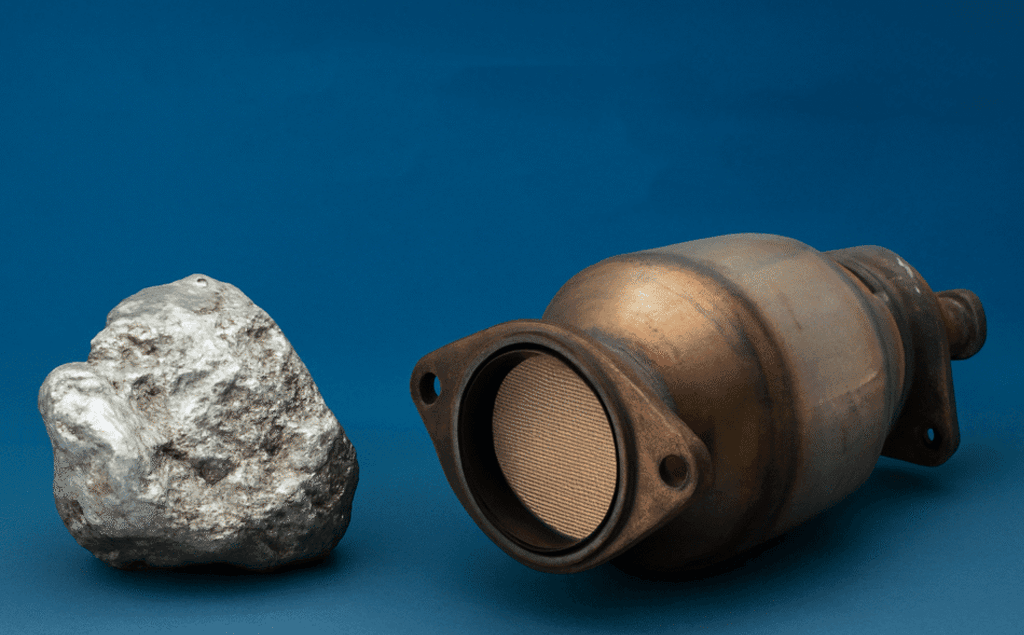
- Внешний корпус (корпус): Внешний корпус обычно изготавливается из нержавеющая сталь, often featuring a double-layered design with an integrated heat shield [9]. Stainless steel is chosen for its excellent corrosion resistance, particularly against the corrosive exhaust gases and external environmental factors, and its ability to withstand high temperatures. The double-layered shell serves multiple functions:
- Структурная целостность: Он обеспечивает надежную механическую защиту внутреннего каталитического блока, предохраняя его от дорожного мусора, ударов и вибраций.
- Теплоизоляция: Воздушный зазор между двойными слоями или наличие теплового экрана помогает уменьшить тепловое излучение от горячего катализатора, защищая окружающие компоненты автомобиля и снижая риск ожогов.
- Профилактика оксидации кожи: It prevents the formation of an oxide skin on the catalyst surface, which could otherwise block the catalytic sites and reduce efficiency [9].
- Монтаж: Он оснащен необходимыми фланцами и соединениями для интеграции в выхлопную систему.
- Внутреннее вспучивающееся покрытие: Между керамической подложкой и корпусом из нержавеющей стали находится вспучивающееся покрытие Материал упакован. Этот мат обычно изготавливается из керамических волокон (например, алюмосиликатных), которые значительно расширяются при нагревании. Его функции критически важны для долговечности и производительности преобразователя:
- Механическая защита и амортизация: Он действует как амортизатор, смягчая вибрации и механические нагрузки, возникающие при движении автомобиля и пульсациях выхлопных газов, на хрупкую керамическую подложку. Это предотвращает растрескивание и разрушение подложки.
- Теплоизоляция: Матирование обеспечивает дополнительную теплоизоляцию, уменьшая потери тепла от катализатора и помогая ему быстрее достигать рабочей температуры (температуры зажигания).
- Надежное крепление: Расширяясь при нагревании, вспучивающееся покрытие оказывает сжимающее усилие на керамический кирпич, надежно удерживая его на месте внутри стального корпуса и предотвращая перемещение или дребезжание.
- Уплотнение: It also provides a seal, preventing exhaust gases from bypassing the catalyst brick and ensuring that all gases flow through the active catalytic channels. Other vibration damping layers, such as metal mesh pads or ceramic gaskets, may also be used [9].
Тщательный выбор и интеграция материалов корпуса и упаковки имеют решающее значение для долгосрочной надежности и производительности трехкомпонентного каталитического нейтрализатора, гарантируя, что он сможет выдерживать суровые условия эксплуатации выхлопной системы автомобиля.
6. Интегрированные характеристики материалов, долговечность и стоимость
Эффективность трёхкомпонентного каталитического нейтрализатора напрямую зависит от синергетического взаимодействия всех его компонентов: подложки, защитного покрытия, драгоценных металлов и корпуса. Их совокупное воздействие определяет общую каталитическую активность, термическую стойкость, механическую прочность и, в конечном счёте, экономическую эффективность всей системы.
Каталитическая активность и эффективность: The primary goal is to achieve high conversion efficiency for CO, HC, and NOx across a wide range of operating conditions. This is largely driven by the precious metals (Pt, Pd, Rh) and their dispersion on the high-surface-area washcoat [1]. The washcoat’s oxygen storage capacity, provided by ceria-zirconia, is crucial for maintaining high efficiency under fluctuating air-fuel ratios, acting as an oxygen buffer [1][2]. Computer models are extensively used to optimize catalyst loadings and layouts, enabling high performance even with reduced PGM content [1][3].
Термическая стойкость: Температура выхлопных газов автомобилей может достигать более 1000 °C, поэтому термическая стойкость становится важнейшей задачей.
- Субстрат: Cordierite’s low thermal expansion and high thermal shock resistance prevent cracking and structural degradation [6].
- Washcoat: The incorporation of zirconia into ceria (CeO₂-ZrO₂) significantly enhances the thermal stability of the oxygen storage component, preventing sintering and loss of surface area [7]. Advanced washcoat designs, such as double layers, can also help prevent sintering of PGMs at high temperatures [1][3].
- Драгоценные металлы: PGM sintering (agglomeration of nanoparticles into larger, less active particles) is a major cause of catalyst deactivation at high temperatures. The washcoat’s ability to disperse and stabilize PGMs is critical. Novel perovskite-based catalysts, for example, have shown superior thermal stability and resistance to activity loss even after hydrothermal aging at 1273K(1000°C), compared to standard dispersed metal catalysts [3][8]. This enhanced stability is often attributed to the substitution of palladium into the perovskite structure, which makes it less prone to sintering [8].
Механическая прочность: Гидротрансформатор должен выдерживать значительные механические нагрузки, включая вибрации от двигателя и дороги, а также физические удары.
- Жилье: The stainless steel shell provides the primary structural integrity and protection [9].
- Вспучивающиеся маты: This material is vital for cushioning the brittle ceramic substrate, absorbing vibrations, and securely holding the catalyst brick in place, preventing mechanical damage [9].
Экономическая эффективность: Стоимость — важный фактор в автомобильном производстве. Наиболее значимым фактором стоимости в TWC является содержание драгоценных металлов [6]. The market for automotive three-way catalytic converters was valued at USD 11.2 billion in 2024, with the platinum-based segment alone projected to exceed USD 7 billion by 2034 [6].
- Волатильность цен на металлы платиновой группы: The fluctuating prices and secure supply of platinum, palladium, and rhodium directly impact manufacturing costs [6].
- Технологические инновации: Manufacturers are continuously innovating to enhance fuel economy and reduce PGM loadings while maintaining or improving conversion efficiency and durability [6]. Projects like PROMETHEUS aim to reduce PGM content, potentially cutting production costs by up to 50% while maintaining or enhancing performance [1][4].
- Оптимизация производственного процесса: The design and preparation techniques for catalyst supports, such as cost-effective methods for creating mesoporous materials, also contribute to overall cost reduction [7].
- Durability vs. Cost: There is a constant trade-off between achieving high durability (which often requires more robust, sometimes more expensive, materials or higher PGM loadings) and managing production costs. The development of more thermally stable catalysts, like perovskites, can extend the converter’s lifespan, offering long-term cost benefits despite potentially higher initial material costs [3][8].
The overall market growth for TWCs is driven by increasing vehicle sales, stricter emissions regulations, and the demand for fuel-efficient vehicles, all of which necessitate continuous material and process innovation [6]. On-road monitoring of TWC performance, often via oxygen storage capacity measurements, further ensures that these complex material systems meet real-world emission targets throughout their operational life [3].
7. Новые материалы и будущие направления
The landscape of catalytic converter technology is continuously evolving, driven by increasingly stringent global emission standards and the imperative to reduce reliance on expensive and scarce Platinum Group Metals (PGMs) [1][6]. Future directions in 3-way catalytic converters focus on novel materials, advanced manufacturing techniques, and integrated systems to achieve superior performance, enhanced durability, and improved sustainability.
Снижение зависимости от МПГ и катализаторов, не содержащих МПГ: The high cost and limited supply of Pt, Pd, and Rh are major motivators for research into PGM-free or low-PGM alternatives [1][6].
- Оксиды переходных металлов: Такие материалы, как цеолит, оксид никеля и другие оксиды металлов are being extensively explored as potential replacements for PGMs [1]. These materials offer lower cost and greater abundance.
- Катализаторы на основе перовскита: Сложные оксиды металлов со структурами перовскита (например, ABO3 являются перспективным классом катализаторов, не содержащих МПГ. Например, легированный медью Перовскиты LaCo₁−xCuxO₃ are under investigation as PGM-free catalysts for TWCs [1][4]. These materials can exhibit high thermal stability and catalytic activity, sometimes even surpassing traditional PGM catalysts in specific conditions [3][8]. Mechanochemical synthesis, including high-energy ball milling, is being used to create such perovskites [1].
- Интеграция нанотехнологий: Projects like NEXT-GEN-CAT have focused on incorporating low-cost transition metals into advanced ceramic substrates using nanotechnology to develop efficient catalysts [1][5]. Prototypes with low-PGM and no-PGM formulations have demonstrated compliance with Euro III emission standards, showcasing the viability of these approaches [1][5].
Усовершенствованная разработка Washcoat: Washcoat and catalyst development remain critical focus areas [1].
- Мезопористые оксидные носители: Research continues into developing mesoporous oxide supports with optimized pore geometries. These structures can significantly increase the active surface area and improve the dispersion of catalytic components, potentially allowing for further reductions in metal loadings while maintaining or enhancing performance [7].
- Novel Preparation Methods: Advanced preparation methods are being explored to create more effective and durable catalysts. These include:
- Ultrasonic treatment combined with electroplating: For precise deposition and dispersion of active materials.
- Citrate method: A common sol-gel type method for synthesizing mixed metal oxides with high homogeneity.
- Plasma Electrolytic Oxidation (PEO): For creating porous oxide layers on metallic substrates, which can then be functionalized with catalytic materials [1].
Addressing Future Emission Regulations: Global emission standards are becoming progressively stricter, pushing the boundaries of current TWC technology [1][6].
- Cold Start Emissions: A significant challenge is the “cold start” period, where the catalyst has not yet reached its light-off temperature and is largely ineffective. Future materials research aims to develop catalysts that activate at much lower temperatures or integrate with electrically heated catalysts (EHCs) or hydrocarbon traps to mitigate cold start emissions.
- Real-Driving Emissions (RDE): Regulations are increasingly focusing on real-world driving emissions rather than just laboratory tests. This necessitates catalysts that perform robustly and efficiently across a wider range of temperatures, speeds, and load conditions. On-road monitoring of oxygen storage capacity is already a step in this direction [3].
- Particulate Matter (PM) Control: While TWCs primarily target gaseous pollutants, future regulations may require integrated solutions for PM, potentially leading to the wider adoption of gasoline particulate filters (GPFs) in conjunction with TWCs, or the development of catalysts with inherent PM reduction capabilities.
Sustainability and Circular Economy: The transition to “green” mobility and the increasing focus on sustainability are driving efforts in recyclability and life cycle assessment (LCA) [1][5].
- Recyclability: The NEXT-GEN-CAT project, for instance, investigated the recyclability of TWCs, examining end-of-life scenarios and using LCA to determine the environmental impact of developed materials [1][5]. Pyro-metallurgical treatment (smelting in an inert atmosphere) was explored for efficient PGM recovery from spent catalysts [1][5]. Future research will likely focus on more energy-efficient and environmentally friendly recycling processes for both PGMs and base metals.
Proactive Solutions and Speculation: Beyond the current research, future directions might include:
- Smart Catalysts: Catalysts that can dynamically adjust their properties (e.g., surface structure, oxygen storage capacity) in response to real-time exhaust conditions, potentially using embedded sensors and AI-driven control systems.
- Integrated Exhaust Aftertreatment Systems: A move towards more compact, multi-functional exhaust systems that combine TWC functionality with other emission control technologies (e.g., selective catalytic reduction for NOx, advanced particulate filters) into a single, highly optimized unit.
- Additive Manufacturing: Использование 3D-печати или других технологий аддитивного производства для создания высокоиндивидуализированных и оптимизированных структур подложек и покрытий, обеспечивающих беспрецедентный контроль над распределением размеров пор, геометрией каналов и размещением катализатора. Это может привести к значительному улучшению массопереноса и каталитической эффективности.
- Биовдохновленный катализ: Изучение каталитических механизмов, обнаруженных в биологических системах, для разработки новых, высокоэффективных и потенциально более устойчивых катализаторов.
Постоянные инновации в материаловедении и химическом машиностроении продолжат расширять границы производительности трехкомпонентных каталитических нейтрализаторов, гарантируя, что автомобили с бензиновым двигателем смогут соответствовать все более строгим экологическим показателям, минимизируя при этом свое воздействие на окружающую среду.все более строгим экологическим показателям, минимизируя при этом свое воздействие на окружающую среду.