Uvod
The internal combustion engine changed human history. It powered the industrial revolution and modern transport. However, this progress came with a heavy environmental price. Gasoline engines emit toxic gases during the combustion process. These pollutants include carbon monoxide (CO), hydrocarbons (HC), and nitrogen oxides (NOx). These gases damage human health and the atmosphere. They cause smog, acid rain, and respiratory diseases.
Governments worldwide now enforce strict emission standards. Manufacturers must find ways to clean exhaust gases before they leave the tailpipe. The trosmjerni katalizator serves as the primary solution for this problem. This device performs a complex chemical miracle. It simultaneously neutralizes three different pollutants. It uses precious metals and clever engineering to protect our air. This article explains the science behind this vital technology. We will explore how it works, why it fails, and how it evolved.
The Problem: Toxic Exhaust Emissions and Environmental Impact
Combustion is never perfect. An engine burns fuel and air to create power. Ideally, this process produces only carbon dioxide and water. Real engines do not achieve this ideal state. High temperatures and rapid cycles create harmful byproducts.
Carbon monoxide (CO) is a colorless, odorless, and deadly gas. It prevents blood from carrying oxygen. Hydrocarbons (HC) represent unburnt or partially burnt fuel. They react with sunlight to create ground-level ozone. Nitrogen oxides (NOx) contribute to acid rain and lung irritation. These three pollutants form the “big three” targets for automotive engineers. The trosmjerni katalizator targets these specific molecules. It transforms them into harmless nitrogen, water, and carbon dioxide.
The environmental impact of these gases is profound. CO is a silent killer in enclosed spaces. HC and NOx combine in the presence of sunlight to form photochemical smog. This smog reduces visibility and causes chronic respiratory issues in urban populations. Furthermore, NOx is a precursor to nitric acid, a major component of acid rain. Acid rain damages forests, leaches nutrients from soil, and acidifies lakes and streams. By implementing the trosmjerni katalizator, the automotive industry has significantly mitigated these global threats.
Anatomy of a Three Way Catalytic Converter
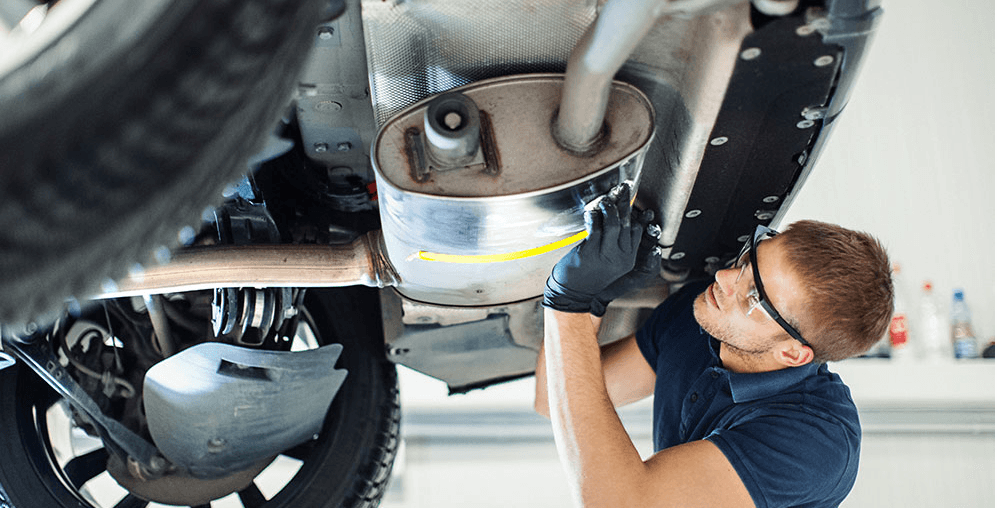
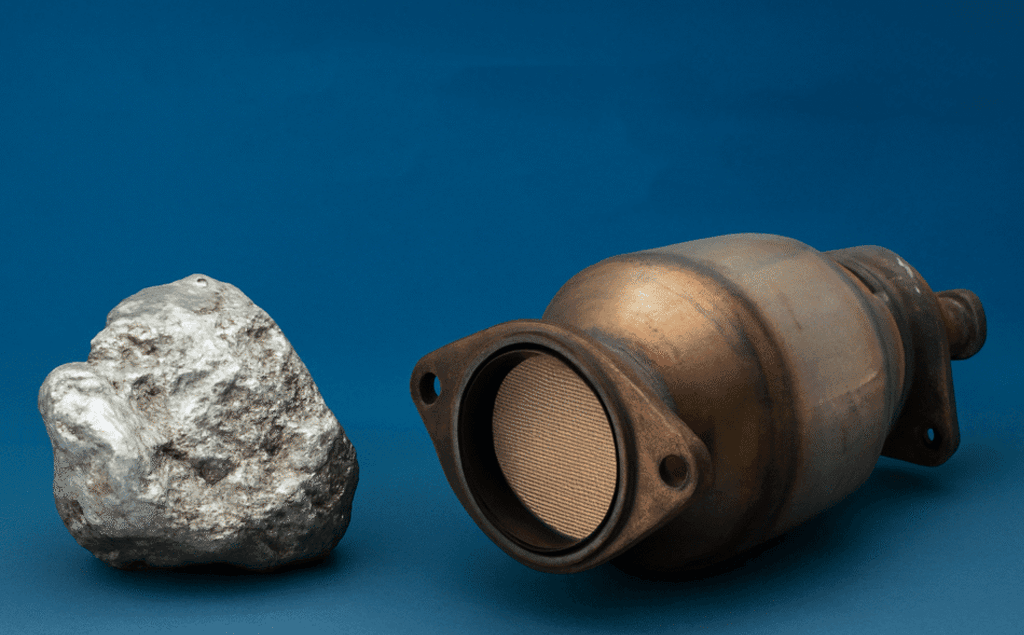
A trosmjerni katalizator is a sophisticated chemical reactor. It sits in the exhaust system of almost every modern gasoline vehicle. The device consists of several key parts. First, a stainless steel housing protects the internal components. Inside, you find a ceramic or metallic substrate.
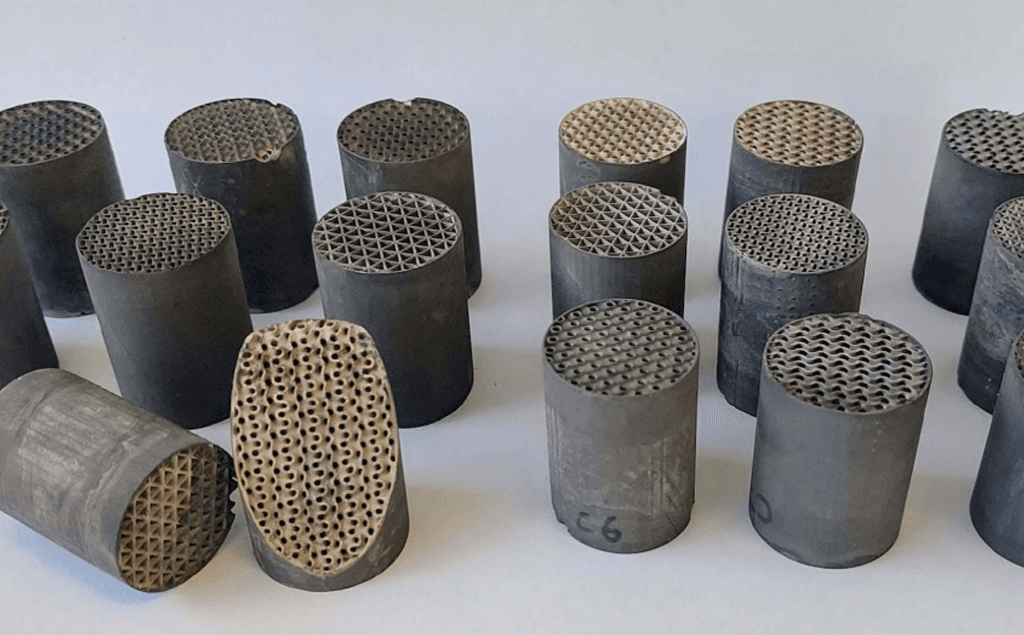
Most manufacturers use a cordierite ceramic honeycomb structure. This design provides a massive surface area for chemical reactions. The honeycomb contains thousands of tiny parallel channels. Engineers apply a “washcoat” to this substrate. The washcoat is a porous material, often made of aluminum oxide. It increases the effective surface area even further. Finally, the washcoat supports the active catalytic materials. These materials are precious metals. They include platinum (Pt), palladium (Pd), and rhodium (Rh). These metals trigger the chemical reactions without being consumed. They act as the “active sites” where pollutants transform into harmless gases.
The manufacturing process of these components requires extreme precision. The cordierite substrate must withstand thermal shocks. It goes from ambient temperature to 800°C in seconds. The washcoat must adhere perfectly to the ceramic walls. Any peeling or “flaking” would expose the substrate and reduce efficiency. The application of precious metals involves a process called “impregnation.” This ensures an even distribution of Pt, Pd, and Rh across the entire surface area.Detailed technical specifications of these substrates can be found at Corning Environmental Technologies
The Chemical Mechanism: Reduction and Oxidation
The term “three way” refers to the three pollutants the device handles. It performs two distinct types of chemical reactions: reduction and oxidation.
The Reduction of Nitrogen Oxides (NOx)
Nitrogen oxides are the most difficult pollutants to remove. They consist of nitrogen and oxygen atoms. Rhodium serves as the primary reduction catalyst in the trosmjerni katalizator. When NOx molecules hit the rhodium surface, the metal pulls the oxygen atoms away. This process breaks the bond between nitrogen and oxygen. The oxygen atoms stay on the catalyst surface temporarily. The nitrogen atoms pair up and form stable nitrogen gas (N2). Nitrogen gas makes up 78% of our atmosphere. It is completely harmless. This reaction effectively “reduces” the pollutant.
The Oxidation of Carbon Monoxide (CO) and Hydrocarbons (HC)
The other two pollutants require oxygen to become harmless. Carbon monoxide is a poisonous gas. Hydrocarbons are essentially unburnt fuel. Platinum and palladium catalyze the oxidation of these gases. They take the oxygen atoms released during the NOx reduction. They also use any excess oxygen in the exhaust stream.
The catalyst adds oxygen to carbon monoxide (CO) to create carbon dioxide (CO2). While CO2 is a greenhouse gas, it is not immediately toxic like CO. For hydrocarbons (HC), the catalyst adds oxygen to form carbon dioxide and water vapor (H2O). These reactions happen incredibly fast. A healthy trosmjerni katalizator converts over 95% of these pollutants.
The Importance of the Stoichiometric Ratio
A trosmjerni katalizator requires a very specific environment. It only works efficiently when the engine burns a precise mixture of air and fuel. This mixture is the “stoichiometric” ratio. For gasoline, this ratio is approximately 14.7 parts of air to 1 part of fuel.
If the mixture is too “lean” (too much air), the exhaust contains excess oxygen. This helps oxidation but hinders the reduction of NOx. If the mixture is too “rich” (too much fuel), the exhaust lacks oxygen. This helps NOx reduction but leaves CO and HC untreated. Modern cars use an Electronic Control Unit (ECU) to manage this. The ECU monitors oxygen sensors before and after the converter. It adjusts fuel injection thousands of times per minute. This keeps the engine within the “catalytic window.”
The precision of the ECU is critical. It uses a “closed-loop” feedback system. The pre-catalyst oxygen sensor provides real-time data on the exhaust composition. The ECU then trims the fuel delivery to oscillate around the stoichiometric point. This oscillation ensures that both reduction and oxidation sites remain active. Without this tight control, the trosmjerni katalizator would quickly lose its efficiency.
Oxygen Storage and Ceria-Zirconia Technology
The air-fuel ratio fluctuates during driving. Rapid acceleration or braking changes the exhaust composition. To handle these fluctuations, the trosmjerni katalizator uses oxygen storage materials. Manufacturers add ceria (cerium oxide) or ceria-zirconia to the washcoat.
Ceria has a unique property. It can store oxygen when the exhaust is lean. It then releases that oxygen when the exhaust becomes rich. This “buffers” the chemical environment. It ensures that oxygen is always available for CO and HC oxidation. It also ensures that the rhodium sites remain clear for NOx reduction. This material significantly improves the real-world efficiency of the converter.
Modern ceria-zirconia mixtures are highly advanced. They maintain their storage capacity even after years of high-temperature exposure. The addition of zirconia stabilizes the ceria crystal structure. This prevents “sintering,” where the particles clump together and lose surface area. This durability is essential for meeting long-term emission warranties.
Substrate Design and Surface Area Optimization
The physical structure of the converter is a masterpiece of geometry. The ceramic honeycomb maximizes the contact between gas and metal. A typical converter has a surface area equivalent to several football fields. This high surface area ensures that every gas molecule hits a catalytic site.
The walls of the honeycomb are incredibly thin. This reduces “backpressure” on the engine. High backpressure reduces fuel economy and power. Engineers must balance surface area with flow resistance. Most modern substrates have 400 to 600 cells per square inch (CPSI). Some high-performance versions use metallic substrates for even better flow.
Metallic substrates offer several advantages over ceramic ones. They have thinner walls, which further reduces backpressure. They also conduct heat more effectively. This helps the converter reach its “light-off” temperature faster. However, metallic substrates are more expensive to manufacture. Most mass-market vehicles continue to use cordierite ceramic due to its cost-effectiveness and proven reliability.

Comparison of Precious Metals in a TWC
| Metal | Primarna funkcija | Target Pollutant | Role in Reaction |
|---|---|---|---|
| Rodij (Rh) | Smanjenje | NOx (Nitrogen Oxides) | Removes oxygen to form N2 |
| Paladijum (Pd) | Oksidacija | CO and HC | Adds oxygen to form CO2 and H2O |
| Platina (Pt) | Oksidacija | CO and HC | Adds oxygen to form CO2 and H2O |

The Role of Lambda Sensors and ECU Logic
The trosmjerni katalizator cannot work alone. It relies on the lambda sensor, also known as the oxygen sensor. Most cars use two sensors. The first sensor sits before the converter. It tells the ECU if the engine is running rich or lean. The ECU then adjusts the fuel trim.
The second sensor sits after the converter. It monitors the efficiency of the catalyst. If the oxygen levels after the converter fluctuate too much, it means the catalyst is failing. The ECU then triggers the “Check Engine” light. This dual-sensor setup ensures the system maintains peak performance throughout the vehicle’s life.
The ECU logic for emission control is highly complex. It includes “adaptive learning” capabilities. The system tracks how the engine ages and adjusts its fuel maps accordingly. It also performs “on-board diagnostics” (OBD). These diagnostics check for leaks in the exhaust system or malfunctions in the sensors. A small exhaust leak before the converter can trick the oxygen sensor. This leads to an incorrect air-fuel ratio and potential damage to the trosmjerni katalizator.
Thermal Management and Cold Start Challenges
Catalytic converters require heat to function. They do not work when they are cold. The “light-off” temperature is usually around 250°C to 300°C. Most engine emissions occur during the first few minutes of driving. This is the “cold start” period.
Engineers use several tricks to heat the converter quickly. They might retard the ignition timing to send hotter gas into the exhaust. They often place the converter very close to the engine manifold. This is a “close-coupled” design. Some modern systems even use electric heaters. Managing heat is critical. If the converter gets too hot (above 800°C), the precious metals can “sinter.” Sintering reduces the surface area and kills the catalyst.
Cold start emissions remain a major focus for regulators. In urban environments, many trips are short. The engine may never reach its optimal operating temperature. To address this, some manufacturers use “hydrocarbon traps.” These materials absorb HC during the cold start. They then release them once the trosmjerni katalizator is hot enough to process them. This innovative approach further reduces the environmental footprint of modern vehicles.
Evolution of Emission Norms and TWC Design
Emission laws have become much stricter over the last 30 years. The early converters were “two-way” models. They only handled CO and HC. The introduction of the trosmjerni katalizator u 1980-ima je došlo do velikog prekretnice.
Danas, standardi poput Euro 6 i China 6 zahtijevaju gotovo nulte emisije. To prisiljava proizvođače da koriste više plemenitih metala i bolje premaze. Također koriste "višestepene" konvertore. Neki sistemi uključuju zaseban NOx filter ili filter čestica. TWC ostaje srce sistema. Evoluirao je od jednostavnog filtera do visokotehnološkog hemijskog procesora.
Cijena ovih plemenitih metala značajan je faktor u određivanju cijene vozila. Rodij je, posebno, jedan od najrjeđih i najskupljih elemenata na Zemlji. Njegova cijena može značajno varirati na osnovu globalne ponude i potražnje. To je dovelo do povećanja krađe katalizatora. Lopovi ciljaju na katalizatore zbog njihove vrijednosti kao starog metala. Proizvođači reaguju tako što otežavaju uklanjanje katalizatora i koriste manje rodija kroz bolji inženjering.
Izazovi: Trovanje, deaktivacija i održavanje
Nekoliko faktora može uništiti trosmjerni katalizator"Trovanje" je najčešći uzrok kvara. Određene supstance prekrivaju plemenite metale i zaustavljaju reakcije. Olovo je u prošlosti bilo najveći otrov. Zato danas koristimo bezolovni benzin.
Sumpor u gorivu također može uzrokovati probleme. On se takmiči sa zagađivačima za aktivna mjesta. Fosfor iz motornog ulja je još jedna prijetnja. Ako motor sagorijeva previše ulja, fosfor prekriva katalizator. Fizička oštećenja također predstavljaju rizik. Krhotine s ceste mogu napuknuti keramičku podlogu. Termički šok od vožnje kroz duboku vodu također može uzrokovati lomljenje keramike.
Pravilno održavanje je najbolji način da zaštitite svoje trosmjerni katalizatorRedovna zamjena motornog ulja sprječava nakupljanje fosfora. Popravljanje propusta u paljenju motora je također ključno. Propust u paljenju šalje sirovo gorivo u ispuh. Ovo gorivo sagorijeva unutar katalizatora, uzrokujući ekstremne temperature koje tope podlogu. Ako vidite trepćuće svjetlo "Check Engine", odmah prekinite vožnju. To obično ukazuje na ozbiljan propust u paljenju koji će uništiti katalizator u roku od nekoliko sekundi.
Uobičajeni zagađivači i njihove transformacije
| Zagađivač | Hemijski simbol | Rezultirajući plin | Utjecaj rezultata na okoliš |
|---|---|---|---|
| Ugljični monoksid | CO | Ugljik-dioksid (CO2) | Staklenički plin (niža toksičnost) |
| Ugljikovodici | Glavni centar | Voda (H2O) + CO2 | Bezopasna para i CO2 |
| Oksidi dušika | NOx | Dušik (N2) | Bezopasni atmosferski plin |
Zaključak
The trosmjerni katalizator je tihi heroj modernog inženjerstva. Obavlja vitalni zadatak u ekstremnim uslovima. Preživljava visoke temperature, vibracije i hemijski stres. Korištenjem rodija, platine i paladija, čisti naš zrak. Pretvara smrtonosne otrove u prirodne komponente naše atmosfere.
Uspjeh ovog uređaja zavisi od stehiometrijske ravnoteže i pametnog dizajna podloge. Iako izazovi poput trovanja i hladnog starta ostaju, tehnologija se nastavlja poboljšavati. Omogućava nam da uživamo u prednostima mobilnosti bez uništavanja naše okoline. Sve dok benzinski motori rade, TWC će štititi naše zdravlje. Predstavlja savršen spoj hemije i mehaničkog dizajna. Moramo cijeniti složenost ovog uređaja svaki put kada upalimo automobile.