Introduction
California’s smog laws are among the strictest in the world. For car owners and mechanics alike, one of the most frequent questions is: “Can my three-way catalytic converter pass the California smog test?” The answer isn’t always simple — it depends on several key factors, including the type of catalytic converter, its certification, and how well your vehicle’s emissions system functions overall.
This article breaks down the science, regulations, and testing procedures behind catalytic converter compliance in California. We’ll explain what affects your chances of passing smog inspection and provide practical tips to ensure your car meets the standards.
What Is a Three-Way Catalytic Converter?
A three-way catalytic converter (TWC) is designed to perform three essential chemical reactions to reduce harmful gases:
- Oxidation of Carbon Monoxide (CO) into Carbon Dioxide (CO₂)
- Oxidation of Unburned Hydrocarbons (HC) into Carbon Dioxide and Water
- Reduction of Nitrogen Oxides (NOₓ) into Nitrogen and Oxygen
These three reactions happen simultaneously inside the converter’s honeycomb structure coated with precious metals like platinum, palladium, and rhodium. A properly functioning TWC can reduce over 90% of harmful exhaust emissions.

Understanding California’s Smog Laws
The California Air Resources Board (CARB) regulates emission control devices. Any catalytic converter sold, installed, or used in the state must have a CARB Executive Order (EO) number. This EO certification proves that the converter meets California’s stringent emission reduction standards.
In other words, even if your catalytic converter works perfectly, it will fail the smog test if it’s not CARB-approved.
Key Requirements:
- The converter must display a legible EO number.
- It must be designed specifically for your vehicle make, model, and engine type.
- Installation must follow CARB-approved procedures.
The Difference Between Federal and CARB Converters
| Feature | Federal (EPA) Converter | California (CARB) Converter |
|---|---|---|
| Certification | EPA | CARB Executive Order (EO) |
| Emission Standard | Less strict | Most stringent in the U.S. |
| Labeling | May lack EO number | Must have EO number and manufacturer info |
| Price | Lower | Higher due to extra testing |
| Smog Test Result | May fail in California | Passes if properly installed |
If your vehicle has a Federal-only catalytic converter, even if it performs well, California’s smog inspection will likely flag it as non-compliant.
What Happens During a Smog Test
During a California smog inspection, technicians conduct several checks:
- Visual Inspection – They confirm the presence of a CARB-approved catalytic converter with a visible EO number.
- Functional Test – They verify the oxygen sensors and exhaust system are operating correctly.
- Emissions Test – Using a dynamometer or OBD-II scan, they measure the emission output to confirm it’s within limits.
If your converter fails either the visual or emissions test, your vehicle will not pass.
Common Reasons for Failing the Smog Test
Even with a CARB-certified converter, vehicles can still fail due to:
- Check Engine Light (CEL) On – Often triggered by O₂ sensor or converter inefficiency.
- Exhaust Leaks – Allow unfiltered gases to escape before reaching the converter.
- Poor Fuel Mixture – Caused by faulty injectors or vacuum leaks.
- Aging Converter – Over time, the catalyst materials degrade, reducing efficiency.
- Incorrect Installation – Wrong placement or welding can block exhaust flow.
How to Improve Your Chances of Passing
Follow these maintenance steps to increase your odds:
- Use a CARB-Approved Converter — Always verify the EO number before installation.
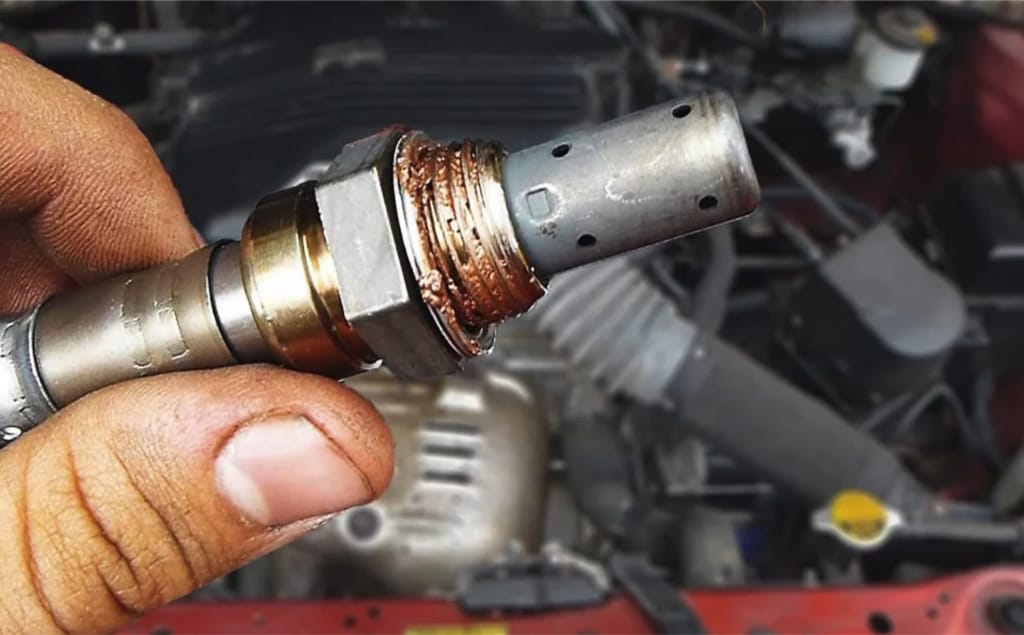
- Replace Faulty Sensors — Especially upstream O₂ sensors that control air-fuel ratio.
- Fix Check Engine Codes — Don’t just clear them; address the root cause.
- Perform Regular Oil Changes — Prevents contamination of catalyst materials.
- Avoid Fuel Additives — Some additives can coat and deactivate the catalyst.
The Science Behind Passing Emissions
A properly functioning three-way catalytic converter maintains a stoichiometric air-fuel ratio (14.7:1) — the perfect balance for oxidation and reduction reactions. When the ratio shifts too lean or rich, conversion efficiency drops sharply.
For example:
| Air-Fuel Ratio | Efficiency of NOₓ Reduction | Efficiency of CO/HC Oxidation |
|---|---|---|
| 14.7:1 | 95–98% | 95–98% |
| 15.5:1 (lean) | 60–70% | 98% |
| 13.5:1 (rich) | 98% | 60–70% |
Maintaining the correct ratio ensures that all three reactions in the converter occur efficiently.
New vs. Used Catalytic Converters in California
California strictly prohibits installing used, refurbished, or aftermarket converters without CARB certification. Every new converter must be individually tested for each vehicle model.
Even if a used converter came from the same model car, it’s illegal to reuse it unless it’s still the original equipment (OEM) installed by the manufacturer.
What If You Fail the Smog Test?
If your vehicle fails due to a non-CARB converter:
- You must replace it with a CARB-approved model.
- Keep documentation showing the EO number and installation date.
- Have your vehicle re-tested after repairs.
If your converter is CARB-approved but your emissions are still high, diagnose upstream issues like faulty sensors, misfires, or rich fuel mixtures before replacing parts.
Cost Considerations
CARB-compliant converters are more expensive — often ranging from $800 to $2,500 — but they’re legally required for vehicles registered in California. Choosing a cheaper, non-certified converter may save money short-term but will ultimately cause smog test failure, fines, and reinstallation costs.
Summary: Increasing Your Odds of Passing
| Step | Description |
|---|---|
| 1 | Use a CARB-approved converter with EO number |
| 2 | Maintain oxygen sensors and fuel mixture |
| 3 | Fix any exhaust leaks or CEL issues |
| 4 | Perform pre-test diagnostics |
| 5 | Avoid tampering or aftermarket shortcuts |
Following these practices maximizes the chance that your catalytic converter — and your car — will pass California’s smog test smoothly.
Conclusion
Passing California’s smog inspection isn’t just about having a catalytic converter — it’s about having the right one. A CARB-certified three-way catalytic converter that’s properly installed and supported by a well-maintained engine is almost guaranteed to pass.
Think of your converter as the final link in a chain of clean emissions. If every component before it functions properly, your odds of success are extremely high.