1. Úvod do třícestných katalyzátorů v benzínových vozidlech
The automotive industry’s relentless pursuit of reduced environmental impact has positioned the 3-way catalytic converter (TWC) as a cornerstone technology for controlling harmful emissions from gasoline internal combustion engines. This report delves into the intricate material science and engineering behind these critical components, focusing specifically on their application in gasoline vehicles. The TWC is a sophisticated chemical reactor designed to simultaneously mitigate three primary pollutants found in engine exhaust: carbon monoxide (CO), unburnt hydrocarbons (HC), and nitrogen oxides (NOx) [1][5].
Operating within a tightly controlled environment, the TWC functions optimally when the engine’s air-fuel ratio is maintained near the stoichiometric point, precisely regulated by a lambda sensor in a closed-loop feedback system [5]. This precise control is crucial because the catalyst must facilitate both oxidation (for CO and HC) and reduction (for NOx) reactions concurrently. The evolution of TWCs has progressed from simpler oxidation catalysts to dual-bed systems, culminating in the highly efficient single-bed TWCs prevalent today, which are designed for thermal stability and rapid activation, often mounted close to the exhaust manifold [1][3]. The continuous tightening of global emission standards for CO, HC, NOx, and particulate matter is a primary driver for ongoing advancements in catalyst design and material innovation [1][6].
2. Materiály a vlastnosti katalytických substrátů
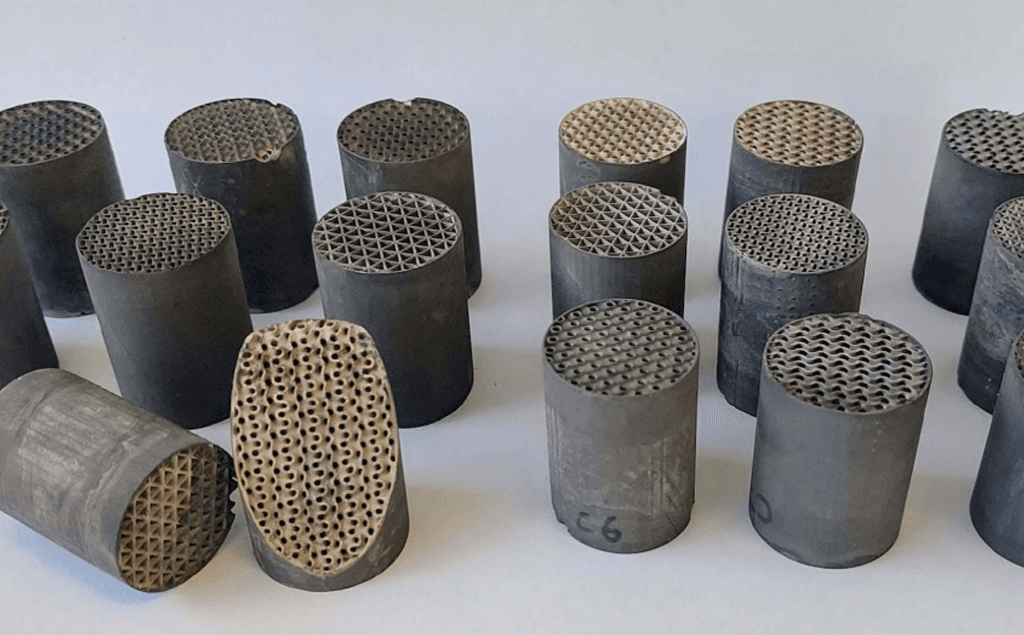
The foundation of a 3-way catalytic converter is its monolithic substrate, which provides the structural support for the catalytically active materials. While metallic substrates are also used, ceramic honeycomb structures, primarily made from cordierite, are the most common choice due to their advantageous properties [6]. Cordierite is a magnesium iron aluminum cyclosilicate mineral with the chemical formula (Mg,Fe)₂Al₄Si₅O₁₈.
Jeho unikátní krystalová struktura umožňuje tvorbu vysoce porézní matrice podobné voštinové struktury s tisíci paralelních kanálků. Fyzikální struktura kordieritového substrátu je pro jeho funkci zásadní. Obvykle se vyznačuje vysokou hustotou buněk (buněk na čtvereční palec, cpsi), což se promítá do velké geometrické plochy povrchu v kompaktním objemu. To maximalizuje kontakt mezi výfukovými plyny a katalytickým nátěrem.
Mezi klíčové vlastnosti, díky kterým je kordierit ideálním substrátovým materiálem, patří:
- Tepelná stabilita: Vynikající odolnost vůči tepelným šokům, odolává náhlým změnám od okolní teploty až po teplotu přes 1000 °C.
- Nízká tepelná roztažnost: Zabraňuje namáhání a praskání v důsledku teplotních gradientů.
- Mechanická pevnost: Dostatečně robustní, aby odolal vibracím a nárazům.
- Velký povrch: Podporuje efektivní aplikaci omyvacího nátěru.
- Nízký pokles tlaku: Rovné kanály zachovávají výkon motoru minimalizací odporu proudění výfukových plynů.
Design parameters like length and cell density are often optimized using simulation software such as Solidworks [7].
3. Složení washcoatu a jeho funkční role
Omývací vrstva je porézní oxidová vrstva nanesená na substrát, která umožňuje vysokou disperzi a stabilitu drahých kovů.
- Gama-oxid hlinitý (γ-Al2O3)Vysoký povrch (100–200 m²/g), podporuje disperzi drahých kovů.
- Ceria-Zirkonie (CeO₂-ZrO₂):Ceria (CeO₂) is indispensable for its remarkable oxygen storage capacity (OSC)[1][2]. It undergoes reversible redox reactions:2CeO₂ ⇌ Ce₂O₃ + ½O₂The addition of zirconia (ZrO₂) forms a solid solution, CeO₂-ZrO₂, enhancing thermal stability and oxygen mobility. Ceria-zirconia-yttria mixed oxides (CZY) are considered the industry standard .
- Ostatní stabilizátoryOxid lanthanu (La₂O₃), oxid barnatý (BaO) a oxid neodymu (Nd₂O₃) zvyšují povrchovou stabilitu a odolnost vůči jedům.
The washcoat is applied as a slurry and then calcined, forming a highly porous, rough surface that maximizes the contact area for the exhaust gases and provides a stable platform for the precious metals. Some advanced TWC designs utilize double-layer washcoats, where different precious metals (e.g., Pd/Pt in one layer and Rh in another) are supported on specific ceria- or zirconia-based oxides to prevent sintering and optimize their individual catalytic functions [1][3]. The development of mesoporous oxide supports with optimal pore geometries is an ongoing area of research, aiming to reduce catalyst size and weight while significantly decreasing the required precious metal loadings [7].
4. Katalyzátory z drahých kovů: Složení a mechanismy
Katalytické srdce TWC se spoléhá na kovy platinové skupiny (PGM):
- Platina (Pt): Katalyzuje oxidaci:
- CO + ½O₂ → CO₂
- CₓHᵧ + (x + y/4)O₂ → xCO₂ + y/2 H₂O
- Palladium (Pd): Katalyzuje oxidaci i mírnou redukci NOx. Dobře funguje při nižších teplotách a má kapacitu pro ukládání kyslíku.
- Rhodium (Rh): Pro snížení NOx je zásadní:
- 2NO + 2CO → N₂ + 2CO₂
- 2NO₂ + 4CO₂ → N2 + 4CO₂
- 2NOₓ → N₂ + xO₂
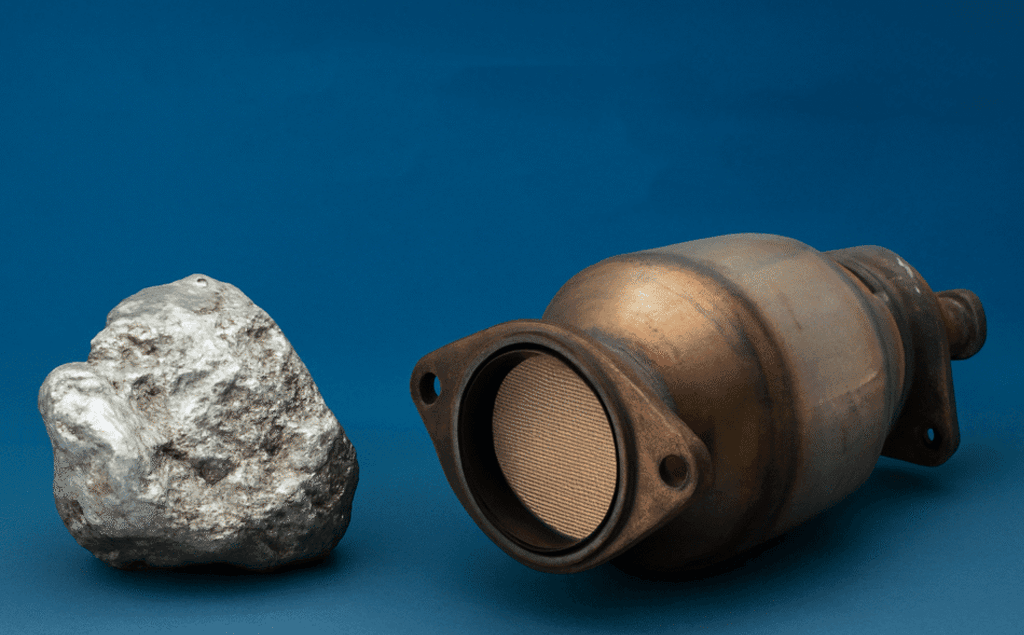
The typical ratios of these PGMs vary depending on the specific application, engine type, and emission targets, but a common formulation might involve a higher proportion of palladium, followed by platinum, and a smaller but critical amount of rhodium. For instance, the platinum-based segment alone held over 40% of the market share in 2024 [6]. The chemical forms of these metals on the washcoat are typically highly dispersed nanoparticles, which maximize the active surface area for reactions. Modified impregnation procedures, such as using toluene, can produce well-dispersed Pt nanoparticles on various hydrophobic materials, showing good activity for CO and propane oxidation [1][2].
The reliance on PGMs presents significant cost and supply chain challenges due to their scarcity and price volatility [1][6]. This has driven extensive research into reducing PGM content or developing entirely PGM-free alternatives. While iridium, ruthenium, and osmium are also PGMs, they are generally not suitable for TWC conditions due to the volatility or toxicity of their oxide forms under exhaust conditions, effectively limiting the choice to Pt, Pd, and Rh [1].
5. Materiály pouzdra a obalu
Kromě katalytického jádra je strukturální integrita a tepelný management třícestného katalyzátoru zajištěn jeho krytem a obalovými materiály. Tyto komponenty jsou navrženy tak, aby chránily křehký keramický substrát, izolovaly proti extrémním teplotám a poskytovaly bezpečný montážní bod ve výfukovém systému vozidla.
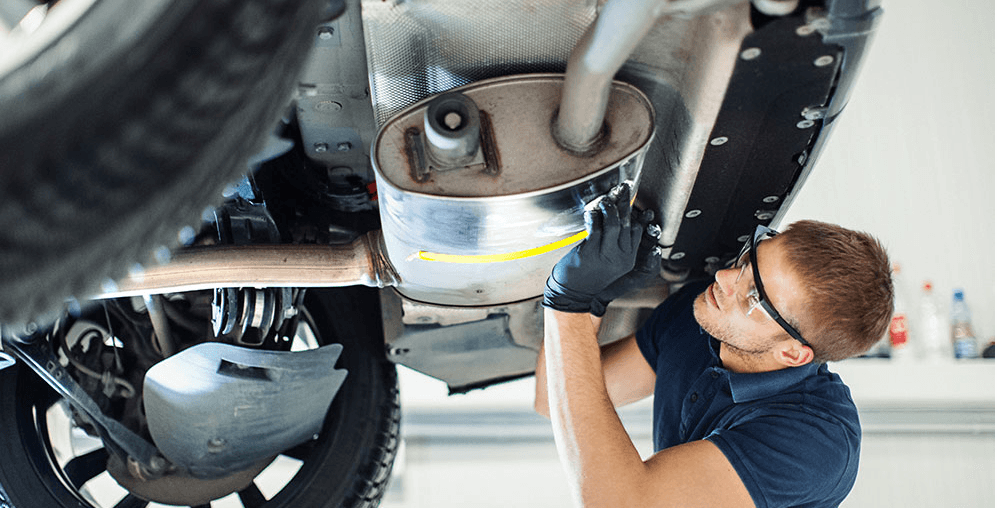
- Vnější pouzdro (plášť): Vnější kryt je obvykle vyroben z nerez, often featuring a double-layered design with an integrated heat shield [9]. Stainless steel is chosen for its excellent corrosion resistance, particularly against the corrosive exhaust gases and external environmental factors, and its ability to withstand high temperatures. The double-layered shell serves multiple functions:
- Strukturální integrita: Poskytuje robustní mechanickou ochranu vnitřního katalyzátoru a chrání ho před nečistotami z vozovky, nárazy a vibracemi.
- Tepelná izolace: Vzduchová mezera mezi dvojitými vrstvami nebo přítomnost tepelného štítu pomáhá snižovat tepelné záření z horkého katalyzátoru, chrání okolní součásti vozidla a snižuje riziko popálení.
- Prevence oxidační kůže: It prevents the formation of an oxide skin on the catalyst surface, which could otherwise block the catalytic sites and reduce efficiency [9].
- Montáž: Poskytuje potřebné příruby a spoje pro integraci do výfukového systému.
- Vnitřní intumescentní rohož: Mezi keramickým substrátem a pouzdrem z nerezové oceli se nachází intumescentní rohože materiál je zabalen. Tato rohož je obvykle vyrobena z keramických vláken (např. oxidu hlinitého a křemičitých vláken), která jsou navržena tak, aby se při zahřátí výrazně roztahovala. Její funkce jsou zásadní pro trvanlivost a výkon převodníku:
- Mechanická ochrana a tlumení: Působí jako tlumič nárazů, který tlumí vibrace a mechanické namáhání křehkého keramického substrátu způsobené pohybem vozidla a pulzacemi výfuku. Tím se zabrání praskání nebo lomu substrátu.
- Tepelná izolace: Rohož poskytuje dodatečnou tepelnou izolaci, snižuje tepelné ztráty z katalyzátoru a pomáhá mu rychleji dosáhnout provozní teploty (teploty zhasnutí).
- Bezpečná montáž: Jak se intumescentní rohož při zahřívání rozpíná, vyvíjí na keramickou cihlu tlakovou sílu, bezpečně ji drží na místě v ocelovém pouzdře a zabraňuje jejímu pohybu nebo chrastění.
- Těsnění: It also provides a seal, preventing exhaust gases from bypassing the catalyst brick and ensuring that all gases flow through the active catalytic channels. Other vibration damping layers, such as metal mesh pads or ceramic gaskets, may also be used [9].
Pečlivý výběr a integrace těchto materiálů pouzdra a obalu jsou nezbytné pro dlouhodobou spolehlivost a výkon třícestného katalyzátoru, což zajišťuje, že odolá náročnému provoznímu prostředí automobilového výfukového systému.
6. Integrované aspekty materiálového výkonu, trvanlivosti a nákladů
Účinnost třícestného katalyzátoru je přímým důsledkem synergické interakce mezi všemi jeho složkami: substrátem, povrchovou úpravou, drahými kovy a pouzdrem. Jejich společný výkon určuje celkovou katalytickou aktivitu, tepelnou odolnost, mechanickou robustnost a v konečném důsledku i nákladovou efektivitu celého systému.
Katalytická aktivita a účinnost: The primary goal is to achieve high conversion efficiency for CO, HC, and NOx across a wide range of operating conditions. This is largely driven by the precious metals (Pt, Pd, Rh) and their dispersion on the high-surface-area washcoat [1]. The washcoat’s oxygen storage capacity, provided by ceria-zirconia, is crucial for maintaining high efficiency under fluctuating air-fuel ratios, acting as an oxygen buffer [1][2]. Computer models are extensively used to optimize catalyst loadings and layouts, enabling high performance even with reduced PGM content [1][3].
Tepelná odolnost: Teploty výfukových plynů z automobilů mohou dosáhnout více než 1000 °C, což z tepelné odolnosti dělá prvořadý problém.
- Substrát: Cordierite’s low thermal expansion and high thermal shock resistance prevent cracking and structural degradation [6].
- Prací nátěr: The incorporation of zirconia into ceria (CeO₂-ZrO₂) significantly enhances the thermal stability of the oxygen storage component, preventing sintering and loss of surface area [7]. Advanced washcoat designs, such as double layers, can also help prevent sintering of PGMs at high temperatures [1][3].
- Drahé kovy: PGM sintering (agglomeration of nanoparticles into larger, less active particles) is a major cause of catalyst deactivation at high temperatures. The washcoat’s ability to disperse and stabilize PGMs is critical. Novel perovskite-based catalysts, for example, have shown superior thermal stability and resistance to activity loss even after hydrothermal aging at 1273K(1000°C), compared to standard dispersed metal catalysts [3][8]. This enhanced stability is often attributed to the substitution of palladium into the perovskite structure, which makes it less prone to sintering [8].
Mechanická robustnost: Měnič musí odolávat značnému mechanickému namáhání, včetně vibrací od motoru a vozovky, a také fyzikálním nárazům.
- Bydlení: The stainless steel shell provides the primary structural integrity and protection [9].
- Intumescentní rohož: This material is vital for cushioning the brittle ceramic substrate, absorbing vibrations, and securely holding the catalyst brick in place, preventing mechanical damage [9].
Cenová efektivita: Náklady jsou hlavním faktorem ovlivňujícím automobilovou výrobu. Nejvýznamnějším nákladovým faktorem v rámci TWC je obsah drahých kovů [6]. The market for automotive three-way catalytic converters was valued at USD 11.2 billion in 2024, with the platinum-based segment alone projected to exceed USD 7 billion by 2034 [6].
- Volatilita ceny PGM: The fluctuating prices and secure supply of platinum, palladium, and rhodium directly impact manufacturing costs [6].
- Technologické inovace: Manufacturers are continuously innovating to enhance fuel economy and reduce PGM loadings while maintaining or improving conversion efficiency and durability [6]. Projects like PROMETHEUS aim to reduce PGM content, potentially cutting production costs by up to 50% while maintaining or enhancing performance [1][4].
- Optimalizace výrobního procesu: The design and preparation techniques for catalyst supports, such as cost-effective methods for creating mesoporous materials, also contribute to overall cost reduction [7].
- Trvanlivost vs. cena: There is a constant trade-off between achieving high durability (which often requires more robust, sometimes more expensive, materials or higher PGM loadings) and managing production costs. The development of more thermally stable catalysts, like perovskites, can extend the converter’s lifespan, offering long-term cost benefits despite potentially higher initial material costs [3][8].
The overall market growth for TWCs is driven by increasing vehicle sales, stricter emissions regulations, and the demand for fuel-efficient vehicles, all of which necessitate continuous material and process innovation [6]. On-road monitoring of TWC performance, often via oxygen storage capacity measurements, further ensures that these complex material systems meet real-world emission targets throughout their operational life [3].
7. Nové materiály a budoucí směry
The landscape of catalytic converter technology is continuously evolving, driven by increasingly stringent global emission standards and the imperative to reduce reliance on expensive and scarce Platinum Group Metals (PGMs) [1][6]. Future directions in 3-way catalytic converters focus on novel materials, advanced manufacturing techniques, and integrated systems to achieve superior performance, enhanced durability, and improved sustainability.
Snížení závislosti na PGM a katalyzátory bez PGM: The high cost and limited supply of Pt, Pd, and Rh are major motivators for research into PGM-free or low-PGM alternatives [1][6].
- Oxidy přechodných kovů: Materiály jako zeolit, oxid niklu a další oxidy kovů are being extensively explored as potential replacements for PGMs [1]. These materials offer lower cost and greater abundance.
- Katalyzátory na bázi perovskitu: Komplexní oxidy kovů s perovskitovou strukturou (např. ABO3 jsou slibnou třídou katalyzátorů bez PGM. Například mědí dopovaný LaCo₁−xCuxO₃ perovskity are under investigation as PGM-free catalysts for TWCs [1][4]. These materials can exhibit high thermal stability and catalytic activity, sometimes even surpassing traditional PGM catalysts in specific conditions [3][8]. Mechanochemical synthesis, including high-energy ball milling, is being used to create such perovskites [1].
- Integrace nanotechnologií: Projects like NEXT-GEN-CAT have focused on incorporating low-cost transition metals into advanced ceramic substrates using nanotechnology to develop efficient catalysts [1][5]. Prototypes with low-PGM and no-PGM formulations have demonstrated compliance with Euro III emission standards, showcasing the viability of these approaches [1][5].
Pokročilý vývoj washcoatu: Washcoat and catalyst development remain critical focus areas [1].
- Nosiče z mezoporézního oxidu: Research continues into developing mesoporous oxide supports with optimized pore geometries. These structures can significantly increase the active surface area and improve the dispersion of catalytic components, potentially allowing for further reductions in metal loadings while maintaining or enhancing performance [7].
- Nové metody přípravy: Pro vytvoření účinnějších a odolnějších katalyzátorů se zkoumají pokročilé metody přípravy. Patří mezi ně:
- Ultrazvukové ošetření v kombinaci s galvanickým pokovováním: Pro přesné nanášení a disperzi aktivních látek.
- Citrátová metoda: Běžná metoda typu sol-gel pro syntézu směsných oxidů kovů s vysokou homogenitou.
- Plazmová elektrolytická oxidace (PEO): For creating porous oxide layers on metallic substrates, which can then be functionalized with catalytic materials [1].
Řešení budoucích emisních předpisů: Global emission standards are becoming progressively stricter, pushing the boundaries of current TWC technology [1][6].
- Emise při studeném startu: Významnou výzvou je období „studeného startu“, kdy katalyzátor ještě nedosáhl své teploty pro zhasnutí a je z velké části neúčinný. Budoucí výzkum materiálů si klade za cíl vyvinout katalyzátory, které se aktivují při mnohem nižších teplotách nebo se integrují s elektricky vyhřívanými katalyzátory (EHC) nebo lapači uhlovodíků za účelem zmírnění emisí při studeném startu.
- Emise v reálném provozu (RDE): Regulations are increasingly focusing on real-world driving emissions rather than just laboratory tests. This necessitates catalysts that perform robustly and efficiently across a wider range of temperatures, speeds, and load conditions. On-road monitoring of oxygen storage capacity is already a step in this direction [3].
- Regulace pevných částic (PM): Zatímco se katalyzátory TWC primárně zaměřují na plynné znečišťující látky, budoucí předpisy mohou vyžadovat integrovaná řešení pro PM, což by mohlo vést k širšímu přijetí filtrů pevných částic (GPF) ve spojení s TWC nebo k vývoji katalyzátorů s inherentní schopností snižovat emise PM.
Udržitelnost a oběhové hospodářství: The transition to “green” mobility and the increasing focus on sustainability are driving efforts in recyclability and life cycle assessment (LCA) [1][5].
- Recyklovatelnost: The NEXT-GEN-CAT project, for instance, investigated the recyclability of TWCs, examining end-of-life scenarios and using LCA to determine the environmental impact of developed materials [1][5]. Pyro-metallurgical treatment (smelting in an inert atmosphere) was explored for efficient PGM recovery from spent catalysts [1][5]. Future research will likely focus on more energy-efficient and environmentally friendly recycling processes for both PGMs and base metals.
Proaktivní řešení a spekulace: Kromě současného výzkumu by se budoucí směry mohly vyvíjet následovně:
- Chytré katalyzátory: Katalyzátory, které dokáží dynamicky upravovat své vlastnosti (např. povrchovou strukturu, kapacitu pro ukládání kyslíku) v reakci na podmínky výfukových plynů v reálném čase, potenciálně s využitím vestavěných senzorů a řídicích systémů řízených umělou inteligencí.
- Integrované systémy dodatečného zpracování výfukových plynů: Přechod ke kompaktnějším, multifunkčním výfukovým systémům, které kombinují funkcionalitu TWC s dalšími technologiemi pro regulaci emisí (např. selektivní katalytická redukce NOx, pokročilé filtry pevných částic) do jediné, vysoce optimalizované jednotky.
- Aditivní výroba: Využití 3D tisku nebo jiných technik aditivní výroby k vytvoření vysoce přizpůsobených a optimalizovaných struktur substrátů a washcoatů, což umožňuje bezprecedentní kontrolu nad distribucí velikosti pórů, geometrií kanálků a umístěním katalyzátoru. To by mohlo vést k výraznému zlepšení přenosu hmoty a katalytické účinnosti.
- Bioinspirovaná katalýza: Zkoumání katalytických mechanismů nalezených v biologických systémech za účelem návrhu nových, vysoce účinných a potenciálně udržitelnějších katalyzátorů.
Neustálé inovace v materiálové vědě a chemickém inženýrství budou i nadále posouvat hranice výkonu třícestných katalyzátorů a zajistí, že benzínové vozy budou moci splňovat stále přísnější environmentální cíle a zároveň minimalizovat svou ekologickou stopu.