Zavedení
The internal combustion engine changed human history. It powered the industrial revolution and modern transport. However, this progress came with a heavy environmental price. Gasoline engines emit toxic gases during the combustion process. These pollutants include carbon monoxide (CO), hydrocarbons (HC), and nitrogen oxides (NOx). These gases damage human health and the atmosphere. They cause smog, acid rain, and respiratory diseases.
Governments worldwide now enforce strict emission standards. Manufacturers must find ways to clean exhaust gases before they leave the tailpipe. The třícestný katalyzátor serves as the primary solution for this problem. This device performs a complex chemical miracle. It simultaneously neutralizes three different pollutants. It uses precious metals and clever engineering to protect our air. This article explains the science behind this vital technology. We will explore how it works, why it fails, and how it evolved.
The Problem: Toxic Exhaust Emissions and Environmental Impact
Combustion is never perfect. An engine burns fuel and air to create power. Ideally, this process produces only carbon dioxide and water. Real engines do not achieve this ideal state. High temperatures and rapid cycles create harmful byproducts.
Carbon monoxide (CO) is a colorless, odorless, and deadly gas. It prevents blood from carrying oxygen. Hydrocarbons (HC) represent unburnt or partially burnt fuel. They react with sunlight to create ground-level ozone. Nitrogen oxides (NOx) contribute to acid rain and lung irritation. These three pollutants form the “big three” targets for automotive engineers. The třícestný katalyzátor targets these specific molecules. It transforms them into harmless nitrogen, water, and carbon dioxide.
The environmental impact of these gases is profound. CO is a silent killer in enclosed spaces. HC and NOx combine in the presence of sunlight to form photochemical smog. This smog reduces visibility and causes chronic respiratory issues in urban populations. Furthermore, NOx is a precursor to nitric acid, a major component of acid rain. Acid rain damages forests, leaches nutrients from soil, and acidifies lakes and streams. By implementing the třícestný katalyzátor, the automotive industry has significantly mitigated these global threats.
Anatomy of a Three Way Catalytic Converter
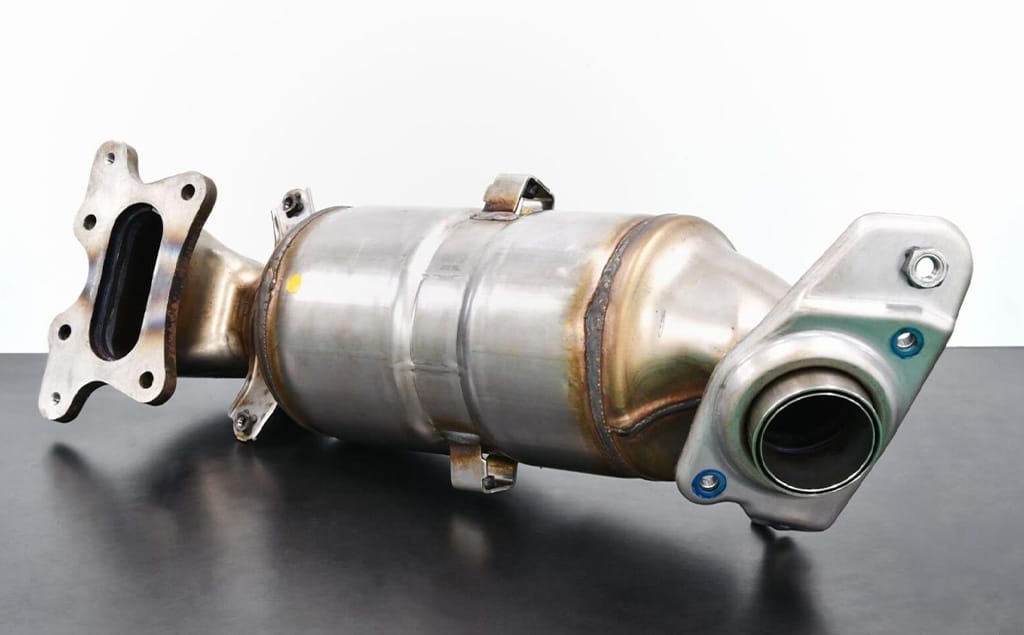
A třícestný katalyzátor is a sophisticated chemical reactor. It sits in the exhaust system of almost every modern gasoline vehicle. The device consists of several key parts. First, a stainless steel housing protects the internal components. Inside, you find a ceramic or metallic substrate.
Most manufacturers use a cordierite ceramic honeycomb structure. This design provides a massive surface area for chemical reactions. The honeycomb contains thousands of tiny parallel channels. Engineers apply a “washcoat” to this substrate. The washcoat is a porous material, often made of aluminum oxide. It increases the effective surface area even further. Finally, the washcoat supports the active catalytic materials. These materials are precious metals. They include platinum (Pt), palladium (Pd), and rhodium (Rh). These metals trigger the chemical reactions without being consumed. They act as the “active sites” where pollutants transform into harmless gases.
The manufacturing process of these components requires extreme precision. The cordierite substrate must withstand thermal shocks. It goes from ambient temperature to 800°C in seconds. The washcoat must adhere perfectly to the ceramic walls. Any peeling or “flaking” would expose the substrate and reduce efficiency. The application of precious metals involves a process called “impregnation.” This ensures an even distribution of Pt, Pd, and Rh across the entire surface area.Detailed technical specifications of these substrates can be found at Corning Environmental Technologies
The Chemical Mechanism: Reduction and Oxidation
The term “three way” refers to the three pollutants the device handles. It performs two distinct types of chemical reactions: reduction and oxidation.
The Reduction of Nitrogen Oxides (NOx)
Nitrogen oxides are the most difficult pollutants to remove. They consist of nitrogen and oxygen atoms. Rhodium serves as the primary reduction catalyst in the třícestný katalyzátor. When NOx molecules hit the rhodium surface, the metal pulls the oxygen atoms away. This process breaks the bond between nitrogen and oxygen. The oxygen atoms stay on the catalyst surface temporarily. The nitrogen atoms pair up and form stable nitrogen gas (N2). Nitrogen gas makes up 78% of our atmosphere. It is completely harmless. This reaction effectively “reduces” the pollutant.
The Oxidation of Carbon Monoxide (CO) and Hydrocarbons (HC)
The other two pollutants require oxygen to become harmless. Carbon monoxide is a poisonous gas. Hydrocarbons are essentially unburnt fuel. Platinum and palladium catalyze the oxidation of these gases. They take the oxygen atoms released during the NOx reduction. They also use any excess oxygen in the exhaust stream.
The catalyst adds oxygen to carbon monoxide (CO) to create carbon dioxide (CO2). While CO2 is a greenhouse gas, it is not immediately toxic like CO. For hydrocarbons (HC), the catalyst adds oxygen to form carbon dioxide and water vapor (H2O). These reactions happen incredibly fast. A healthy třícestný katalyzátor converts over 95% of these pollutants.
The Importance of the Stoichiometric Ratio
A třícestný katalyzátor requires a very specific environment. It only works efficiently when the engine burns a precise mixture of air and fuel. This mixture is the “stoichiometric” ratio. For gasoline, this ratio is approximately 14.7 parts of air to 1 part of fuel.
If the mixture is too “lean” (too much air), the exhaust contains excess oxygen. This helps oxidation but hinders the reduction of NOx. If the mixture is too “rich” (too much fuel), the exhaust lacks oxygen. This helps NOx reduction but leaves CO and HC untreated. Modern cars use an Electronic Control Unit (ECU) to manage this. The ECU monitors oxygen sensors before and after the converter. It adjusts fuel injection thousands of times per minute. This keeps the engine within the “catalytic window.”
The precision of the ECU is critical. It uses a “closed-loop” feedback system. The pre-catalyst oxygen sensor provides real-time data on the exhaust composition. The ECU then trims the fuel delivery to oscillate around the stoichiometric point. This oscillation ensures that both reduction and oxidation sites remain active. Without this tight control, the třícestný katalyzátor would quickly lose its efficiency.
Oxygen Storage and Ceria-Zirconia Technology
The air-fuel ratio fluctuates during driving. Rapid acceleration or braking changes the exhaust composition. To handle these fluctuations, the třícestný katalyzátor uses oxygen storage materials. Manufacturers add ceria (cerium oxide) or ceria-zirconia to the washcoat.
Ceria has a unique property. It can store oxygen when the exhaust is lean. It then releases that oxygen when the exhaust becomes rich. This “buffers” the chemical environment. It ensures that oxygen is always available for CO and HC oxidation. It also ensures that the rhodium sites remain clear for NOx reduction. This material significantly improves the real-world efficiency of the converter.
Modern ceria-zirconia mixtures are highly advanced. They maintain their storage capacity even after years of high-temperature exposure. The addition of zirconia stabilizes the ceria crystal structure. This prevents “sintering,” where the particles clump together and lose surface area. This durability is essential for meeting long-term emission warranties.
Substrate Design and Surface Area Optimization
The physical structure of the converter is a masterpiece of geometry. The ceramic honeycomb maximizes the contact between gas and metal. A typical converter has a surface area equivalent to several football fields. This high surface area ensures that every gas molecule hits a catalytic site.
The walls of the honeycomb are incredibly thin. This reduces “backpressure” on the engine. High backpressure reduces fuel economy and power. Engineers must balance surface area with flow resistance. Most modern substrates have 400 to 600 cells per square inch (CPSI). Some high-performance versions use metallic substrates for even better flow.
Metallic substrates offer several advantages over ceramic ones. They have thinner walls, which further reduces backpressure. They also conduct heat more effectively. This helps the converter reach its “light-off” temperature faster. However, metallic substrates are more expensive to manufacture. Most mass-market vehicles continue to use cordierite ceramic due to its cost-effectiveness and proven reliability.

Comparison of Precious Metals in a TWC
| Kov | Primární funkce | Target Pollutant | Role in Reaction |
|---|---|---|---|
| Rhodium (Rh) | Snížení | NOx (Nitrogen Oxides) | Removes oxygen to form N2 |
| Palladium (Pd) | Oxidace | CO and HC | Adds oxygen to form CO2 and H2O |
| Platina (Pt) | Oxidace | CO and HC | Adds oxygen to form CO2 and H2O |

The Role of Lambda Sensors and ECU Logic
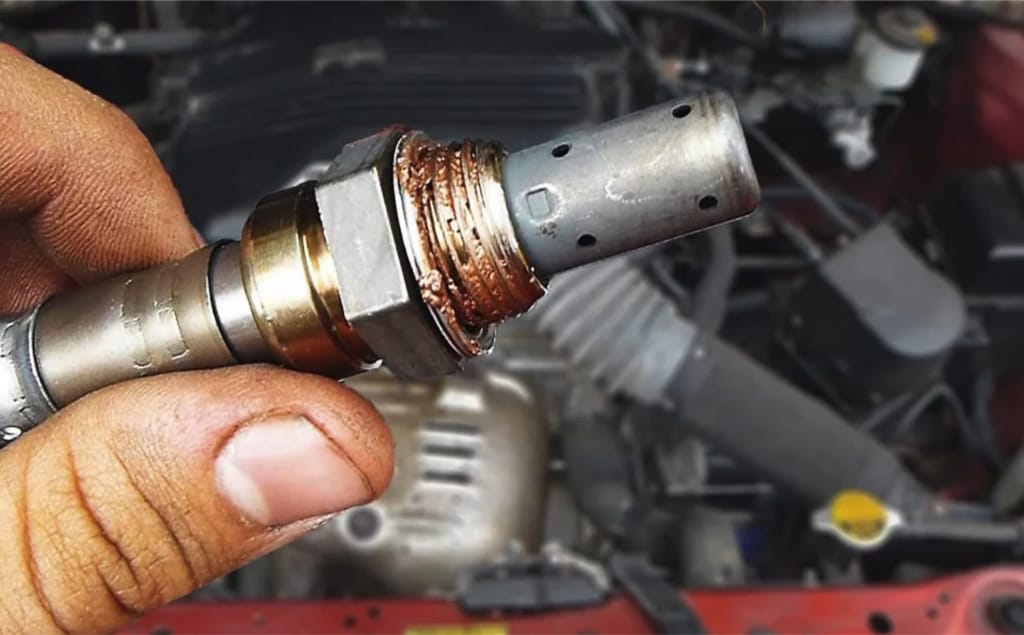
Ten/Ta/To třícestný katalyzátor cannot work alone. It relies on the lambda sensor, also known as the oxygen sensor. Most cars use two sensors. The first sensor sits before the converter. It tells the ECU if the engine is running rich or lean. The ECU then adjusts the fuel trim.
The second sensor sits after the converter. It monitors the efficiency of the catalyst. If the oxygen levels after the converter fluctuate too much, it means the catalyst is failing. The ECU then triggers the “Check Engine” light. This dual-sensor setup ensures the system maintains peak performance throughout the vehicle’s life.
The ECU logic for emission control is highly complex. It includes “adaptive learning” capabilities. The system tracks how the engine ages and adjusts its fuel maps accordingly. It also performs “on-board diagnostics” (OBD). These diagnostics check for leaks in the exhaust system or malfunctions in the sensors. A small exhaust leak before the converter can trick the oxygen sensor. This leads to an incorrect air-fuel ratio and potential damage to the třícestný katalyzátor.
Thermal Management and Cold Start Challenges
Catalytic converters require heat to function. They do not work when they are cold. The “light-off” temperature is usually around 250°C to 300°C. Most engine emissions occur during the first few minutes of driving. This is the “cold start” period.
Engineers use several tricks to heat the converter quickly. They might retard the ignition timing to send hotter gas into the exhaust. They often place the converter very close to the engine manifold. This is a “close-coupled” design. Some modern systems even use electric heaters. Managing heat is critical. If the converter gets too hot (above 800°C), the precious metals can “sinter.” Sintering reduces the surface area and kills the catalyst.
Cold start emissions remain a major focus for regulators. In urban environments, many trips are short. The engine may never reach its optimal operating temperature. To address this, some manufacturers use “hydrocarbon traps.” These materials absorb HC during the cold start. They then release them once the třícestný katalyzátor is hot enough to process them. This innovative approach further reduces the environmental footprint of modern vehicles.
Evolution of Emission Norms and TWC Design
Emission laws have become much stricter over the last 30 years. The early converters were “two-way” models. They only handled CO and HC. The introduction of the třícestný katalyzátor in the 1980s was a major breakthrough.
Today, standards like Euro 6 and China 6 require near-zero emissions. This forces manufacturers to use more precious metals and better washcoats. They also use “multi-stage” converters. Some systems include a separate NOx trap or a particulate filter. The TWC remains the heart of the system. It has evolved from a simple filter into a high-tech chemical processor.
The cost of these precious metals is a significant factor in vehicle pricing. Rhodium, in particular, is one of the rarest and most expensive elements on Earth. Its price can fluctuate wildly based on global supply and demand. This has led to an increase in catalytic converter theft. Thieves target the converters for their scrap value. Manufacturers are responding by making converters harder to remove and using less rhodium through better engineering.
Challenges: Poisoning, Deactivation, and Maintenance
Several factors can destroy a třícestný katalyzátor. “Poisoning” is the most common cause of failure. Certain substances coat the precious metals and stop the reactions. Lead was the biggest poison in the past. This is why we use unleaded gasoline today.
Sulfur in fuel can also cause problems. It competes with pollutants for active sites. Phosphorus from engine oil is another threat. If an engine burns too much oil, the phosphorus coats the catalyst. Physical damage is also a risk. Road debris can crack the ceramic substrate. Thermal shock from driving through deep water can also cause the ceramic to shatter.
Proper maintenance is the best way to protect your třícestný katalyzátor. Regularly changing the engine oil prevents phosphorus buildup. Fixing engine misfires is also crucial. A misfire sends raw fuel into the exhaust. This fuel burns inside the converter, causing extreme temperatures that melt the substrate. If you see a flashing “Check Engine” light, stop driving immediately. This usually indicates a severe misfire that will destroy the catalyst in seconds.
Common Pollutants and Their Transformations
| Pollutant | Chemical Symbol | Resulting Gas | Environmental Impact of Result |
|---|---|---|---|
| Oxid uhelnatý | CO | Carbon Dioxide (CO2) | Greenhouse gas (lower toxicity) |
| Uhlovodíky | Hlavní město | Water (H2O) + CO2 | Harmless vapor and CO2 |
| Oxidy dusíku | NOx | Nitrogen (N2) | Harmless atmospheric gas |
Závěr
Ten/Ta/To třícestný katalyzátor is a silent hero of modern engineering. It performs a vital task under extreme conditions. It survives high heat, vibration, and chemical stress. By using rhodium, platinum, and palladium, it cleans our air. It turns deadly poisons into the natural components of our atmosphere.
The success of this device depends on the stoichiometric balance and clever substrate design. While challenges like poisoning and cold starts remain, the technology continues to improve. It allows us to enjoy the benefits of mobility without destroying our environment. As long as gasoline engines run, the TWC will protect our health. It represents a perfect marriage of chemistry and mechanical design. We must appreciate the complexity of this device every time we start our cars.