1. Introduktion til 3-vejs katalysatorer i benzindrevne køretøjer
The automotive industry’s relentless pursuit of reduced environmental impact has positioned the 3-way catalytic converter (TWC) as a cornerstone technology for controlling harmful emissions from gasoline internal combustion engines. This report delves into the intricate material science and engineering behind these critical components, focusing specifically on their application in gasoline vehicles. The TWC is a sophisticated chemical reactor designed to simultaneously mitigate three primary pollutants found in engine exhaust: carbon monoxide (CO), unburnt hydrocarbons (HC), and nitrogen oxides (NOx) [1][5].
Operating within a tightly controlled environment, the TWC functions optimally when the engine’s air-fuel ratio is maintained near the stoichiometric point, precisely regulated by a lambda sensor in a closed-loop feedback system [5]. This precise control is crucial because the catalyst must facilitate both oxidation (for CO and HC) and reduction (for NOx) reactions concurrently. The evolution of TWCs has progressed from simpler oxidation catalysts to dual-bed systems, culminating in the highly efficient single-bed TWCs prevalent today, which are designed for thermal stability and rapid activation, often mounted close to the exhaust manifold [1][3]. The continuous tightening of global emission standards for CO, HC, NOx, and particulate matter is a primary driver for ongoing advancements in catalyst design and material innovation [1][6].
2. Katalytiske substratmaterialer og egenskaber
The foundation of a 3-way catalytic converter is its monolithic substrate, which provides the structural support for the catalytically active materials. While metallic substrates are also used, ceramic honeycomb structures, primarily made from cordierite, are the most common choice due to their advantageous properties [6]. Cordierite is a magnesium iron aluminum cyclosilicate mineral with the chemical formula (Mg,Fe)₂Al₄Si₅O₁₈.
Dens unikke krystalstruktur muliggør dannelsen af en meget porøs, bikagelignende matrix med tusindvis af parallelle kanaler. Cordieritsubstratets fysiske struktur er afgørende for dets funktion. Det har typisk en høj celletæthed (celler pr. kvadrattomme, cpsi), hvilket svarer til et stort geometrisk overfladeareal inden for et kompakt volumen. Dette maksimerer kontakten mellem udstødningsgasserne og den katalytiske washcoat.
Nøgleegenskaber, der gør cordierit til et ideelt substratmateriale, inkluderer:
- Termisk stabilitet: Fremragende termisk chokbestandighed, der modstår hurtige ændringer fra omgivende temperaturer til over 1000 °C.
- Lav termisk ekspansion: Forhindrer stress og revner på grund af temperaturgradienter.
- Mekanisk styrke: Tilstrækkelig robust til at håndtere vibrationer og stød.
- Højt overfladeareal: Understøtter effektiv påføring af washcoat.
- Lavt trykfald: Lige kanaler bevarer motorens ydeevne ved at minimere udstødningsstrømningsmodstanden.
Design parameters like length and cell density are often optimized using simulation software such as Solidworks [7].
3. Washcoat-formuleringer og funktionelle roller
Washcoaten er et porøst oxidlag, der påføres underlaget, hvilket muliggør høj spredning og stabilitet af ædle metaller.
- Gamma-aluminiumoxid (γ-Al2O3)Stort overfladeareal (100-200 m²/g), understøtter spredning af ædelmetaller.
- Ceria-zirconia (CeO₂-ZrO₂):Ceria (CeO₂) is indispensable for its remarkable oxygen storage capacity (OSC)[1][2]. It undergoes reversible redox reactions:2CeO₂ ⇌ Ce₂O₃ + ½O₂The addition of zirconia (ZrO₂) forms a solid solution, CeO₂-ZrO₂, enhancing thermal stability and oxygen mobility. Ceria-zirconia-yttria mixed oxides (CZY) are considered the industry standard .
- Andre stabilisatorerLanthanoxid (La₂O₃), bariumoxid (BaO) og neodymoxid (Nd₂O₃) forbedrer overfladestabiliteten og modstandsdygtigheden over for giftstoffer.
The washcoat is applied as a slurry and then calcined, forming a highly porous, rough surface that maximizes the contact area for the exhaust gases and provides a stable platform for the precious metals. Some advanced TWC designs utilize double-layer washcoats, where different precious metals (e.g., Pd/Pt in one layer and Rh in another) are supported on specific ceria- or zirconia-based oxides to prevent sintering and optimize their individual catalytic functions [1][3]. The development of mesoporous oxide supports with optimal pore geometries is an ongoing area of research, aiming to reduce catalyst size and weight while significantly decreasing the required precious metal loadings [7].
4. Ædelmetalkatalysatorer: Sammensætning og mekanismer
Det katalytiske hjerte i en TWC er baseret på platingruppemetaller (PGM'er):
- Platin (Pt): Katalyserer oxidation:
- CO + ½O₂ → CO₂
- CₓHᵧ + (x + y/4)O₂ → xCO₂ + y/2 H₂O
- Palladium (Pd): Katalyserer både oxidation og moderat NOx-reduktion. Fungerer godt ved lavere temperaturer og har iltlagringskapacitet.
- Rhodium (Rh): Afgørende for NOx-reduktion:
- 2NO + 2CO → N₂ + 2CO₂
- 2NO2 + 4CO2 → N2 + 4CO2
- 2NOₓ → N₂ + xO₂
The typical ratios of these PGMs vary depending on the specific application, engine type, and emission targets, but a common formulation might involve a higher proportion of palladium, followed by platinum, and a smaller but critical amount of rhodium. For instance, the platinum-based segment alone held over 40% of the market share in 2024 [6]. The chemical forms of these metals on the washcoat are typically highly dispersed nanoparticles, which maximize the active surface area for reactions. Modified impregnation procedures, such as using toluene, can produce well-dispersed Pt nanoparticles on various hydrophobic materials, showing good activity for CO and propane oxidation [1][2].
The reliance on PGMs presents significant cost and supply chain challenges due to their scarcity and price volatility [1][6]. This has driven extensive research into reducing PGM content or developing entirely PGM-free alternatives. While iridium, ruthenium, and osmium are also PGMs, they are generally not suitable for TWC conditions due to the volatility or toxicity of their oxide forms under exhaust conditions, effectively limiting the choice to Pt, Pd, and Rh [1].
5. Hus og emballagematerialer
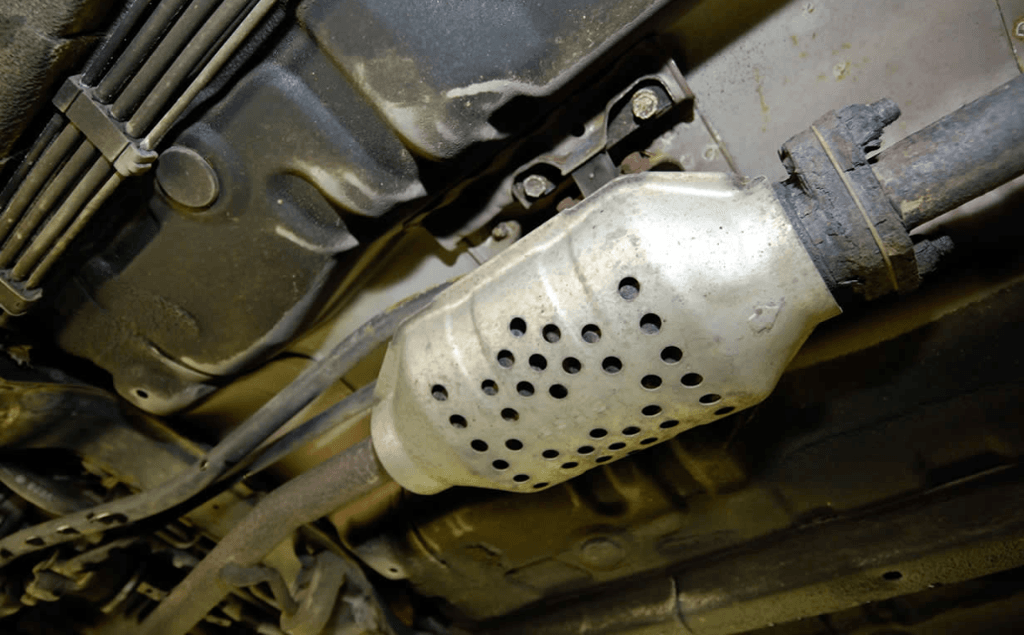
Ud over den katalytiske kerne sikres den strukturelle integritet og termiske styring af 3-vejskatalysatoren af dens hus og emballagematerialer. Disse komponenter er designet til at beskytte det skrøbelige keramiske substrat, isolere mod ekstreme temperaturer og give et sikkert monteringspunkt i køretøjets udstødningssystem.
- Eksternt hus (skal): Det udvendige hus er typisk konstrueret af rustfrit stål, often featuring a double-layered design with an integrated heat shield [9]. Stainless steel is chosen for its excellent corrosion resistance, particularly against the corrosive exhaust gases and external environmental factors, and its ability to withstand high temperatures. The double-layered shell serves multiple functions:
- Strukturel integritet: Den yder robust mekanisk beskyttelse af den indvendige katalysatorklods og beskytter den mod vejaffald, stød og vibrationer.
- Termisk isolering: Luftgabet mellem dobbeltlagene, eller tilstedeværelsen af et varmeskjold, hjælper med at reducere varmestrålingen fra den varme katalysator, hvilket beskytter de omgivende køretøjskomponenter og reducerer risikoen for forbrændinger.
- Forebyggelse af oxideret hud: It prevents the formation of an oxide skin on the catalyst surface, which could otherwise block the catalytic sites and reduce efficiency [9].
- Montering: Den leverer de nødvendige flanger og forbindelser til integration i udstødningssystemet.
- Indvendig intumescerende måtte: Mellem det keramiske substrat og kabinettet i rustfrit stål er der en intumescerende måtter Materialet er pakket. Denne måtte er typisk lavet af keramiske fibre (f.eks. aluminiumoxid-silicafibre), der er designet til at udvide sig betydeligt ved opvarmning. Dens funktioner er afgørende for konverterens holdbarhed og ydeevne:
- Mekanisk beskyttelse og dæmpning: Den fungerer som en støddæmper, der beskytter det sprøde keramiske substrat mod vibrationer og mekaniske belastninger fra køretøjets bevægelse og udstødningspulseringer. Dette forhindrer substratet i at revne eller gå i stykker.
- Termisk isolering: Måtten giver yderligere varmeisolering, hvilket reducerer varmetab fra katalysatoren og hjælper den med at nå sin driftstemperatur hurtigere (antændelsestemperatur).
- Sikker montering: Når den intumescerende måtte udvider sig ved opvarmning, udøver den en trykkraft på den keramiske mursten, hvilket holder den sikkert på plads i stålhuset og forhindrer bevægelse eller raslen.
- Forsegling: It also provides a seal, preventing exhaust gases from bypassing the catalyst brick and ensuring that all gases flow through the active catalytic channels. Other vibration damping layers, such as metal mesh pads or ceramic gaskets, may also be used [9].
Den omhyggelige udvælgelse og integration af disse hus- og emballagematerialer er afgørende for den langsigtede pålidelighed og ydeevne af 3-vejskatalysatoren, hvilket sikrer, at den kan modstå det barske driftsmiljø i et biludstødningssystem.
6. Integrerede overvejelser om materialeydelse, holdbarhed og omkostningsomkostninger
Effektiviteten af en 3-vejs katalysator er en direkte konsekvens af den synergistiske interaktion mellem alle dens komponentmaterialer: substrat, washcoat, ædelmetaller og hus. Deres samlede ydeevne dikterer den samlede katalytiske aktivitet, termiske holdbarhed, mekaniske robusthed og i sidste ende hele systemets omkostningseffektivitet.
Katalytisk aktivitet og effektivitet: The primary goal is to achieve high conversion efficiency for CO, HC, and NOx across a wide range of operating conditions. This is largely driven by the precious metals (Pt, Pd, Rh) and their dispersion on the high-surface-area washcoat [1]. The washcoat’s oxygen storage capacity, provided by ceria-zirconia, is crucial for maintaining high efficiency under fluctuating air-fuel ratios, acting as an oxygen buffer [1][2]. Computer models are extensively used to optimize catalyst loadings and layouts, enabling high performance even with reduced PGM content [1][3].
Termisk holdbarhed: Temperaturen på udstødningsgasserne fra biler kan nå over 1000 °C, hvilket gør termisk holdbarhed til en altafgørende faktor.
- Underlag: Cordierite’s low thermal expansion and high thermal shock resistance prevent cracking and structural degradation [6].
- Vaskefrakke: The incorporation of zirconia into ceria (CeO₂-ZrO₂) significantly enhances the thermal stability of the oxygen storage component, preventing sintering and loss of surface area [7]. Advanced washcoat designs, such as double layers, can also help prevent sintering of PGMs at high temperatures [1][3].
- Ædelmetaller: PGM sintering (agglomeration of nanoparticles into larger, less active particles) is a major cause of catalyst deactivation at high temperatures. The washcoat’s ability to disperse and stabilize PGMs is critical. Novel perovskite-based catalysts, for example, have shown superior thermal stability and resistance to activity loss even after hydrothermal aging at 1273K(1000°C), compared to standard dispersed metal catalysts [3][8]. This enhanced stability is often attributed to the substitution of palladium into the perovskite structure, which makes it less prone to sintering [8].
Mekanisk robusthed: Konverteren skal modstå betydelige mekaniske belastninger, herunder vibrationer fra motor og vej, samt fysiske påvirkninger.
- Boliger: The stainless steel shell provides the primary structural integrity and protection [9].
- Intumescerende måtter: This material is vital for cushioning the brittle ceramic substrate, absorbing vibrations, and securely holding the catalyst brick in place, preventing mechanical damage [9].
Omkostningseffektivitet: Omkostninger er en væsentlig drivkraft i bilproduktion. Den vigtigste omkostningsfaktor i en TWC er indhold af ædle metaller [6]. The market for automotive three-way catalytic converters was valued at USD 11.2 billion in 2024, with the platinum-based segment alone projected to exceed USD 7 billion by 2034 [6].
- PGM-prisvolatilitet: The fluctuating prices and secure supply of platinum, palladium, and rhodium directly impact manufacturing costs [6].
- Teknologisk innovation: Manufacturers are continuously innovating to enhance fuel economy and reduce PGM loadings while maintaining or improving conversion efficiency and durability [6]. Projects like PROMETHEUS aim to reduce PGM content, potentially cutting production costs by up to 50% while maintaining or enhancing performance [1][4].
- Optimering af produktionsprocesser: The design and preparation techniques for catalyst supports, such as cost-effective methods for creating mesoporous materials, also contribute to overall cost reduction [7].
- Holdbarhed vs. pris: There is a constant trade-off between achieving high durability (which often requires more robust, sometimes more expensive, materials or higher PGM loadings) and managing production costs. The development of more thermally stable catalysts, like perovskites, can extend the converter’s lifespan, offering long-term cost benefits despite potentially higher initial material costs [3][8].
The overall market growth for TWCs is driven by increasing vehicle sales, stricter emissions regulations, and the demand for fuel-efficient vehicles, all of which necessitate continuous material and process innovation [6]. On-road monitoring of TWC performance, often via oxygen storage capacity measurements, further ensures that these complex material systems meet real-world emission targets throughout their operational life [3].
7. Nye materialer og fremtidige retninger
The landscape of catalytic converter technology is continuously evolving, driven by increasingly stringent global emission standards and the imperative to reduce reliance on expensive and scarce Platinum Group Metals (PGMs) [1][6]. Future directions in 3-way catalytic converters focus on novel materials, advanced manufacturing techniques, and integrated systems to achieve superior performance, enhanced durability, and improved sustainability.
Reduktion af PGM-afhængighed og ikke-PGM-katalysatorer: The high cost and limited supply of Pt, Pd, and Rh are major motivators for research into PGM-free or low-PGM alternatives [1][6].
- Overgangsmetaloxider: Materialer som zeolit, nikkeloxid og andre metaloxider are being extensively explored as potential replacements for PGMs [1]. These materials offer lower cost and greater abundance.
- Perovskitbaserede katalysatorer: Komplekse metaloxider med perovskitstrukturer (f.eks. ABO3 er en lovende klasse af ikke-PGM-katalysatorer. For eksempel, kobberdopet LaCo₁−xCuxO3 perovskiter are under investigation as PGM-free catalysts for TWCs [1][4]. These materials can exhibit high thermal stability and catalytic activity, sometimes even surpassing traditional PGM catalysts in specific conditions [3][8]. Mechanochemical synthesis, including high-energy ball milling, is being used to create such perovskites [1].
- Nanoteknologiintegration: Projects like NEXT-GEN-CAT have focused on incorporating low-cost transition metals into advanced ceramic substrates using nanotechnology to develop efficient catalysts [1][5]. Prototypes with low-PGM and no-PGM formulations have demonstrated compliance with Euro III emission standards, showcasing the viability of these approaches [1][5].
Avanceret Washcoat-udvikling: Washcoat and catalyst development remain critical focus areas [1].
- Mesoporøse oxidunderstøtninger: Research continues into developing mesoporous oxide supports with optimized pore geometries. These structures can significantly increase the active surface area and improve the dispersion of catalytic components, potentially allowing for further reductions in metal loadings while maintaining or enhancing performance [7].
- Nye tilberedningsmetoder: Avancerede fremstillingsmetoder undersøges for at skabe mere effektive og holdbare katalysatorer. Disse omfatter:
- Ultralydbehandling kombineret med galvanisering: Til præcis aflejring og dispergering af aktive materialer.
- Citratmetode: En almindelig sol-gel-metode til syntese af blandede metaloxider med høj homogenitet.
- Plasmaelektrolytisk oxidation (PEO): For creating porous oxide layers on metallic substrates, which can then be functionalized with catalytic materials [1].
Håndtering af fremtidige emissionsregler: Global emission standards are becoming progressively stricter, pushing the boundaries of current TWC technology [1][6].
- Koldstartsemissioner: En betydelig udfordring er "koldstartsperioden", hvor katalysatoren endnu ikke har nået sin antændelsestemperatur og stort set er ineffektiv. Fremtidig materialeforskning sigter mod at udvikle katalysatorer, der aktiveres ved meget lavere temperaturer eller integreres med elektrisk opvarmede katalysatorer (EHC'er) eller kulbrintefælder for at mindske koldstartsemissioner.
- Emissioner ved faktisk kørsel (RDE): Regulations are increasingly focusing on real-world driving emissions rather than just laboratory tests. This necessitates catalysts that perform robustly and efficiently across a wider range of temperatures, speeds, and load conditions. On-road monitoring of oxygen storage capacity is already a step in this direction [3].
- Kontrol af partikler (PM): Selvom TWC'er primært er rettet mod luftforurenende stoffer, kan fremtidige reguleringer kræve integrerede løsninger til PM, hvilket potentielt kan føre til en bredere anvendelse af benzinpartikelfiltre (GPF'er) i forbindelse med TWC'er eller udvikling af katalysatorer med iboende PM-reduktionsegenskaber.
Bæredygtighed og cirkulær økonomi: The transition to “green” mobility and the increasing focus on sustainability are driving efforts in recyclability and life cycle assessment (LCA) [1][5].
- Genanvendelighed: The NEXT-GEN-CAT project, for instance, investigated the recyclability of TWCs, examining end-of-life scenarios and using LCA to determine the environmental impact of developed materials [1][5]. Pyro-metallurgical treatment (smelting in an inert atmosphere) was explored for efficient PGM recovery from spent catalysts [1][5]. Future research will likely focus on more energy-efficient and environmentally friendly recycling processes for both PGMs and base metals.
Proaktive løsninger og spekulation: Ud over den nuværende forskning kan fremtidige retninger omfatte:
- Smarte katalysatorer: Katalysatorer, der dynamisk kan justere deres egenskaber (f.eks. overfladestruktur, iltlagringskapacitet) som reaktion på udstødningsforhold i realtid, potentielt ved hjælp af indlejrede sensorer og AI-drevne styresystemer.
- Integrerede udstødningsefterbehandlingssystemer: Et skridt mod mere kompakte, multifunktionelle udstødningssystemer, der kombinerer TWC-funktionalitet med andre emissionskontrolteknologier (f.eks. selektiv katalytisk reduktion af NOx, avancerede partikelfiltre) i én, stærkt optimeret enhed.
- Additiv fremstilling: Brugen af 3D-print eller andre additive fremstillingsteknikker til at skabe yderst tilpassede og optimerede substrat- og washcoat-strukturer, hvilket giver hidtil uset kontrol over porestørrelsesfordeling, kanalgeometri og katalysatorplacering. Dette kan føre til betydeligt forbedret masseoverførsel og katalytisk effektivitet.
- Bioinspireret katalyse: Udforskning af katalytiske mekanismer i biologiske systemer med henblik på at designe nye, yderst effektive og potentielt mere bæredygtige katalysatorer.
Den løbende innovation inden for materialevidenskab og kemiteknik vil fortsætte med at flytte grænserne for 3-vejs katalysatorers ydeevne og sikre, at benzinbiler kan opfylde stadigt strengere miljømål, samtidig med at deres økologiske fodaftryk minimeres.