Perkenalan
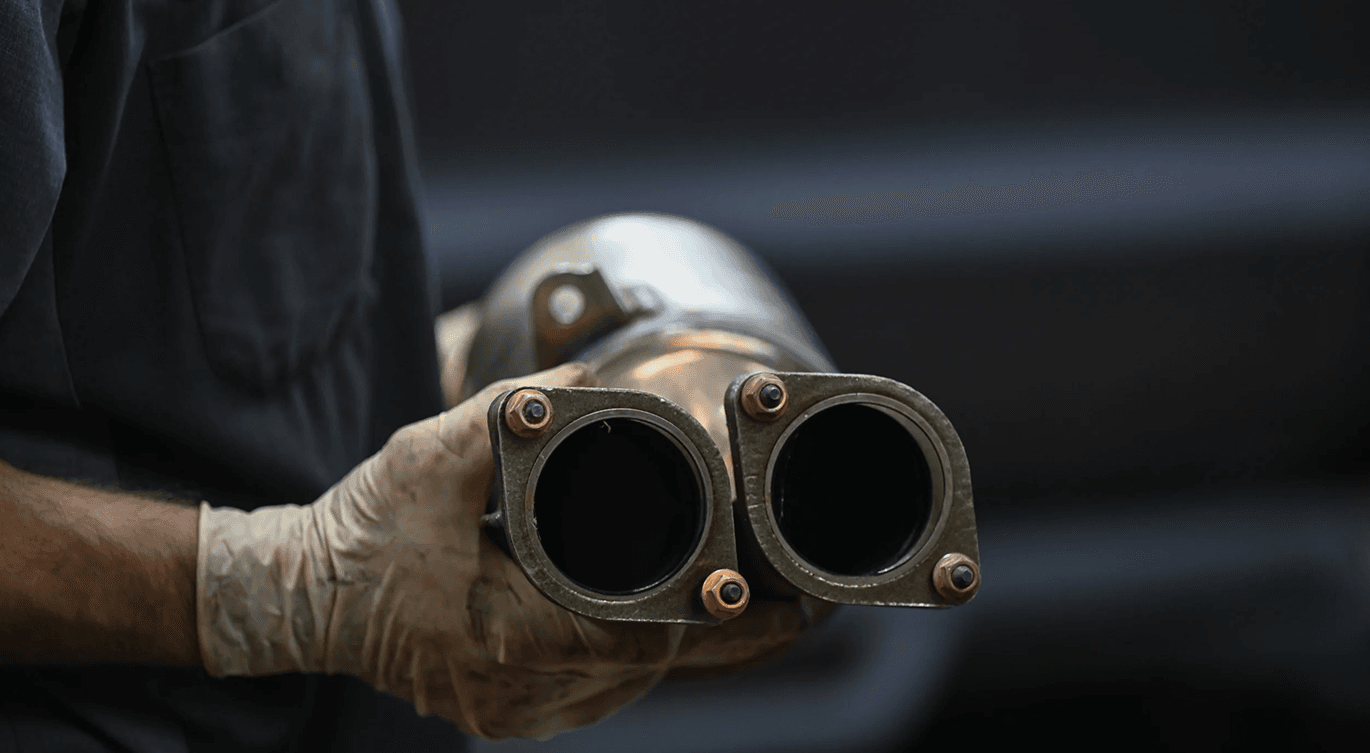
In real konverter katalitik tiga arah recycling work, there is a pattern that shows up again and again.
Don’t let looks fool you. Two identical-looking catalysts can yield completely different scrap prices. The gap is usually small, but in some cases, it’s downright shocking.
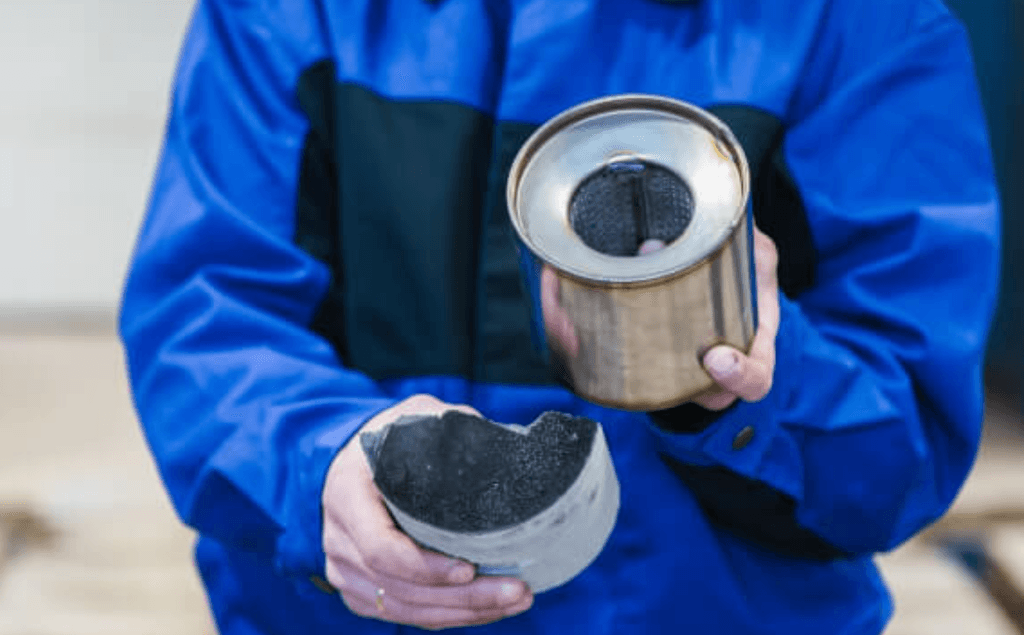
Most people assume the difference comes from size or weight. But in practice, what really drives value is what sits inside the ceramic core.
And rhodium is usually part of that explanation.
Inside a konverter katalitik tiga arah, rhodium is used in very small quantities, but its influence on emission performance and recycling value is far from small.
The challenge is simple: there is no fixed universal number. This depends heavily on the structure of a three way catalytic converter explained in detail.Only realistic ranges based on engineering design, peraturan emisi, and cost balancing.
Why Rhodium Is Treated Differently in Real Industry Work
If you talk to two groups—engineers and recyclers—you will notice a clear difference in mindset.
Engineers look at rhodium as a performance control element. Recyclers look at it as a value multiplier variable.
Both are correct, but they are focusing on different stages of the same product lifecycle.
Inside a konverter katalitik tiga arah, rhodium is mainly responsible for NOx reduction. But it does not act alone. It works together with platinum and palladium under constantly changing exhaust conditions.
What this means in real production is straightforward:
Manufacturers do not decide rhodium amount directly. They design emission performance first, then adjust catalyst loading until the system passes regulations.
So rhodium is always a result of system optimization, not a standalone design input.
Real Rhodium Content Range in Vehicles
From recycling reports and OEM estimation data, rhodium content generally falls into a predictable range—but not a fixed number.To understand this better, we need to look at how a catalytic converter recycling process works in real industry conditions.The amount of rhodium inside a konverter katalitik tiga arah varies significantly between vehicle categories.
Typical Rhodium Content in a Three Way Catalytic Converter
| Jenis Kendaraan | Rhodium Range | Industry Interpretation |
|---|---|---|
| Small Economy Cars | 0.1 – 0.8 g | Cost-optimized emission systems |
| Standard Passenger Cars | 0.5 – 2 g | Balanced OEM design |
| SUVs / Crossovers | 1 – 3 g | Higher exhaust load handling |
| Light Trucks | 1 – 2.5 g | Durability-focused design |
| Heavy Duty Vehicles | 2 – 3+ g | High NOx stress conditions |
In real recycling operations, professionals rarely rely only on these numbers. They are used more as a reference baseline than an exact calculation.
What Really Controls Rhodium Usage (Engineering Reality)
In theory, emission regulations drive everything.
In practice, the situation is more layered.
Factors Affecting Rhodium Content in a Three Way Catalytic Converter
| Layer | Factor | Real Impact | Explanation |
|---|---|---|---|
| 1 | Standar emisi | Very High | Defines performance threshold |
| 2 | OEM catalyst design | Very High | Determines system architecture |
| 3 | Engine combustion behavior | Medium–High | Influences NOx output |
| 4 | Material cost pressure | Sedang | Adjusts metal ratio strategy |
| 5 | Production updates | Sedang | Creates batch variation |
The key point is that none of these factors works alone.
They combine and shift together, which is why rhodium content always appears as a range instead of a fixed value.
Converter Type Matters More Than People Expect
Not all catalytic converters behave the same.
Even under the umbrella of high flow three way catalytic converter, there are design differences that influence precious metal loading.
Three Way Catalytic Converter Types and Rhodium Usage
| Jenis | Aplikasi | Rhodium Usage Trend |
|---|---|---|
| OEM Standard TWC | Mass production vehicles | Seimbang |
| High-Emission Performance TWC | Stricter regulation markets | Higher loading |
| High-Flow Performance Converter | Aftermarket tuning | Variable, often lower rhodium |
| Aging Generation Converters | Older vehicles | Sometimes higher metal loading |
This is one reason why recyclers never rely only on size or shape.
Two converters can look identical but still behave differently in value.
How Rhodium Fits in the Full PGM System
A catalytic converter is always a combined system, not a single-metal device.Every modern konverter katalitik tiga arah relies on a carefully balanced PGM formulation.
PGM System Role Table
These three metals work together, but their value contribution is very different in a platinum palladium rhodium comparison system.
| Logam | Fungsi | Behavior in System |
|---|---|---|
| Platinum | Oxidation support (CO, HC) | Stable long-term activity |
| Paladium | Hydrocarbon conversion | Cost-sensitive efficiency control |
| Rodium | Pengurangan NOx | High sensitivity, high value impact |
One important real-world observation:
Even though rhodium has the smallest quantity, it often creates the largest pricing variation when market conditions change.
Why Scrap Value Can Change Without Physical Change
This is something many beginners misunderstand.
A catalytic converter does not physically change when market prices move.
But its estimated value changes immediately.
Because recycling companies calculate value based on expected metal return under current market conditions.
So when rhodium price increases:
- same converter becomes more valuable
- price differences between models expand
- buyer quotations become less stable
When rhodium stabilizes, pricing becomes more consistent again.
How Recyclers Estimate Rhodium in Practice
In real recycling operations, estimation is not a single-step process.When a konverter katalitik tiga arah enters the recycling stream, rhodium becomes one of the key value drivers.
It follows a layered logic.
Industry Estimation Workflow
| Melangkah | Metode | Tujuan |
|---|---|---|
| 1 | Vehicle identification | Establish baseline expectation |
| 2 | OEM database matching | Predict catalyst structure |
| 3 | Experience-based classification | Narrow value range |
| 4 | Physical inspection | Confirm authenticity |
| 5 | Laboratory assay (if needed) | Final confirmation |
Most of the time, step 1–3 already determine a close estimate.
Lab testing is mainly used for high-value or uncertain cases.
Recovery Process (Real Industrial View)
On paper,konverter katalitik tiga arah recycling looks like a clean chemical process.
In reality, it is more controlled and iterative.
Recovery Flow Table
| Stage | Proses | Real Challenge |
|---|---|---|
| 1 | Decanning | Structural variation between units |
| 2 | Crushing | Ensuring uniform particle distribution |
| 3 | Homogenization | Sampling accuracy control |
| 4 | Chemical leaching | Reaction efficiency stability |
| 5 | Separation | Metal overlap control |
| 6 | Refining | Yield optimization |
The most critical factor is not chemistry itself, but consistency of input material.
Small differences at the beginning can significantly affect final output.
Converter Types and Rhodium Behavior (Expanded Module)
Different converter generations behave differently in terms of rhodium usage.
Modern systems tend to optimize efficiency rather than simply increasing precious metal loading.
Older systems often relied more on higher material input to meet emission targets.
Generation Trend Table
| Generation | Technology Level | Rhodium Strategy |
|---|---|---|
| Early systems | Basic catalyst design | Higher loading |
| Mid-generation | Improved washcoat | Balanced usage |
| Modern systems | High efficiency design | Lower but optimized usage |
This shows a clear industry trend: efficiency is replacing raw material dependency.
Rhodium vs Platinum vs Palladium (Deep Comparison)
Understanding rhodium alone is not enough.
You need to see the full system.
Metal Comparison Table
| Logam | Price Volatility | Supply Stability | Recycling Sensitivity |
|---|---|---|---|
| Rodium | Very High | Sangat Rendah | Extremely sensitive |
| Platinum | Sedang | Sedang | Stable |
| Paladium | Tinggi | Sedang | Demand-driven |
Rhodium stands out because small quantity changes can lead to large pricing effects.
Market Behavior of Rhodium (Practical Insight)
Rhodium does not behave like a stable industrial metal.
It behaves more like a sensitive market indicator inside the PGM system.
In recycling cycles, a simple pattern often appears:
- Price rise → value differences increase
- Price stability → valuation becomes consistent
- Price drop → model differences shrink
This is why recyclers always monitor rhodium trends closely.
Key Industry Reality Summary
If we simplify everything into practical understanding:
- Rhodium exists in very small amounts
- It is essential in three way catalytic converter systems
- It is highly sensitive to market pricing
- It strongly affects recycling valuation differences
That combination is what makes it strategically important in both engineering and trading.
FAQ Section
Q1: Is rhodium the most valuable metal in catalytic converters?
In many market conditions, yes. Rhodium often has the highest price per gram among PGMs.
Q2: Why do similar converters have different scrap value?
Because OEM design differences and emission standards affect precious metal loading.
Q3: Can rhodium content be accurately estimated without testing?
Only approximate estimation is possible. Accurate measurement requires assay or OEM data matching.Overall valuation also depends on the full PGM distribution inside a catalytic converter system.
Q4: How much rhodium is typically found in a three way catalytic converter?
Most passenger vehicles contain between 0.1 and 2 grams of rhodium, although some larger applications may contain more.
Q5:Why is rhodium more valuable than platinum and palladium?
Rhodium is significantly rarer and its supply is more limited, which often leads to higher market prices.
Q6:Do all catalytic converters contain rhodium?
Most gasoline konverter katalitik tiga arah contain rhodium, while some diesel systems use different catalyst formulations.
Kesimpulan
Rhodium setups are minimal in standard converters, clustering between 0.1 and 2 grams depending on the vehicle setup and clean-air mandates.
However, its importance is not defined by quantity.
Inside a konverter katalitik tiga arah, rhodium plays a critical role in NOx reduction and significantly influences recycling value and system performance.
Tighter environmental caps worldwide mean rhodium is here to stay as a baseline component in catalyst design.
For recyclers, manufacturers, and vehicle owners, understanding rhodium content provides a clearer picture of both emissions performance and potential recycling value. Although the quantity is small, its contribution to a three way catalytic converter remains essential.