Introduzione
Convertitore catalitico a tre vie is a core component of modern emission control systems used in gasoline engines.the convertitore catalitico a tre vie mitigates harmful gasoline engine exhaust.Crucial to its function is the concurrent reduction of carbon monoxide (CO), hydrocarbons (HC), and nitrogen oxides (NOx) into benign byproducts: carbon dioxide ($CO_2$), nitrogen ($N_2$), and water vapor.
OEM suppliers of catalytic converters operate in a highly technical and regulated environment. They must meet strict emission laws. They’re forced to balance the financial strain of precious metal costs with the need for uniform performance across millions of units. This guide explains how OEM catalytic converter manufacturers operate. A vast array of suppliers power the catalytic converter market, an ecosystem that continues to be defined by high fragmentation as we hit 2026.
Global Catalytic Converter Manufacturing Landscape
There’s a massive mix of different suppliers in the catalytic converter space. Even now in 2026, the market is still all over the place, with no single player dominating.
Some manufacturers are fully integrated. They handle everything from start to finish—from sourcing the raw PGMs all the way to final assembly. Most other companies out there just stick to one specific step, like substrate engineering or coating formulations.
Main supplier categories:
- OEM automotive exhaust system suppliers
- High-performance catalytic substrate manufacturers
- Industrial emission control system providers
- PGM refining and recovery companies
- Contract coating and canning specialists
Each category plays a specific role in the convertitore catalitico a tre vie supply chain.
Core Functions of a Three Way Catalytic Converter
UN convertitore catalitico a tre vie performs three chemical reactions at the same time:
- Oxidation of carbon monoxide (CO → CO₂)
- Oxidation of hydrocarbons (HC → CO₂ + H₂O)
- Reduction of nitrogen oxides (NOx → N₂ + O₂)
These reactions occur on a catalyst surface coated with platinum group metals.
Key internal components:
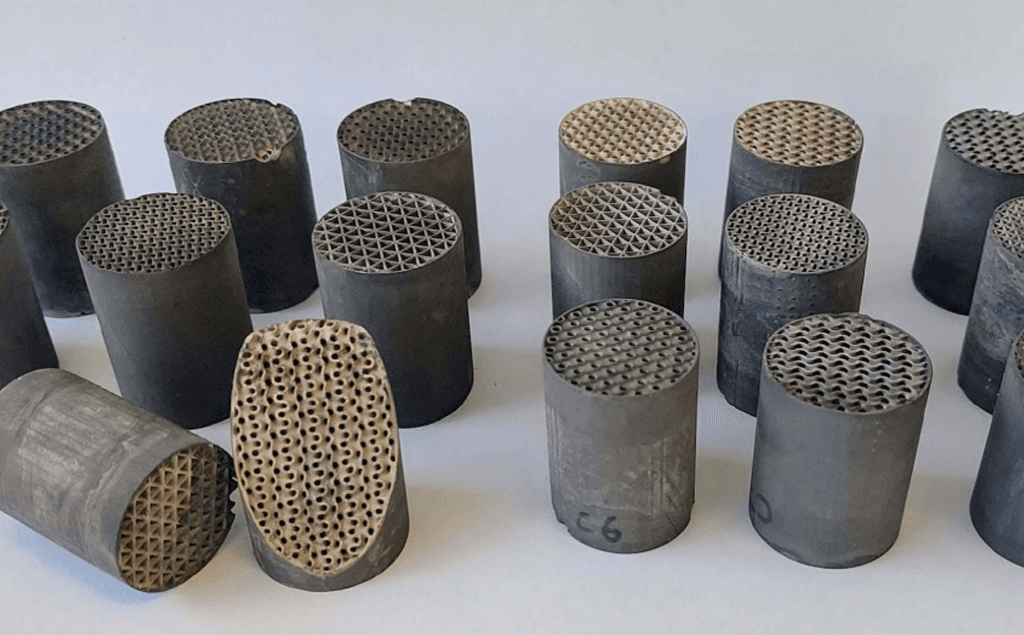
- Substrate (ceramic or metallic honeycomb)
- Washcoat layer (high-surface-area support material)
- Active catalytic metals (Pt, Pd, Rh)
- Steel housing and thermal insulation layers
Each component directly impacts conversion efficiency, durability, and cost.
Market Requirements for OEM Buyers
OEM buyers do not simply purchase a product. They purchase a compliance solution.
Modern buyers expect suppliers to solve multiple engineering challenges:
- Emission compliance under EPA E CARBOIDRATI rules
- Optimization of PGM loading efficiency
- Thermal durability across engine cycles
- Stable oxygen storage capacity performance
- Cost control under volatile metal markets
UN convertitore catalitico a tre vie must perform consistently for tens of thousands of miles without degradation.
Supplier Capability Structure
Catalytic converter suppliers vary significantly in technical depth.
Vertically integrated manufacturers
These companies manage:
- PGM sourcing and hedging
- Catalyst formulation
- Substrate manufacturing
- Washcoat coating
- Final canning and assembly
They usually offer higher stability and better cost control.
Specialized manufacturers
These suppliers focus on one segment:
- Metallic substrate design for performance engines
- Industrial emission system engineering
- Coating technology development
- Aftermarket replacement units
They often deliver innovation but rely on partners for full system integration.
Engineering Requirements for Buyers
OEM buyers must prepare detailed technical input before contacting suppliers.
Required specifications include:
- Engine displacement and fuel type
- Exhaust gas temperature profile
- Expected load cycles and driving conditions
- Target emission reduction levels
- Annual production volume forecast
- Required durability (e.g., 100,000-mile equivalent)
- OBD-II compatibility requirements
- CAD drawings or packaging constraints
Without these inputs, a convertitore catalitico a tre vie cannot be properly engineered.
Ceramic vs Metallic Substrate Comparison
The substrate is the foundation of catalytic performance. It directly affects heat transfer, durability, and efficiency.
| Caratteristica | Substrato ceramico | Substrato metallico |
|---|---|---|
| Materiale | Cordierite | Stainless steel foil |
| Thermal shock resistance | Medio | Alto |
| Cost | Lower | Più alto |
| Light-off speed | Slower | Faster |
| Durata | Moderare | Alto |
| Design flexibility | Limitato | Alto |
| Best use case | Standard passenger cars | High-performance & heavy-duty systems |
Ceramic substrates dominate cost-sensitive applications. Metallic substrates dominate performance-critical systems where heat cycles are extreme.
PGM Materials and Market Volatility Impact
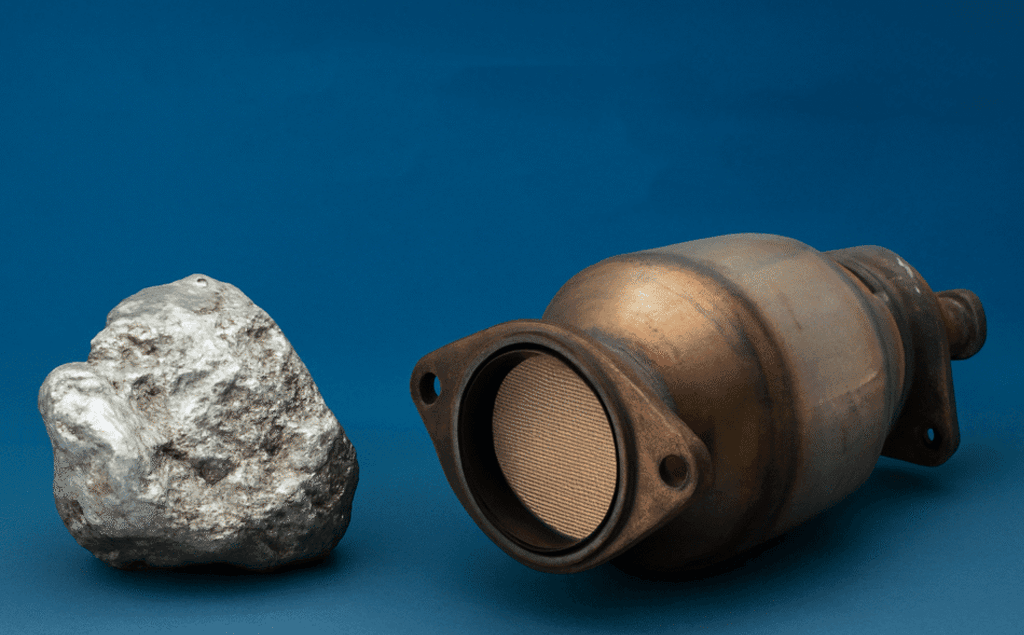
Platinum group metals define the performance of every convertitore catalitico a tre vie.
These include:
- Platino (Pt)
- Palladio (Pd)
- Rodio (Rh)
Why PGM prices matter
PGM materials in catalytic converter can account for 70–80% of total converter cost. Prices fluctuate due to:
- Mining supply limitations
- Geopolitical instability
- Automotive demand cycles
- Investment speculation
Supplier risk strategies:
- Hedging contracts for metal price stability
- Consignment-based PGM supply models
- Recycling and recovery integration
- Fixed-price OEM agreements (short-term only)
Buyers must evaluate how each supplier manages this volatility.
Requisiti di conformità normativa
Compliance defines market access. Without certification, a catalytic converter cannot be sold legally in most markets.
Key certifications:
- EPA (Environmental Protection Agency)
- CARB (California Air Resources Board)
- IATF 16949 quality management system
Testing requirements include:
- 50,000 to 100,000-mile durability simulation
- Cold start emission control performance
- Thermal aging resistance testing
- OBD-II system compatibility validation
A compliant convertitore catalitico a tre vie must maintain efficiency across its entire lifecycle.
How to Choose a Catalytic Converter Manufacturer
Selecting the right three way catalytic converter supplier requires technical and financial evaluation.
1. Evaluate manufacturing capability
Check whether the supplier controls:
- Washcoat consistency control systems
- Precision PGM application technology
- High-temperature canning equipment
2. Verify regulatory experience
Suppliers must demonstrate:
- Proven EPA certification history
- CARB-approved product lines
- Successful OEM program delivery
3. Analyze cost stability strategy
Ask how they manage:
- PGM price fluctuations
- Long-term supply contracts
- Metal recovery programs
4. Validate emissions performance data
Avoid suppliers who:
- Claim ultra-low PGM usage without testing proof
- Cannot provide third-party validation reports
- Lack durability test documentation.
Digital Simulation in Catalytic Converter Design (New Section)
Modern convertitore catalitico a tre vie development increasingly uses digital engineering tools.
Simulation reduces physical prototyping cycles and improves efficiency.
Key technologies include:
- Computational Fluid Dynamics (CFD) for exhaust flow
- Finite Element Analysis (FEA) for thermal stress
- Chemical reaction modeling for catalyst efficiency
- AI-based emission prediction systems
Benefits:
- Faster development cycles
- Lower R&D cost
- Improved emission precision
- Reduced material waste
Digital modeling now defines competitive advantage in OEM supply chains.
Recycling and Circular Economy of PGMs (New Section)
Sustainability has become a core requirement in catalytic converter manufacturing.
PGM recovery plays a major role in cost reduction and environmental responsibility.
Recycling process:
- Collection of spent catalytic converters
- Mechanical shredding and sampling
- Chemical extraction of PGMs
- Refining and purification
- Reintroduction into catalyst production
Industry impact:
- Reduces dependency on mining
- Stabilizes supply chain risks
- Lowers long-term production cost
- Supports circular economy models
Un moderno convertitore catalitico a tre vie supplier often integrates recycling systems into its business model.
Common Buyer Mistakes
Many buyers face avoidable risks when sourcing catalytic converters.
Common errors include:
- Choosing suppliers based only on low cost
- Ignoring long-term PGM cost exposure
- Overlooking certification requirements
- Accepting unverified emission claims
- Underestimating durability testing importance
These mistakes often lead to recalls or compliance failures.
Future Trends in Three Way Catalytic Converter Industry
The industry continues to evolve under multiple pressures.
Key trends:
- Reduction in PGM loading through advanced chemistry
- Growth of hybrid and start-stop engine optimization
- Increased metallic substrate adoption
- Stronger recycling integration
- AI-driven catalyst design systems
- Gradual transition pressure from EV adoption
Despite electrification trends, the convertitore catalitico a tre vie remains essential for the global vehicle fleet.
Conclusione
Making catalytic converters means tying together three deep fields: chemistry, material science, and tight environmental rules.
OEM convertitore catalitico a tre vie suppliers operate under strict emission regulations while facing continuous pressure from precious metal cost volatility. Buyers today look way beyond the initial price tag.Strict environmental laws are reshaping the industry. Tomorrow’s winners are the manufacturers funding advanced materials, digital modeling, and sustainable recycling networks today. As emission standards tighten globally, manufacturers who invest in advanced materials, digital simulation, and recycling systems will lead the next phase of industry development.