Introduzione
As the world goes green, the auto industry isn’t just changing—it’s being completely overhauled. Despite the rapid rise of electric mobility, the convertitore catalitico a tre vie remains a cornerstone of global emission control strategies. Engineers and researchers are now developing next-generation catalytic materials to satisfy the rigorous demands of Euro 7 and 2026-2027 EPA standards. This article examines how the industry is moving toward “zero-emission” targets by refining the chemical efficiency and material composition of these essential components.
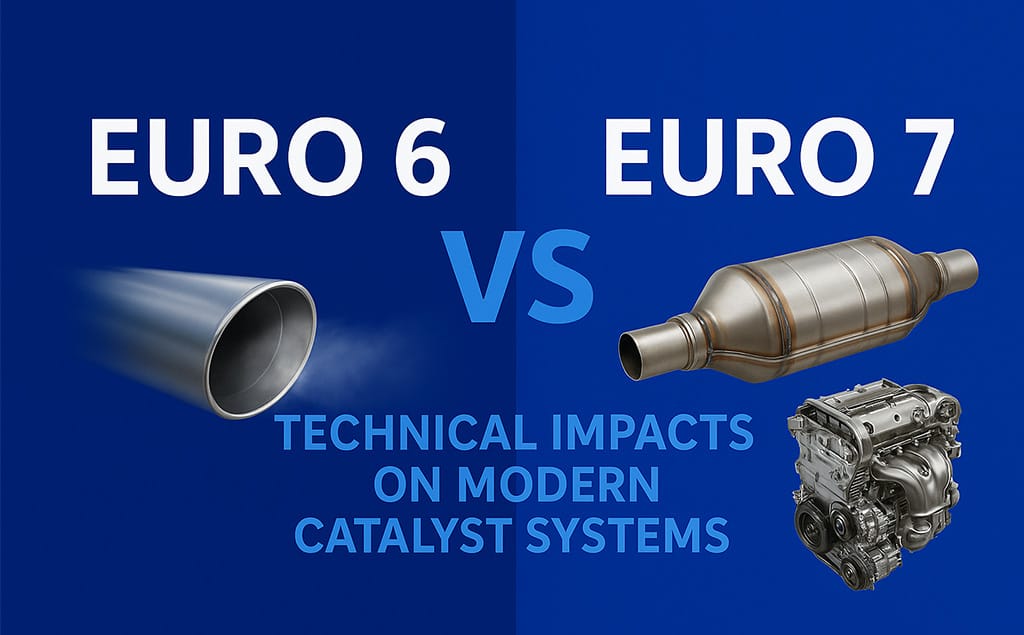
Redefining Efficiency: Next-Gen Catalytic Materials
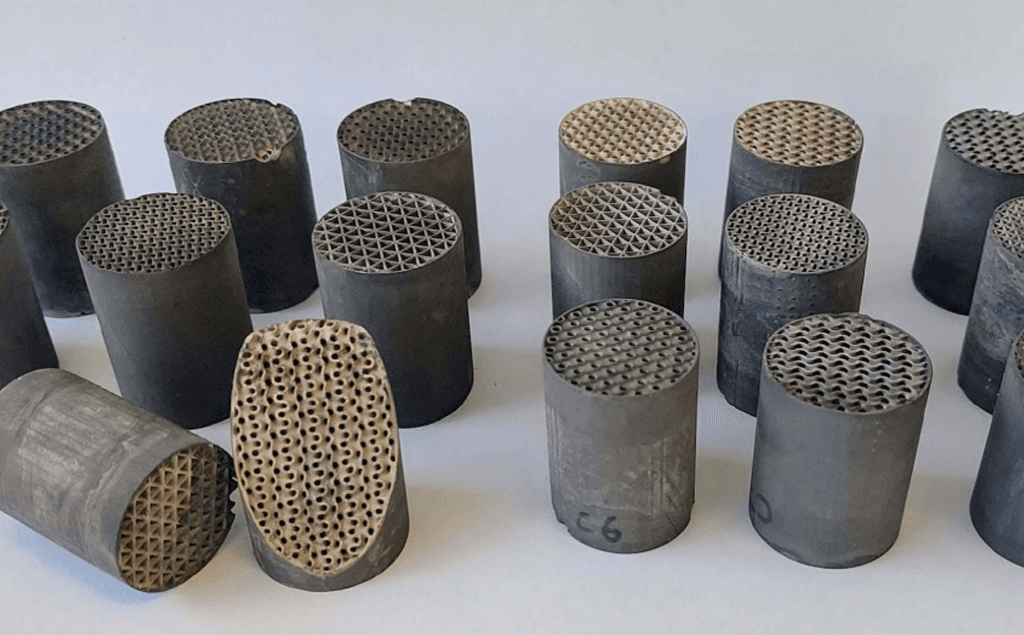
Manufacturers are currently shifting away from heavy reliance on expensive precious metals. The new era of the convertitore catalitico a tre vie focuses on nanostructured designs and atom-efficient configurations. By utilizing transition metal nanoparticles and perovskites, developers improve the structural integrity of catalysts at extreme temperatures reaching 1600°F.
Furthermore, advanced support materials like ceria ($CeO_2$) and ceria-zirconia ($CeO_2-ZrO_2$) have become industry standards. these substrates provide superior oxygen storage, allowing the convertitore catalitico a tre vie to maintain high conversion rates even during rapid fluctuations in engine load. Active thermal management systems now enable catalysts to reach “light-off” temperatures within seconds, effectively neutralizing cold-start emissions which previously accounted for the bulk of vehicle pollution.
Innovative Catalyst Technologies and Market Comparison
To better understand how these technologies differ from traditional setups, the following table highlights the key shifts in material science and functionality:
| Technology Category | Core Materials | Key Benefit | Target Application |
|---|---|---|---|
| Traditional TWC | High PGM (Pt, Pd, Rh) | Reliable $NO_x$/CO reduction | Standard Gasoline Engines |
| Low-PGM Catalyst | Bimetallic/Tri-metal Alloys | Reduced manufacturing cost | Budget-friendly ICE |
| Four-Way Catalyst | Ceramic honeycomb + Filter | Gas & Particulate removal | GDI & Hybrid Engines |
| Smart Catalysts | AI-integrated sensors | Real-time adaptive control | High-end PHEVs |
The Critical Role of Hybrid and Hydrogen Systems
As the market transitions, the convertitore catalitico a tre vie must adapt to new powertrains.The frequent stop-start nature of hybrid systems is tough on the engine, creating wear and tear that you just don’t see in traditional vehicles.This behavior requires catalysts that stay hot or heat up instantly. Consequently, the industry is adopting “smart” systems that use machine learning algorithms to predict exhaust temperature needs.
In the realm of hydrogen fuel cell vehicles, catalysis research ensures the robustness of the fuel cell stack itself. While these vehicles do not use a traditional exhaust-based convertitore catalitico a tre vie, the underlying science of precious metal management remains identical. Additionally, synthetic “green” fuels require specialized catalysts to ensure that the combustion process remains carbon-neutral and free of criteria pollutants.
Market Dynamics and Global Regulatory Pressure
Even with the EV boom, the global demand for auto catalysts isn’t slowing down—it’s actually hitting a major growth spurt.Analysts value the market at approximately 14.22 billion USD in 2024, with projections reaching 24.22 billion USD by 2033. This growth stems largely from stricter laws in emerging economies.
- China and India: The implementation of “China 6” and “Bharat Stage VI” (BS-VI) standards forces local manufacturers to adopt high-performance convertitore catalitico a tre vie units.
- America del Nord: The EPA’s 2027 roadmap requires a massive reduction in $NO_x$ and $CO_2$ levels, prompting giants like Ford and GM to invest heavily in tri-metal catalyst technology.
- Europe: Euro 7 is fast-tracking the shift to four-way catalysts by making integrated GPFs a must-have within the converter shell.
Sustainable Manufacturing and the Circular Economy
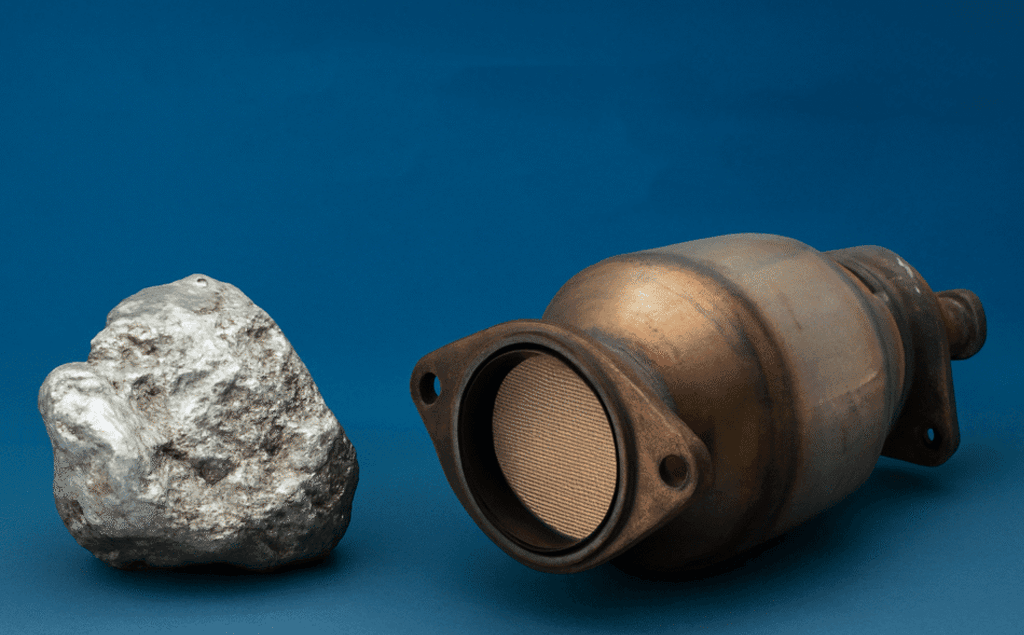
Sustainability no longer refers only to tailpipe emissions. The automotive industry now prioritizes the lifecycle of the convertitore catalitico a tre vie. Since platinum, palladium, and rhodium are finite resources, recycling has become a mechanical necessity. Top players like Umicore and JM are doubling down on specialized facilities, pushing the recovery of precious metals from scrap units to a staggering 95%. This “closed-loop” system stabilizes production costs and reduces the environmental footprint of mining.
Overcoming Modern Restraints
The industry faces two primary hurdles: the rising cost of raw materials and the declining sales of traditional internal combustion engines. However, the complexity of the modern convertitore catalitico a tre vie actually increases its value per unit. Manufacturers are tailoring their designs for hybrid use to keep their products in the game throughout the next decade.
Conclusione
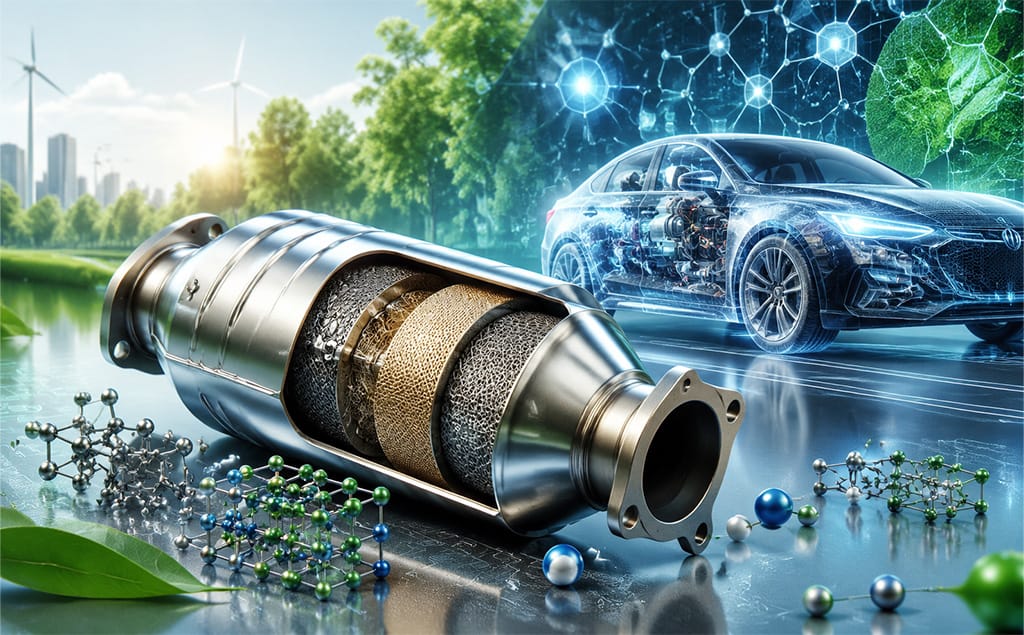
IL convertitore catalitico a tre vie is not a relic of the past; it is a high-tech solution evolving for a greener future. Through the use of nanotechnology, smart sensors, and advanced recycling, this technology bridges the gap between traditional fossil fuels and a zero-emission world.Catalyst tech isn’t going anywhere; it remains a massive frontier in auto engineering for as long as internal combustion powers the hybrid mix.