導入
The transition from Euro 6 to Euro 7 marks a major shift in European emission-control regulations. These new rules reshape catalyst design, durability expectations, and real-world performance requirements. They also increase the technical burden on 三元触媒コンバーター, diesel aftertreatment systems, and particulate-control technologies. To comply with Euro 7, manufacturers must improve catalyst activity, reduce ultrafine particles, manage new pollutants, and ensure long-term system stability.
Euro 7 expands pollutant categories, tightens durability limits, and adds new test conditions that capture real-world driving more accurately than Euro 6. This pushes catalyst engineering toward faster light-off performance, better thermal resistance, and enhanced monitoring strategies.
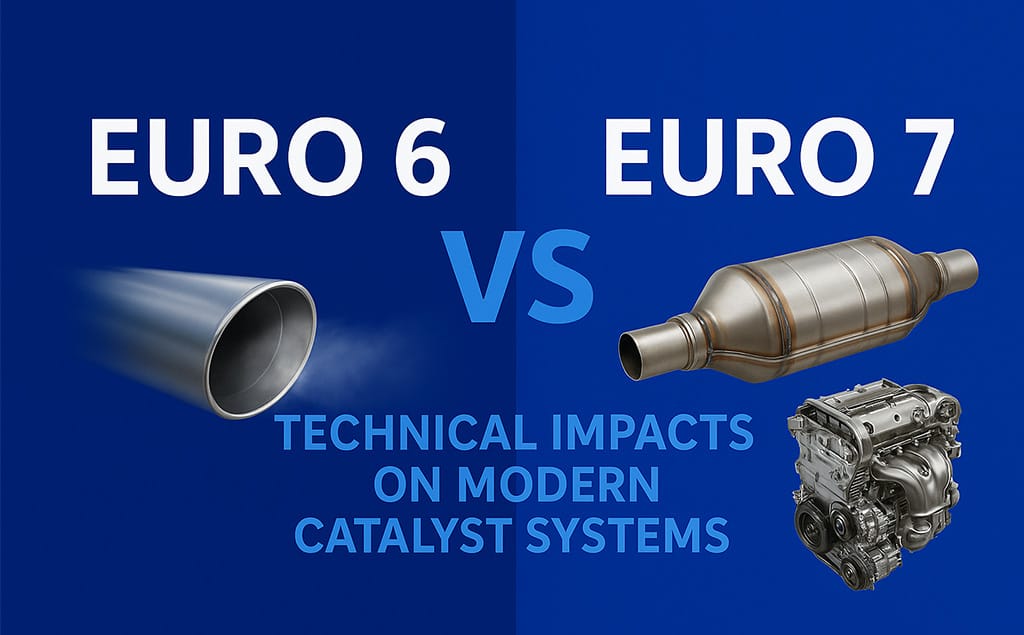
Euro 7 Represents a Major Step Beyond Euro 6
Euro 6 regulations have controlled NOx, CO, PM, and hydrocarbon emissions since 2014. Euro 7 builds on this foundation but broadens the scope. It adds ammonia and nitrous oxide limits, regulates particles from 10 nm, and introduces standards for brakes and tires.
Euro 7 differs from Euro 6 in several ways:
- Wider pollutant coverage
- Longer durability requirements
- Stricter Real Driving Emissions tests
- New particle-number thresholds (PN10)
- Lower-temperature and lower-load evaluations
- Regulation of non-exhaust emissions
- Battery performance requirements for electric vehicles
These changes require more advanced catalyst chemistry and stronger system integration.
Catalyst Durability Requirements Increase
Euro 7 requires catalytic converters and filters to remain effective for 200,000 km or 10 years, which doubles Euro 6’s 100,000-km requirement. Manufacturers need stronger substrates, more stable washcoat formulations, and optimized PGM distribution.
To meet durability goals, catalyst engineers focus on:
- Thermal-resistant substrate materials
- High-stability oxygen-storage components
- Strong washcoat adhesion
- Optimized precious-metal loading
- Improved flow-channel design
Euro 7’s OBD rules also require earlier detection of catalyst degradation, which demands more sensitive monitoring sensors and software.
Ultrafine Particle Regulation (PN10)
Euro 7 regulates particles down to 10 nm (PN10), while Euro 6 covered only 23 nm (PN23). This forces the adoption of higher-efficiency gasoline particulate filters and more advanced diesel particulate filters.
To meet PN10, engineers improve:
- GPF coating uniformity
- Filter pore structure
- Catalyst heat-up behavior
- Regeneration strategies
これはガソリン、ディーゼル、ハイブリッドのパワートレインに影響を与えます。
New Pollutant Categories
Euro 7 では、触媒化学に影響を与える新しい排出ガス制限が導入されています。
アンモニア(NH₃)
Euro 7では、SCRシステムからのアンモニアスリップが規制されています。メーカーは以下のものを使用する必要があります。
- 最適化された尿素投与
- 大容量SCR触媒
- アンモニアスリップ触媒(ASC)
亜酸化窒素(N₂O)
N₂Oは規制対象汚染物質となる。触媒の選択肢は以下のように変化した。
- 銅ゼオライトSCRよりもバナジウムベースのSCRシステム(N₂O排出量が少ない)
この変更により、温室効果ガスの排出量が削減され、実際のパフォーマンスが向上します。
Real-World Driving Emissions Testing
Euro 7ではRDE試験の範囲が拡大されます。触媒システムは以下の条件で作動する必要があります。
- 低速
- エンジン負荷の低減
- 排気温度の低下
- より広い周囲温度範囲
メーカーは、より速い着火を実現する必要がある。 三元触媒コンバーター 使用:
- 高活性PGM製剤
- 薄壁基板
- 電気加熱触媒
- 断熱性の向上
- エンジンに近い位置に最適化
Table 1. Euro 6 vs Euro 7 Key Technical Differences
| パラメータ | ユーロ6 | ユーロ7 | インパクト |
|---|---|---|---|
| 耐久性 | 10万キロ | 20万キロ | より強力な触媒が必要 |
| 粒子サイズ | 23 nm | 10 nm | フィルター効率の向上 |
| NOx | 適度 | より厳しい | 高度なSCR/TWC設計 |
| アンモニア | 規制されていない | 規制された | ASC触媒が必要 |
| N₂O | 規制されていない | 規制された | バナジウムSCRのトレンド |
| RDE閾値 | 限定 | 拡大 | コールドスタート最適化 |
| ブレーキ/タイヤの粒子 | いいえ | はい | EVにも適用 |
Euro 7 Requirements for Diesel Engines
ディーゼル システムは以下を統合する必要があります:
- より大きなDPF容量
- より効率的なSCR触媒
- 低N₂Oを実現するバナジウムベースのシステム
- 尿素噴射制御の改善
- より良い加熱と混合戦略
これらの機能強化により、低速、低負荷の市街地走行時に安定した NOx 変換が保証されます。
Euro 7 Requirements for Gasoline Engines
ガソリン車は 三元触媒コンバーターユーロ7では以下の点が期待されます。
- CO削減
- 炭化水素制御
- NOx削減
- N₂O抑制
ガソリン直噴エンジンでも、PN10 規格を満たすには GPF 性能の向上が必要です。
Non-Exhaust Particles
Euro 7 では、以下の粒子に対する制限が導入されます。
- ブレーキパッド
- ブレーキローター
- タイヤ
これは内燃機関車と電気自動車の両方に当てはまります。メーカーは摩耗の少ない素材と集塵システムで対応しています。
Broader Climate Policy Context
ユーロ7は、欧州グリーンディールと気候変動法を支持するものです。これらの政策は以下を対象としています。
- 2030年までに温室効果ガスを55%削減
- 2050年までにネットゼロ排出
Euro 7 は、実験室のみでのコンプライアンスではなく、実際の排出削減を推進します。
Euro 6 Pollutant Limits (Reference)
| エンジンタイプ | 汚染物質 | 制限 |
|---|---|---|
| ガソリン | 二酸化炭素 | 1.0 g/km |
| ガソリン | THC | 0.10 g/km |
| ガソリン | NMHC | 0.068 g/km |
| ガソリン | NOx | 0.06 g/km |
| ガソリン直噴 | 首相 | 0.005 g/km |
| ディーゼル | 二酸化炭素 | 0.50 g/km |
| ディーゼル | HC+NOx | 0.17 g/km |
| ディーゼル | NOx | 0.08 g/km |
| ディーゼル | 首相 | 0.005 g/km |
Euro 7 では、より厳しい制限、より広範なテスト シナリオ、より長い耐久性要件が導入されます。
Euro 7 Implementation Timeline
- 2025年7月1日:乗用車および軽バン(M1、N1)
- 2027年7月1日:バスおよび大型車両(M2、M3、N2、N3)
- 2030年7月1日: 少量生産メーカー
ユーロ 7 に適合しない車両は、この日付以降は市場に参入できません。
結論
ユーロ7は、ユーロ基準導入以来、最も重要な規制強化の一つです。耐久性に対する期待値を高め、新たな汚染物質を追加し、超微粒子を規制し、実走行における要件を拡大しています。 三元触媒コンバータ 20万kmの長寿命化を実現しながら、より迅速な着火とより効率的なNOx制御を実現する必要があります。ディーゼルシステムは、アンモニアスリップ、N₂O生成、そして低温NOx浄化をより高い精度で処理する必要があります。
Euro 7は、触媒エンジニア、メーカー、そして材料科学者に革新を促します。その導入により、ヨーロッパの大気浄化に向けた取り組みが加速し、交通機関と長期的な気候変動対策が整合します。