導入
The automotive industry faces stricter emission standards in 2026. The 三元触媒コンバーター remains the primary defense against harmful pollutants in gasoline engines. This component simultaneously reduces nitrogen oxides (NOx) and oxidizes carbon monoxide (CO) and hydrocarbons (HC). Unlike diesel systems, the 三元触媒コンバーター does not deal with particulate soot. Therefore, “regeneration” in this context does not mean burning off carbon. Instead, it refers to the complex restoration of chemical active sites on noble metal surfaces. Understanding when to attempt restoration and when to mandate replacement is critical for fleet managers and technicians. This guide explores the scientific nuances of catalyst maintenance and the technical thresholds for component failure.
The Chemical Foundation of the Three Way Catalytic Converter
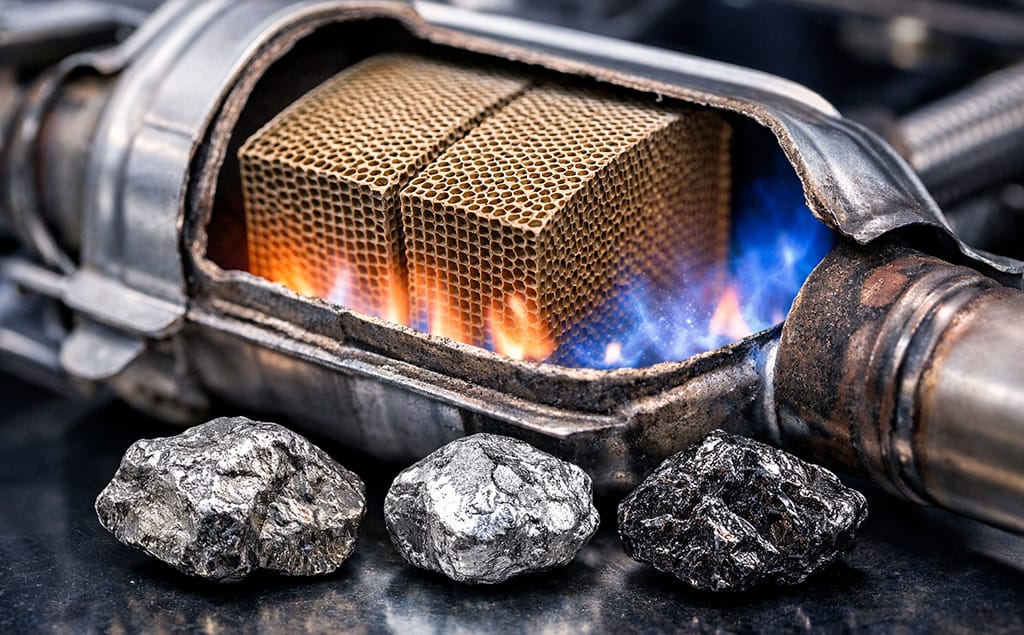
A modern 三元触媒コンバーター relies on a sophisticated bimetallic structure. Manufacturers typically deposit Rhodium (Rh) and Palladium (Pd) onto a stabilized Al2O3 (Alumina) washcoat. Each metal serves a specific purpose. Rhodium excels at reducing NOx into nitrogen and oxygen. Palladium focuses on the oxidation of CO and unburned hydrocarbons.
The interaction between these metals and the ceramic substrate determines the efficiency of the device. In 2026, engine control modules (ECMs) manage these reactions with extreme precision. However, engine operational modes like “fuel shutoff” during coasting can alter catalyst chemistry. While fuel shutoff improves economy, it creates an oxygen-rich environment. This environment can temporarily deactivate the noble metals. A subsequent switch to a fuel-rich mode restores the catalyst’s performance. This cycle is the most basic form of regeneration.

TWC Regeneration: Restoring Chemical Activity
Regeneration of a 三元触媒コンバーター involves reversing deactivation. This deactivation usually stems from chemical poisoning or surface aging. In 2026, professional restoration methods have become more refined.(catalyst deactivation research)
Fuel-Rich Cycling and Redox Chemistry
Modern ECMs perform internal regeneration through fuel-rich cycling. When the sensor detects oxygen saturation on the catalyst surface, the computer increases fuel delivery. This “rich” environment reduces the oxide layers on Rhodium and Palladium. This process “cleans” the metal surfaces at a molecular level. It ensures the active sites remain available for the next exhaust pulse. This is a continuous, automated form of regeneration.
Professional Chemical and Solvent Washing
Chemical poisoning often involves sulfur, phosphorus, or calcium. These elements come from fuel impurities or engine oil additives. They form a physical barrier over the washcoat. Professional services now use specialized weak acidic solutions, such as oxalic acid. These solvents dissolve inorganic contaminants without destroying the precious metal structure. Research shows that a successful acid wash can restore 30% to 50% of lost efficiency. This method is gaining popularity for high-value commercial gasoline fleets.
Thermal Treatment and Metal Redispersal
Extreme heat can cause noble metals to “sinter” or clump together. This reduces the available surface area for catalysis. Industrial thermal treatment involves heating the catalyst in a controlled atmosphere of oxygen and hydrogen. This process can theoretically redisperse sintered metals across the Alumina support. However, this remains an industrial-scale process. It is rarely cost-effective for individual passenger vehicles.
The Role of Precious Metals in Catalytic Efficiency
The performance of a 三元触媒コンバーター depends heavily on its “Oxygen Storage Capacity” (OSC). Cerium dioxide (Ceria) within the washcoat stores and releases oxygen. This stabilizes the reactions during fluctuations in the air-fuel ratio. When a catalyst ages, its ability to store oxygen diminishes.
Technicians must distinguish between temporary surface poisoning and permanent thermal degradation. Chemical regeneration works well for surface poisoning. However, if the precious metals have migrated deep into the substrate due to heat, regeneration will fail. The 2026 standards require a deeper understanding of these metal-support interactions to avoid unnecessary replacements.

When to Replace: Mandatory Best Practices
Replacement becomes mandatory when the three way catalytic converter suffers irreversible physical damage. No amount of chemical washing can fix a structural failure.
Thermal Meltdown
A thermal meltdown is the most common cause of catastrophic failure. If unburned fuel enters the exhaust due to a misfire, it ignites inside the converter. Temperatures can quickly exceed 1,200°C. At this temperature, the ceramic honeycomb substrate melts. This creates a physical blockage in the exhaust system. A melted catalyst cannot be regenerated. It requires immediate replacement to prevent engine damage.
Substrate Fracture and Mechanical Damage
The ceramic monolith inside the 三元触媒コンバーター is fragile. Rapid temperature changes or physical impacts can crack the substrate. If you hear a “rattling” sound from the converter housing, the ceramic has fractured. These pieces can shift and block exhaust flow. This leads to high backpressure and power loss. Mechanical integrity is a prerequisite for any functional catalyst.
Severe Oil Poisoning and Glazing
エンジン内部のオイル漏れはオイル中毒を引き起こします。エンジンが過剰なオイルを燃焼すると、リンと亜鉛の灰が触媒を覆います。重症の場合、この灰がウォッシュコートの上にガラスのような「釉薬」を形成します。軽度の中毒であれば洗浄で改善しますが、重度の釉薬は永久に残ります。この釉薬は排気ガスがロジウムとパラジウムの触媒部位に到達するのを妨げます。洗浄後もOBD-IIデータで酸素貯蔵能力が完全に失われていることが示された場合は、ユニットを交換する必要があります。
2026年のメンテナンスのベストプラクティス
寿命を最大限に延ばす 三元触媒コンバーター プロアクティブなエンジン管理が求められます。2026年には、診断ツールによってこれまで以上に透明性が高まります。
失火への即時対応
エンジンの失火は直ちに対処する必要があります。一度失火が発生すると、触媒コンバーター(TWC)の温度が数秒で800℃を超える可能性があります。これにより「シンタリング」が発生し、貴金属粒子が融合します。シンタリングにより、触媒の活性表面積が永久的に減少します。点火コイルとスパークプラグを最良の状態に保つことが、コンバーターを保護する最善の方法です。
燃料の品質とその影響
燃料の品質は触媒の健全性にとって依然として重要な要素です。硫黄と鉛は「毒物」であり、 三元触媒コンバーターこれらの元素は貴金属と強く結合し、NOx、CO、HCの転換を阻害します。常に高品質で硫黄含有量の低いガソリンを使用してください。2026年までに多くの地域で高硫黄燃料の使用が禁止されますが、国境を越えた輸送によって低品質の燃料がシステムに流入する可能性があります。
高度なOBD-II診断
OBD-II診断を使用してシステムの健全性を監視します。具体的には、下流の酸素センサーの応答を追跡します。 三元触媒コンバーター下流センサーは安定した電圧を示します。これは高い酸素貯蔵能力を示しています。下流センサーが上流センサーの変動を模倣し始めた場合、触媒は故障しています。この「スイッチング」信号は、ウォッシュコートがもはや酸化還元反応を制御できないことを示しています。
交換による経済的影響への対応
再生と交換の選択には費用対効果の分析が必要となる。新しいOEM 三元触媒コンバーター 2026 年はロジウムとパラジウムの価格上昇により高価になります。
| 要素 | 再生(化学修復) | 交換(機械故障) |
|---|---|---|
| 適用範囲 | 化学中毒(硫黄、リン) | 溶解、ひび割れ、または重度の油の釉薬 |
| 方法 | 燃料豊富なエンジンサイクルまたはプロの酸洗浄 | OEM/認定部品による完全なコンポーネント交換 |
| 効果 | 部分的(効率を約30~75%回復) | 完全(100% の効率が回復) |
| 一次コスト | 労働と化学溶剤 | 新しいハードウェアと貴金属含有量 |
| 2026年のステータス | 産業/商業車両向けの登場 | 乗用車の規格 |
| 環境への影響 | 下げる(部品の寿命を延ばす) | より高い(採掘/製造が必要) |
触媒不活性化の技術的分析
科学者たちは不活性化をいくつかのタイプに分類しています。「ファウリング」は、灰や煤によって表面が物理的に覆われることをいいます。「ポイゾニング」は、汚染物質と触媒部位との化学結合をいいます。「シンタリング」は、熱によって表面積が失われることをいいます。
2026年のRh-Pdシステムに関する研究では、パラジウムは硫黄被毒に対してより敏感であることが強調されています。ロジウムは熱焼結に対してより敏感です。燃料リッチ再生サイクルを実行する際は、主にパラジウム酸化物の還元を目的とします。これにより、COおよびHCの酸化経路が回復します。これらの特定の金属の挙動を理解することで、より正確な診断結果を得ることができます。
結論
その 三元触媒コンバーター は化学工学の傑作です。2026年には、この部品のメンテナンスには、自動化されたECM戦略と専門家の介入のバランスが不可欠です。再生は、化学物質による汚染によって失われた効率を回復するための現実的な方法であり、早期廃棄に代わる環境に優しい代替手段となります。しかし、溶融や亀裂などの物理的な故障は修復の余地を残しません。技術者は、失火の修理など、エンジンの緊急修理を優先し、TWCの壊滅的な損傷を防ぐ必要があります。これらのベストプラクティスに従うことで、車両の性能と規制への準拠の両方を確保できます。 世界的な排出基準.