Wstęp
The automotive industry undergoes a massive shift toward sustainable energy. Hybrid vehicles represent a critical bridge in this evolution. These machines combine internal combustion engines (ICE) with advanced electric propulsion. A common question arises among new owners: do hybrid cars have catalytic converters? The answer is a definitive yes. In fact, these vehicles rely on highly specialized exhaust treatment systems.
A hybrid catalytic converter must perform under conditions that would fail a standard unit. While it operates as a katalizator trójdrożny, its internal chemistry is far more aggressive. This article explores the engineering necessity, chemical complexity, and the rising economic value of these components. We will dissect why these devices are essential for environmental compliance and why they have become primary targets for theft.
1. The Engineering Logic: Evolution of the Three Way Catalytic Converter
A hybrid car is a dual-energy machine. It pairs a high-voltage battery with a gasoline engine. When that engine fires, it creates a chemical storm. Carbon monoxide, nitrogen oxides, and raw hydrocarbons rush toward the tailpipe. A hybrid catalytic converter stands as the only barrier between these toxins and the atmosphere.
Think of it as a high-speed chemical incinerator. The internal combustion engine (ICE) in a hybrid often runs on the Atkinson cycle. This cycle improves efficiency but alters exhaust temperature profiles. Every modern katalizator trójdrożny must adapt to these changes. However, the hybrid version goes further. It uses molecular-level reactions to turn poison into breathable air instantly. Without this component, a hybrid would fail every global emission test.
2. Thermal Shock: Why Hybrid Units Run Cold
Temperature is the lifeblood of a catalyst. A traditional katalizator trójdrożny stays hot through constant operation. Hybrids break this rule. They cycle the engine on and off. This creates a phenomenon engineers call “Cold Restart Penalty.”
When the car cruises in EV mode, the exhaust system chills. The hybrid catalytic converter temperature plunges. Suddenly, the driver hits the accelerator. The engine roars to life, dumping 500°C gas into a cold ceramic brick. This is thermal shock. A standard katalizator trójdrożny would crack under this stress.
Hybrid units solve this with “Thermal Mass Management.” Engineers mount the unit directly to the manifold. This “Close-Coupled” position captures every bit of wasted heat. According to the EPA Vehicle Emissions Guide, this thermal efficiency is critical for modern environmental compliance.
Table 1: Operating Profile Comparison
| Metric | Standard Three Way Catalytic Converter | Hybrid Catalytic Converter |
|---|---|---|
| Duty Cycle | Continuous Flow | Intermittent Pulse |
| Stabilność termiczna | High Consistency | Rapid Cycling |
| Light-Off Target | < 30 Seconds (Initial) | < 5 Seconds (Every Restart) |
| Mounting Logic | Under-floor / Mid-pipe | Close-Coupled / Manifold |
| Primary Stress | Chemical Saturation | Thermal Shock & Vibration |
3. PGM Loading: The Multi-Thousand Dollar Secret
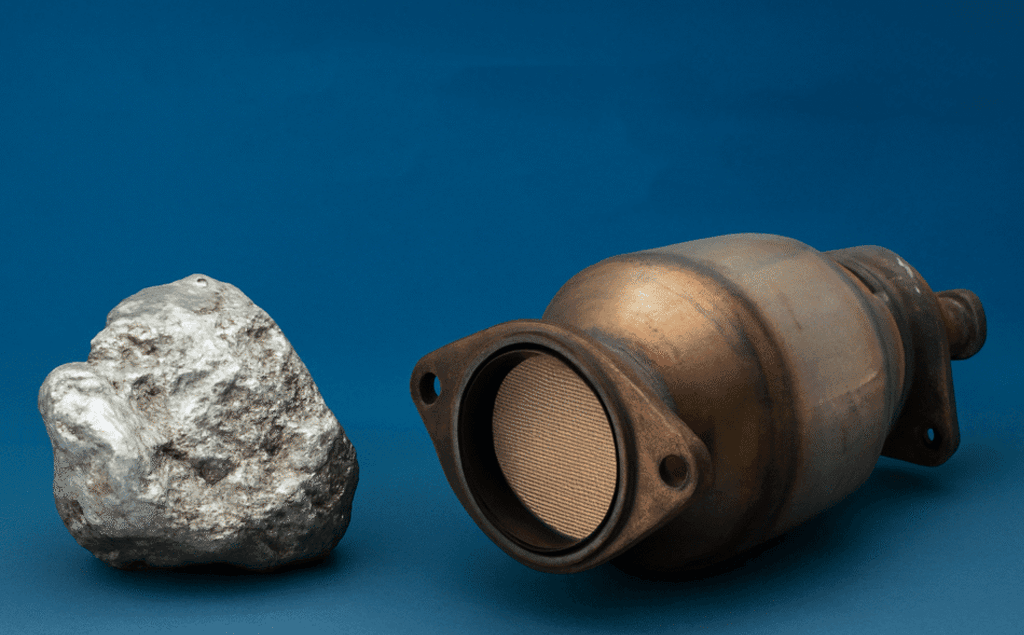
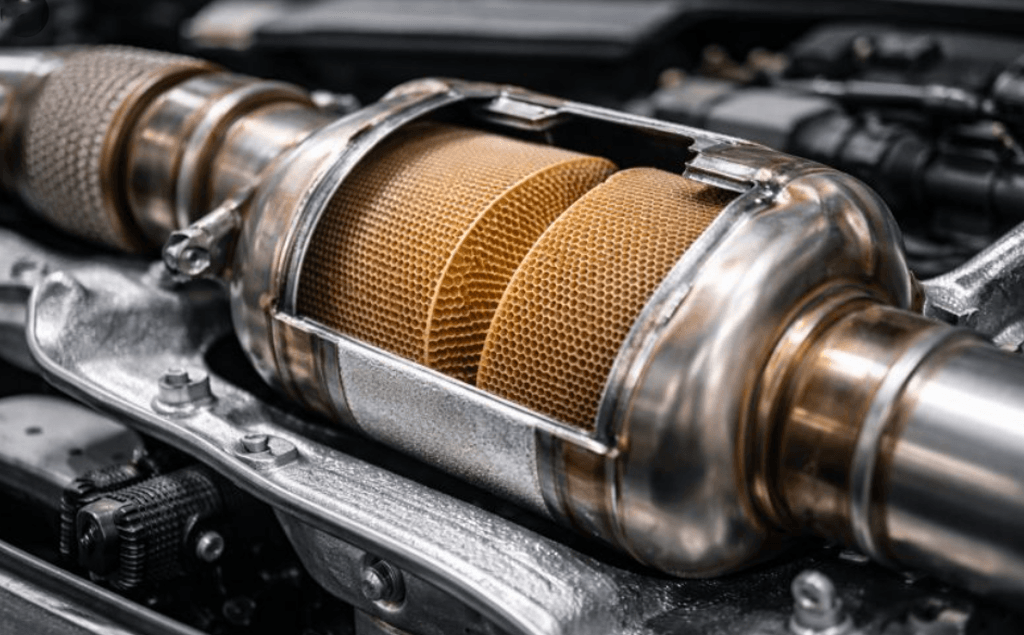
Why does a hybrid unit cost more? The answer lies in the washcoat. Manufacturers apply a microscopic layer of Platinum Group Metals (PGM) to the internal honeycomb. In a hybrid catalytic converter, they “over-load” these metals compared to a basic katalizator trójdrożny.
We are talking about Palladium and Rhodium. These metals trigger the conversion. Research from Johnson Matthey’s PGM Market Analysis indicates that hybrids require significantly higher concentrations of rhodium to maintain efficiency during rapid restarts.
- Paladium handles the heavy lifting of oxidation.
- Rod is the king of NOx reduction.
A hybrid unit often contains 30% to 50% more PGM than a standard car. This ensures the chemistry works even when the exhaust isn’t at peak temperature. This isn’t just engineering; it is an expensive insurance policy against pollution.
4. The Economics of Theft: High-Value Targets
Criminals understand PGM loading better than most drivers. They target hybrids because the scrap value is astronomical. A hybrid catalytic converter from a Toyota Prius is a gold mine.
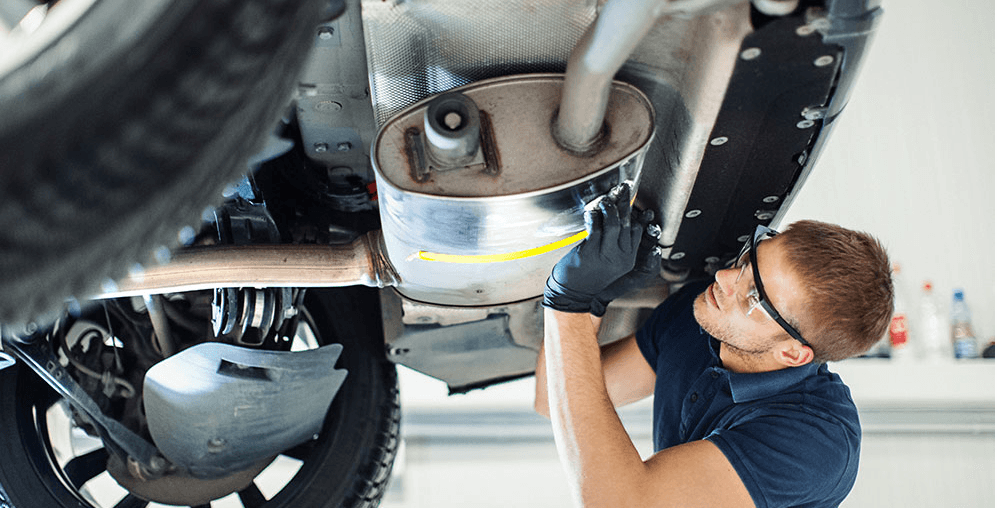
Thieves use battery-powered saws. They slide under the car and cut the stainless steel pipes. In sixty seconds, they steal a component worth over $1,000 in raw metal content. To them, it is just a high-grade katalizator trójdrożny. For the owner, the replacement cost can exceed $3,500. This economic vulnerability has spawned a massive market for “Cat Shields.”
5. Substrate Technology: Ceramic vs. Metallic Foils
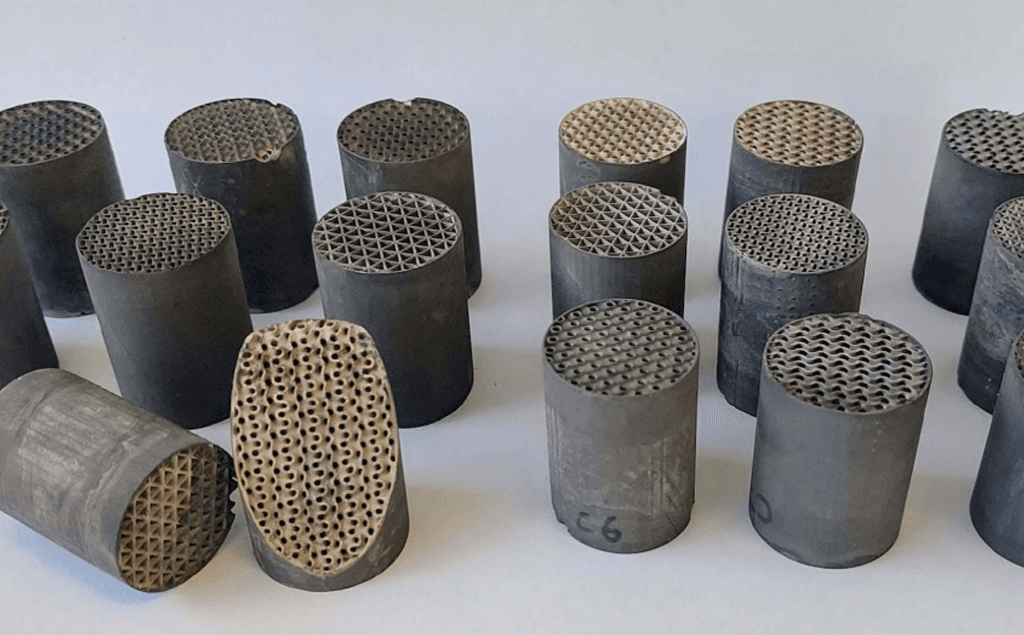
The internal structure must endure a torture test. Most units use a cordierite ceramic honeycomb. It is cheap and holds heat. But for high-performance hybrids, ceramic is too brittle.
Enter the metallic substrate. These use ultra-thin FeCrAl (Iron-Chromium-Aluminum) alloy foils. These foils are only 0.03mm thick. They offer zero thermal lag. They heat up faster than any traditional katalizator trójdrożny. More importantly, they resist the mechanical vibration of constant engine restarts. If you want the best hybrid catalytic converter performance, you look for metallic cores.
Table 2: Substrate Torture Test Results
| Test Factor | Ceramic Honeycomb | Metallic Foil Substrate |
|---|---|---|
| Mechanical Shock | Moderate Risk (Cracking) | High Resistance (Ductile) |
| Surface-to-Volume Ratio | Standard | Znakomity |
| Heat Transfer Rate | Umiarkowany | Ultra-Fast |
| Przeciwciśnienie | Higher | Lower (Better Flow) |
| Lifespan in Hybrids | 100,000 Miles | Ponad 150 000 mil |
6. Washcoat Chemistry: The Oxygen Buffer
The PGM loading is only half the story. The “Washcoat” is the carrier. In a hybrid catalytic converter, engineers use oxygen storage components (OSC). Usually, this is a Ceria-Zirconia (CeO2-ZrO2) composite.
When the engine runs “lean,” the OSC soaks up oxygen. When the engine runs “rich,” it releases that oxygen to burn off hydrocarbons. Hybrids experience rapid swings in air-fuel ratios during restarts. The OSC acts as a chemical buffer. It stabilizes the environment inside the katalizator trójdrożny. Without this advanced material science, the hybrid would emit a puff of smoke every time the engine kicked in.
7. Future Trends: Electrically Heated Catalysts (EHC)
Jak Euro 7 I CARB regulations tighten, “Passive” heating isn’t enough. The industry is moving toward “Active” systems. This is the Electrically Heated Catalyst.
Imagine a toaster element inside your exhaust. The high-voltage hybrid battery sends power to a heating disc before the engine starts. It pre-warms the hybrid catalytic converter to 400°C. By the time the first piston moves, the catalyst is ready. This eliminates 99% of cold-start emissions. It represents the ultimate evolution of the katalizator trójdrożny family.
Maintaining Your Hybrid Emission System
Owners must monitor engine health to protect the catalyst. Misfires represent the greatest threat. A misfiring engine dumps raw fuel into the exhaust. This fuel ignites inside the hybrid catalytic converter. The resulting heat melts the ceramic honeycomb instantly.
Regular spark plug changes prevent these disasters. Additionally, using low-SAPS (Low Sulfated Ash, Phosphorus, and Sulfur) oil reduces catalyst “poisoning.” For those looking for high-quality replacements, our three way catalytic converter category offers several compatible hybrid units designed for longevity.
Wniosek
Ten hybrid catalytic converter is a masterpiece of modern engineering. It solves the paradox of intermittent combustion and strict emission limits. While it shares the fundamental DNA of a katalizator trójdrożny, its internal chemistry is far more advanced. The high concentration of precious metals makes it a vital environmental tool but also a target for theft. Protecting this component and maintaining engine health is crucial for every hybrid owner. As global standards tighten, the technology within these steel canisters will continue to evolve, remaining the silent guardians of our air quality.