Wstęp
Modern automotive engineering faces a critical challenge. Engineers must reduce harmful tailpipe emissions to protect global air quality. Internal combustion engines produce several toxic byproducts during fuel combustion. These include carbon monoxide, unburnt hydrocarbons, and nitrogen oxides. Furthermore, engines release solid particulate matter or soot. Regulatory bodies worldwide have implemented strict emission standards. These standards force manufacturers to develop advanced aftertreatment systems. Three primary components lead this technological field. These are the Diesel Oxidation Catalyst (DOC), the Diesel Particulate Filter (DPF), and the Gasoline Particulate Filter (GPF). Each component serves a specific role in the exhaust stream. Some systems also incorporate a katalizator trójdrożny to handle gaseous pollutants. This article provides a deep technical analysis of these technologies.
The Foundation of Emission Control: Three Way Catalytic Converter
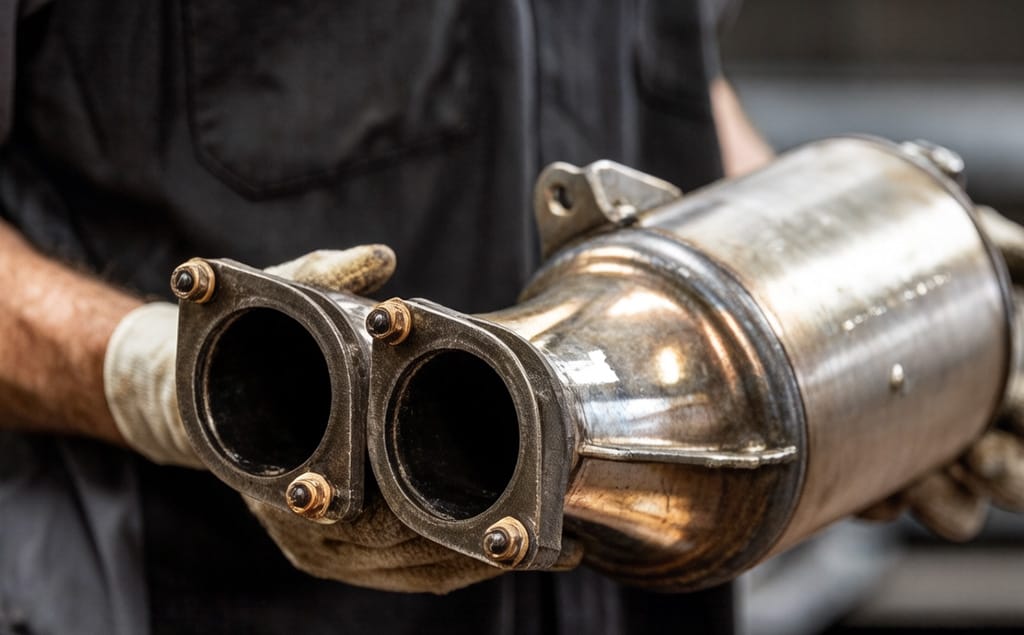
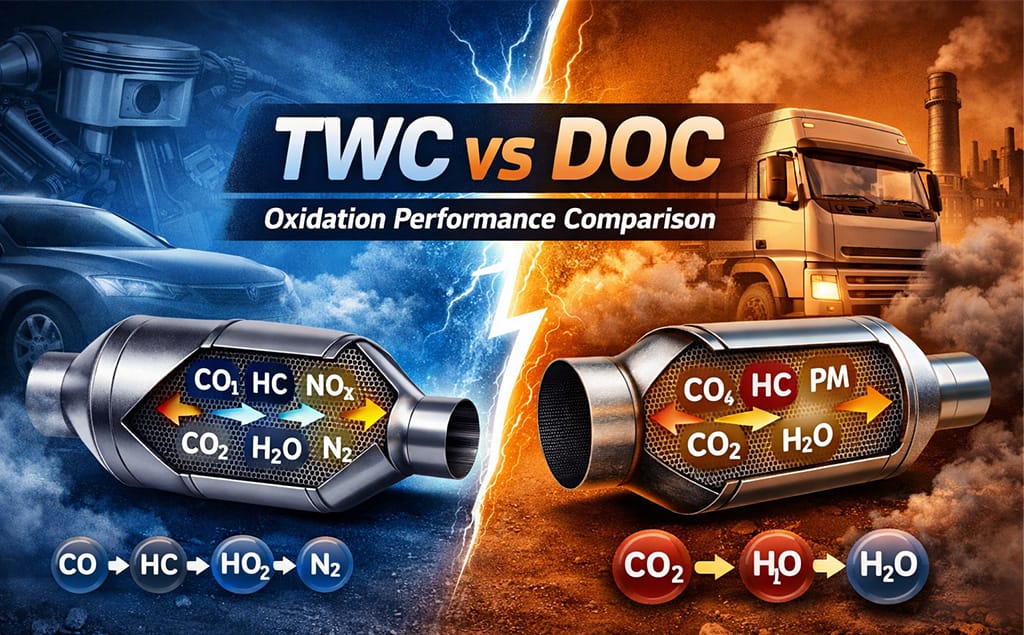
Ten katalizator trójdrożny represents the most successful emission control device in history. It primarily serves gasoline engines. This device manages three specific pollutants simultaneously. First, it reduces nitrogen oxides into elemental nitrogen and oxygen. Second, it oxidizes carbon monoxide into carbon dioxide. Third, it oxidizes unburnt hydrocarbons into water and carbon dioxide.
Efficiency depends heavily on the air-fuel ratio. The engine must operate near the stoichiometric point for the katalizator trójdrożny to work effectively. Modern vehicles often pair this catalyst with other filtration technologies. For example, many Gasoline Direct Injection (GDI) engines now use a katalizator trójdrożny alongside a GPF. This combination ensures the vehicle meets both gaseous and particulate emission limits. The catalyst handles the chemical reactions. The filter handles the physical trapping of solids.
Defining the Diesel Oxidation Catalyst (DOC)
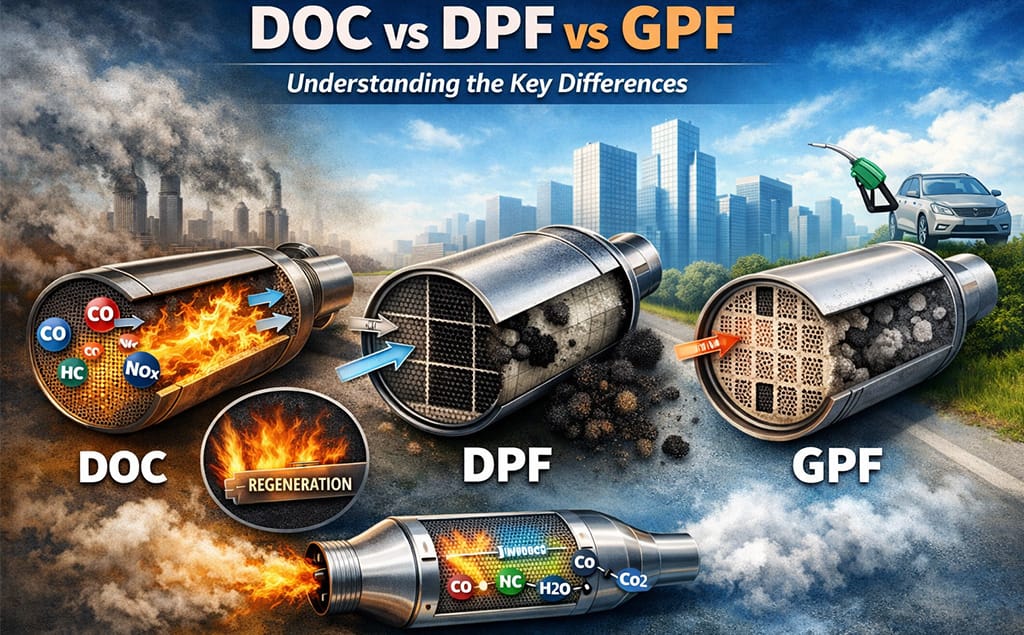
The DOC acts as the primary chemical processor in diesel exhaust systems. It resembles a flow-through device. Unlike a filter, it does not trap solid particles. Instead, it relies on chemical surface reactions. The DOC contains a honeycomb substrate made of ceramic or metal. Manufacturers coat this substrate with a washcoat of precious metals. Platinum and palladium are the most common active materials.
The DOC performs several vital functions. It converts carbon monoxide and hydrocarbons into less harmful substances. It also treats the soluble organic fraction of diesel soot. This process reduces the overall mass of particulate matter. Furthermore, the DOC manages nitrogen oxide ratios. It converts nitric oxide (NO) into nitrogen dioxide (NO2). This specific conversion is essential for the downstream DPF. High levels of NO2 facilitate the burning of soot at lower temperatures. This synergy prevents the exhaust system from clogging during normal operation.
The Mechanism of the Diesel Particulate Filter (DPF)
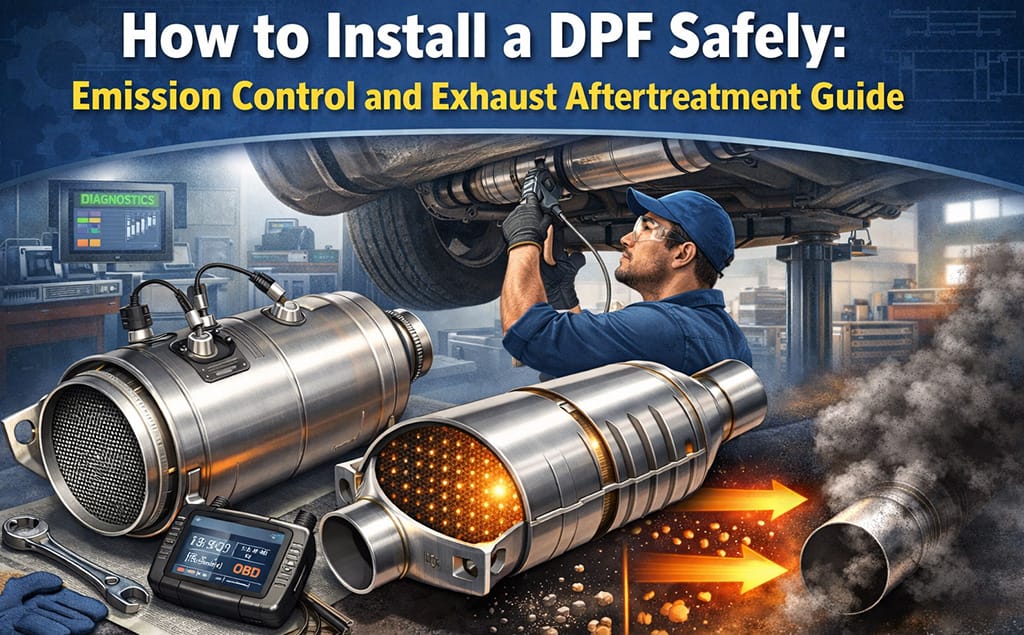
The DPF focuses on physical filtration rather than chemical conversion. Diesel combustion inherently produces carbon-based soot. These particles contribute to smog and respiratory health issues. The DPF uses a wall-flow monolith design. In this design, the channels are blocked at alternate ends. This forces the exhaust gas to pass through the porous walls of the channel.
The porous walls act as a microscopic net. They trap soot particles while allowing gases to escape. However, these particles eventually fill the filter. This accumulation increases backpressure in the engine. High backpressure reduces fuel efficiency and can cause engine damage. To solve this, the system initiates a “regeneration” cycle. Regeneration uses high heat to burn the soot into ash. Passive regeneration occurs during high-speed highway driving. Active regeneration requires the engine control unit (ECU) to inject extra fuel. This extra fuel raises the exhaust temperature to approximately 600 degrees Celsius.
GPF: The Solution for Gasoline Particulate Emissions
Gasoline Direct Injection (GDI) engines offer impressive power and fuel economy. However, they produce higher levels of fine particulates than older port-injection engines. The Gasoline Particulate Filter (GPF) addresses this specific problem. The GPF shares the wall-flow design of the DPF. However, gasoline engines produce different exhaust conditions than diesel engines.
Gasoline exhaust is naturally hotter than diesel exhaust. This heat allows the GPF to regenerate almost continuously. Consequently, the GPF rarely requires the complex active regeneration cycles seen in diesel systems. The GPF also features higher porosity. This design allows for better gas flow and lower backpressure. In many modern designs, engineers apply a catalytic coating to the GPF. This creates a “four-way catalyst.” This integrated component performs the duties of a katalizator trójdrożny while filtering soot.

Integration and System Synergy
Modern exhaust systems do not rely on a single component. They use a series of devices working in harmony. In a diesel system, the DOC usually sits upstream of the DPF. The DOC creates the necessary heat and NO2 for the DPF to function. In some cases, a Selective Catalytic Reduction (SCR) system follows the DPF to further reduce nitrogen oxides.
W systemach benzynowych katalizator trójdrożny usually sits closest to the engine. This location allows it to heat up quickly. A fast “light-off” time is crucial for reducing emissions during cold starts. The GPF typically follows the catalyst. This arrangement ensures that the system cleans the gases before it filters the particulates. Some manufacturers now integrate these two components into a single housing to save space and weight.
Technical Comparison of DOC, DPF, and GPF
The following table summarizes the primary technical differences between these three essential components.
| Funkcja | Katalizator utleniający oleju napędowego (DOC) | Filtr cząstek stałych (DPF) | Filtr cząstek stałych benzyny (GPF) |
|---|---|---|---|
| Główny cel | Oxidize toxic gases (CO, HC) | Filter solid soot particles | Filter fine gasoline soot |
| Typ silnika | Silniki Diesla | Silniki Diesla | Gasoline (GDI) engines |
| Internal Design | Flow-through honeycomb | Wall-flow monolith | Wall-flow monolith |
| Tworzywo | Ceramiczno-metaliczne z Pt/Pd | Kordieryt lub węglik krzemu | Ceramika (kordieryt) |
| Regeneracja | Nie dotyczy (tylko substancje chemiczne) | Cykle aktywne i pasywne | Ciągły pasywny |
| Przeciwciśnienie | Niski wpływ | Znaczny wpływ po pełnym naładowaniu | Umiarkowany do niskiego wpływ |
| Słowo kluczowe | Wykorzystuje zasadę trójdrożnego konwertera katalitycznego | Współpracuje z DOC w zakresie ogrzewania | Często zastępuje katalizator trójdrożny |
Materiały podłoża i trwałość
Wybór materiału decyduje o żywotności filtra lub katalizatora. Większość systemów wykorzystuje kordieryt. Ten materiał ceramiczny zapewnia doskonałą odporność na szok termiczny. Pod wpływem ciepła rozszerza się w minimalnym stopniu. Ta stabilność zapobiega pękaniu podłoża podczas intensywnych cykli regeneracji.
Zastosowania w silnikach wysokoprężnych o dużej mocy często wymagają węglika krzemu (SiC). SiC ma wyższą temperaturę topnienia niż kordieryt. Wytrzymuje ekstremalne temperatury „niekontrolowanej” regeneracji. Jednak SiC jest cięższy i droższy. katalizator trójdrożnyNiektórzy producenci wybierają podłoża metalowe. Podłoża metalowe mają cieńsze ścianki. Te cienkie ścianki zwiększają efektywną powierzchnię. Większa powierzchnia poprawia wydajność reakcji chemicznych.
Tryby konserwacji i awarii
Każdy element układu emisji spalin ma skończony okres eksploatacji. Gromadzenie się popiołu stanowi największe zagrożenie dla filtrów DPF i GPF. W przeciwieństwie do sadzy, popiół nie ulega spaleniu. Popiół pochodzi z dodatków do oleju silnikowego i zanieczyszczeń paliwa. Po przejechaniu tysięcy kilometrów popiół wypełnia kanały filtra. To zmniejsza przestrzeń dostępną dla sadzy. Ostatecznie filtr wymaga profesjonalnego czyszczenia lub wymiany.
DOC i katalizator trójdrożny narażają się na różne zagrożenia. „Zatrucie” występuje, gdy pewne substancje chemiczne pokrywają metale szlachetne. Siarka, fosfor i ołów to powszechne trucizny katalizatorów. Substancje te zapobiegają kontaktowi spalin z katalizatorem. Ponadto nadmierne ciepło może powodować „spiekanie”. Spiekanie zmniejsza powierzchnię metali szlachetnych. To trwałe uszkodzenie sprawia, że katalizator staje się nieskuteczny. Zawsze należy stosować wysokiej jakości olej o niskiej zawartości SAPS (popiołów siarczanowych, fosforu i siarki), aby chronić te elementy.
Diagnozowanie problemów w łańcuchu wydechowym
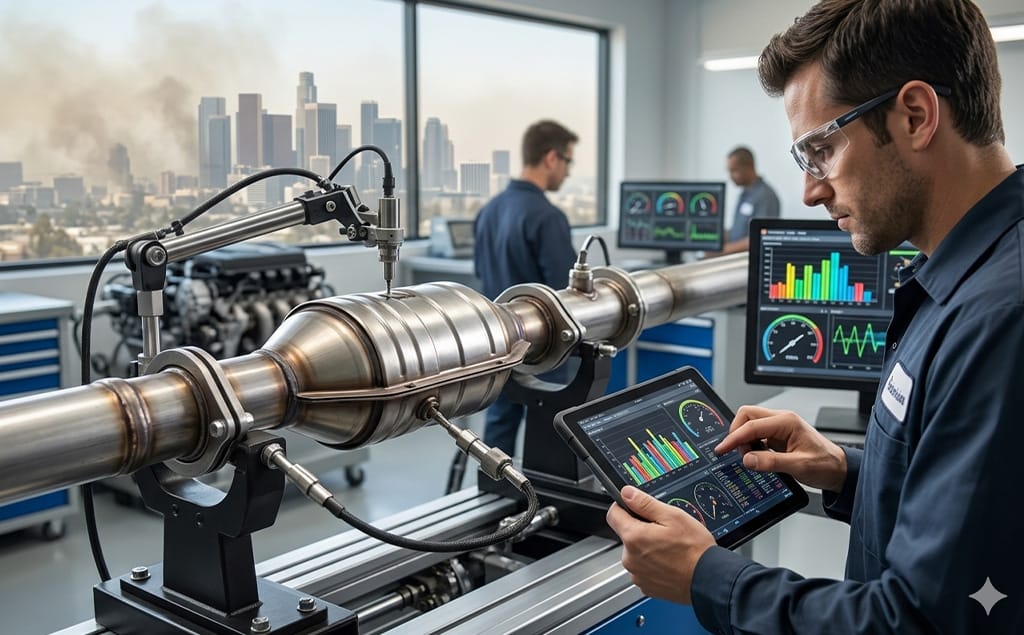
Nowoczesne pojazdy wykorzystują sieć czujników do monitorowania stanu układu oczyszczania spalin. Czujniki różnicy ciśnień mierzą spadek ciśnienia w filtrze cząstek stałych (DPF) lub filtrze cząstek stałych (GPF). Jeśli ciśnienie jest zbyt wysokie, sterownik silnika (ECU) zapala kontrolkę ostrzegawczą. Czujniki tlenu monitorują wydajność trójdrożnego katalizatora.
Awaria katalizatora DOC często powoduje problemy w dalszej części układu. Jeśli katalizator DOC nie generuje wystarczającej ilości ciepła, filtr DPF nie będzie się regenerował. Prowadzi to do szybkiego gromadzenia się sadzy i przejścia silnika w tryb awaryjny. Nietypowy zapach spalin często wskazuje na awarię katalizatora. Czarny dym zazwyczaj sugeruje pęknięcie podłoża filtra DPF. Kierowcy nigdy nie powinni ignorować tych sygnałów ostrzegawczych. Wczesna interwencja pozwala zaoszczędzić tysiące dolarów na kosztach wymiany.
Przyszłość filtracji cząstek stałych
Normy emisji spalin są stale zaostrzane na całym świecie. Przyszłe przepisy mogą wymagać jeszcze wyższej wydajności filtracji. Inżynierowie badają obecnie powłoki membranowe do filtrów. Powłoki te mogłyby wychwytywać nawet mniejsze cząsteczki poniżej 23 nm. Obserwujemy również wzrost popularności katalizatorów podgrzewanych elektrycznie. Urządzenia te wykorzystują układ elektryczny pojazdu do podgrzewania. katalizator trójdrożny natychmiast. Technologia ta praktycznie eliminuje emisję spalin podczas zimnego rozruchu.
Wniosek
DOC, DPF i GPF to niedoceniani bohaterowie nowoczesnej technologii motoryzacyjnej. Pozwalają nam cieszyć się zaletami spalania wewnętrznego, minimalizując jednocześnie szkodliwość dla środowiska. DOC stanowi podstawę chemiczną do czyszczenia silników Diesla. DPF oferuje solidne rozwiązanie do wychwytywania dużej ilości sadzy. GPF dostosowuje te zasady do nowoczesnych silników benzynowych. Wreszcie, katalizator trójdrożny Pozostaje podstawowym narzędziem oczyszczania fazy gazowej. Prawidłowa konserwacja, właściwy dobór oleju i regularna jazda autostradą zapewnią sprawne działanie tych systemów przez cały okres użytkowania pojazdu. Wraz z rozwojem technologii, komponenty te będą stawać się coraz bardziej zintegrowane i wydajne.