การแนะนำ
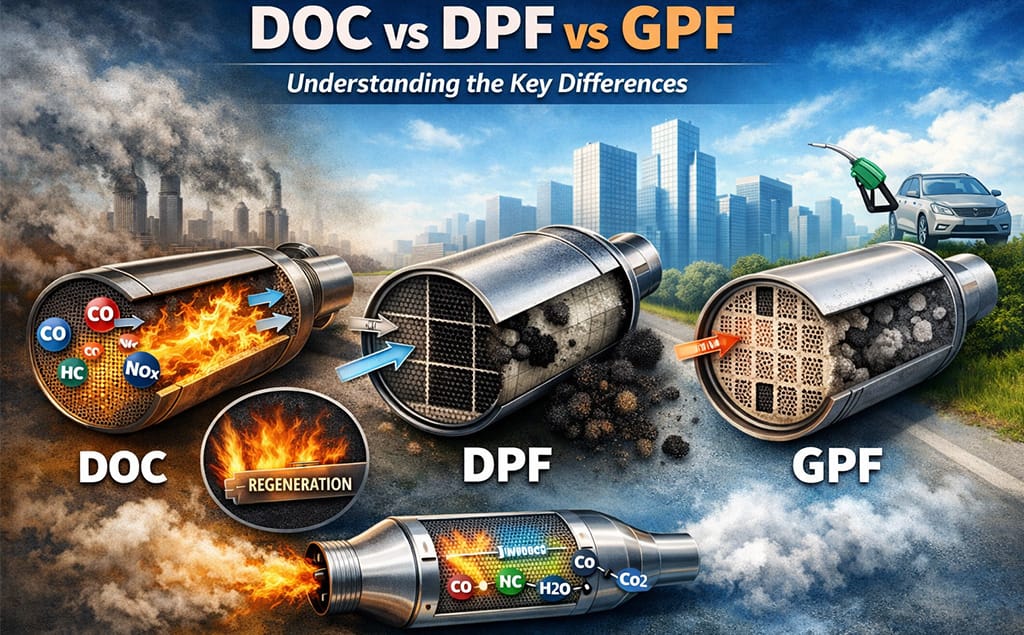
Modern automotive engineering faces a critical challenge. Engineers must reduce harmful tailpipe emissions to protect global air quality. Internal combustion engines produce several toxic byproducts during fuel combustion. These include carbon monoxide, unburnt hydrocarbons, and nitrogen oxides. Furthermore, engines release solid particulate matter or soot. Regulatory bodies worldwide have implemented strict emission standards. These standards force manufacturers to develop advanced aftertreatment systems. Three primary components lead this technological field. These are the Diesel Oxidation Catalyst (DOC), the Diesel Particulate Filter (DPF), and the Gasoline Particulate Filter (GPF). Each component serves a specific role in the exhaust stream. Some systems also incorporate a ตัวเร่งปฏิกิริยาสามทาง to handle gaseous pollutants. This article provides a deep technical analysis of these technologies.
The Foundation of Emission Control: Three Way Catalytic Converter
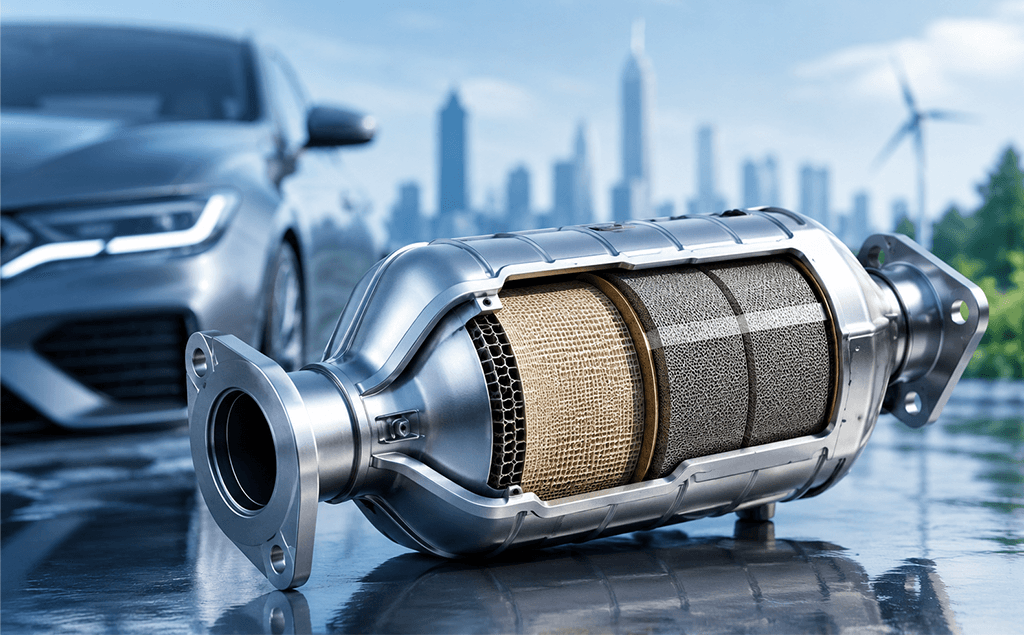
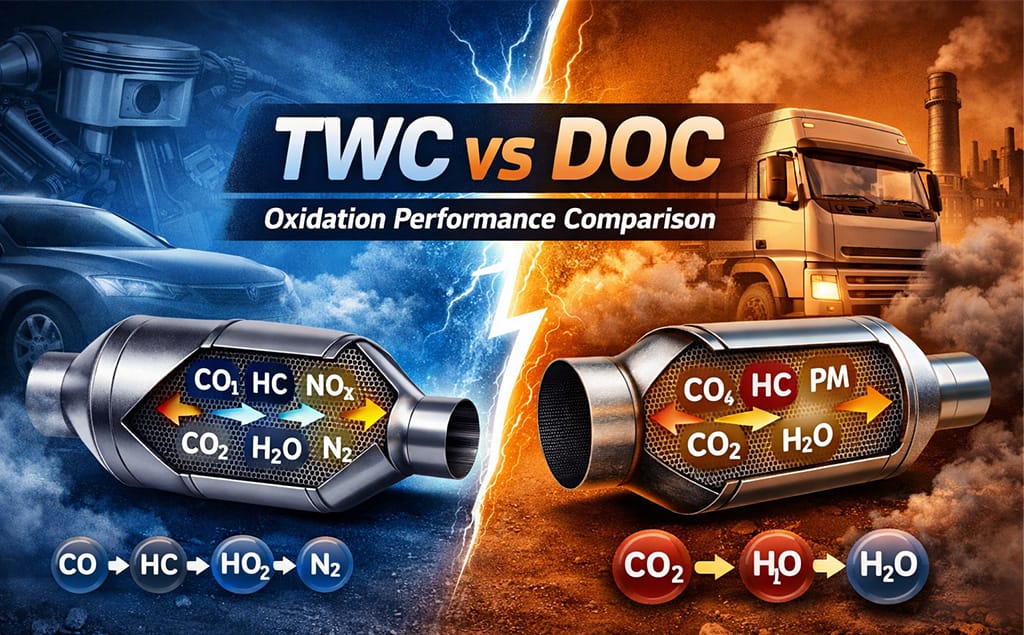
การ ตัวเร่งปฏิกิริยาสามทาง represents the most successful emission control device in history. It primarily serves gasoline engines. This device manages three specific pollutants simultaneously. First, it reduces nitrogen oxides into elemental nitrogen and oxygen. Second, it oxidizes carbon monoxide into carbon dioxide. Third, it oxidizes unburnt hydrocarbons into water and carbon dioxide.
Efficiency depends heavily on the air-fuel ratio. The engine must operate near the stoichiometric point for the ตัวเร่งปฏิกิริยาสามทาง to work effectively. Modern vehicles often pair this catalyst with other filtration technologies. For example, many Gasoline Direct Injection (GDI) engines now use a ตัวเร่งปฏิกิริยาสามทาง alongside a GPF. This combination ensures the vehicle meets both gaseous and particulate emission limits. The catalyst handles the chemical reactions. The filter handles the physical trapping of solids.
Defining the Diesel Oxidation Catalyst (DOC)
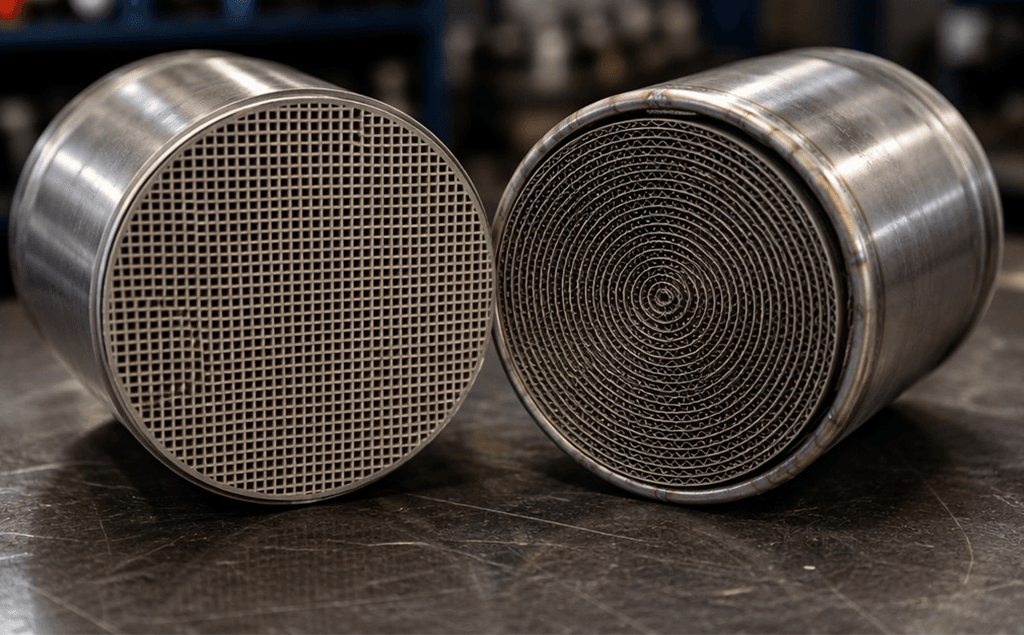
The DOC acts as the primary chemical processor in diesel exhaust systems. It resembles a flow-through device. Unlike a filter, it does not trap solid particles. Instead, it relies on chemical surface reactions. The DOC contains a honeycomb substrate made of ceramic or metal. Manufacturers coat this substrate with a washcoat of precious metals. Platinum and palladium are the most common active materials.
The DOC performs several vital functions. It converts carbon monoxide and hydrocarbons into less harmful substances. It also treats the soluble organic fraction of diesel soot. This process reduces the overall mass of particulate matter. Furthermore, the DOC manages nitrogen oxide ratios. It converts nitric oxide (NO) into nitrogen dioxide (NO2). This specific conversion is essential for the downstream DPF. High levels of NO2 facilitate the burning of soot at lower temperatures. This synergy prevents the exhaust system from clogging during normal operation.
The Mechanism of the Diesel Particulate Filter (DPF)
The DPF focuses on physical filtration rather than chemical conversion. Diesel combustion inherently produces carbon-based soot. These particles contribute to smog and respiratory health issues. The DPF uses a wall-flow monolith design. In this design, the channels are blocked at alternate ends. This forces the exhaust gas to pass through the porous walls of the channel.
The porous walls act as a microscopic net. They trap soot particles while allowing gases to escape. However, these particles eventually fill the filter. This accumulation increases backpressure in the engine. High backpressure reduces fuel efficiency and can cause engine damage. To solve this, the system initiates a “regeneration” cycle. Regeneration uses high heat to burn the soot into ash. Passive regeneration occurs during high-speed highway driving. Active regeneration requires the engine control unit (ECU) to inject extra fuel. This extra fuel raises the exhaust temperature to approximately 600 degrees Celsius.

GPF: The Solution for Gasoline Particulate Emissions
Gasoline Direct Injection (GDI) engines offer impressive power and fuel economy. However, they produce higher levels of fine particulates than older port-injection engines. The Gasoline Particulate Filter (GPF) addresses this specific problem. The GPF shares the wall-flow design of the DPF. However, gasoline engines produce different exhaust conditions than diesel engines.
Gasoline exhaust is naturally hotter than diesel exhaust. This heat allows the GPF to regenerate almost continuously. Consequently, the GPF rarely requires the complex active regeneration cycles seen in diesel systems. The GPF also features higher porosity. This design allows for better gas flow and lower backpressure. In many modern designs, engineers apply a catalytic coating to the GPF. This creates a “four-way catalyst.” This integrated component performs the duties of a ตัวเร่งปฏิกิริยาสามทาง while filtering soot.

Integration and System Synergy
Modern exhaust systems do not rely on a single component. They use a series of devices working in harmony. In a diesel system, the DOC usually sits upstream of the DPF. The DOC creates the necessary heat and NO2 for the DPF to function. In some cases, a Selective Catalytic Reduction (SCR) system follows the DPF to further reduce nitrogen oxides.
ในระบบเบนซิน ตัวเร่งปฏิกิริยาสามทาง โดยปกติแล้วตัวกรองก๊าซไอเสีย (GPF) จะอยู่ใกล้กับเครื่องยนต์มากที่สุด ตำแหน่งนี้ช่วยให้ตัวกรองร้อนขึ้นได้อย่างรวดเร็ว เวลาในการ "จุดติด" ที่รวดเร็วเป็นสิ่งสำคัญสำหรับการลดการปล่อยมลพิษในระหว่างการสตาร์ทเครื่องยนต์ในสภาพอากาศเย็น ตัวกรองก๊าซไอเสียมักจะอยู่ถัดจากตัวเร่งปฏิกิริยา การจัดเรียงแบบนี้ช่วยให้ระบบทำความสะอาดก๊าซก่อนที่จะกรองอนุภาค ผู้ผลิตบางรายในปัจจุบันได้รวมส่วนประกอบทั้งสองนี้ไว้ในตัวเรือนเดียวกันเพื่อประหยัดพื้นที่และน้ำหนัก
การเปรียบเทียบทางเทคนิคของ DOC, DPF และ GPF
ตารางต่อไปนี้สรุปความแตกต่างทางเทคนิคหลักระหว่างส่วนประกอบสำคัญทั้งสามนี้
| คุณสมบัติ | ตัวเร่งปฏิกิริยาออกซิเดชันดีเซล (DOC) | ตัวกรองอนุภาคดีเซล (DPF) | ตัวกรองอนุภาคน้ำมันเบนซิน (GPF) |
|---|---|---|---|
| เป้าหมายหลัก | ออกซิไดซ์ก๊าซพิษ (CO, HC) | กรองอนุภาคเขม่าแข็ง | กรองเขม่าละเอียดของน้ำมันเบนซิน |
| ประเภทเครื่องยนต์ | เครื่องยนต์ดีเซล | เครื่องยนต์ดีเซล | เครื่องยนต์เบนซิน (GDI) |
| การออกแบบภายใน | รังผึ้งแบบไหลผ่าน | โมโนลิธแบบไหลผ่านผนัง | โมโนลิธแบบไหลผ่านผนัง |
| วัสดุ | เซรามิก/โลหะผสมแพลทินัม/แพลเลเดียม | คอร์เดียไรต์หรือซิลิคอนคาร์ไบด์ | เซรามิก (คอร์เดียไรต์) |
| การฟื้นฟู | ไม่เกี่ยวข้อง (เฉพาะสารเคมี) | วงจรแอคทีฟและพาสซีฟ | พาสซีฟต่อเนื่อง |
| แรงดันย้อนกลับ | ผลกระทบต่ำ | ผลกระทบที่สำคัญเมื่อเต็มประสิทธิภาพ | แรงกระแทกปานกลางถึงต่ำ |
| คำหลักสำคัญ | ใช้หลักการทำงานของตัวแปลงไอเสียแบบสามทาง | ใช้งานร่วมกับ DOC สำหรับความร้อน | มักใช้แทนตัวแปลงไอเสียแบบสามทาง |
วัสดุพื้นผิวและความทนทาน
การเลือกใช้วัสดุเป็นตัวกำหนดอายุการใช้งานของตัวกรองหรือตัวเร่งปฏิกิริยา ระบบส่วนใหญ่ใช้คอร์เดียไรต์ วัสดุเซรามิกชนิดนี้ทนต่อการเปลี่ยนแปลงอุณหภูมิอย่างฉับพลันได้ดีเยี่ยม มันขยายตัวน้อยมากเมื่อได้รับความร้อน ความเสถียรนี้ช่วยป้องกันไม่ให้วัสดุแตกในระหว่างรอบการฟื้นฟูที่รุนแรง
การใช้งานเครื่องยนต์ดีเซลสำหรับงานหนักมักต้องการซิลิคอนคาร์ไบด์ (SiC) SiC มีจุดหลอมเหลวสูงกว่าคอร์เดียไรต์ และสามารถทนต่ออุณหภูมิสูงมากในกระบวนการฟื้นฟูสภาพแบบ "ควบคุมไม่ได้" อย่างไรก็ตาม SiC มีน้ำหนักมากกว่าและมีราคาแพงกว่า สำหรับการใช้งานดังกล่าว ตัวเร่งปฏิกิริยาสามทางผู้ผลิตบางรายเลือกใช้พื้นผิวโลหะ พื้นผิวโลหะมีผนังที่บางกว่า ผนังที่บางนี้ช่วยเพิ่มพื้นที่ผิวที่มีประสิทธิภาพ พื้นที่ผิวที่มากขึ้นช่วยเพิ่มประสิทธิภาพของปฏิกิริยาเคมี
การบำรุงรักษาและรูปแบบความล้มเหลว
ชิ้นส่วนไอเสียทุกชิ้นมีอายุการใช้งานจำกัด การสะสมของเถ้าเป็นภัยคุกคามที่ใหญ่ที่สุดต่อ DPF และ GPF เถ้าไม่เหมือนเขม่าที่ไม่เผาไหม้ เถ้าเกิดจากสารเติมแต่งในน้ำมันเครื่องและสิ่งปนเปื้อนในเชื้อเพลิง เมื่อใช้งานไปหลายพันไมล์ เถ้าจะเข้าไปอุดตันช่องกรอง ทำให้พื้นที่สำหรับเขม่าลดลง ในที่สุด ตัวกรองก็จำเป็นต้องได้รับการทำความสะอาดโดยผู้เชี่ยวชาญหรือเปลี่ยนใหม่
กรมราชทัณฑ์และ ตัวเร่งปฏิกิริยาสามทาง เผชิญกับความเสี่ยงที่แตกต่างกัน “การเป็นพิษ” เกิดขึ้นเมื่อสารเคมีบางชนิดเคลือบโลหะมีค่า ซัลเฟอร์ ฟอสฟอรัส และตะกั่ว เป็นสารพิษที่พบได้ทั่วไปในตัวเร่งปฏิกิริยา สารเคมีเหล่านี้จะป้องกันไม่ให้ก๊าซไอเสียสัมผัสกับตัวเร่งปฏิกิริยา นอกจากนี้ ความร้อนสูงเกินไปอาจทำให้เกิด “การเผาผนึก” การเผาผนึกจะลดพื้นที่ผิวของโลหะมีค่า ความเสียหายถาวรนี้ทำให้ตัวเร่งปฏิกิริยาไม่มีประสิทธิภาพ ควรใช้น้ำมันคุณภาพสูงที่มี SAPS (เถ้าซัลเฟต ฟอสฟอรัส และซัลเฟอร์) ต่ำเสมอเพื่อปกป้องชิ้นส่วนเหล่านี้
การวินิจฉัยปัญหาในโซ่ท่อไอเสีย
รถยนต์สมัยใหม่ใช้เครือข่ายเซ็นเซอร์เพื่อตรวจสอบสภาพการทำงานของระบบบำบัดไอเสีย เซ็นเซอร์วัดแรงดันแตกต่างจะวัดแรงดันตกคร่อม DPF หรือ GPF หากแรงดันสูงเกินไป ECU จะแสดงไฟเตือน เซ็นเซอร์ออกซิเจนจะตรวจสอบประสิทธิภาพของตัวแปลงไอเสียแบบสามทาง
ตัวเร่งปฏิกิริยาไอเสีย (DOC) ที่ชำรุดมักก่อให้เกิดปัญหาตามมา หาก DOC สร้างความร้อนไม่เพียงพอ ตัวกรองอนุภาคดีเซล (DPF) จะไม่สามารถฟื้นฟูตัวเองได้ ส่งผลให้เกิดเขม่าสะสมอย่างรวดเร็วและเครื่องยนต์เข้าสู่ “โหมดฉุกเฉิน” กลิ่นไอเสียที่ผิดปกติมักบ่งชี้ถึงความล้มเหลวของตัวเร่งปฏิกิริยา ควันดำมักบ่งชี้ว่าพื้นผิวของ DPF แตก ผู้ขับขี่ไม่ควรละเลยสัญญาณเตือนเหล่านี้ การแก้ไขปัญหาตั้งแต่เนิ่นๆ ช่วยประหยัดค่าใช้จ่ายในการเปลี่ยนอะไหล่ได้หลายพันดอลลาร์
อนาคตของการกรองอนุภาค
มาตรฐานการปล่อยมลพิษทั่วโลกยังคงเข้มงวดขึ้นเรื่อยๆ กฎระเบียบในอนาคตอาจต้องการประสิทธิภาพการกรองที่สูงขึ้นกว่าเดิม ปัจจุบันวิศวกรกำลังวิจัยเกี่ยวกับสารเคลือบเมมเบรนสำหรับตัวกรอง สารเคลือบเหล่านี้สามารถดักจับอนุภาคขนาดเล็กกว่า 23 นาโนเมตรได้ นอกจากนี้เรายังเห็นการเพิ่มขึ้นของตัวเร่งปฏิกิริยาที่ใช้ความร้อนจากไฟฟ้า อุปกรณ์เหล่านี้ใช้ระบบไฟฟ้าของรถยนต์ในการให้ความร้อนแก่ตัวเร่งปฏิกิริยา ตัวเร่งปฏิกิริยาสามทาง ทันที เทคโนโลยีนี้ช่วยลดการปล่อยมลพิษขณะสตาร์ทเครื่องยนต์ในสภาพอากาศเย็นได้อย่างแทบจะหมดสิ้น
บทสรุป
DOC, DPF และ GPF คือฮีโร่ผู้ไม่ได้รับการยกย่องในเทคโนโลยีรถยนต์สมัยใหม่ พวกมันช่วยให้เราได้เพลิดเพลินกับประโยชน์ของการเผาไหม้ภายในในขณะที่ลดผลกระทบต่อสิ่งแวดล้อมให้น้อยที่สุด DOC เป็นพื้นฐานทางเคมีสำหรับการทำความสะอาดดีเซล DPF นำเสนอโซลูชันที่แข็งแกร่งสำหรับการดักจับเขม่าหนัก GPF ปรับหลักการเหล่านี้ให้เข้ากับเครื่องยนต์เบนซินสมัยใหม่ สุดท้ายนี้... ตัวเร่งปฏิกิริยาสามทาง ระบบนี้ยังคงเป็นเครื่องมือสำคัญสำหรับการทำให้ก๊าซบริสุทธิ์ การบำรุงรักษาที่เหมาะสม การเลือกใช้น้ำมันที่ถูกต้อง และการขับขี่บนทางหลวงเป็นประจำ จะช่วยให้ระบบเหล่านี้ทำงานได้ตลอดอายุการใช้งานของรถยนต์ เมื่อเทคโนโลยีพัฒนาขึ้น ส่วนประกอบเหล่านี้จะมีความเชื่อมโยงและมีประสิทธิภาพมากยิ่งขึ้น