1. บทนำเกี่ยวกับตัวเร่งปฏิกิริยา 3 ทางในรถยนต์ที่ใช้น้ำมันเบนซิน
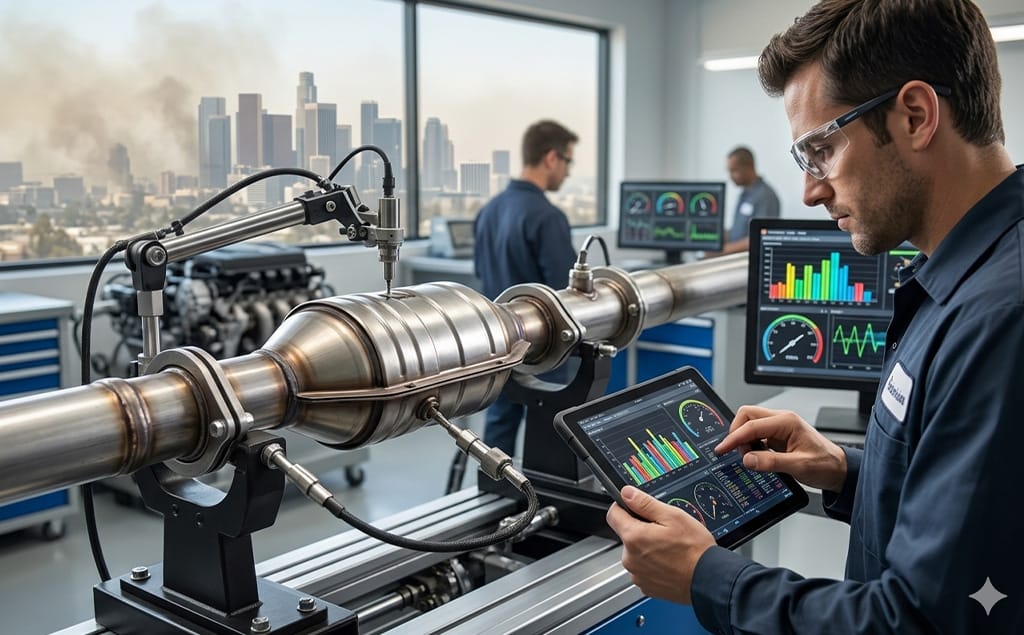
The automotive industry’s relentless pursuit of reduced environmental impact has positioned the 3-way catalytic converter (TWC) as a cornerstone technology for controlling harmful emissions from gasoline internal combustion engines. This report delves into the intricate material science and engineering behind these critical components, focusing specifically on their application in gasoline vehicles. The TWC is a sophisticated chemical reactor designed to simultaneously mitigate three primary pollutants found in engine exhaust: carbon monoxide (CO), unburnt hydrocarbons (HC), and nitrogen oxides (NOx) [1][5].
Operating within a tightly controlled environment, the TWC functions optimally when the engine’s air-fuel ratio is maintained near the stoichiometric point, precisely regulated by a lambda sensor in a closed-loop feedback system [5]. This precise control is crucial because the catalyst must facilitate both oxidation (for CO and HC) and reduction (for NOx) reactions concurrently. The evolution of TWCs has progressed from simpler oxidation catalysts to dual-bed systems, culminating in the highly efficient single-bed TWCs prevalent today, which are designed for thermal stability and rapid activation, often mounted close to the exhaust manifold [1][3]. The continuous tightening of global emission standards for CO, HC, NOx, and particulate matter is a primary driver for ongoing advancements in catalyst design and material innovation [1][6].
2. วัสดุและคุณสมบัติของสารตั้งต้นเร่งปฏิกิริยา
The foundation of a 3-way catalytic converter is its monolithic substrate, which provides the structural support for the catalytically active materials. While metallic substrates are also used, ceramic honeycomb structures, primarily made from cordierite, are the most common choice due to their advantageous properties [6]. Cordierite is a magnesium iron aluminum cyclosilicate mineral with the chemical formula (Mg,Fe)₂Al₄Si₅O₁₈.
โครงสร้างผลึกอันเป็นเอกลักษณ์นี้ทำให้เกิดเมทริกซ์รูปทรงรังผึ้งที่มีรูพรุนสูงและมีช่องทางขนานหลายพันช่อง โครงสร้างทางกายภาพของสารตั้งต้นคอร์เดียไรต์มีความสำคัญอย่างยิ่งต่อการทำงานของมัน โดยทั่วไปแล้วคอร์เดียไรต์จะมีความหนาแน่นของเซลล์สูง (เซลล์ต่อตารางนิ้ว, cpsi) ซึ่งส่งผลให้มีพื้นที่ผิวทางเรขาคณิตขนาดใหญ่ภายในปริมาตรที่กะทัดรัด วิธีนี้ช่วยเพิ่มการสัมผัสระหว่างก๊าซไอเสียและชั้นเคลือบเร่งปฏิกิริยาให้มากที่สุด
คุณสมบัติหลักที่ทำให้คอร์เดียไรต์เป็นวัสดุพื้นผิวที่เหมาะสม ได้แก่:
- เสถียรภาพทางความร้อน: ทนทานต่อการเปลี่ยนแปลงความร้อนอย่างรวดเร็วตั้งแต่อุณหภูมิห้องจนถึงมากกว่า 1,000°C
- การขยายตัวทางความร้อนต่ำ: ป้องกันความเครียดและการแตกร้าวอันเนื่องมาจากการเปลี่ยนแปลงของอุณหภูมิ
- ความแข็งแรงเชิงกล: ทนทานเพียงพอที่จะรองรับแรงสั่นสะเทือนและแรงกระแทก
- พื้นที่ผิวสูง: รองรับการลงน้ำยาเคลือบอย่างมีประสิทธิภาพ
- การลดแรงดันต่ำ: ช่องทางตรงช่วยรักษาประสิทธิภาพของเครื่องยนต์โดยลดแรงต้านทานการไหลของไอเสีย
Design parameters like length and cell density are often optimized using simulation software such as Solidworks [7].
3. สูตรน้ำยาเคลือบและบทบาทหน้าที่
Washcoat คือชั้นออกไซด์ที่มีรูพรุนที่ทาลงบนสารตั้งต้น ช่วยให้โลหะมีค่ามีการกระจายตัวและมีเสถียรภาพสูง
- แกมมา-อะลูมินา (γ-Al2O3):พื้นที่ผิวสูง (100–200 ตร.ม./ก.) รองรับการกระจายตัวของโลหะมีค่า
- ซีเรีย-เซอร์โคเนีย (CeO₂-ZrO₂):Ceria (CeO₂) is indispensable for its remarkable oxygen storage capacity (OSC)[1][2]. It undergoes reversible redox reactions:2CeO₂ ⇌ Ce₂O₃ + ½O₂The addition of zirconia (ZrO₂) forms a solid solution, CeO₂-ZrO₂, enhancing thermal stability and oxygen mobility. Ceria-zirconia-yttria mixed oxides (CZY) are considered the industry standard .
- สารกันโคลงอื่นๆ:แลนทานัมออกไซด์ (La₂O₃) แบเรียมออกไซด์ (BaO) และนีโอไดเมียมออกไซด์ (Nd₂O₃) ช่วยเพิ่มเสถียรภาพของพื้นผิวและความต้านทานพิษ
The washcoat is applied as a slurry and then calcined, forming a highly porous, rough surface that maximizes the contact area for the exhaust gases and provides a stable platform for the precious metals. Some advanced TWC designs utilize double-layer washcoats, where different precious metals (e.g., Pd/Pt in one layer and Rh in another) are supported on specific ceria- or zirconia-based oxides to prevent sintering and optimize their individual catalytic functions [1][3]. The development of mesoporous oxide supports with optimal pore geometries is an ongoing area of research, aiming to reduce catalyst size and weight while significantly decreasing the required precious metal loadings [7].
4. ตัวเร่งปฏิกิริยาโลหะมีค่า: องค์ประกอบและกลไก
หัวใจเร่งปฏิกิริยาของ TWC อาศัยโลหะกลุ่มแพลตตินัม (PGMs):
- แพลตตินัม (Pt): เร่งปฏิกิริยาออกซิเดชัน:
- CO + ½O₂ → CO₂
- CₓHᵧ + (x + y/4)O₂ → xCO₂ + y/2 H₂O
- แพลเลเดียม (Pd): เร่งปฏิกิริยาออกซิเดชันและรีดักชัน NOx ในระดับปานกลาง ทำงานได้ดีที่อุณหภูมิต่ำกว่าและมีความสามารถในการกักเก็บออกซิเจน
- โรเดียม (Rh): สิ่งสำคัญสำหรับการลด NOx:
- 2NO + 2CO → N₂ + 2CO₂
- 2NO₂ + 4CO₂ → N₂ + 4CO₂
- 2NOₓ → N₂ + xO₂
The typical ratios of these PGMs vary depending on the specific application, engine type, and emission targets, but a common formulation might involve a higher proportion of palladium, followed by platinum, and a smaller but critical amount of rhodium. For instance, the platinum-based segment alone held over 40% of the market share in 2024 [6]. The chemical forms of these metals on the washcoat are typically highly dispersed nanoparticles, which maximize the active surface area for reactions. Modified impregnation procedures, such as using toluene, can produce well-dispersed Pt nanoparticles on various hydrophobic materials, showing good activity for CO and propane oxidation [1][2].
The reliance on PGMs presents significant cost and supply chain challenges due to their scarcity and price volatility [1][6]. This has driven extensive research into reducing PGM content or developing entirely PGM-free alternatives. While iridium, ruthenium, and osmium are also PGMs, they are generally not suitable for TWC conditions due to the volatility or toxicity of their oxide forms under exhaust conditions, effectively limiting the choice to Pt, Pd, and Rh [1].
5. วัสดุที่อยู่อาศัยและบรรจุภัณฑ์
นอกเหนือจากแกนกลางของตัวเร่งปฏิกิริยาแล้ว ความสมบูรณ์ของโครงสร้างและการจัดการความร้อนของตัวเร่งปฏิกิริยาแบบ 3 ทางยังได้รับการรับรองด้วยวัสดุที่ใช้ทำตัวเรือนและบรรจุภัณฑ์ ส่วนประกอบเหล่านี้ได้รับการออกแบบมาเพื่อปกป้องพื้นผิวเซรามิกที่บอบบาง ป้องกันอุณหภูมิที่รุนแรง และให้จุดยึดที่มั่นคงภายในระบบไอเสียของรถยนต์
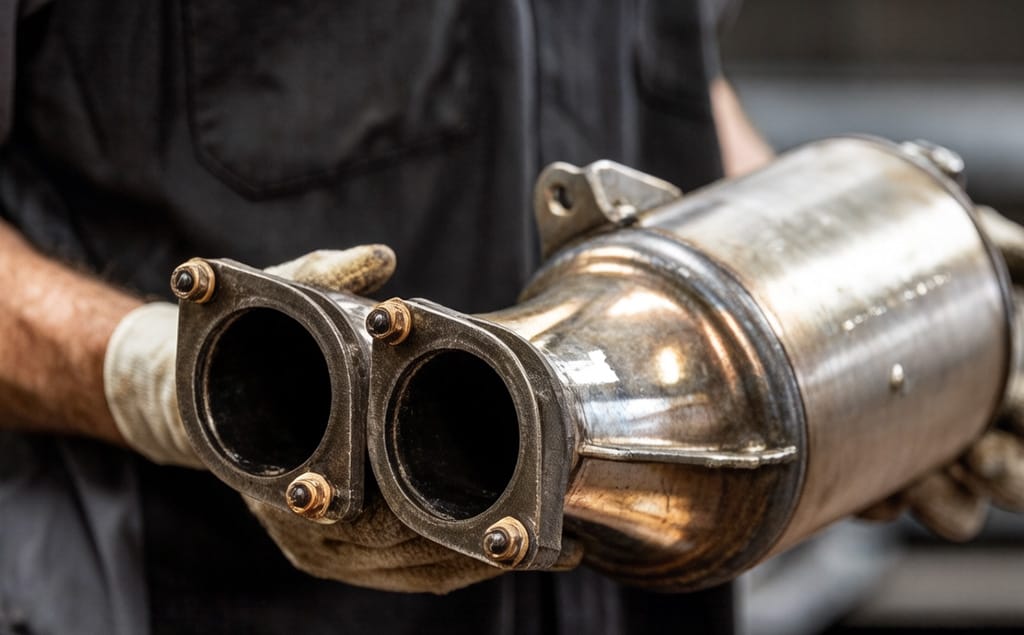
- ตัวเรือนภายนอก (เปลือก): โดยทั่วไปแล้วตัวเรือนภายนอกจะสร้างขึ้นจาก สแตนเลสสตีล, often featuring a double-layered design with an integrated heat shield [9]. Stainless steel is chosen for its excellent corrosion resistance, particularly against the corrosive exhaust gases and external environmental factors, and its ability to withstand high temperatures. The double-layered shell serves multiple functions:
- ความสมบูรณ์ของโครงสร้าง: มันช่วยปกป้องทางกลไกที่แข็งแกร่งให้กับอิฐตัวเร่งปฏิกิริยาภายใน ปกป้องมันจากเศษซากบนท้องถนน แรงกระแทก และการสั่นสะเทือน
- ฉนวนกันความร้อน: ช่องว่างอากาศระหว่างชั้นคู่หรือการมีแผ่นป้องกันความร้อนช่วยลดการแผ่รังสีความร้อนจากตัวเร่งปฏิกิริยาที่ร้อน ช่วยปกป้องส่วนประกอบรถยนต์โดยรอบและลดความเสี่ยงต่อการไหม้
- การป้องกันการเกิดออกไซด์ของผิวหนัง: It prevents the formation of an oxide skin on the catalyst surface, which could otherwise block the catalytic sites and reduce efficiency [9].
- การติดตั้ง: มีหน้าแปลนและการเชื่อมต่อที่จำเป็นสำหรับการรวมเข้ากับระบบไอเสีย
- แผ่นปูรองพื้นภายใน: ระหว่างพื้นผิวเซรามิกและตัวเรือนสแตนเลส แผ่นปูรองบวม วัสดุถูกบรรจุ โดยทั่วไปแล้วเสื่อนี้ทำจากเส้นใยเซรามิก (เช่น เส้นใยอะลูมินา-ซิลิกา) ซึ่งออกแบบมาให้ขยายตัวอย่างมากเมื่อได้รับความร้อน ฟังก์ชันของเสื่อมีความสำคัญอย่างยิ่งต่อความทนทานและประสิทธิภาพของตัวแปลง:
- การป้องกันเชิงกลและการกันกระแทก: ทำหน้าที่เป็นตัวดูดซับแรงกระแทก ช่วยลดแรงกระแทกของพื้นผิวเซรามิกที่เปราะบางจากแรงสั่นสะเทือนและแรงกดทางกลจากการเคลื่อนที่ของรถยนต์และจังหวะการสั่นของท่อไอเสีย ช่วยป้องกันพื้นผิวเซรามิกไม่ให้แตกร้าวหรือแตกหัก
- ฉนวนกันความร้อน: แผ่นรองช่วยให้มีฉนวนกันความร้อนเพิ่มเติม ช่วยลดการสูญเสียความร้อนจากตัวเร่งปฏิกิริยา และช่วยให้ถึงอุณหภูมิการทำงานได้เร็วขึ้น (อุณหภูมิปิดเตา)
- การติดตั้งที่ปลอดภัย: เมื่อขยายตัวเมื่อได้รับความร้อน แผ่นขยายตัวจะออกแรงกดทับอิฐเซรามิก ทำให้อิฐเซรามิกติดแน่นกับโครงเหล็ก และป้องกันไม่ให้อิฐเคลื่อนตัวหรือสั่น
- การปิดผนึก: It also provides a seal, preventing exhaust gases from bypassing the catalyst brick and ensuring that all gases flow through the active catalytic channels. Other vibration damping layers, such as metal mesh pads or ceramic gaskets, may also be used [9].
การคัดเลือกและการผสานรวมวัสดุที่อยู่อาศัยและบรรจุภัณฑ์เหล่านี้ด้วยความระมัดระวังถือเป็นสิ่งสำคัญสำหรับความน่าเชื่อถือและประสิทธิภาพในระยะยาวของตัวเร่งปฏิกิริยา 3 ทาง ช่วยให้มั่นใจได้ว่าสามารถทนต่อสภาพแวดล้อมการทำงานที่รุนแรงของระบบไอเสียรถยนต์ได้
6. การพิจารณาประสิทธิภาพ ความทนทาน และต้นทุนของวัสดุแบบบูรณาการ
ประสิทธิภาพของตัวเร่งปฏิกิริยาแบบ 3 ทางเป็นผลโดยตรงจากปฏิสัมพันธ์ที่เสริมฤทธิ์กันระหว่างวัสดุส่วนประกอบทั้งหมด ได้แก่ วัสดุตั้งต้น วัสดุเคลือบผิว โลหะมีค่า และตัวเรือน ประสิทธิภาพโดยรวมของตัวเร่งปฏิกิริยาเป็นตัวกำหนดกิจกรรมการเร่งปฏิกิริยาโดยรวม ความทนทานต่อความร้อน ความทนทานเชิงกล และท้ายที่สุดคือความคุ้มค่าของระบบโดยรวม
กิจกรรมเร่งปฏิกิริยาและประสิทธิภาพ: The primary goal is to achieve high conversion efficiency for CO, HC, and NOx across a wide range of operating conditions. This is largely driven by the precious metals (Pt, Pd, Rh) and their dispersion on the high-surface-area washcoat [1]. The washcoat’s oxygen storage capacity, provided by ceria-zirconia, is crucial for maintaining high efficiency under fluctuating air-fuel ratios, acting as an oxygen buffer [1][2]. Computer models are extensively used to optimize catalyst loadings and layouts, enabling high performance even with reduced PGM content [1][3].
ความทนทานต่อความร้อน: อุณหภูมิไอเสียรถยนต์อาจสูงถึง 1,000°C ทำให้ความทนทานต่อความร้อนกลายเป็นข้อกังวลที่สำคัญที่สุด
- พื้นผิว: Cordierite’s low thermal expansion and high thermal shock resistance prevent cracking and structural degradation [6].
- เสื้อโค้ท: The incorporation of zirconia into ceria (CeO₂-ZrO₂) significantly enhances the thermal stability of the oxygen storage component, preventing sintering and loss of surface area [7]. Advanced washcoat designs, such as double layers, can also help prevent sintering of PGMs at high temperatures [1][3].
- โลหะมีค่า: PGM sintering (agglomeration of nanoparticles into larger, less active particles) is a major cause of catalyst deactivation at high temperatures. The washcoat’s ability to disperse and stabilize PGMs is critical. Novel perovskite-based catalysts, for example, have shown superior thermal stability and resistance to activity loss even after hydrothermal aging at 1273K(1000°C), compared to standard dispersed metal catalysts [3][8]. This enhanced stability is often attributed to the substitution of palladium into the perovskite structure, which makes it less prone to sintering [8].
ความแข็งแกร่งทางกล: ตัวแปลงจะต้องทนต่อแรงกดดันทางกลอย่างมาก รวมถึงแรงสั่นสะเทือนจากเครื่องยนต์และถนน รวมไปถึงแรงกระแทกทางกายภาพ
- ที่อยู่อาศัย: The stainless steel shell provides the primary structural integrity and protection [9].
- แผ่นปูกันไฟ: This material is vital for cushioning the brittle ceramic substrate, absorbing vibrations, and securely holding the catalyst brick in place, preventing mechanical damage [9].
ความคุ้มค่า: ต้นทุนเป็นปัจจัยสำคัญในการผลิตยานยนต์ ปัจจัยต้นทุนที่สำคัญที่สุดในระบบ TWC คือ ปริมาณโลหะมีค่า [6]. The market for automotive three-way catalytic converters was valued at USD 11.2 billion in 2024, with the platinum-based segment alone projected to exceed USD 7 billion by 2034 [6].
- ความผันผวนของราคา PGM: The fluctuating prices and secure supply of platinum, palladium, and rhodium directly impact manufacturing costs [6].
- นวัตกรรมทางเทคโนโลยี: Manufacturers are continuously innovating to enhance fuel economy and reduce PGM loadings while maintaining or improving conversion efficiency and durability [6]. Projects like PROMETHEUS aim to reduce PGM content, potentially cutting production costs by up to 50% while maintaining or enhancing performance [1][4].
- การเพิ่มประสิทธิภาพกระบวนการผลิต: The design and preparation techniques for catalyst supports, such as cost-effective methods for creating mesoporous materials, also contribute to overall cost reduction [7].
- ความทนทานเทียบกับราคา: There is a constant trade-off between achieving high durability (which often requires more robust, sometimes more expensive, materials or higher PGM loadings) and managing production costs. The development of more thermally stable catalysts, like perovskites, can extend the converter’s lifespan, offering long-term cost benefits despite potentially higher initial material costs [3][8].
The overall market growth for TWCs is driven by increasing vehicle sales, stricter emissions regulations, and the demand for fuel-efficient vehicles, all of which necessitate continuous material and process innovation [6]. On-road monitoring of TWC performance, often via oxygen storage capacity measurements, further ensures that these complex material systems meet real-world emission targets throughout their operational life [3].
7. วัสดุที่เกิดขึ้นใหม่และทิศทางในอนาคต
The landscape of catalytic converter technology is continuously evolving, driven by increasingly stringent global emission standards and the imperative to reduce reliance on expensive and scarce Platinum Group Metals (PGMs) [1][6]. Future directions in 3-way catalytic converters focus on novel materials, advanced manufacturing techniques, and integrated systems to achieve superior performance, enhanced durability, and improved sustainability.
การลดการพึ่งพา PGM และตัวเร่งปฏิกิริยาที่ไม่ใช่ PGM: The high cost and limited supply of Pt, Pd, and Rh are major motivators for research into PGM-free or low-PGM alternatives [1][6].
- ออกไซด์ของโลหะทรานซิชัน: วัสดุเช่น ซีโอไลต์ นิกเกิลออกไซด์ และออกไซด์ของโลหะอื่นๆ are being extensively explored as potential replacements for PGMs [1]. These materials offer lower cost and greater abundance.
- ตัวเร่งปฏิกิริยาที่ใช้ Perovskite: โลหะออกไซด์เชิงซ้อนที่มีโครงสร้างเพอรอฟสไกต์ (เช่น ABO3 เป็นตัวเร่งปฏิกิริยาที่ไม่ใช่ PGM ที่มีอนาคต ตัวอย่างเช่น ผสมทองแดง LaCo₁−xCuxO₃ เพอร์รอฟสกี้ are under investigation as PGM-free catalysts for TWCs [1][4]. These materials can exhibit high thermal stability and catalytic activity, sometimes even surpassing traditional PGM catalysts in specific conditions [3][8]. Mechanochemical synthesis, including high-energy ball milling, is being used to create such perovskites [1].
- การบูรณาการนาโนเทคโนโลยี: Projects like NEXT-GEN-CAT have focused on incorporating low-cost transition metals into advanced ceramic substrates using nanotechnology to develop efficient catalysts [1][5]. Prototypes with low-PGM and no-PGM formulations have demonstrated compliance with Euro III emission standards, showcasing the viability of these approaches [1][5].
การพัฒนา Washcoat ขั้นสูง: Washcoat and catalyst development remain critical focus areas [1].
- ตัวรองรับออกไซด์ที่มีรูพรุนขนาดกลาง: Research continues into developing mesoporous oxide supports with optimized pore geometries. These structures can significantly increase the active surface area and improve the dispersion of catalytic components, potentially allowing for further reductions in metal loadings while maintaining or enhancing performance [7].
- วิธีการเตรียมการแบบใหม่: กำลังมีการสำรวจวิธีการเตรียมขั้นสูงเพื่อสร้างตัวเร่งปฏิกิริยาที่มีประสิทธิภาพและคงทนยิ่งขึ้น ซึ่งรวมถึง:
- การบำบัดด้วยคลื่นเสียงความถี่สูงร่วมกับการชุบด้วยไฟฟ้า: เพื่อการสะสมและการกระจายตัวของวัสดุที่ใช้งานอย่างแม่นยำ
- วิธีซิเตรต: วิธีการประเภทโซลเจลทั่วไปสำหรับการสังเคราะห์ออกไซด์โลหะผสมที่มีความเป็นเนื้อเดียวกันสูง
- ออกซิเดชันอิเล็กโทรไลต์ในพลาสมา (PEO): For creating porous oxide layers on metallic substrates, which can then be functionalized with catalytic materials [1].
การจัดการกับกฎระเบียบการปล่อยมลพิษในอนาคต: Global emission standards are becoming progressively stricter, pushing the boundaries of current TWC technology [1][6].
- การปล่อยมลพิษจากการสตาร์ทเครื่องเย็น: ความท้าทายที่สำคัญคือช่วง “การสตาร์ทเย็น” ซึ่งตัวเร่งปฏิกิริยายังไม่ถึงอุณหภูมิที่พร้อมสำหรับการจุดติดและแทบจะไม่มีประสิทธิภาพ การวิจัยวัสดุในอนาคตมีเป้าหมายที่จะพัฒนาตัวเร่งปฏิกิริยาที่สามารถทำงานที่อุณหภูมิต่ำกว่ามาก หรือผสานเข้ากับตัวเร่งปฏิกิริยาที่ให้ความร้อนด้วยไฟฟ้า (EHC) หรือกับดักไฮโดรคาร์บอนเพื่อลดการปล่อยสารจากการสตาร์ทเย็น
- การปล่อยมลพิษจากการขับขี่จริง (RDE): Regulations are increasingly focusing on real-world driving emissions rather than just laboratory tests. This necessitates catalysts that perform robustly and efficiently across a wider range of temperatures, speeds, and load conditions. On-road monitoring of oxygen storage capacity is already a step in this direction [3].
- การควบคุมฝุ่นละออง (PM): แม้ว่า TWC จะมุ่งเป้าไปที่มลพิษในรูปแบบก๊าซเป็นหลัก แต่กฎระเบียบในอนาคตอาจต้องใช้โซลูชันแบบบูรณาการสำหรับ PM ซึ่งอาจนำไปสู่การนำตัวกรองอนุภาคเบนซิน (GPF) มาใช้ร่วมกับ TWC มากขึ้น หรือการพัฒนาตัวเร่งปฏิกิริยาที่มีคุณสมบัติในการลด PM โดยธรรมชาติ
ความยั่งยืนและเศรษฐกิจหมุนเวียน: The transition to “green” mobility and the increasing focus on sustainability are driving efforts in recyclability and life cycle assessment (LCA) [1][5].
- ความสามารถในการรีไซเคิล: The NEXT-GEN-CAT project, for instance, investigated the recyclability of TWCs, examining end-of-life scenarios and using LCA to determine the environmental impact of developed materials [1][5]. Pyro-metallurgical treatment (smelting in an inert atmosphere) was explored for efficient PGM recovery from spent catalysts [1][5]. Future research will likely focus on more energy-efficient and environmentally friendly recycling processes for both PGMs and base metals.
การแก้ปัญหาเชิงรุกและการเก็งกำไร: นอกเหนือจากการวิจัยในปัจจุบัน ทิศทางในอนาคตอาจรวมถึง:
- ตัวเร่งปฏิกิริยาอัจฉริยะ: ตัวเร่งปฏิกิริยาที่สามารถปรับคุณสมบัติต่างๆ ได้อย่างไดนามิก (เช่น โครงสร้างพื้นผิว ความสามารถในการกักเก็บออกซิเจน) เพื่อตอบสนองต่อสภาวะไอเสียแบบเรียลไทม์ โดยอาจใช้เซ็นเซอร์ฝังตัวและระบบควบคุมที่ขับเคลื่อนด้วย AI
- ระบบบำบัดไอเสียแบบบูรณาการ: ก้าวไปสู่ระบบไอเสียที่มีขนาดกะทัดรัดและใช้งานได้หลากหลายมากขึ้น ซึ่งรวมฟังก์ชัน TWC เข้ากับเทคโนโลยีควบคุมการปล่อยมลพิษอื่นๆ (เช่น การลด NOx แบบเลือกตัวเร่งปฏิกิริยา ตัวกรองอนุภาคขั้นสูง) เข้าเป็นหน่วยเดียวที่ได้รับการปรับให้เหมาะสมอย่างยิ่ง
- การผลิตแบบเติมแต่ง: การใช้การพิมพ์สามมิติหรือเทคนิคการผลิตแบบเติมแต่งอื่นๆ เพื่อสร้างโครงสร้างพื้นผิวและชั้นเคลือบที่ปรับแต่งได้ตามความต้องการและปรับให้เหมาะสม ช่วยให้สามารถควบคุมการกระจายขนาดรูพรุน รูปทรงของช่อง และตำแหน่งของตัวเร่งปฏิกิริยาได้อย่างเหนือชั้น ซึ่งอาจนำไปสู่การถ่ายโอนมวลและประสิทธิภาพของตัวเร่งปฏิกิริยาที่ดีขึ้นอย่างมีนัยสำคัญ
- การเร่งปฏิกิริยาที่ได้รับแรงบันดาลใจจากชีวภาพ: การสำรวจกลไกการเร่งปฏิกิริยาที่พบในระบบชีวภาพเพื่อออกแบบตัวเร่งปฏิกิริยาแบบใหม่ ประสิทธิภาพสูง และอาจยั่งยืนยิ่งขึ้น
นวัตกรรมที่ดำเนินอยู่อย่างต่อเนื่องในด้านวิทยาศาสตร์วัสดุและวิศวกรรมเคมีจะยังคงขยายขอบเขตของประสิทธิภาพของตัวเร่งปฏิกิริยา 3 ทาง เพื่อให้แน่ใจว่ารถยนต์ที่ใช้น้ำมันเบนซินสามารถบรรลุเป้าหมายด้านสิ่งแวดล้อมที่เข้มงวดยิ่งขึ้นในขณะที่ลดผลกระทบต่อระบบนิเวศให้เหลือน้อยที่สุด เป้าหมายด้านสิ่งแวดล้อมที่เข้มงวดยิ่งขึ้นในขณะที่ลดผลกระทบต่อระบบนิเวศให้เหลือน้อยที่สุด