Introduction
Car brands are currently stuck between a rock and a hard place: hitting the brutal Euro 7 targets without killing engine performance. While EVs get all the limelight, the internal combustion engine isn’t going anywhere just yet. Instead, we’re seeing a total overhaul in exhaust tech. The shift from the standard three way catalytic converter to integrated 4-way systems is arguably the biggest shake-up we’ve seen in decades.
Moving past the traditional three way catalytic converter and stepping into 4-way technology is the most radical shift we’ve seen in a generation. The goal here is ambitious: it’s about pushing internal combustion engines toward true zero emissions under actual driving conditions, finally closing the gap between lab results and reality.
The Foundation: How the Three Way Catalytic Converter Works
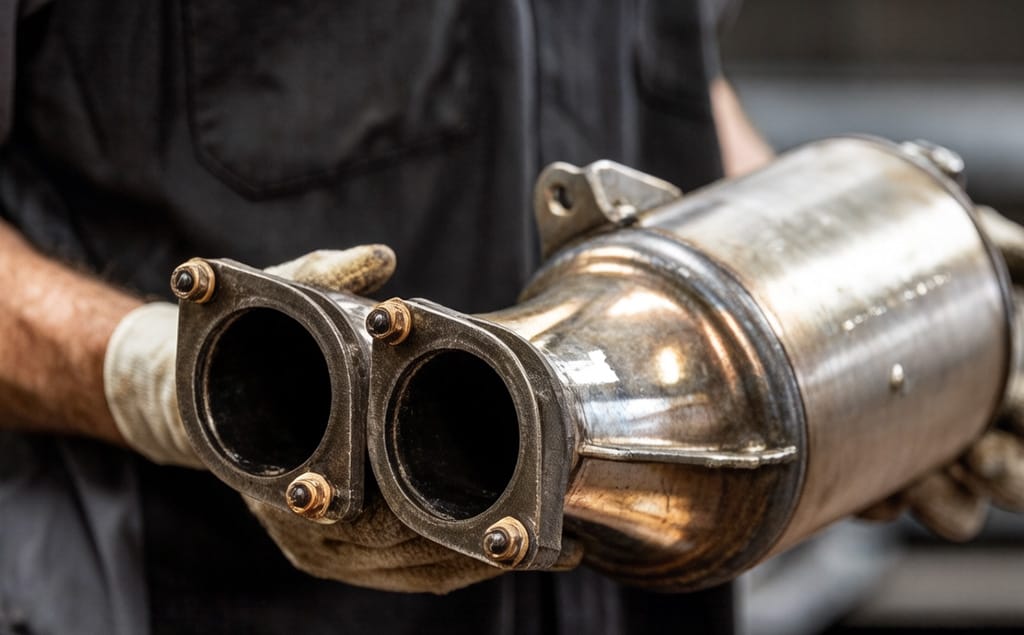
For over thirty years, the three way catalytic converter (TWC) has been the backbone of gasoline exhaust systems. The three way catalytic converter is a triple-threat to emissions. It works by:
- Breaking $NO_x$ down into nitrogen and oxygen.
- Transforming toxic carbon monoxide ($CO$) into $CO_2$.
- Finishing the job by oxidizing unburnt hydrocarbons ($HC$) into water and carbon dioxide.
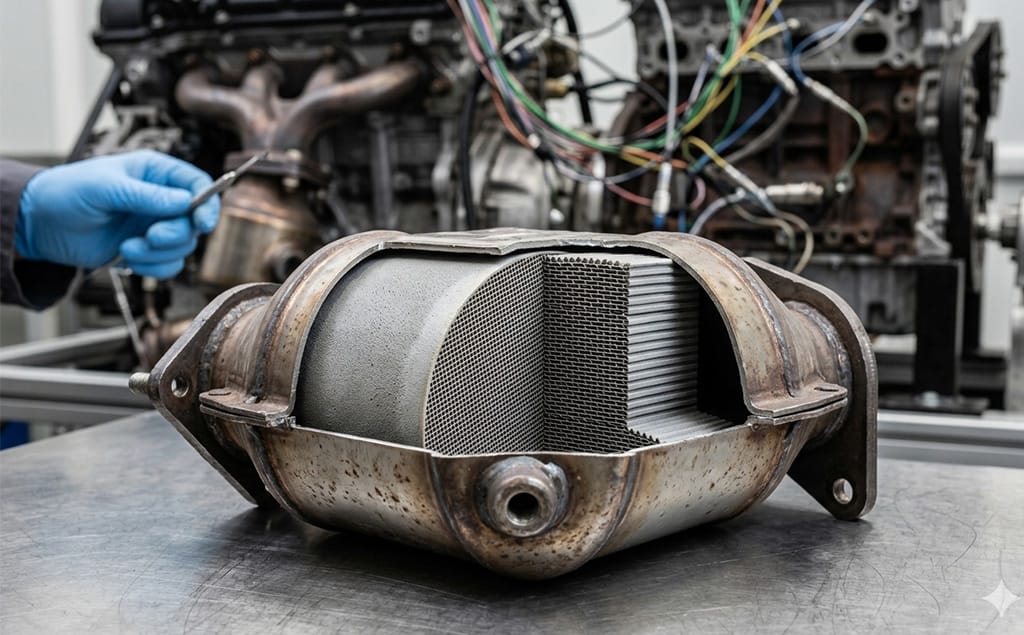
It’s a complete cleanup crew in a single ceramic shell. A three way catalytic converter relies on a specialized ceramic honeycomb structure. By coating this core with palladium and rhodium, manufacturers create a catalytic surface that remains passive until it reaches operating temperature. Once hot enough, these metals trigger the rapid chemical breakdown of toxic gases.

The 4-Way Revolution: Adding Particulate Filtration
The 4-way converter (FWC) takes the proven chemistry of a three way catalytic converter and adds a physical filter. Modern direct-injection engines create microscopic soot particles that used to fly straight through the exhaust. By integrating a Gasoline Particulate Filter (GPF) directly into the three way catalytic converter unit, engineers have created a “catch-all” solution.
This 4-way design saves space and weight, which is vital for compact modern cars. The magic happens inside the porous walls of the filter. As exhaust passes through, the walls trap solid particles while the precious metal coating cleans the gases. Here’s where the magic happens: as the engine heats up, the captured soot naturally incinerates into $CO_2$. This built-in self-cleaning process is vital—it makes sure the three way catalytic converter stays breathable and doesn’t get backed up with grime as the miles add up.
Comparison: Three Way vs. 4-Way Catalytic Technology
| Feature | Three Way Catalytic Converter | 4-Way Catalytic Converter |
|---|---|---|
| Pollutants Handled | $CO, HC, NO_x$ | $CO, HC, NO_x$ + Particulate Matter ($PM$) |
| Filter Type | None | Integrated GPF (Gasoline Particulate Filter) |
| System Complexity | Standard | High (Integrated structure) |
| Compliance Level | Euro 1 – Euro 6 | Euro 6d – Euro 7 |
| Main Benefit | Proven gas reduction | Full emissions control in one unit |
Why Euro 7 Demands Better Catalysts
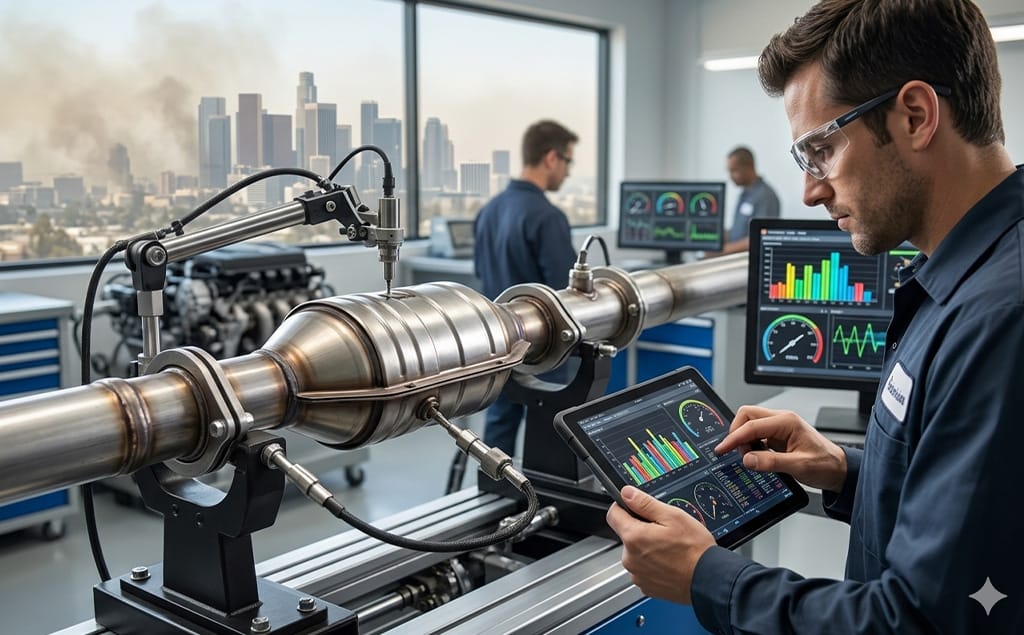
The move to 4-way technology isn’t optional. the latest Euro 7 emission standards isn’t playing around. Unlike the old rules, it’s obsessed with ‘Real Driving Emissions’ (RDE). This means your car’s exhaust cleanup—including that advanced three way catalytic converter system—has to perform just as well on a steep, icy mountain road as it does on a pampered laboratory test bench. No more faking it in the lab; it’s got to stay clean out in the real world.
1. Faster “Light-Off” Times
A three way catalytic converter only works once it gets hot. Most pollution happens in the first 30 seconds after you start your car. Modern 4-way systems use electric heaters to reach working temperatures almost instantly. This “pre-heating” ensures the three way catalytic converter reactions start before you even pull out of your driveway.
2. Solving the Hybrid Cold-Start Problem
Hybrid cars are actually very hard on a three way catalytic converter. Since the engine turns off and on constantly, the catalyst often cools down. If it gets too cold, it stops cleaning the air. New 4-way units use advanced insulation and special chemical coatings to stay “active” even when the engine is off.
Managing Backpressure and Engine Power
One common worry with adding filters to a three way catalytic converter is the loss of horsepower. If the exhaust can’t flow out easily (backpressure), the engine has to work harder and burns more fuel.
Engineers solved this by redesigning the internal channels of the three way catalytic converter. By using thinner walls and more porous materials, they allow the gas to flow freely while still catching 95% of the soot. This balance keeps the engine efficient while keeping the air clean.
The Future of Global Emission Standards
Looking ahead to 2030, the three way catalytic converter isn’t going anywhere—it’s just leveling up. We’re seeing a massive push toward global harmony in emissions rules. This means the high-tech 4-way systems currently hitting European roads will soon be the blueprint for Asia and the Americas. The endgame is clear: cutting the environmental footprint of every single gas-powered car to the absolute bone.
Conclusion
The leap from the standard three way catalytic converter to 4-way technology is a win for both drivers and the environment. By baking both gas reduction and soot filtration into a single, smart unit, the industry is proving that gas engines can actually nail those brutal Euro 7 targets. It’s a massive win for internal combustion.
This leap—evolving the classic three way catalytic converter into an all-in-one system—ensures that as long as we’re burning fuel, we’re doing it with the smallest environmental footprint possible. The 4-way three way catalytic converter is the key to sustainable driving in the modern era.