1. Introduction
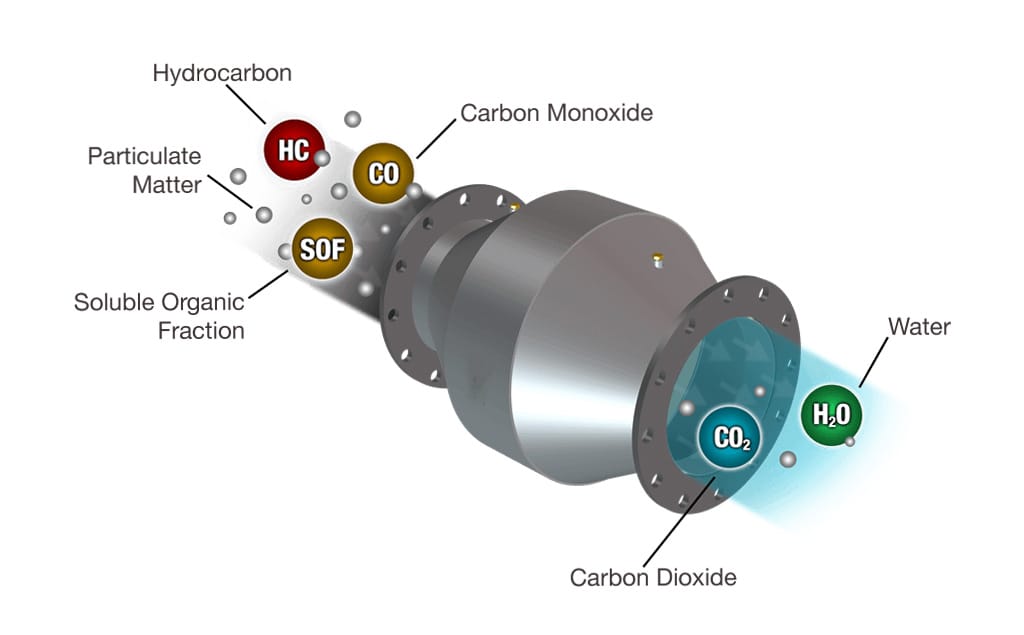
The three way catalytic converter stands as a cornerstone of modern automotive emission control. It performs a vital task. It converts toxic exhaust gases into harmless substances. These gases include carbon monoxide (CO), hydrocarbons (HC), and nitrogen oxides (NOx). Engineers rely on coating loading to dictate the efficiency of these reactions. Coating loading refers to the density of the washcoat and the concentration of precious metals. This parameter determines how the three way catalytic converter interacts with engine exhaust.
A precise balance in coating loading is essential. If the loading is too low, the vehicle fails emission tests. If the loading is too high, costs skyrocket and engine performance suffers. This article provides a deep technical analysis of how coating loading affects every aspect of the three way catalytic converter. We will examine chemical activity, physical flow dynamics, and long-term durability.
2. Chemical Composition and the Role of the Washcoat
Every three way catalytic converter features a complex internal structure. The substrate serves as the skeleton. The washcoat acts as the skin. The precious metals function as the active cells.
2.1 The Purpose of the Washcoat
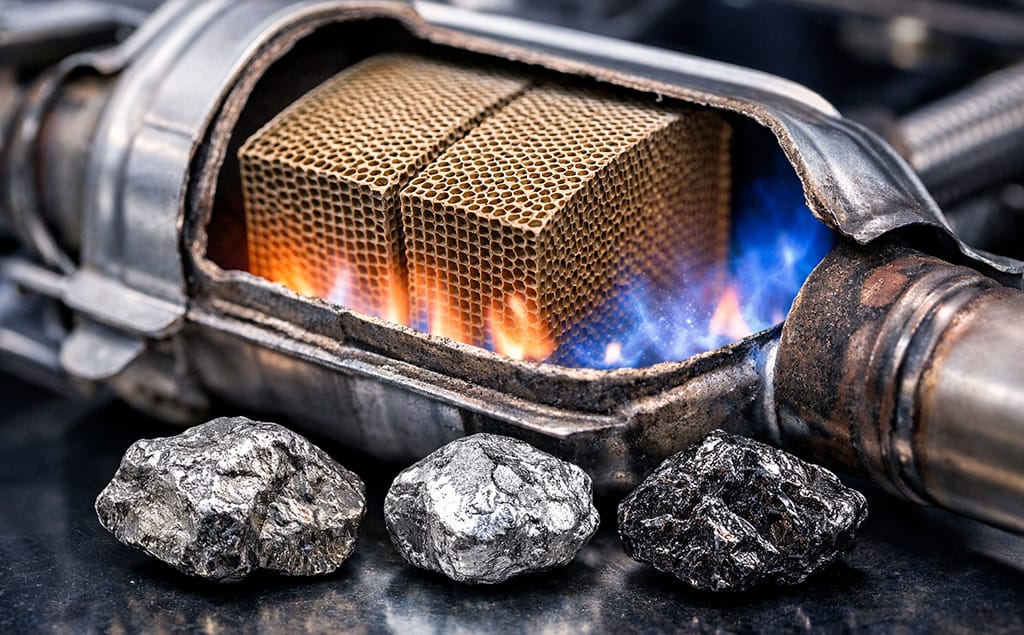
The washcoat is a porous ceramic layer. It typically consists of aluminum oxide ($Al{2}O{3}$), cerium oxide ($CeO{2}$), and zirconium oxide ($ZrO{2}$). Manufacturers apply this slurry to the substrate channels. The washcoat creates a massive internal surface area. A single three way catalytic converter can have a surface area equivalent to several football fields. This vast area provides a stage for chemical reactions.
2.2 Precious Metal Distribution
Precious metals reside within the washcoat structure. Palladium (Pd), Rhodium (Rh), and Platinum (Pt) are the primary players. Loading levels define the “active site” density. Each active site represents a location where a gas molecule can react. Higher loading means more active sites. However, the distribution must remain uniform. Poor distribution leads to “hot spots” and reduced efficiency.
3. How Loading Influences Conversion Efficiency
The primary goal of a three way catalytic converter is conversion. Loading directly impacts the speed and completeness of this process.
3.1 Analyzing Non-Linear Performance Gains
Increasing the precious metal loading improves the conversion rate. However, this relationship is not linear. In the early stages of loading, performance gains are rapid. As the concentration increases, the benefit begins to taper off.
- The Plateau Effect: Once the loading reaches a specific threshold (e.g., 80 g/$ft^{3}$), the system hits a plateau.
- Saturation Limits: At this point, the reaction is no longer “kinetically limited.” Instead, it becomes “diffusion limited.”
- Waste of Resources: Adding more metal beyond this point increases cost without improving air quality.
3.2 Cold Start and Light-Off Temperature
Cold starts generate the majority of a vehicle’s total emissions. The three way catalytic converter is cold when the engine starts. It cannot catalyze reactions until it reaches a “light-off” temperature (typically around $250^{\circ}C$ to $300^{\circ}C$).
- Loading Impact: Higher metal loadings lower the light-off temperature.
- Thermal Activation: A catalyst with high loading ignites the chemical reaction sooner.
- Emission Compliance: This rapid activation is crucial for meeting stringent environmental regulations.
4. Specific Roles of Palladium and Rhodium
A three way catalytic converter uses different metals for different tasks. The loading of each metal must be precisely tuned.
4.1 Palladium (Pd) and Hydrocarbon Control
Palladium is an oxidation specialist. It handles CO and HC.
- Oxygen Storage: High Pd loading enhances the Oxygen Storage Capacity (OSC).
- Chemical Buffering: It helps the three way catalytic converter survive brief periods of “rich” or “lean” fuel mixtures.
- Durability: Pd offers excellent thermal stability under high-heat conditions.
4.2 Rhodium (Rh) and NOx Reduction
Rhodium is the most expensive and critical metal for reducing NOx.
- The Reduction Process: Rhodium breaks the bonds of nitrogen oxides. It releases pure nitrogen and oxygen.
- High-Speed Performance: Increased Rh loading ensures the converter works during high-speed driving.
- Sensitivity: Rhodium is sensitive to the surrounding chemical environment. Proper loading protects its activity.
| Loading Component | Primary Function | Performance Benefit |
|---|---|---|
| High Washcoat Amount | Increases Surface Area | Provides more space for metals |
| High Palladium (Pd) | HC/CO Oxidation | Lowers light-off temperature |
| High Rhodium (Rh) | NOx Reduction | Improves efficiency under high load |
| Oxygen Storage (OSC) | Air-Fuel Balancing | Stabilizes the “lambda” window |
5. Physical Dynamics: Pressure Drop and Backpressure
The three way catalytic converter is a physical barrier in the exhaust path. Coating loading changes the shape of this barrier.
5.1 Washcoat Thickness and Channel Diameter
As the manufacturer adds more washcoat, the layer on the channel walls grows thicker.
- OFA Reduction: This reduces the Open Frontal Area (OFA).
- Airflow Resistance: Thicker coatings narrow the “pipes” through which gas flows.
- Backpressure Rise: Narrower channels increase exhaust backpressure. This forces the engine to push harder to expel gas.
5.2 Impact on Engine Performance
High backpressure is an enemy of efficiency.
- Fuel Economy: Increased backpressure lowers the vehicle’s miles per gallon.
- Power Loss: The engine loses horsepower because it cannot “breathe” effectively.
- Turbocharger Stress: In turbocharged engines, high backpressure increases heat and wear on the turbine.
6. Mass Transfer and Internal Resistance
Exhaust gas must travel from the center of the channel into the pores of the washcoat. This is called mass transfer.
6.1 The “Wasted Material” Problem
If the washcoat loading is too high, the layer becomes too thick ($>30\ \mu m$).
- Diffusion Limits: Gas molecules cannot reach the bottom of a thick coating.
- Inactive Layers: The precious metals at the base of the coating never touch the exhaust.
- Economic Inefficiency: The manufacturer pays for metal that does no work.
6.2 Optimization of Pore Structure
Modern three way catalytic converter designs focus on pore architecture. Engineers create “macro-pores” to help gas reach deeper layers. However, high loading often clogs these pores, negating the architectural benefits.
7. Durability and Long-Term Stability
A three way catalytic converter must function for 150,000 miles or more. Loading levels influence how the catalyst handles aging.
7.1 The Mechanism of Sintering
Sintering occurs when high temperatures cause metal particles to migrate and clump together.
- Surface Area Loss: Clumping reduces the total active surface area.
- Loading Paradox: While some loading improves stability, excessive loading promotes sintering.
- Hydrothermal Aging: High moisture and heat accelerate this degradation.
7.2 Poisoning and Deactivation
Exhaust contains “poisons” like phosphorus and sulfur.
- Site Blockage: These poisons bond to the active sites.
- Loading Buffer: A higher initial loading provides a “buffer.” It allows the three way catalytic converter to lose some sites while still meeting emission standards.
8. Advanced Strategies: Zone Coating and cGPF
To solve the conflict between cost, backpressure, and efficiency, the industry uses advanced coating strategies.
8.1 The Logic of Zone Coating
Manufacturers do not coat the entire three way catalytic converter substrate equally.
- Front Zone: They apply high precious metal loading to the first 1-2 inches. This ensures rapid light-off.
- Rear Zone: They apply lower loading to the remaining length. This saves money while still completing the conversion.
- Efficiency: Zone coating provides the best performance per gram of precious metal.
8.2 TWC-Coated Gasoline Particulate Filters (cGPF)
Modern direct-injection engines produce soot. A cGPF traps this soot and uses a three way catalytic converter coating to treat gases.
- The Loading Challenge: Filters have much tighter paths than standard substrates.
- Pressure Risks: High loading in a cGPF can cause extreme pressure drops.
- Delicate Balance: Engineers must use very low washcoat loadings (often $<100\ g/L$) to maintain engine health.
9. Conclusion: The Future of Coating Optimization
The three way catalytic converter remains the most effective tool for clean air. Coating loading is the most important variable in its design. We have seen that higher loading improves chemical activity and lowers light-off temperatures. We also discovered that excessive loading harms the engine through backpressure and increases material waste through mass transfer resistance.
In the future, manufacturers will use even more precise coating techniques. They will focus on atomic-level metal distribution. This will allow the three way catalytic converter to achieve higher efficiency with even less precious metal. Achieving the perfect loading balance is not just a technical goal. It is an economic and environmental necessity.