Introduction
The three way catalytic converter stands as the primary guardian of automotive air quality. This device handles a complex array of chemical reactions within the exhaust system. It effectively neutralizes carbon monoxide, hydrocarbons, and nitrogen oxides. However, the three way catalytic converter lives in a harsh environment. It must endure extreme heat and rapid temperature cycles. Thermal stress poses the greatest risk to its operational life. When internal temperatures exceed safe limits, the catalyst suffers irreversible damage. This leads to increased emissions and poor engine performance. Engineers design these components to be robust. Yet, external engine malfunctions often push the three way catalytic converter to its breaking point.
The Nature of Three Way Catalytic Converter Thermal Stress
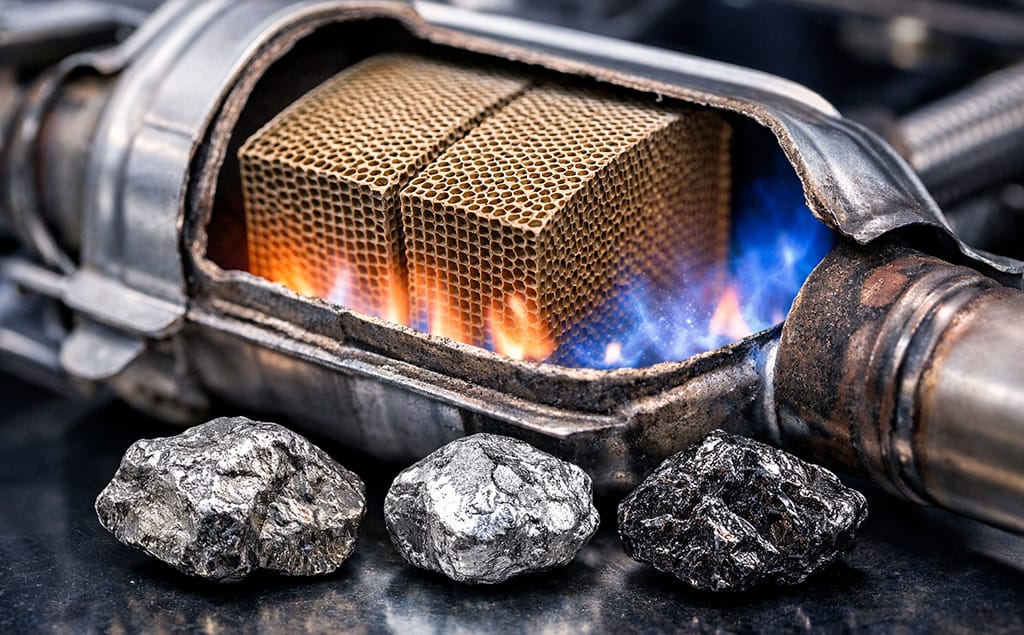
Thermal stress occurs when a three way catalytic converter encounters heat beyond its structural capacity. Most modern catalysts use a ceramic or metallic substrate. This substrate supports a washcoat of precious metals like platinum, palladium, and rhodium. These metals facilitate the necessary redox reactions. However, these reactions are exothermic. This means the chemical process itself creates heat. Under normal conditions, the exhaust flow carries this heat away. Problems arise when the balance between heat generation and heat dissipation fails. Excessive heat causes the washcoat to peel or the substrate to melt. This process often begins silently. Drivers may not notice the damage until the unit clogs or the check engine light activates.
Common Causes of Thermal Stress in the Three Way Catalytic Converter
Several factors contribute to the overheating of a three way catalytic converter. Most of these issues originate in the engine’s fuel or ignition systems.
Fuel System Imbalances The air-fuel ratio dictates the temperature inside the three way catalytic converter. A rich fuel mixture contains more gasoline than oxygen. This excess fuel cannot burn completely in the combustion chamber. It travels into the exhaust and reaches the three way catalytic converter. The catalyst then attempts to burn this raw fuel. This reaction creates a massive heat spike. Conversely, a lean mixture increases the temperature of the exhaust gases leaving the engine. Both conditions put immense thermal pressure on the catalyst structure.
Ignition System Misfires A misfiring spark plug is the most frequent killer of the three way catalytic converter. When a cylinder misfires, it pumps raw gasoline and fresh air directly into the exhaust. The three way catalytic converter acts like a secondary furnace in this scenario. It ignites the mixture, causing internal temperatures to soar instantly. This thermal runaway can melt a ceramic substrate in less than a minute.
Mechanical Fluid Leaks Internal leaks represent a hidden cause of thermal stress. If engine oil or coolant enters the exhaust stream, they coat the catalyst. This coating creates a barrier between the exhaust gases and the precious metals. The three way catalytic converter must work harder to achieve the same chemical results. This increased workload generates localized hot spots. Over time, these hot spots weaken the substrate and lead to structural failure.
Thermal Thresholds and Material Comparison
Different materials respond to thermal stress in various ways. Manufacturers choose substrates based on the intended use of the vehicle.
Substrate Material Properties
Material Type: Ceramic (Cordierite) Melting Point: 1,200 Degrees Celsius Thermal Conductivity: Low Thermal Shock Resistance: Moderate Best Use: Standard Passenger Vehicles
Material Type: Metallic (FeCrAl) Melting Point: 1,100 Degrees Celsius Thermal Conductivity: High Thermal Shock Resistance: Very High Best Use: Performance and Heavy Duty Vehicles
Ceramic substrates offer excellent cost efficiency. They are the standard for most vehicles on the road. However, they are brittle. Rapid cooling, such as driving through deep water, can crack them. Metallic substrates offer better heat dissipation. They handle vibration and thermal shock more effectively. Performance enthusiasts often choose metallic three way catalytic converters for their durability under high-speed conditions.

Recognizing the Symptoms of Catalyst Overheating
You must identify thermal distress before it causes total system failure. The three way catalytic converter often provides physical and performance-based clues.
Physical Indicators A healthy three way catalytic converter maintains its original metallic finish. If the outer shell looks blue or purple, it has overheated. In extreme cases, the unit may glow red after a long drive. This indicates a severe engine malfunction. A rattling sound inside the housing suggests the substrate has shattered. This happens when thermal stress causes the ceramic to expand and contract too quickly.
Performance Red Flags A melted three way catalytic converter restricts exhaust flow. This creates backpressure in the engine. You will notice a significant loss of power during acceleration. The vehicle may struggle to maintain highway speeds. Fuel economy will drop as the engine works harder to push air through the blockage. Some drivers also report a strong smell of sulfur or “rotten eggs.” This smell indicates the catalyst cannot properly process the exhaust gases.
The Role of the Oxygen Sensor in Heat Management
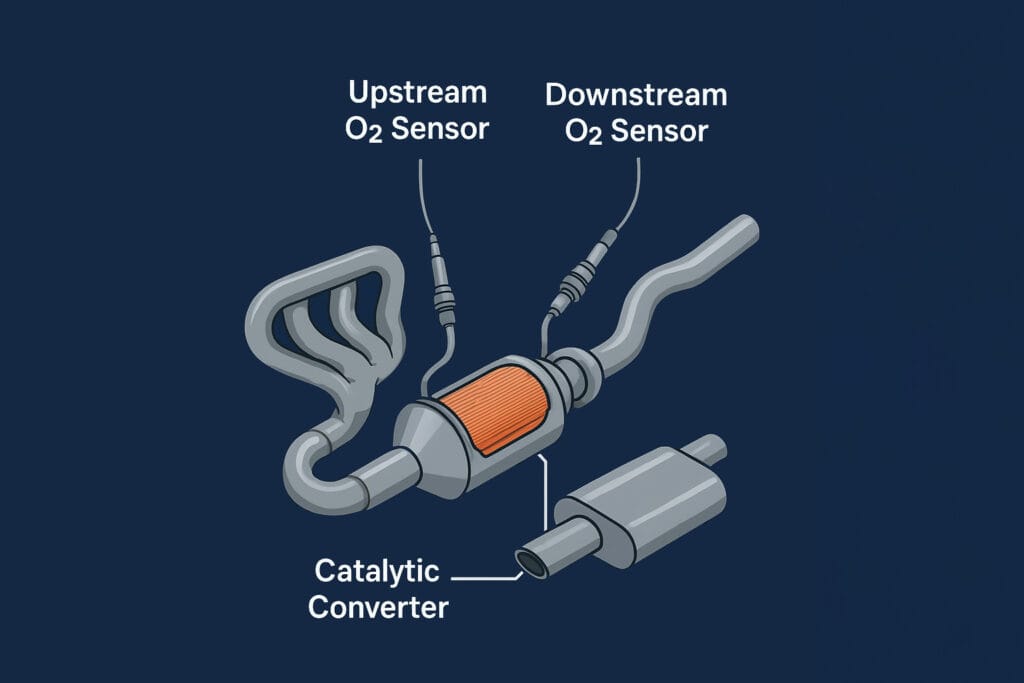
The oxygen sensor serves as the primary monitor for the three way catalytic converter. Most modern cars use two sensors. The upstream sensor tells the engine how much fuel to spray. The downstream sensor checks if the three way catalytic converter is working. If the upstream sensor fails, the engine may run too rich. This sends excess fuel to the catalyst and causes thermal stress. Maintaining these sensors is a critical part of catalyst health. A sluggish sensor might not trigger a light immediately, but it can slowly kill the three way catalytic converter through heat.
Prevention Strategies for Long-Term Success
Preventing thermal stress is far cheaper than replacing a three way catalytic converter. You should follow a strict maintenance schedule to protect this expensive component.
Ignition System Audits Check your spark plugs every 30,000 miles. Ensure the ignition coils provide a strong, consistent spark. If you feel the engine stumble, investigate it immediately. Never ignore a flashing check engine light. A flashing light usually means a misfire is occurring right now. This is the fastest way to destroy your three way catalytic converter.
Fuel System Cleaning Use high-quality fuel to prevent injector clogging. Clogged injectors create uneven fuel distribution. This leads to lean or rich conditions in individual cylinders. Periodic use of a fuel system cleaner helps maintain a perfect air-fuel ratio. This keeps the three way catalytic converter operating within its ideal temperature range.
Exhaust System Inspections Check for exhaust leaks upstream of the three way catalytic converter. A leak in the manifold pulls fresh air into the system. The oxygen sensor sees this extra air and thinks the engine is lean. It then adds more fuel, creating a rich condition. This “false lean” reading is a common cause of melted catalysts. Ensure all gaskets and bolts remain tight and leak-free.
Advanced Engineering Controls for Thermal Management
High-performance vehicles require extra steps to manage three way catalytic converter heat. Engineers use several techniques to protect the catalyst during racing or heavy towing.
Heat Shielding and Airflow Proper airflow around the exhaust system is essential. Many vehicles use heat shields to protect the chassis. These shields also help keep the three way catalytic converter at a stable temperature. Do not remove these shields. If you use a custom exhaust, ensure the three way catalytic converter has enough clearance from other parts.
Electronic Control Unit (ECU) Tuning Modern ECU programming includes “component protection” modes. When the computer detects high exhaust temperatures, it adds extra fuel. This extra fuel actually cools the three way catalytic converter through evaporation. If you tune your engine for more power, ensure these safety features remain active. Removing these protections can lead to rapid thermal failure of the three way catalytic converter.
Catalyst Temperature Ranges and Risks
Operating State: Light-Off Temperature: 250 – 300 Degrees Celsius Risk Level: Low Effect: Chemical reactions begin.
Operating State: Optimal Range Temperature: 400 – 800 Degrees Celsius Risk Level: None Effect: Peak efficiency for pollutant conversion.
Operating State: Thermal Aging Temperature: 850 – 950 Degrees Celsius Risk Level: Moderate Effect: Precious metals begin to clump (sintering).
Operating State: Structural Damage Temperature: Above 1,000 Degrees Celsius Risk Level: Critical Effect: Substrate begins to melt or crack.
The Environmental and Economic Impact of Failure
A failed three way catalytic converter has wide-ranging consequences. Environmentally, a damaged unit allows raw pollutants into the atmosphere. This contributes to smog and respiratory issues in urban areas. Economically, the cost of replacement is high. These units contain expensive metals like rhodium, which has a very high market value. Furthermore, a clogged catalyst can damage other engine parts. High backpressure puts stress on the exhaust valves and the turbocharger. By preventing thermal stress, you protect your entire vehicle investment.
Proper Cooling Procedures After Heavy Use
Many drivers do not realize that the hottest moment for a three way catalytic converter is right after a hard drive. When you stop the car, the airflow stops. However, the internal heat remains. This is called “heat soak.” If you have been towing or driving at high speeds, let the engine idle for two minutes before turning it off. This allows the oil and coolant to circulate. It also allows the exhaust flow to stabilize the temperature of the three way catalytic converter. This simple habit can significantly extend the life of the catalyst.
Chemical Poisoning and Thermal Sensitivity
Chemical poisoning makes a three way catalytic converter more sensitive to heat. When substances like lead, silicone, or phosphorus coat the catalyst, they block the active sites. The unit must reach higher temperatures to achieve the same conversion rate. This forces the catalyst to operate closer to its thermal limit at all times. Always use “low-SAPS” engine oils if your manufacturer recommends them. Avoid using non-approved additives in your fuel or oil. Keeping the catalyst clean ensures it can operate at lower, safer temperatures.
Conclusion
The three way catalytic converter is a vital but vulnerable part of the modern vehicle. Thermal stress remains its most significant challenge. Misfires, fuel imbalances, and mechanical leaks create excessive heat that destroys the catalyst substrate. You can prevent this damage through regular maintenance of the ignition and fuel systems. Monitor your oxygen sensors and respond quickly to any engine performance issues. By understanding the causes of thermal stress, you ensure your three way catalytic converter lasts for the life of the vehicle. This proactive approach saves money and protects the environment. Keep your engine healthy, and your three way catalytic converter will continue to perform its essential job.