Introduction
Modern automotive engineering faces a massive challenge. Engines must produce power while minimizing environmental damage. Governments worldwide enforce strict emission standards. Manufacturers respond by installing advanced after-treatment systems. The two most common devices are the three way catalytic converter and the Diesel Particulate Filter. Both components reside in the exhaust path. However, they perform very different technical roles. The three way catalytic converter handles gaseous toxins in gasoline engines. The DPF captures solid soot particles in diesel engines. This article provides a comprehensive technical analysis of these systems. We will examine their chemical processes, structural designs, and maintenance requirements. Understanding these differences helps vehicle owners maintain engine health and ensure legal compliance.
The Core Purpose of the Three Way Catalytic Converter
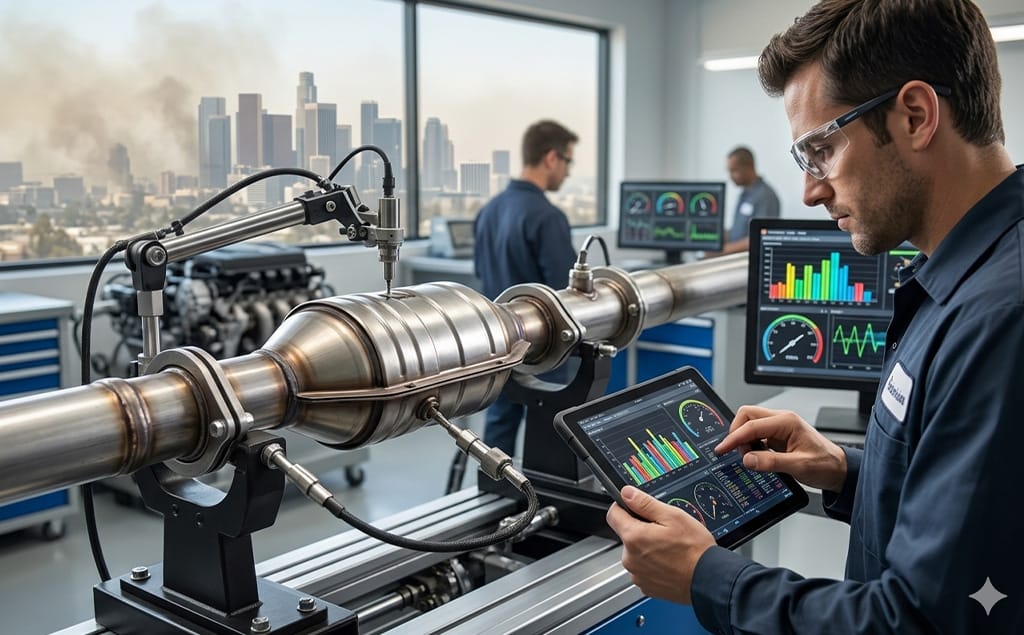
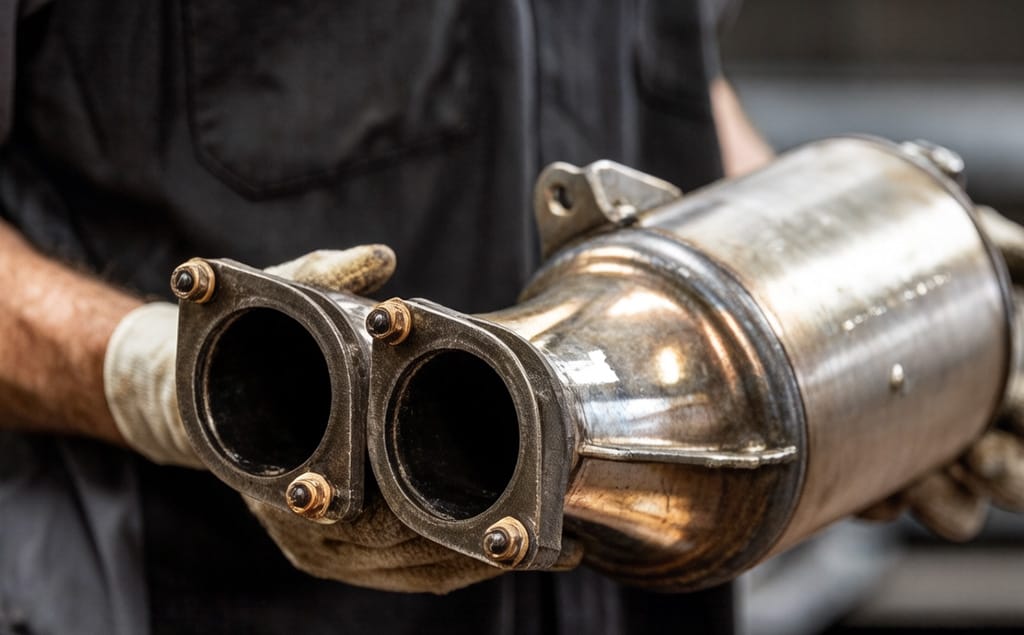
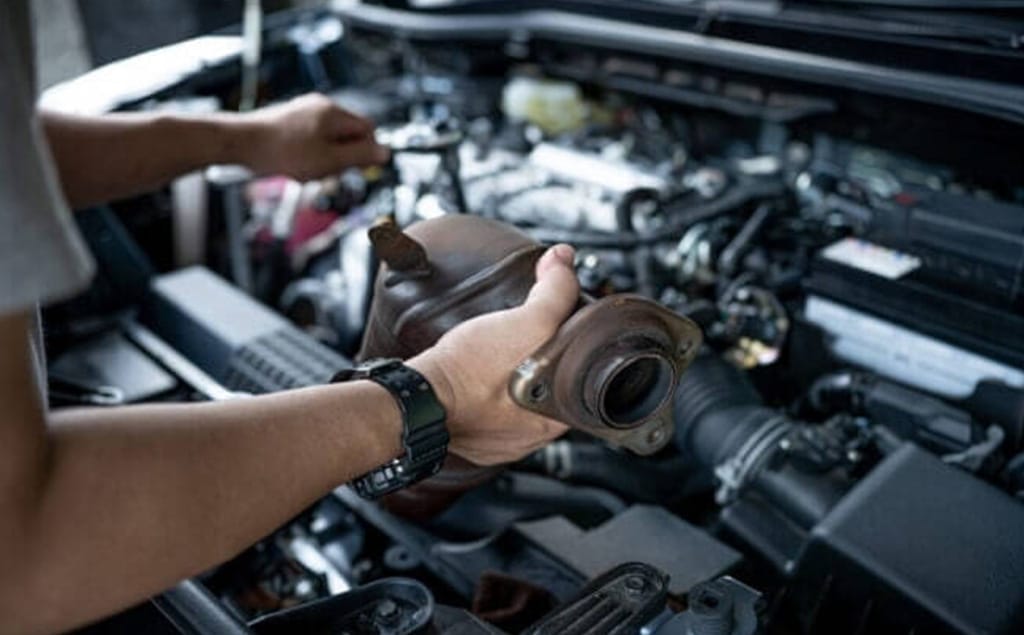
The three way catalytic converter acts as a chemical reactor. It sits between the engine and the muffler. Its primary job involves converting toxic gases into harmless substances. The “three way” name refers to the three specific pollutants it targets. These are Nitrogen Oxides (NOx), Carbon Monoxide (CO), and Unburnt Hydrocarbons (HC).
The three way catalytic converter utilizes a flow-through design. Exhaust gas enters the converter and passes through thousands of micro-channels. These channels feature a ceramic honeycomb structure. Engineers coat this structure with a washcoat. This washcoat contains precious metals. Platinum and Palladium handle the oxidation of CO and HC. Rhodium manages the reduction of NOx.
The three way catalytic converter performs two simultaneous chemical reactions. In the reduction reaction, the catalyst strips oxygen away from Nitrogen Oxides. This creates pure Nitrogen gas and Oxygen. In the oxidation reaction, the catalyst adds oxygen to Carbon Monoxide and Hydrocarbons. This produces Carbon Dioxide and water vapor. These reactions happen almost instantly. However, the three way catalytic converter requires a high operating temperature. Most units start working effectively at 400°C.

The Mechanics of the Diesel Particulate Filter (DPF)
Diesel engines operate differently than gasoline engines. Diesel fuel contains longer carbon chains. The combustion process often leaves behind solid carbon residue. We call this residue soot or particulate matter. A three way catalytic converter cannot stop these solid particles. Therefore, diesel vehicles require a DPF.
The DPF uses a wall-flow filtration design. Unlike the flow-through three way catalytic converter, the DPF channels have blocked ends. One channel is open at the entrance but closed at the exit. The next channel is closed at the entrance but open at the exit. This geometry forces the exhaust gas through the porous walls of the ceramic substrate.
The gas molecules pass through the microscopic pores. However, the soot particles are too large. They remain trapped inside the filter channels. Over time, these particles accumulate. This accumulation forms a “soot cake.” This cake actually improves filtration efficiency initially. But eventually, it restricts exhaust flow. This creates backpressure. High backpressure reduces engine power and increases fuel consumption.
Substrate Material Science in Exhaust Systems
Engineers select materials based on thermal stress and chemical stability. Most three way catalytic converter units use Cordierite. This is a synthetic ceramic material. It offers a low thermal expansion coefficient. This means the honeycomb structure does not crack under extreme heat changes.
DPF systems often use Silicon Carbide (SiC). This material handles much higher temperatures than Cordierite. This is vital because DPF regeneration creates intense heat. During regeneration, the soot burns off at temperatures exceeding 600°C. SiC has a higher melting point and better thermal conductivity. This helps distribute heat evenly and prevents “hot spots” that could melt the filter.
Comparison Table: Technical Specifications
The following table highlights the operational differences between the three way catalytic converter and the DPF.
| Technical Feature | Three Way Catalytic Converter (TWC) | Diesel Particulate Filter (DPF) |
|---|---|---|
| Primary Pollutant | Gaseous (NOx, CO, HC) | Solid (Soot, Particulate Matter) |
| Internal Design | Flow-Through Honeycomb | Wall-Flow Monolith |
| Reaction Type | Chemical Oxidation and Reduction | Physical Trapping and Combustion |
| Substrate Material | Cordierite or Metallic Foil | Silicon Carbide or Aluminum Titanate |
| Maintenance Logic | Continuous Operation (Passive) | Periodic Regeneration (Active/Passive) |
| Typical Engine | Gasoline / Petrol | Diesel / Heavy Duty |
| Major Failure | Chemical Poisoning / Melting | Clogging / Ash Accumulation |
The Regeneration Process: DPF vs TWC
A three way catalytic converter does not need a cleaning cycle. It functions continuously as long as the engine maintains the correct air-fuel ratio. It relies on a “stoichiometric” mixture. This means the engine burns 14.7 parts of air for every 1 part of fuel. If the mixture is correct, the three way catalytic converter stays clean.
The DPF is different. It is a storage device. It eventually fills up with soot. To clear the soot, the system performs “regeneration.” There are two main types of regeneration.
Passive regeneration happens during long highway drives. The exhaust gas temperature rises naturally to around 350°C. At this temperature, the nitrogen dioxide in the exhaust helps burn off the soot slowly. The driver never notices this process.
Active regeneration occurs when the vehicle detects a high soot load. If you drive only in the city, the exhaust never gets hot enough for passive cleaning. The engine control unit (ECU) then takes over. It injects extra fuel into the cylinders during the exhaust stroke. This fuel travels to the exhaust system and ignites. This raises the DPF temperature to over 600°C. This heat incinerates the soot and turns it into a tiny amount of ash.
Failure Modes: What Destroys These Components?
Both systems are expensive to replace. Understanding failure modes helps prevent costly repairs.
The three way catalytic converter suffers primarily from poisoning. Certain chemicals bind permanently to the precious metals. Phosphorus and Sulfur are the biggest enemies. These chemicals often come from engine oil or low-quality fuel. Once poisoned, the three way catalytic converter cannot trigger chemical reactions. It becomes a useless brick of ceramic. Physical damage also occurs. If an engine misfires, unburnt fuel enters the hot converter. It explodes inside, melting the honeycomb structure.
The DPF fails due to clogging. Short trips are the main cause. If the engine never reaches operating temperature, it cannot regenerate. The soot builds up until the filter is completely blocked. At this point, even active regeneration might fail. Another issue is ash accumulation. Regeneration burns soot, but it cannot burn ash. Ash comes from the metallic additives in engine oil. Over 100,000 miles, this ash fills the DPF pores. Only professional pneumatic cleaning can remove ash.
Diagnostic Codes and Symptoms
Modern vehicles use On-Board Diagnostics (OBD-II) to monitor these systems.
A failing three way catalytic converter usually triggers code P0420. This code means “Catalyst System Efficiency Below Threshold.” The ECU monitors the oxygen sensors before and after the converter. If the readings look too similar, the converter is dead. You might notice a “rotten egg” smell. This is hydrogen sulfide gas. It indicates the converter is not processing sulfur correctly.
A failing DPF triggers codes like P242F (Ash Accumulation) or P2463 (Soot Accumulation). You will see a DPF warning light on the dashboard. The car may enter “Limp Mode.” This limits the engine to low RPM to prevent turbocharger damage. You will also see a massive drop in fuel economy. This happens because the ECU keeps trying to start the regeneration cycle.
Impact of Engine Oil on After-treatment Health
The choice of engine oil determines the lifespan of your three way catalytic converter and DPF. Conventional oils contain high levels of Sulfated Ash, Phosphorus, and Sulfur (SAPS).
In a three way catalytic converter, phosphorus coats the catalyst. This is called “chemical masking.” It hides the platinum from the exhaust gases. Even a small amount of oil consumption can kill a three way catalytic converter over time.
In a DPF, the metallic additives in the oil turn into permanent ash. You cannot burn this ash away. It stays in the filter forever. Therefore, diesel cars with DPFs must use Low-SAPS oils. These oils have special chemical markers. They protect the engine parts without harming the filter. Always check the ACEA C-grade rating on the oil bottle. C1 and C4 oils have the lowest SAPS levels. C3 is a common mid-SAPS oil for many European cars.
The Role of Oxygen Sensors and Temperature Sensors
Both systems rely on data from various sensors. The three way catalytic converter uses two oxygen sensors. The upstream sensor tells the engine how to adjust the fuel. The downstream sensor checks if the three way catalytic converter is working. If the downstream sensor shows fluctuating oxygen levels, the converter has failed.
The DPF uses pressure sensors. These sensors measure the “pressure drop” across the filter. One tube measures pressure at the inlet. Another tube measures pressure at the outlet. A large difference in pressure means the filter is full of soot. The DPF also uses temperature sensors. These ensure the filter does not get too hot during active regeneration. If the temperature exceeds 800°C, the filter might melt.
List of Common Causes for Exhaust Failure
- Using the wrong engine oil (High SAPS).
- Frequent short-distance driving (prevents heat buildup).
- Leaking fuel injectors (causes overheating).
- Worn spark plugs (leads to misfires and TWC melting).
- Faulty EGR valves (increases soot production).
- Leaking turbocharger seals (sends oil into the exhaust).
- Using low-quality fuel with high sulfur content.
Environmental and Legal Importance
The three way catalytic converter and DPF are not optional. Most countries mandate these devices by law. Removing them is a serious offense. A car without a three way catalytic converter produces 10 to 50 times more toxic gas. A diesel without a DPF releases fine soot. This soot enters the human bloodstream and causes respiratory diseases.
During annual vehicle inspections, technicians check these systems. They use smoke meters for diesels and gas analyzers for gasoline cars. If the three way catalytic converter is missing or broken, the car fails the test. You cannot legally drive the vehicle until you repair it. Furthermore, deleting these units ruins the resale value of the car.
Future Trends: GPF and Beyond
Technology continues to evolve. Many new gasoline cars now feature a Gasoline Particulate Filter (GPF). This is essentially a DPF for petrol engines. High-pressure direct injection in gasoline engines now produces small amounts of soot. The GPF works alongside the three way catalytic converter to capture these particles.
Hybrid vehicles also present new challenges. The engine turns on and off frequently. This keeps the exhaust system cool. Engineers now develop heated catalysts. These use electricity to pre-heat the three way catalytic converter. This ensures the catalyst works even during short engine runs.
Conclusion
The three way catalytic converter and the DPF are the guardians of our air quality. The three way catalytic converter uses chemistry to neutralize gases. The DPF uses mechanical filtration to trap soot. Both systems require specific operating conditions to survive. You must use the correct Low-SAPS engine oil to prevent poisoning and ash buildup. You must also ensure your engine is in good mechanical shape. Regular highway driving helps the DPF stay clean through regeneration. By maintaining these components, you protect the environment and avoid expensive repair bills. Always trust the warning lights on your dashboard. They provide the first sign that your exhaust system needs attention.