1. Benzinli Araçlardaki 3 Yollu Katalitik Konvertörlere Giriş
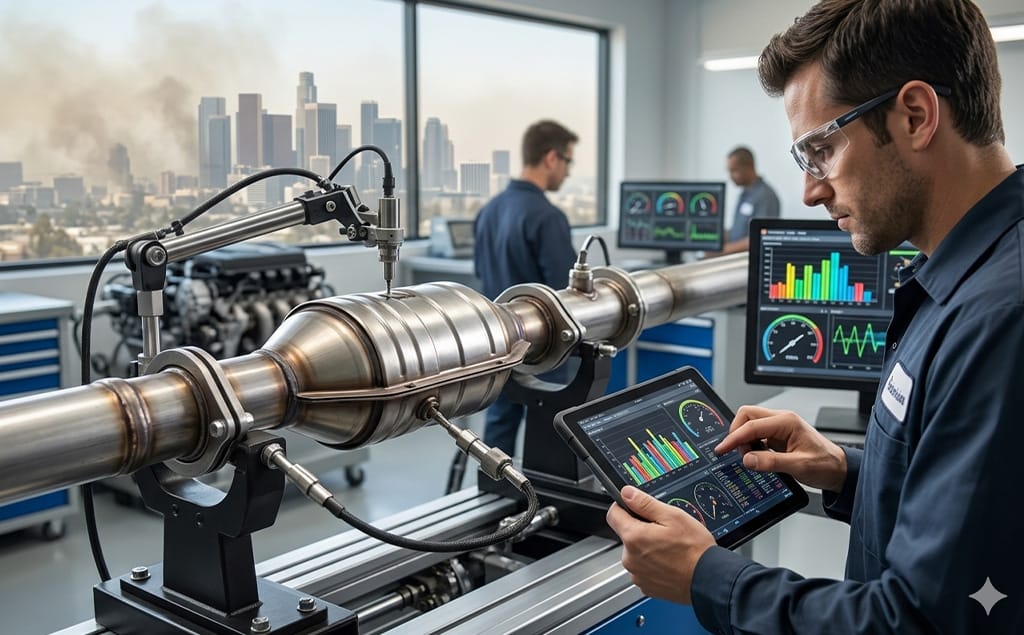
The automotive industry’s relentless pursuit of reduced environmental impact has positioned the 3-way catalytic converter (TWC) as a cornerstone technology for controlling harmful emissions from gasoline internal combustion engines. This report delves into the intricate material science and engineering behind these critical components, focusing specifically on their application in gasoline vehicles. The TWC is a sophisticated chemical reactor designed to simultaneously mitigate three primary pollutants found in engine exhaust: carbon monoxide (CO), unburnt hydrocarbons (HC), and nitrogen oxides (NOx) [1][5].
Operating within a tightly controlled environment, the TWC functions optimally when the engine’s air-fuel ratio is maintained near the stoichiometric point, precisely regulated by a lambda sensor in a closed-loop feedback system [5]. This precise control is crucial because the catalyst must facilitate both oxidation (for CO and HC) and reduction (for NOx) reactions concurrently. The evolution of TWCs has progressed from simpler oxidation catalysts to dual-bed systems, culminating in the highly efficient single-bed TWCs prevalent today, which are designed for thermal stability and rapid activation, often mounted close to the exhaust manifold [1][3]. The continuous tightening of global emission standards for CO, HC, NOx, and particulate matter is a primary driver for ongoing advancements in catalyst design and material innovation [1][6].
2. Katalitik Substrat Malzemeleri ve Özellikleri
The foundation of a 3-way catalytic converter is its monolithic substrate, which provides the structural support for the catalytically active materials. While metallic substrates are also used, ceramic honeycomb structures, primarily made from cordierite, are the most common choice due to their advantageous properties [6]. Cordierite is a magnesium iron aluminum cyclosilicate mineral with the chemical formula (Mg,Fe)₂Al₄Si₅O₁₈.
Benzersiz kristal yapısı, binlerce paralel kanala sahip, oldukça gözenekli, petek benzeri bir matrisin oluşumuna olanak tanır. Kordierit alt tabakanın fiziksel yapısı, işlevi için kritik öneme sahiptir. Genellikle yüksek bir hücre yoğunluğuna (inç kare başına hücre, cpsi) sahiptir ve bu da kompakt bir hacim içinde geniş bir geometrik yüzey alanına karşılık gelir. Bu, egzoz gazları ile katalitik yıkama katı arasındaki teması en üst düzeye çıkarır.
Kordieriti ideal bir alt tabaka malzemesi yapan temel özellikler şunlardır:
- Isıl Kararlılık: Ortam sıcaklığından 1000°C'nin üzerine hızlı değişimlere dayanıklı, mükemmel termal şok direnci.
- Düşük Isıl Genleşme: Sıcaklık değişimlerinden kaynaklanan gerilme ve çatlamaları önler.
- Mekanik Dayanıklılık: Titreşim ve darbelere karşı yeterince dayanıklı.
- Yüksek Yüzey Alanı: Etkili yıkama katı uygulamasını destekler.
- Düşük Basınç Düşüşü: Düz kanallar egzoz akış direncini en aza indirerek motor performansını korur.
Design parameters like length and cell density are often optimized using simulation software such as Solidworks [7].
3. Washcoat Formülasyonları ve Fonksiyonel Rolleri
Yıkama katı, alt tabakaya uygulanan gözenekli bir oksit tabakasıdır ve değerli metallerin yüksek oranda dağılmasını ve stabilitesini sağlar.
- Gama-Alümina (γ-Al2O3): Yüksek yüzey alanı (100–200 m²/g), değerli metal dağılımını destekler.
- Seryum-Zirkonya (CeO₂-ZrO₂):Ceria (CeO₂) is indispensable for its remarkable oxygen storage capacity (OSC)[1][2]. It undergoes reversible redox reactions:2CeO₂ ⇌ Ce₂O₃ + ½O₂The addition of zirconia (ZrO₂) forms a solid solution, CeO₂-ZrO₂, enhancing thermal stability and oxygen mobility. Ceria-zirconia-yttria mixed oxides (CZY) are considered the industry standard .
- Diğer Stabilizatörler: Lantan oksit (La₂O₃), baryum oksit (BaO) ve neodim oksit (Nd₂O₃) yüzey kararlılığını ve zehirlenme direncini artırır.
The washcoat is applied as a slurry and then calcined, forming a highly porous, rough surface that maximizes the contact area for the exhaust gases and provides a stable platform for the precious metals. Some advanced TWC designs utilize double-layer washcoats, where different precious metals (e.g., Pd/Pt in one layer and Rh in another) are supported on specific ceria- or zirconia-based oxides to prevent sintering and optimize their individual catalytic functions [1][3]. The development of mesoporous oxide supports with optimal pore geometries is an ongoing area of research, aiming to reduce catalyst size and weight while significantly decreasing the required precious metal loadings [7].
4. Değerli Metal Katalizörleri: Bileşimi ve Mekanizmaları
Bir TWC'nin katalitik kalbi Platin Grubu Metallerine (PGM'ler) dayanır:
- Platin (Pt): Oksidasyonu katalize eder:
- CO + ½O₂ → CO₂
- CₓHᵧ + (x + y/4)O₂ → xCO₂ + y/2 H₂O
- Paladyum (Pd): Hem oksidasyonu hem de orta düzeyde NOx redüksiyonunu katalize eder. Düşük sıcaklıklarda iyi performans gösterir ve oksijen depolama kapasitesine sahiptir.
- Rodyum (Rh): NOx azaltımı için kritik öneme sahip:
- 2NO + 2CO₂ → N₂ + 2CO₂
- 2NO₂ + 4CO₂ → N₂ + 4CO₂
- 2NOₓ → N₂ + xO₂
The typical ratios of these PGMs vary depending on the specific application, engine type, and emission targets, but a common formulation might involve a higher proportion of palladium, followed by platinum, and a smaller but critical amount of rhodium. For instance, the platinum-based segment alone held over 40% of the market share in 2024 [6]. The chemical forms of these metals on the washcoat are typically highly dispersed nanoparticles, which maximize the active surface area for reactions. Modified impregnation procedures, such as using toluene, can produce well-dispersed Pt nanoparticles on various hydrophobic materials, showing good activity for CO and propane oxidation [1][2].
The reliance on PGMs presents significant cost and supply chain challenges due to their scarcity and price volatility [1][6]. This has driven extensive research into reducing PGM content or developing entirely PGM-free alternatives. While iridium, ruthenium, and osmium are also PGMs, they are generally not suitable for TWC conditions due to the volatility or toxicity of their oxide forms under exhaust conditions, effectively limiting the choice to Pt, Pd, and Rh [1].
5. Muhafaza ve Paketleme Malzemeleri
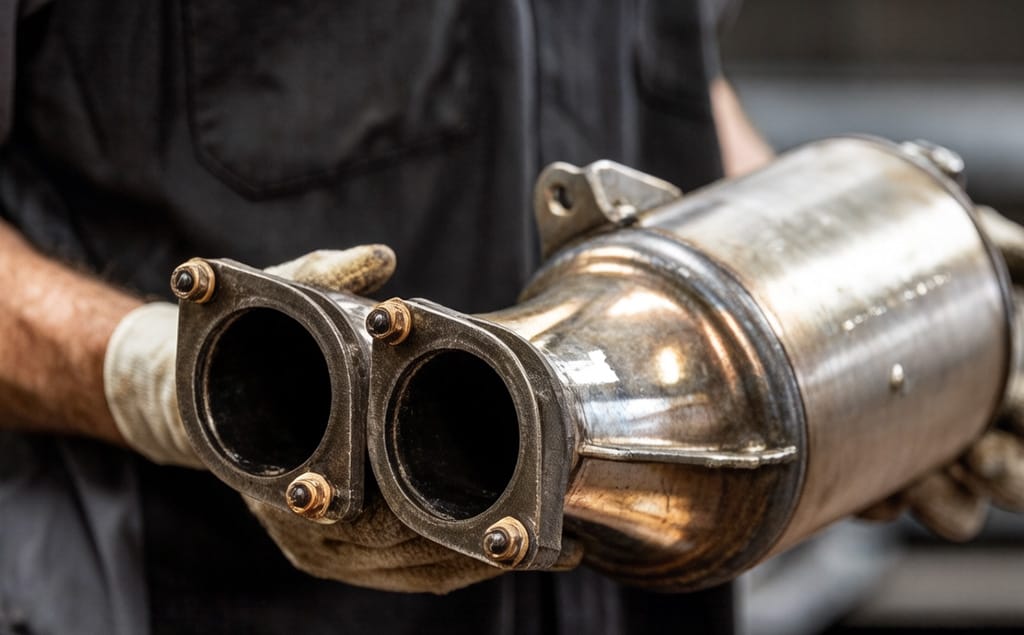
Katalitik çekirdeğin yanı sıra, 3 yollu katalitik konvertörün yapısal bütünlüğü ve termal yönetimi, gövdesi ve ambalaj malzemeleriyle sağlanır. Bu bileşenler, kırılgan seramik alt tabakayı korumak, aşırı sıcaklıklara karşı yalıtım sağlamak ve aracın egzoz sistemi içinde güvenli bir montaj noktası sağlamak üzere tasarlanmıştır.
- Dış Gövde (Kabuk): Dış muhafaza genellikle şu şekilde yapılır: paslanmaz çelik, often featuring a double-layered design with an integrated heat shield [9]. Stainless steel is chosen for its excellent corrosion resistance, particularly against the corrosive exhaust gases and external environmental factors, and its ability to withstand high temperatures. The double-layered shell serves multiple functions:
- Yapısal Bütünlük: İç katalizör tuğlasına sağlam bir mekanik koruma sağlayarak, onu yol döküntülerinden, darbelerden ve titreşimlerden korur.
- Isı Yalıtımı: Çift katmanlar arasındaki hava boşluğu veya bir ısı kalkanının varlığı, sıcak katalizörden gelen ısı radyasyonunu azaltmaya yardımcı olur, çevredeki araç bileşenlerini korur ve yanma riskini azaltır.
- Oksit Cildin Önlenmesi: It prevents the formation of an oxide skin on the catalyst surface, which could otherwise block the catalytic sites and reduce efficiency [9].
- Montaj: Egzoz sistemine entegrasyon için gerekli flanş ve bağlantıları sağlar.
- İçten Şişen Mat: Seramik alt tabaka ile paslanmaz çelik gövde arasında, şişen paspas Malzeme paketlenmiştir. Bu paspas genellikle ısıtıldığında önemli ölçüde genleşecek şekilde tasarlanmış seramik elyaflardan (örneğin, alüminyum-silika elyaflar) yapılır. İşlevleri, dönüştürücünün dayanıklılığı ve performansı için kritik öneme sahiptir:
- Mekanik Koruma ve Yastıklama: Aracın hareketi ve egzoz titreşimlerinden kaynaklanan titreşimlere ve mekanik zorlanmalara karşı kırılgan seramik alt tabakayı yastıklayarak amortisör görevi görür. Bu sayede alt tabakanın çatlaması veya kırılması önlenir.
- Isı Yalıtımı: Mat, ilave ısı yalıtımı sağlayarak katalizörden ısı kaybını azaltır ve katalizörün çalışma sıcaklığına (ateşleme sıcaklığı) daha çabuk ulaşmasına yardımcı olur.
- Güvenli Montaj: Isındıkça genleşen şişen paspas, seramik tuğlaya basınç kuvveti uygulayarak, tuğlayı çelik kasa içerisinde güvenli bir şekilde yerinde tutar ve hareket etmesini veya sallanmasını önler.
- Sızdırmazlık: It also provides a seal, preventing exhaust gases from bypassing the catalyst brick and ensuring that all gases flow through the active catalytic channels. Other vibration damping layers, such as metal mesh pads or ceramic gaskets, may also be used [9].
Bu muhafaza ve paketleme malzemelerinin dikkatli bir şekilde seçilmesi ve entegre edilmesi, 3 yollu katalitik konvertörün uzun vadeli güvenilirliği ve performansı için önemlidir ve otomotiv egzoz sisteminin zorlu çalışma ortamına dayanabilmesini sağlar.
6. Entegre Malzeme Performansı, Dayanıklılığı ve Maliyet Hususları
3 yollu bir katalitik konvertörün verimliliği, tüm bileşen malzemeleri arasındaki sinerjik etkileşimin doğrudan bir sonucudur: alt tabaka, yıkama katmanı, değerli metaller ve gövde. Bu bileşenlerin toplu performansı, genel katalitik aktiviteyi, termal dayanıklılığı, mekanik sağlamlığı ve nihayetinde tüm sistemin maliyet etkinliğini belirler.
Katalitik Aktivite ve Verimlilik: The primary goal is to achieve high conversion efficiency for CO, HC, and NOx across a wide range of operating conditions. This is largely driven by the precious metals (Pt, Pd, Rh) and their dispersion on the high-surface-area washcoat [1]. The washcoat’s oxygen storage capacity, provided by ceria-zirconia, is crucial for maintaining high efficiency under fluctuating air-fuel ratios, acting as an oxygen buffer [1][2]. Computer models are extensively used to optimize catalyst loadings and layouts, enabling high performance even with reduced PGM content [1][3].
Isıl Dayanıklılık: Otomotiv egzoz sıcaklıkları 1000°C'nin üzerine çıkabildiğinden, termal dayanıklılık en önemli husustur.
- Alt tabaka: Cordierite’s low thermal expansion and high thermal shock resistance prevent cracking and structural degradation [6].
- Yıkama ceketi: The incorporation of zirconia into ceria (CeO₂-ZrO₂) significantly enhances the thermal stability of the oxygen storage component, preventing sintering and loss of surface area [7]. Advanced washcoat designs, such as double layers, can also help prevent sintering of PGMs at high temperatures [1][3].
- Değerli Metaller: PGM sintering (agglomeration of nanoparticles into larger, less active particles) is a major cause of catalyst deactivation at high temperatures. The washcoat’s ability to disperse and stabilize PGMs is critical. Novel perovskite-based catalysts, for example, have shown superior thermal stability and resistance to activity loss even after hydrothermal aging at 1273K(1000°C), compared to standard dispersed metal catalysts [3][8]. This enhanced stability is often attributed to the substitution of palladium into the perovskite structure, which makes it less prone to sintering [8].
Mekanik Dayanıklılık: Konvertörün, motor ve yoldan kaynaklanan titreşimler ve fiziksel darbeler de dahil olmak üzere önemli mekanik zorlanmalara dayanıklı olması gerekir.
- Konut: The stainless steel shell provides the primary structural integrity and protection [9].
- Şişen Mat: This material is vital for cushioning the brittle ceramic substrate, absorbing vibrations, and securely holding the catalyst brick in place, preventing mechanical damage [9].
Maliyet Etkinliği: Maliyet, otomotiv üretiminde önemli bir etkendir. Bir TWC'deki en önemli maliyet faktörü, değerli metal içeriği [6]. The market for automotive three-way catalytic converters was valued at USD 11.2 billion in 2024, with the platinum-based segment alone projected to exceed USD 7 billion by 2034 [6].
- PGM Fiyat Volatilitesi: The fluctuating prices and secure supply of platinum, palladium, and rhodium directly impact manufacturing costs [6].
- Teknolojik Yenilik: Manufacturers are continuously innovating to enhance fuel economy and reduce PGM loadings while maintaining or improving conversion efficiency and durability [6]. Projects like PROMETHEUS aim to reduce PGM content, potentially cutting production costs by up to 50% while maintaining or enhancing performance [1][4].
- Üretim Süreci Optimizasyonu: The design and preparation techniques for catalyst supports, such as cost-effective methods for creating mesoporous materials, also contribute to overall cost reduction [7].
- Dayanıklılık ve Maliyet: There is a constant trade-off between achieving high durability (which often requires more robust, sometimes more expensive, materials or higher PGM loadings) and managing production costs. The development of more thermally stable catalysts, like perovskites, can extend the converter’s lifespan, offering long-term cost benefits despite potentially higher initial material costs [3][8].
The overall market growth for TWCs is driven by increasing vehicle sales, stricter emissions regulations, and the demand for fuel-efficient vehicles, all of which necessitate continuous material and process innovation [6]. On-road monitoring of TWC performance, often via oxygen storage capacity measurements, further ensures that these complex material systems meet real-world emission targets throughout their operational life [3].
7. Ortaya Çıkan Malzemeler ve Gelecekteki Yönler
The landscape of catalytic converter technology is continuously evolving, driven by increasingly stringent global emission standards and the imperative to reduce reliance on expensive and scarce Platinum Group Metals (PGMs) [1][6]. Future directions in 3-way catalytic converters focus on novel materials, advanced manufacturing techniques, and integrated systems to achieve superior performance, enhanced durability, and improved sustainability.
PGM Bağımlılığının ve PGM Dışı Katalizörlerin Azaltılması: The high cost and limited supply of Pt, Pd, and Rh are major motivators for research into PGM-free or low-PGM alternatives [1][6].
- Geçiş Metal Oksitleri: Gibi malzemeler zeolit, nikel oksit ve diğer metal oksitler are being extensively explored as potential replacements for PGMs [1]. These materials offer lower cost and greater abundance.
- Perovskit Bazlı Katalizörler: Perovskit yapılarına sahip kompleks metal oksitler (örneğin, ABO3 PGM dışı katalizörlerin umut vadeden bir sınıfıdır. Örneğin, bakır katkılı LaCo₁−xCuxO₃ perovskitler are under investigation as PGM-free catalysts for TWCs [1][4]. These materials can exhibit high thermal stability and catalytic activity, sometimes even surpassing traditional PGM catalysts in specific conditions [3][8]. Mechanochemical synthesis, including high-energy ball milling, is being used to create such perovskites [1].
- Nanoteknoloji Entegrasyonu: Projects like NEXT-GEN-CAT have focused on incorporating low-cost transition metals into advanced ceramic substrates using nanotechnology to develop efficient catalysts [1][5]. Prototypes with low-PGM and no-PGM formulations have demonstrated compliance with Euro III emission standards, showcasing the viability of these approaches [1][5].
Gelişmiş Washcoat Geliştirme: Washcoat and catalyst development remain critical focus areas [1].
- Mezogözenekli Oksit Destekleri: Research continues into developing mesoporous oxide supports with optimized pore geometries. These structures can significantly increase the active surface area and improve the dispersion of catalytic components, potentially allowing for further reductions in metal loadings while maintaining or enhancing performance [7].
- Yeni Hazırlama Yöntemleri: Daha etkili ve dayanıklı katalizörler oluşturmak için gelişmiş hazırlama yöntemleri araştırılmaktadır. Bunlar şunlardır:
- Elektrokaplama ile birleştirilmiş ultrasonik işlem: Aktif maddelerin hassas bir şekilde biriktirilmesi ve dağıtılması için.
- Sitrat yöntemi: Yüksek homojenliğe sahip karışık metal oksitlerin sentezlenmesi için yaygın bir sol-jel tipi yöntem.
- Plazma Elektrolitik Oksidasyon (PEO): For creating porous oxide layers on metallic substrates, which can then be functionalized with catalytic materials [1].
Gelecekteki Emisyon Düzenlemelerinin Ele Alınması: Global emission standards are becoming progressively stricter, pushing the boundaries of current TWC technology [1][6].
- Soğuk Başlatma Emisyonları: Önemli bir zorluk, katalizörün henüz yanma sıcaklığına ulaşmadığı ve büyük ölçüde etkisiz kaldığı "soğuk çalıştırma" dönemidir. Gelecekteki malzeme araştırmaları, çok daha düşük sıcaklıklarda etkinleşen veya soğuk çalıştırma emisyonlarını azaltmak için elektrikle ısıtılan katalizörler (EHC'ler) veya hidrokarbon tuzaklarıyla entegre olan katalizörler geliştirmeyi amaçlamaktadır.
- Gerçek Sürüş Emisyonları (RDE): Regulations are increasingly focusing on real-world driving emissions rather than just laboratory tests. This necessitates catalysts that perform robustly and efficiently across a wider range of temperatures, speeds, and load conditions. On-road monitoring of oxygen storage capacity is already a step in this direction [3].
- Partikül Madde (PM) Kontrolü: TWC'ler öncelikli olarak gaz halindeki kirleticileri hedef alırken, gelecekteki düzenlemeler PM için entegre çözümler gerektirebilir ve bu da potansiyel olarak TWC'lerle birlikte benzin partikül filtrelerinin (GPF'ler) daha yaygın olarak benimsenmesine veya doğal PM azaltma yeteneklerine sahip katalizörlerin geliştirilmesine yol açabilir.
Sürdürülebilirlik ve Döngüsel Ekonomi: The transition to “green” mobility and the increasing focus on sustainability are driving efforts in recyclability and life cycle assessment (LCA) [1][5].
- Geri dönüştürülebilirlik: The NEXT-GEN-CAT project, for instance, investigated the recyclability of TWCs, examining end-of-life scenarios and using LCA to determine the environmental impact of developed materials [1][5]. Pyro-metallurgical treatment (smelting in an inert atmosphere) was explored for efficient PGM recovery from spent catalysts [1][5]. Future research will likely focus on more energy-efficient and environmentally friendly recycling processes for both PGMs and base metals.
Proaktif Çözümler ve Spekülasyon: Mevcut araştırmaların ötesinde, gelecekteki yönelimler şunları içerebilir:
- Akıllı Katalizörler: Gerçek zamanlı egzoz koşullarına yanıt olarak özelliklerini (örneğin, yüzey yapısı, oksijen depolama kapasitesi) dinamik olarak ayarlayabilen katalizörler, potansiyel olarak gömülü sensörler ve yapay zeka destekli kontrol sistemleri kullanılarak.
- Entegre Egzoz Son İşlem Sistemleri: TWC işlevselliğini diğer emisyon kontrol teknolojileriyle (örneğin, NOx için seçici katalitik indirgeme, gelişmiş partikül filtreleri) tek bir, son derece optimize edilmiş ünitede birleştiren, daha kompakt, çok işlevli egzoz sistemlerine doğru bir geçiş.
- Katmanlı Üretim: Son derece özelleştirilmiş ve optimize edilmiş alt tabaka ve yıkama kaplaması yapıları oluşturmak için 3B baskı veya diğer katkı maddesi üretim tekniklerinin kullanılması, gözenek boyutu dağılımı, kanal geometrisi ve katalizör yerleşimi üzerinde benzersiz bir kontrol sağlar. Bu, kütle transferinde ve katalitik verimlilikte önemli ölçüde iyileşme sağlayabilir.
- Biyolojik İlhamlı Kataliz: Biyolojik sistemlerde bulunan katalitik mekanizmaları araştırarak yeni, yüksek verimli ve potansiyel olarak daha sürdürülebilir katalizörler tasarlamak.
Malzeme bilimi ve kimya mühendisliğindeki devam eden yenilikler, 3 yollu katalitik konvertör performansının sınırlarını zorlamaya devam edecek ve benzinli araçların ekolojik ayak izlerini en aza indirirken giderek daha sıkı çevresel hedefleri karşılamasını sağlayacaktır.