1. Introduction to Catalytic Converters
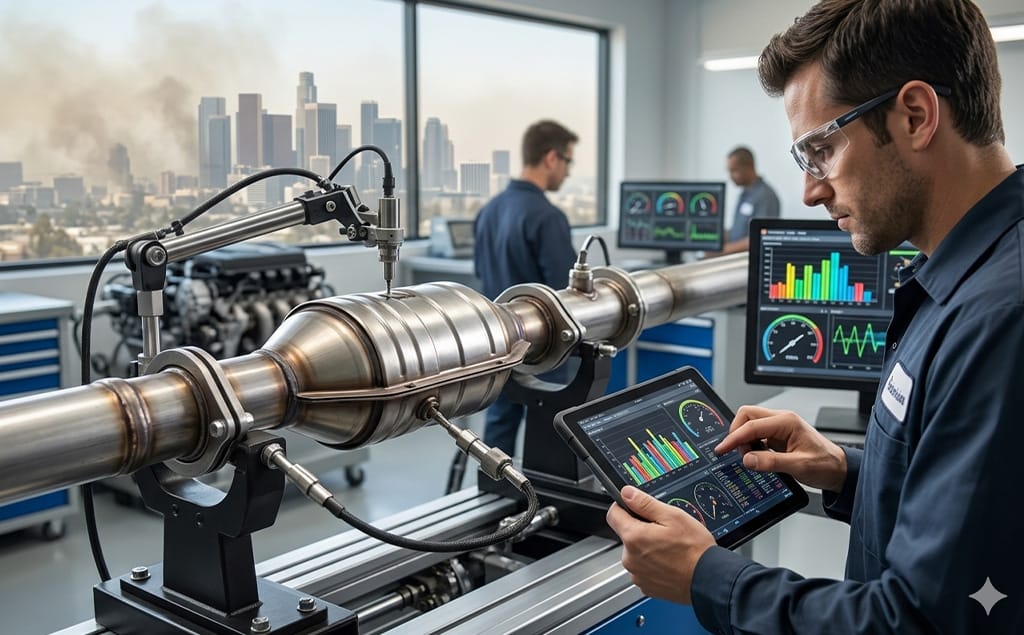
Automotive emissions control represents a critical intersection of environmental science, chemical engineering, and public health. At the heart of modern vehicle emission reduction systems lies the catalytic converter, a device engineered to transform harmful pollutants generated during internal combustion into less noxious substances. The genesis of this technology can be traced back to growing public awareness of air pollution, particularly photochemical smog and low-level ozone, which became increasingly prevalent in major cities during the 1940s due to the surge in automobile usage 1.
Early research initiatives in the 1960s, spurred by these environmental concerns, sought solutions to mitigate the escalating levels of carbon monoxide (CO), hydrocarbons (HC), and nitrogen oxides (NOx) emitted by vehicles 3. A pivotal figure in this early development was French engineer Eugene Houdry, who in 1952 and 1973, developed the first practical catalytic converters for automobiles 4. His pioneering work laid the groundwork for using catalysts to convert pollutants into less harmful compounds, initially focusing on applications for smokestacks and warehouse forklifts before automotive integration 4.
The landscape of automotive emissions control was fundamentally reshaped by legislative action, most notably the U.S. Clean Air Act of 1970. This landmark legislation set stringent emission standards, demanding a 90% reduction in vehicle emissions within five years, thereby compelling automotive manufacturers to adopt advanced control technologies 1. By 1975, the Clean Air Act mandated the installation of catalytic converters in all new cars sold in the U.S., marking a significant turning point in environmental regulation and automotive design 1.
Initially, the catalytic converters introduced were “two-way” oxidation converters. These early designs were capable of addressing carbon monoxide and unburned hydrocarbons but possessed inherent limitations in their ability to mitigate nitrogen oxides 4. The subsequent evolution led to the development of “three-way” catalytic converters, which emerged in the 1980s and revolutionized emissions control by simultaneously targeting all three major pollutants: CO, HC, and NOx 5. This report will delve into the distinct principles, functionalities, structural innovations, and regulatory drivers that differentiate these two foundational types of catalytic converters.
2. Two-Way Catalytic Converters: Principles and Limitations
Two-way catalytic converters, also known as oxidation catalysts, represented the initial foray into widespread automotive exhaust treatment. Their primary function is to facilitate specific oxidation reactions, converting two of the most prevalent harmful exhaust gases into less toxic forms.
2.1. Chemical Principles and Reactions
The core chemical processes within a two-way converter involve the combination of oxygen with carbon monoxide and unburned hydrocarbons. The main reactions are:
- Oxidation of Carbon Monoxide (CO): Carbon monoxide, a toxic gas, is oxidized to carbon dioxide (CO2), a relatively harmless greenhouse gas.2CO+O2→2CO22CO+O2→2CO2
- Oxidation of Hydrocarbons (HC): Unburned hydrocarbons, which contribute to smog and are volatile organic compounds, are oxidized to carbon dioxide and water (H2O). The general reaction for hydrocarbons (CxHy) is:CxHy+(x+y4)O2→xCO2+y2H2OCxHy+(x+4y)O2→xCO2+2yH2O
These reactions are exothermic, meaning they release heat, which causes the exhaust gases to increase in temperature as they pass through the converter, necessitating the use of heat shields 6.
2.2. Catalyst Materials and Operating Conditions
Two-way converters typically utilize precious metals such as platinum (Pt) and palladium (Pd) as the primary catalyst materials 6. These metals are highly effective in promoting the oxidation reactions described above. The converter operates efficiently with a relatively lean fuel mixture, meaning there is an excess of oxygen in the exhaust gas to facilitate the oxidation processes 6.
2.3. Inherent Limitations
Despite their effectiveness in reducing CO and HC, the fundamental limitation of two-way catalytic converters is their inability to reduce nitrogen oxides (NOx) 6. NOx compounds are formed at high combustion temperatures and are significant contributors to acid rain and photochemical smog. The chemical environment required for NOx reduction (a reducing atmosphere, or lack of excess oxygen) is antithetical to the oxidizing environment necessary for CO and HC conversion. This inherent design constraint meant that two-way converters could only address two of the three major regulated pollutants.
2.4. Applications and Phase-Out
Two-way converters were widely used on gasoline cars from the mid-1970s, following the mandate of the Clean Air Act 6. However, their inability to control NOx emissions quickly led to their obsolescence in gasoline vehicles as emission regulations became more stringent 6.
Interestingly, two-way catalytic converters, often referred to as Diesel Oxidation Catalysts (DOCs), are still employed in diesel engines 7. This is because diesel exhaust is inherently oxygen-rich, making three-way catalysts unsuitable. DOCs in diesel applications oxidize CO, HC, and also facilitate the oxidation of nitric oxide (NO) to nitrogen dioxide (NO2), and can reduce the mass of diesel particulate emissions by oxidizing hydrocarbons adsorbed onto the carbon particulates 7. While rare on modern gasoline cars in regions with strict emissions standards, two-way converters can still be found in less regulated markets, as well as on CNG buses, motorcycles, and small gasoline engines (e.g., strimmers) 7.
3. Three-Way Catalytic Converters: Advanced Chemistry and Functionality
The advent of three-way catalytic converters (TWCs) marked a significant leap forward in automotive emissions control, addressing the critical limitation of their two-way predecessors by simultaneously reducing nitrogen oxides (NOx) alongside the oxidation of carbon monoxide (CO) and hydrocarbons (HC). This advanced functionality is achieved through a complex interplay of redox reactions and precise engine control.
3.1. Simultaneous Redox Reactions
Three-way catalytic converters are designed to facilitate three distinct chemical reactions concurrently:
- Oxidation of Carbon Monoxide (CO):2CO+O2→2CO22CO+O2→2CO2
- Oxidation of Hydrocarbons (HC):CxHy+(x+y4)O2→xCO2+y2H2OCxHy+(x+4y)O2→xCO2+2yH2O
- Reduction of Nitrogen Oxides (NOx): Nitrogen oxides are reduced to harmless molecular nitrogen (N2) and oxygen (O2).2NOx→N2+xO22NOx→N2+xO2
The ability to perform both oxidation and reduction reactions simultaneously within a single device is the defining characteristic and primary advantage of the three-way converter.
3.2. Critical Role of Stoichiometric Air-Fuel Ratio Control
The simultaneous efficiency of these three reactions is critically dependent on maintaining a precise stoichiometric air-fuel ratio (λ = 1) in the engine’s combustion process 1. For gasoline, this ratio is approximately 14.7 parts of air to 1 part of fuel by mass.
- Stoichiometric Conditions (λ = 1): At this ideal ratio, there is just enough oxygen to completely oxidize the CO and HC, while also creating the slightly oxygen-deficient (reducing) environment necessary for NOx reduction. This narrow operating window is where TWCs achieve their peak efficiency, often reaching 95% or higher pollutant removal 26.
- Rich Conditions (λ < 1): If the mixture is too rich (excess fuel), there is insufficient oxygen for complete oxidation of CO and HC, leading to increased emissions of these pollutants. However, NOx reduction is favored under these conditions due to the reducing environment.
- Lean Conditions (λ > 1): If the mixture is too lean (excess oxygen), NOx reduction is hindered because the excess oxygen competes with NOx for active sites on the catalyst surface. Conversely, CO and HC oxidation is enhanced due to abundant oxygen.
3.3. Oxygen Storage Capacity (OSC) and Feedback Control
To maintain the delicate balance required for optimal TWC operation, modern systems incorporate sophisticated control mechanisms:
- Oxygen Storage Capacity (OSC): The washcoat of the catalyst, typically containing cerium oxide (CeO2), plays a crucial role in buffering minor fluctuations in the air-fuel ratio 1. CeO2 can reversibly switch between its oxidized (CeO2) and reduced (Ce2O3) states, storing oxygen when the exhaust is slightly lean and releasing it when the exhaust is slightly rich. This oxygen buffering capability significantly enhances the converter’s efficiency, especially during transient engine operation 1.
- Oxygen Sensor (Lambda Sensor) Feedback: An oxygen sensor (often a zirconia or titania sensor), positioned in the exhaust stream upstream of the catalytic converter, continuously monitors the oxygen content 1. This sensor generates a voltage signal that is directly proportional to the oxygen concentration.
- Engine Control Unit (ECU) Control Loop: The signal from the oxygen sensor is fed back to the Engine Control Unit (ECU). The ECU uses this real-time information to precisely adjust the amount of fuel injected into the engine, thereby maintaining the air-to-fuel ratio as close to stoichiometry as possible. This closed-loop control system is fundamental to the effective operation of three-way catalytic converters 1.
3.4. Catalyst Composition and Light-off Temperature
Typical TWC catalysts consist of a combination of platinum (Pt), palladium (Pd), and rhodium (Rh) dispersed on a high surface area support material, most commonly alumina (Al2O3) 1.
- Platinum (Pt) and Palladium (Pd): These metals primarily promote the oxidation reactions of CO and HC 13.
- Rhodium (Rh): Rhodium is particularly effective for the reduction of NOx to molecular nitrogen, even in the presence of oxygen or sulfur dioxide 13. It is a critical component that distinguishes three-way from two-way converters 18. Rhodium is also less inhibited by CO compared to Pt, though it cannot effectively convert all three components alone 13.
- Light-off Temperature: Catalytic converters require a minimum temperature, known as the light-off temperature (typically around 250-300°C), to initiate and sustain the catalytic reactions 1. Below this temperature, the catalyst is largely inactive, leading to higher emissions, particularly during cold starts 20.
3.5. Catalyst Deactivation Mechanisms
The long-term performance of TWCs can be affected by several deactivation mechanisms:
- Sulfur Poisoning: Sulfur compounds present in fuel can poison the catalyst by blocking active sites on the catalyst surface, thereby reducing its activity 1. While noble metals are generally resistant to bulk sulfation, sulfur oxides (SOx) can still hinder redox reactions 13.
- Thermal Aging (Sintering): Prolonged exposure to high temperatures (e.g., above 800°C, sometimes reaching 1000°C) can cause the precious metal particles to agglomerate and grow larger (sintering), reducing their active surface area and catalytic efficiency 1. This is a permanent deactivation 20.
- Fouling: Deposition of carbon (soot) or other contaminants from the exhaust stream can physically block the catalyst’s active sites 1.
- Chemical Deactivation: High-temperature interaction between precious metals and the washcoat oxides (Al, Ce, Zr) can also lead to deactivation 13.
4. Structural and Material Innovations
The efficacy of catalytic converters, whether two-way or three-way, is profoundly influenced by their internal structure and the sophisticated material science behind their design. While both types share fundamental structural elements, the specific formulations and arrangements differ to enable their respective chemical functionalities.
4.1. Substrate Design and Materials
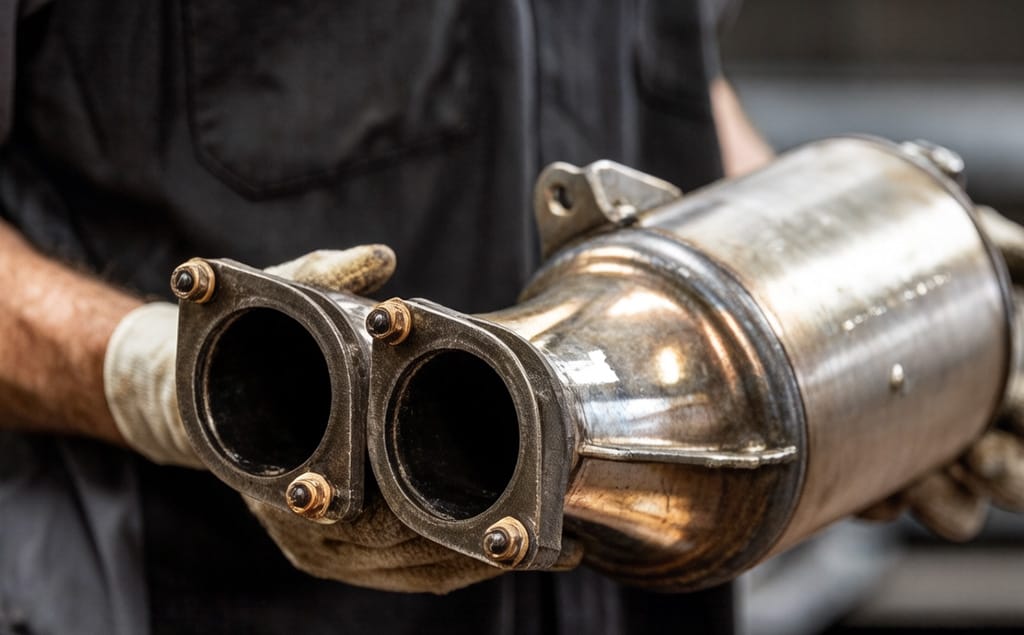
Modern catalytic converters universally employ monolithic flow-through supports, characterized by a honeycomb structure 14. This design maximizes the surface area exposed to the exhaust gases while minimizing pressure drop.
- Ceramic Substrates: The most common material for these porous monolith supports is cordierite 14. Ceramic substrates are favored for their thermal stability and cost-effectiveness. At lower exhaust gas velocities, ceramic substrates may offer better conversion efficiencies for HC and CO due to their lower thermal conductivity, which helps maintain the necessary temperature for catalytic reactions 19.
- Metallic Substrates: Metallic substrates are also utilized, offering advantages such as higher mechanical strength, better thermal shock resistance, and thinner cell walls, which can lead to a larger geometric surface area 14. At higher exhaust gas velocities, metallic substrates can provide superior conversion rates due to this larger surface area 19.
- Cell Density: The honeycomb structure is defined by its cell density, which can be as high as 62 cells/cm² 12. Higher cell densities increase the surface area but can also increase back pressure.
- Modified Geometry: Research continues into modifying converter geometry to enhance conversion efficiency and reduce pressure drop, for instance, by optimizing recirculation zones 11.
4.2. Washcoat Composition and Function
The washcoat is a critical component, providing the high surface area necessary for the dispersion of the precious metal catalysts and facilitating the chemical reactions. It is typically applied as an acidified aqueous slurry to the substrate, followed by drying and calcination 14.
- Primary Washcoat Materials: Aluminum oxide (Al2O3) is the most common washcoat material due to its high surface area (typically 100-200 m²/g) and thermal stability 14.
- Promoters and Stabilizers: Other materials are incorporated into the washcoat to enhance performance, act as promoters, or stabilize the catalyst against thermal degradation and poisoning. These include:
- Cerium dioxide (CeO2): Crucial for oxygen storage capacity (OSC) in three-way converters, buffering air-fuel ratio fluctuations 1.
- Zirconium oxide (ZrO2): Often used in conjunction with ceria to improve its thermal stability and oxygen storage properties 14.
- Titanium dioxide (TiO2) and Silicon oxide (SiO2): Can be used as catalyst carriers or to modify washcoat properties 14.
- Zeolites: Can be incorporated, particularly in advanced systems, for their adsorptive properties and catalytic activity 15.
- Washcoat Loading and Thickness: Washcoat loading typically ranges from 100 g/dm³ on a 200 cpsi (cells per square inch) substrate to 200 g/dm³ on a 400 cpsi substrate 14. The washcoat layer itself can have a thickness of 20-100 μm 11. For specific applications, such as those involving zeolites, washcoat layers can range from 25 g/l to 90 g/l, with catalytically active particle layers from 50 g/l to 250 g/l 15.
4.3. Precious Metal Catalyst Formulations
The choice and loading of precious metals are paramount to the converter’s function. These are collectively known as Platinum Group Metals (PGMs).
- Two-Way Converters: Primarily use platinum (Pt) and palladium (Pd) 6. These metals are highly effective for the oxidation of CO and HC.
- Three-Way Converters: Utilize a combination of platinum (Pt), palladium (Pd), and rhodium (Rh)1.
- Pt and Pd: Continue to serve as the primary catalysts for oxidation reactions 13.
- Rh (Rhodium): Is the key addition, specifically for the reduction of NOx to molecular nitrogen 13. Rhodium is less inhibited by CO compared to Pt and is less prone to sulfur poisoning, though it is severely poisoned by lead compounds 13.
- Precious Metal Loading: PGM loading typically varies from 1.0 to 1.8 g/dm³ (30 to 50 g/ft³), representing about 0.1 to 0.15% by weight of the monolith 13. The specific ratio of Pt/Pd/Rh is carefully optimized based on the target emissions and operating conditions. For instance, some vehicles may use a palladium-only catalyst as a “light-off” catalyst (close to the engine for rapid heating) and a Pd/Rh catalyst downstream 13.
- Cost and Availability: The selection of noble metal loading is also influenced by their cost and availability, with rhodium being particularly rare and expensive 13.
4.4. Manufacturing Processes
The manufacturing of catalytic converters involves precise coating techniques:
- Washcoating: The washcoat slurry is applied to the substrates. This can be done using continuous coating apparatus where substrates move under a “waterfall” of slurry 14.
- Impregnation: Traditionally, after washcoating, the precious metals were introduced in a separate impregnation step. This involved immersing the washcoated part in an aqueous solution of the catalyst precursor, removing excess solution, and then drying and calcining 14. In modern processes, precious metals may also be incorporated directly into the washcoat slurry 14.
4.5. Catalyst Aging and Durability Innovations
Catalyst performance degrades over time due to various factors, including thermal aging (sintering of metal particles), chemical poisoning (e.g., by sulfur compounds, lead), and fouling 1. Innovations aim to mitigate these effects:
- Reduced Light-Off Temperatures: New catalyst and washcoat formulations are being developed to achieve significantly reduced light-off temperatures, even after extensive aging, compared to older wet-chemistry methods 15. This is crucial for reducing cold-start emissions.
- Thermal Stability: Research focuses on developing more thermally durable catalysts that can withstand high temperatures (around 1000°C), allowing them to be mounted closer to the engine for faster light-off and extended life 7. This requires stabilized crystallites and washcoat materials that maintain high surface area 7.
- Aging Effect Reduction: Efforts are continuously made to reduce the aging effect to prolong the efficacy of the catalytic converter for controlling emissions 15.
5. Comparative Emissions Reduction Efficiency and Operational Characteristics
The fundamental distinction between two-way and three-way catalytic converters lies in their scope of emissions reduction and the operational parameters required to achieve it. This section provides a detailed comparison of their performance across various pollutants, operational ranges, and durability aspects.
5.1. Emissions Reduction Performance
- Two-Way Catalytic Converters: These converters primarily target carbon monoxide (CO) and hydrocarbons (HC). They achieve this through oxidation reactions, converting CO to CO2 and HC to CO2 and H2O 6. Their efficiency in reducing these pollutants is high when operating with a lean fuel mixture 6. However, their critical limitation is their inability to reduce nitrogen oxides (NOx), which are significant contributors to air pollution 6.
- Three-Way Catalytic Converters: These represent a significant advancement, capable of simultaneously reducing CO, HC, and NOx 16. Modern three-way converters, when operating under optimal conditions (i.e., precise stoichiometric air-fuel ratio control), can achieve remarkable pollutant removal efficiencies, often reaching approximately 95% for CO, HC, and NOx 19. Some sources even cite efficiencies as high as 99% once the converter reaches its operating temperature 26.
5.2. Operational Temperature Ranges and Light-Off Times
Both types of converters require a minimum temperature to become active, known as the light-off temperature.
- Light-Off Temperature: For a new catalyst, the light-off temperature is typically around 250°C 20. Below this temperature, the catalyst is largely inactive, leading to significant emissions, particularly during cold starts 26. As the converter ages, this light-off temperature tends to increase, reducing its effectiveness over time 20.
- Operational Temperature: Once active, catalytic converters operate effectively within a range of 400°C to 800°C 12. The exothermic reactions within the converter cause the exhaust gas temperature to increase as it passes through 6.
- Cold Start Emissions: Emissions during cold starts are a major challenge for both types of converters, as the catalyst takes time to reach its light-off temperature 26. This period, often extended in real-world driving cycles compared to standardized tests, results in untreated exhaust 28. Strategies like close-coupled catalysts (small “light-off” catalysts placed near the engine’s exhaust ports) are employed to accelerate heating and reduce cold-start emissions 18.
5.3. System Durability and Degradation
The long-term performance and durability of catalytic converters are influenced by several factors:
- Thermal Effects: High temperatures can lead to sintering of the precious metal particles, reducing their active surface area and catalytic efficiency 20. More thermally durable catalysts are being developed to withstand temperatures up to 1000°C, allowing for closer mounting to the engine and extended life 7.
- Chemical Effects (Poisoning):
- Lead Poisoning: Historically, lead in gasoline was a major cause of catalyst deactivation, as it coated the catalyst and prevented it from functioning 1. The ban on leaded gasoline in the 1990s was crucial for the widespread adoption and longevity of catalytic converters 1.
- Sulfur Poisoning: Sulfur compounds in fuel can also poison the catalyst by blocking active sites 1. While noble metals are generally resistant to bulk sulfation, sulfur oxides can still hinder redox reactions 13.
- Other Poisons: Zinc and phosphorus from engine oil additives can also contribute to poisoning 20.
- Mechanical Effects: Physical damage, such as impacts or vibrations, can damage the fragile honeycomb structure 20.
- Reversible vs. Permanent Deactivation: Some chemical effects, like HC and CO storage due to sensor malfunction or engine misfire, can cause reversible efficiency reduction. However, poisoning by lead, sulfur, or zinc, and thermal effects like sintering, lead to permanent deactivation 20.
- Chemical Deactivation Progression: Chemical deactivation often begins at the converter’s entrance and gradually progresses towards the exit 20.
- Mounting Inversion (Speculative Solution): One intriguing, albeit speculative, idea to extend converter life when it’s nearing its limits is to invert its mounting. This would utilize the less chemically active sections (which were previously the outlet) as the new inlet. Studies have shown potential benefits, such as a 28% decrease in CO emissions with an inverse converter mounting at 3000 rpm under full load conditions 20. This suggests that optimizing flow distribution and utilizing less-degraded sections could offer a temporary extension of life.
5.4. Real-World Emissions and Testing
Real-world driving conditions often present a more challenging environment for catalytic converters than standardized laboratory test cycles (e.g., NEDC, USFTP).
- Higher Real-World Emissions: Emissions measured in real-world traffic are frequently significantly higher than those obtained during standard tests. For instance, NOx emissions can be 2 to 4 times higher in real-world conditions compared to NEDC measurements 28.
- Impact of Driving Dynamics: Greater accelerations and decelerations in real-world driving can affect the accuracy of the TWC’s stoichiometric (λ=1) control 26. Stop/start events and hard accelerations lead to higher NOx emissions due to the proportionality between NOx and power/acceleration rates 28.
- Durability and Maintenance Issues: Real-world NOx emissions exceeding type-approval limits, particularly in some China 4 and China 5 gasoline cars, have been attributed to in-use tampering, poor durability, and inadequate maintenance of three-way catalytic converters 29. Similarly, heavy-duty vehicles in China have shown limited improvement in real-world NOx emissions despite stricter standards, possibly due to issues like failure to refill urea tanks or removal of Selective Catalytic Reduction (SCR) systems 29.
- Byproduct Emissions: While effective in reducing primary pollutants, advanced aftertreatment systems like TWCs, SCR, and NOx Storage Catalysts (NSC) can lead to the emission of byproducts such as ammonia (NH3) and isocyanic acid (HNCO) 30. Diesel vehicles with SCR can even have NH3 emission factors comparable to gasoline vehicles 30.
5.5. Economic Implications of Durability and Replacement
The lifespan and replacement costs of catalytic converters have significant economic implications for vehicle owners and the automotive industry.
- Lifespan Indicators: Signs of a failing catalytic converter include loss of engine power, reduced fuel economy, engine misfiring, difficulty starting, rattling sounds, a check engine light (often P0420 code), and a rotten egg odor from the exhaust 31.
- Replacement Costs: The average replacement cost for a catalytic converter can range significantly, from 450to450to4200, including parts and labor 31. Factors influencing this cost include vehicle make and model (luxury and import vehicles often have higher costs), engine size (larger engines require more precious metals), component type (direct-fit vs. universal), and compliance standards (CARB-compliant converters are more expensive than EPA-compliant ones) 31.
- Precious Metal Value and Theft: The high cost is primarily due to the precious metals (platinum, palladium, rhodium) they contain 31. Rhodium, for instance, can be significantly more valuable than gold 31. This high value makes catalytic converters a frequent target for theft, leading to additional repair costs for vehicle owners 31.
- Recycling Value: The precious metals in catalytic converters can be recycled, providing an economic incentive for proper disposal and recovery 31. Furthermore, platinum recovered from end-of-life gasoline and diesel vehicles could potentially supply a significant portion of the platinum needed for future fuel cell and hybrid vehicles, highlighting a circular economy aspect 34.
6. Regulatory Evolution and Global Adoption
The widespread adoption of catalytic converters, particularly the transition from two-way to three-way designs, has been overwhelmingly driven by increasingly stringent global emissions regulations. These regulations have served as powerful “technology-forcing” mechanisms, compelling automotive manufacturers to innovate and implement advanced emission control systems.
6.1. The U.S. Clean Air Act: A Global Precedent
The U.S. Clean Air Act of 1970 stands as a seminal piece of legislation that fundamentally reshaped automotive engineering 21. It mandated a drastic 90% reduction in emissions from new automobiles by 1975, a standard that could not be met with existing technologies at an acceptable cost 21. This “technology-forcing” approach compelled the automotive industry to rapidly develop and integrate new emission control solutions.
- 1975 Mandate: As a direct consequence of the Clean Air Act, catalytic converters became mandatory equipment on all new cars sold in the U.S. starting in 1975 21. The EPA played a crucial role in enforcing these standards, even granting a one-year delay for the 1975 HC and CO standards but setting interim limits that still necessitated the installation of catalytic converters 21.
- California’s Influence: California, often a leader in environmental regulation, imposed even stricter interim standards for HC and CO, further accelerating the adoption of catalytic converters 21.
- 1981: The Three-Way Revolution: The inadequacy of two-way converters in controlling NOx emissions became apparent as regulations tightened. By 1981, when U.S. federal emission control regulations began requiring tight control of NOx, most automakers transitioned to three-way catalytic converters and their associated engine control systems 4. This marked the widespread commercialization of three-way technology, with Volvo notably introducing them on its California-specification 1977 240 cars 4.
- 1990 Amendments: The 1990 amendments to the Clean Air Act further tightened emission standards for HC, CO, NOx, and particulate matter (PM), introduced lower tailpipe standards, and expanded Inspection and Maintenance (I/M) programs in areas with air pollution problems 23.
- Tier 3 Standards (2017): The EPA continued to evolve its regulations, finalizing Tier 3 Standards in 2017. These standards set new vehicle emissions limits and, crucially, lowered the sulfur content of gasoline, treating the vehicle and fuel as an integrated system to optimize emission control 23.
6.2. European Union: Euro Emission Standards
Following the U.S. lead, the European Union implemented its own comprehensive set of regulations known as the Euro Emission Standards.
- Euro 1 (1993): Catalytic converters became mandatory on all new gasoline cars sold in the European Union starting January 1, 1993, to comply with the Euro 1 emission standards 22. This marked a significant shift in the European automotive market towards advanced emission control.
- Progressive Stringency: The Euro standards have progressively become more stringent over time, defining acceptable limits for exhaust emissions of new light-duty vehicles sold across EU and EEA member states 24.
- Euro 6 (2014): The latest exhaust emissions standard for new cars, Euro 6, was introduced in 2014, with its latest update, Euro 6d, becoming a requirement in January 2021 24. These standards continue to drive innovation in aftertreatment technologies.
- CO2 Emission Performance Standards (2020): Beyond traditional pollutants, the European Commission also implemented Regulation (EU) 2019/631 on January 1, 2020, setting CO2 emission performance standards for new passenger cars and vans, further influencing vehicle design and powertrain choices 24.
6.3. Global Harmonization and Emerging Economies
The regulatory push for cleaner vehicles has extended globally, with many countries adopting similar standards or developing their own.
- Global CO2 Regulation: By 2013, over 70% of the global market for passenger cars was subject to automotive CO2 regulations, primarily in economically advanced countries 25.
- Emerging Economies: Emerging economies, including China, Mexico, and India, have also implemented CO2 regulation policies. For example, India finalized its first passenger vehicle fuel economy standards in 2014, effective from April 2016 25.
- Beyond Direct Regulation: Some countries complement direct emission regulations with fiscal incentives or traffic-control measures to encourage the adoption of cleaner vehicles 25.
6.4. Impact on Technology and Future Outlook
The continuous tightening of emission regulations has been the primary catalyst for advancements in catalytic converter technology.
- Advanced Catalyst Materials: Regulations have driven the development of advanced catalyst materials, including high-surface-area formulations with optimized ratios of platinum, palladium, and rhodium, to enhance catalytic activity and durability 22.
- Durability Improvements: The transition to advanced substrate materials like ceramic and metallic honeycombs has improved the heat resistance and mechanical durability of catalytic converters, allowing them to meet extended warranty periods mandated by regulations 22.
- Future Aftertreatment Technologies: The ongoing pursuit of ultra-low emissions, particularly for cold starts and real-world driving, continues to push the boundaries of catalytic converter design. This includes research into alternative catalyst materials (e.g., perovskites, mixed metal oxides) to improve performance, reduce cost, and enhance resistance to poisoning 1. Furthermore, the development of “four-way” catalytic converters designed to remove particulates from engine exhaust, and other advanced aftertreatment systems like Lean NOx Traps (LNTs) and Selective Catalytic Reduction (SCR) for lean-burn engines, are direct responses to evolving regulatory demands 4.
The journey from early air pollution concerns to the sophisticated three-way catalytic converters of today underscores a remarkable triumph of engineering and regulatory foresight in addressing a critical environmental challenge.
flowchart TD subgraph Engine Combustion A[Fuel + Air] –> B(Combustion) end B –> C{Exhaust Gases} subgraph Two-Way Catalytic Converter C –> D[Two-Way Converter] D — Pt, Pd –> E{Oxidation Reactions} E –> F[CO + HC] F –> G[CO2 + H2O] G –> H[Cleaned Exhaust (No NOx Reduction)] end subgraph Three-Way Catalytic Converter C –> I{Oxygen Sensor Feedback} I — Signal to ECU –> J[ECU Adjusts Fuel Injection] J –> B C –> K[Three-Way Converter] K — Pt, Pd, Rh, CeO2 –> L{Redox Reactions} L –> M[CO + HC + NOx] M –> N[CO2 + H2O + N2] N –> O[Cleaned Exhaust (All Three Pollutants Reduced)] end style D fill:#f9f,stroke:#333,stroke-width:2px style K fill:#9f9,stroke:#333,stroke-width:2px style H fill:#add8e6,stroke:#333,stroke-width:2px style O fill:#add8e6,stroke:#333,stroke-width:2px