تعارف
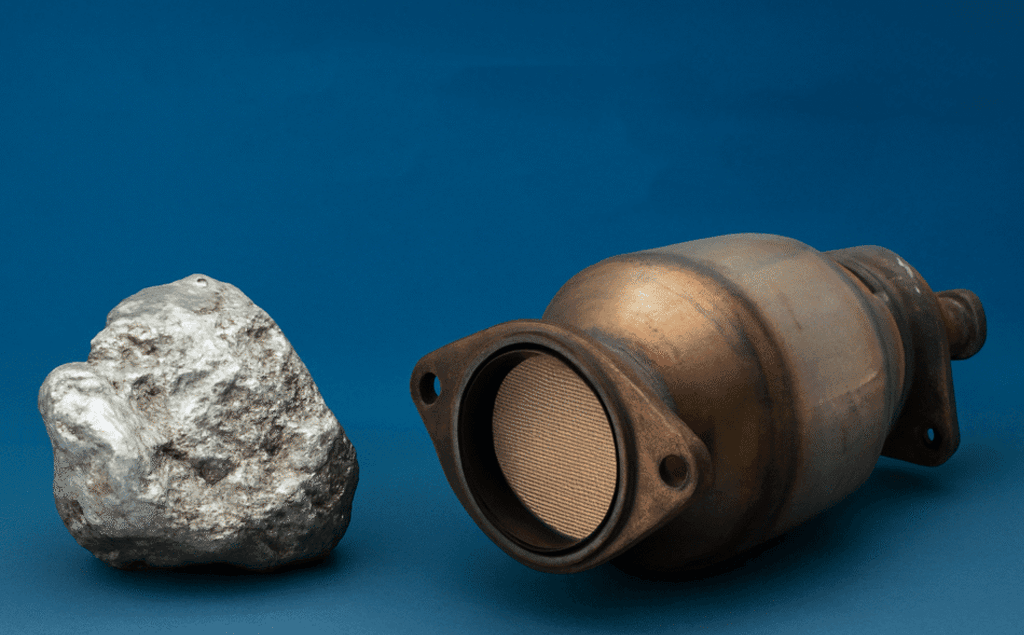
VIN verification stands as the most critical process in the modern three way catalytic converter recycling industry. Precision drives every dollar in the scrap trade, and without a rigorous VIN verification protocol, you are simply gambling on rusted steel.Inside, precious metals hide behind rusted steel. However, visual guessing is a trap.
VIN Identification errors destroy your profit margins instantly. You must adopt a data-driven approach. Today, VIN identification serves as the gold standard for verifying unit value. You cannot rely on the size of the shell alone. You need to decode the vehicle’s digital fingerprint. This guide provides the technical steps to link a vehicle’s VIN to its actual precious metal loading. Stop gambling on rusted steel. Start using forensics to lock in your returns.
The Chemical Engine: Inside the Shell
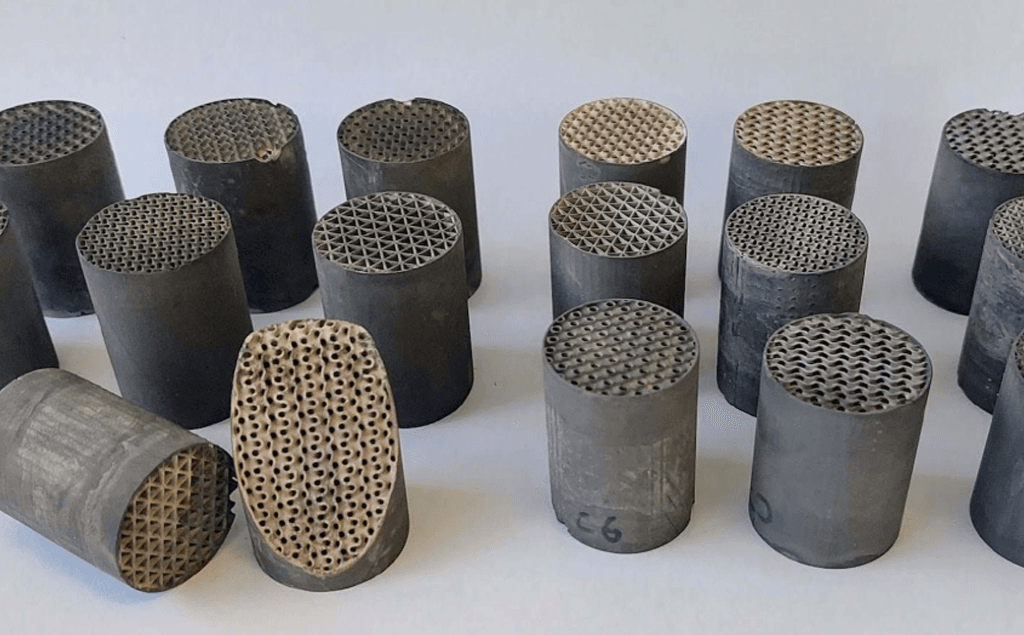
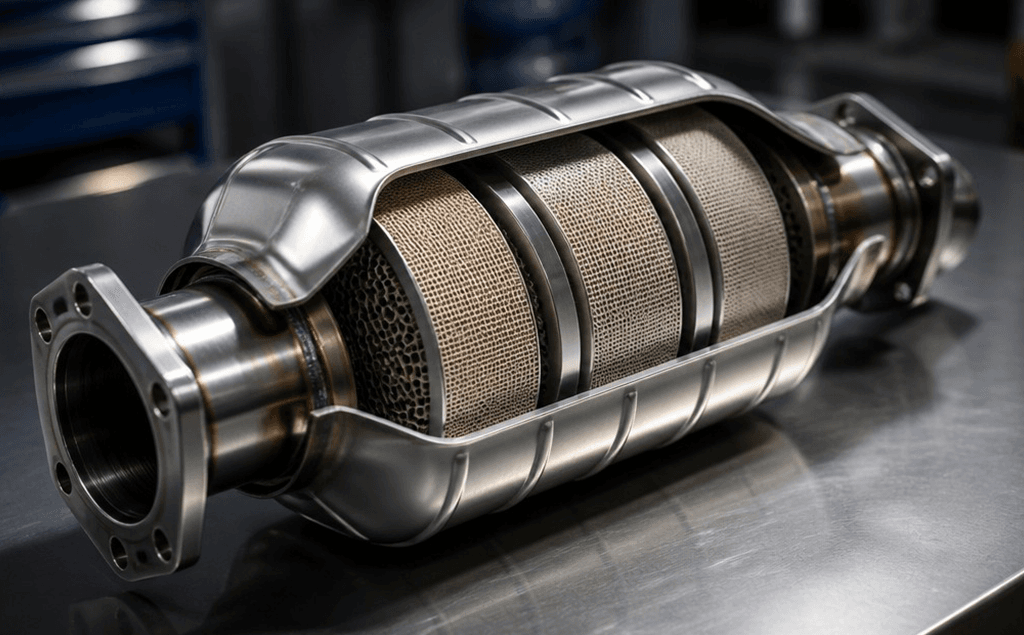
A three way catalytic converter acts as a complex chemical reactor. It targets three specific pollutants: nitrogen oxides, carbon monoxide, and raw hydrocarbons. This process requires a catalyst. Manufacturers apply a washcoat to a سیرامک شہد کامب سبسٹریٹ. This washcoat hosts microscopic particles of Platinum, Palladium, and Rhodium.
These “Platinum-Group Metals” (PGMs) facilitate the molecular breakdown of exhaust toxins. The ratio of these metals is the actual source of value. Recyclers pay for the milligrams of metal, not the weight of the ceramic. Without accurate data, you might treat a high-rhodium unit as a standard domestic unit. That mistake costs you hundreds of dollars. VIN identification reveals the specific “recipe” the manufacturer used for that exact engine.
The Role of Platinum (Pt)
Platinum primarily handles oxidation. It converts carbon monoxide and hydrocarbons into carbon dioxide and water. Recyclers find high platinum concentrations in diesel oxidation catalysts (DOC) and older gasoline models. While stable, its price fluctuates based on industrial demand.
The Role of Palladium (Pd)
Palladium is the workhorse of modern gasoline engines. It excels at high-temperature oxidation. Most three way catalytic converter units from the last 20 years rely heavily on Palladium. It replaced Platinum in many applications because it handles lean-burn conditions more efficiently.
The Role of Rhodium (Rh)
Rhodium is the most expensive metal in the world. Its sole job is reduction. It strips oxygen away from nitrogen oxides. This metal represents the largest “profit spike” in a converter. A tiny increase in Rhodium loading can double the unit’s scrap price. Hybrid vehicles carry the highest Rhodium density to manage frequent cold starts.
The Engine Code Secret: Decoding the 8th Digit
Most recyclers forget the importance of the 8th character in the VIN. This digit identifies the engine code. In the world of the three way catalytic converter, the engine defines the catalyst. A 2.0L engine requires a different metal loading than a 3.5L engine. Even within the same model year, manufacturers use different converters for different trim levels.
You must look at the 8th digit to understand the “emission family.” For example, a “Code K” engine might have a high-palladium converter. A “Code B” engine might use a lower-grade unit. VIN identification bridges the gap between the vehicle’s hood and the scrap buyer’s price list. By verifying the engine code, you eliminate the risk of misgrading a unit. Professionals use this data to force buyers to pay the full market rate. Never accept a “regular” price for a “high-grade” engine unit.
Comparison of PGM Loading and Market Value
This table illustrates how specific categories impact your bottom line. Use these as benchmarks during your VIN verification process.
| زمرہ | Typical Vehicle | Key PGM | Average Scrap Value | Density (CPSI) |
|---|---|---|---|---|
| Exotic / Super Exotic | BMW M5, Porsche 911 | Palladium/Rhodium | $540 – $680 | 600+ |
| Hybrid Foreign | Toyota Prius Gen 3 | Ultra-High Rhodium | $270 – $450 | 400 – 600 |
| Domestic XL | Ford F-250, Silverado | Platinum/Palladium | $240 – $340 | 300 – 400 |
| Standard Foreign | Honda Accord, Camry | Palladium Dominant | $150 – $280 | 400 |
| آفٹر مارکیٹ | Generic Replacement | Trace Amounts | $20 (Flat Rate) | < 200 |
The Forensic Protocol: Deciphering the 17-Digit String
Utilizing VIN verification allows you to strip away the rust and see the chemical truth. When you initiate VIN verification on a scrap unit, you are specifically targeting the 8th digit of the engine code. This granular level of VIN verification reveals the exact PGM loading programmed by the OEM.
1. Digits 1-3 (WMI)
This is the World Manufacturer Identifier. It tells you where the car was born. A Toyota built in Japan (J-VIN) often carries a different converter than one built in Kentucky (1-VIN). Japanese-market washcoats are historically denser. They use higher-purity rare earths in their washcoat stabilization.
2. Digit 8 (The Engine Key)
As discussed, this is the engine descriptor. If you see a “Code 5” on a Ford, you are looking at a 5.0L V8. This engine requires a large-volume three way catalytic converter to handle the high exhaust flow. Large volume usually translates to more total PGM weight.
3. Digit 10 (Model Year)
This digit is a letter or number representing the year. Example: “L” is 2020. Why does this matter? Emission standards change. A 2020 model must meet stricter NOx limits than a 2010 model. Stricter limits require more Rhodium. Therefore, newer units almost always have higher scrap value per square inch of substrate.
4. Digit 11 (Plant Code)
The assembly plant code reveals the supplier. A manufacturer might use two different suppliers (e.g., Tenneco and Faurecia) for the same car model. One supplier might use a slightly different washcoat chemistry. Advanced recyclers track these plant-specific variances to squeeze out an extra 5% profit.
Identifying Aftermarket Threats and Fakes
Aftermarket units are the primary cause of financial loss in recycling. These units do not follow OEM recipes. They contain minimal precious metals.
The Visual “Clean” Trap
Aftermarket units often look too new. They have shiny, generic steel shells. If you see a rusted exhaust pipe connected to a sparkling clean converter, it is a replacement. Manufacturers of these units use just enough metal to fool the car’s computer for a few thousand miles.
Weight and Density Discrepancies
An OEM three way catalytic converter feels like a heavy brick. An aftermarket unit feels hollow. Why? Because the ceramic honeycomb inside is less dense. OEM substrates usually have 400 to 600 cells per square inch (CPSI). Aftermarket substrates might only have 200 CPSI. Less surface area means less metal.
The “No VIN” Problem
When you run a VIN identification, the data might show the car had a factory recall. If the converter was replaced under warranty, it is still OEM. If the owner bought a “Direct Fit” unit from a local parts store, it is scrap steel. Always check the service records if the physical unit looks suspicious.
Advanced Identification Methods: Beyond the VIN
Sometimes the VIN only tells half the story. You must verify the physical unit to confirm the data.
Method A: Serial Number Verification
OEM units carry laser-etched or stamped codes.
- General Motors (GM): 8-digit numeric strings.
- Ford: Alphanumeric codes with a “Ford” logo stamp.
- Volkswagen/Audi: Complex codes like “1K0 131 701”. These codes are the ultimate proof. If the VIN says one thing but the serial number says another, trust the serial number. The converter may have been swapped.
Method B: The Density and Flashlight Test
Shine a high-lumen flashlight through the honeycomb.
- Dark Substrate: High metal loading. The washcoat is thick and blocks some light.
- Light/Grey Substrate: Low metal loading or aftermarket.
- Melted Center: The engine misfired. The ceramic fused into a lump. This destroys the surface area. Refineries dock your pay for melted units because they cannot be sampled accurately.
Method C: XRF Technology
For high-volume yards, the XRF (X-Ray Fluorescence) gun is mandatory. It shoots X-rays into the ceramic. It returns a reading of the exact grams of Pt, Pd, and Rh. While expensive ($20,000+), it removes all guesswork. It confirms the VIN data with physical proof.
Regional Standards: The Geography of Value
Geography dictates the chemistry of the three way catalytic converter. You must know where the vehicle was originally sold.
- CARB States: California, New York, and 12 other states follow California Air Resources Board rules. These cars must be ultra-clean. Consequently, their converters contain 20-30% more precious metal. Look for the “EO” (Executive Order) number on the shell. If the VIN shows a CA-origin car, you are holding a high-value unit.
- Federal States: The rest of the US follows ای پی اے rules. These are the baseline for scrap pricing.
- Cold Climate Models: Vehicles sold in Canada or Alaska often have additional heating elements or denser catalysts to manage “cold start” emissions. These are hidden gems in the scrap yard.
Physical Integrity and Contamination
A damaged core loses value. You must inspect the health of the unit before you pay, regardless of what the VIN says.
- The Shake Test: Shake the unit hard. If it rattles like loose gravel, the substrate is shattered. This is “loose material.” You will lose 20-50% of the value because the dust (which holds the metal) has leaked out.
- آلودگی: Look for oil soot or blueish tinting. This indicates engine oil or coolant leaks. Contaminants “poison” the catalyst. They coat the PGMs and prevent the chemical reaction. Refineries may charge an extra processing fee for contaminated lots.
- Empty Shells: This is a common scam. Thieves “hollow out” the shell and weld it back together. Always verify the weight. A hollow shell is worth exactly $0.20 as scrap iron.
نتیجہ
VIN identification transforms a gamble into a predictable business. You must move beyond visual classification. Learn to read the engine codes, year stamps, and plant identifiers. Recognize the difference between a high-value hybrid unit and a low-value aftermarket replacement. Document every transaction with serial numbers and VIN logs. The three way catalytic converter is a chemical asset, not just a car part. Treat it with technical respect. Master the VIN, and you master the market. Start your verification process today.