1. Giới thiệu về bộ chuyển đổi xúc tác 3 chiều trong xe chạy xăng
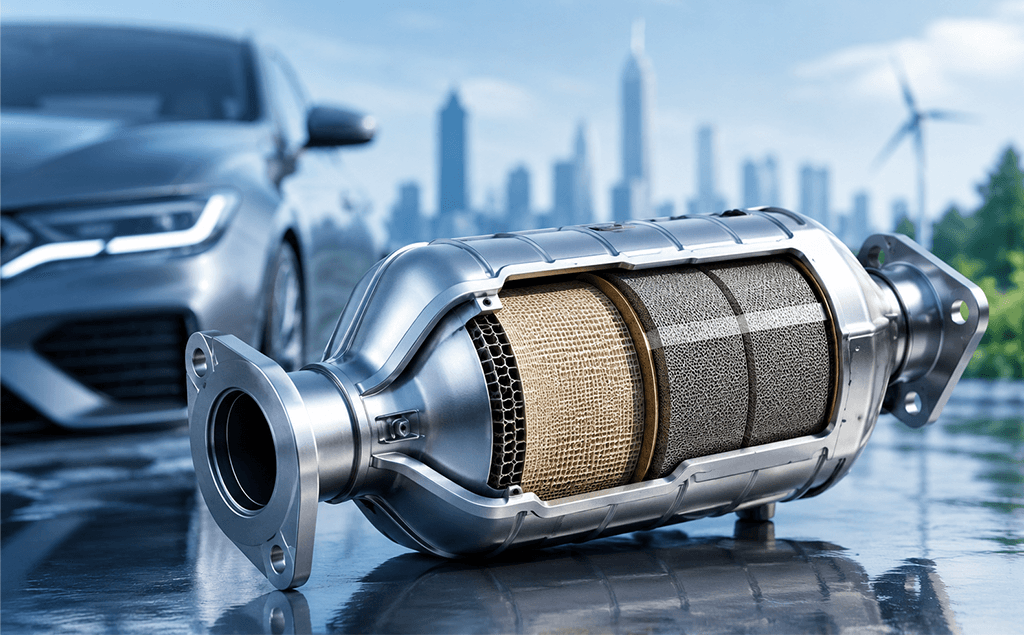
The automotive industry’s relentless pursuit of reduced environmental impact has positioned the 3-way catalytic converter (TWC) as a cornerstone technology for controlling harmful emissions from gasoline internal combustion engines. This report delves into the intricate material science and engineering behind these critical components, focusing specifically on their application in gasoline vehicles. The TWC is a sophisticated chemical reactor designed to simultaneously mitigate three primary pollutants found in engine exhaust: carbon monoxide (CO), unburnt hydrocarbons (HC), and nitrogen oxides (NOx) [1][5].
Operating within a tightly controlled environment, the TWC functions optimally when the engine’s air-fuel ratio is maintained near the stoichiometric point, precisely regulated by a lambda sensor in a closed-loop feedback system [5]. This precise control is crucial because the catalyst must facilitate both oxidation (for CO and HC) and reduction (for NOx) reactions concurrently. The evolution of TWCs has progressed from simpler oxidation catalysts to dual-bed systems, culminating in the highly efficient single-bed TWCs prevalent today, which are designed for thermal stability and rapid activation, often mounted close to the exhaust manifold [1][3]. The continuous tightening of global emission standards for CO, HC, NOx, and particulate matter is a primary driver for ongoing advancements in catalyst design and material innovation [1][6].
2. Vật liệu và tính chất của chất nền xúc tác
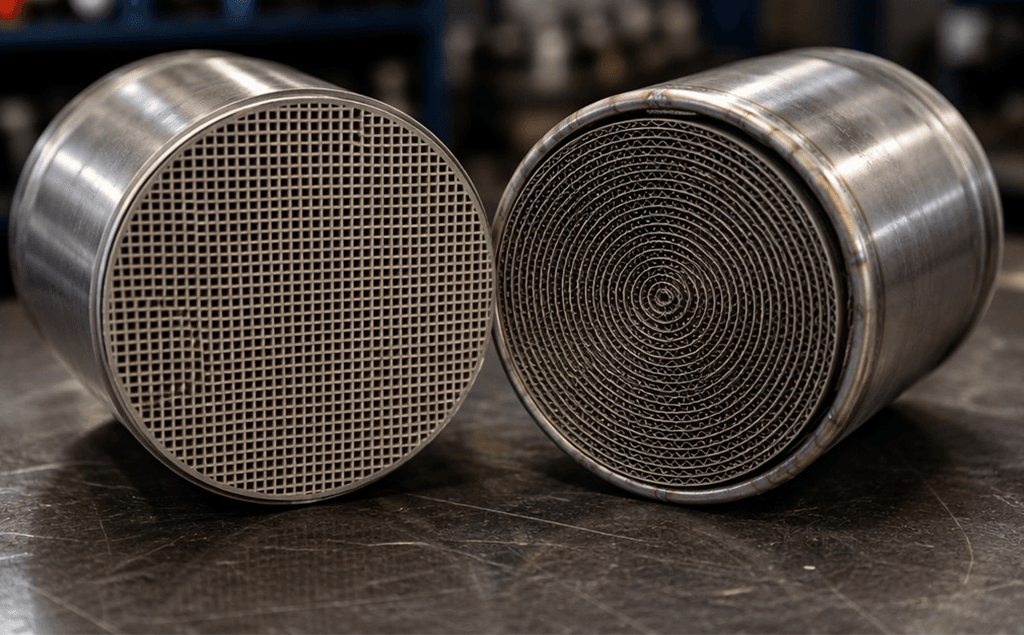
The foundation of a 3-way catalytic converter is its monolithic substrate, which provides the structural support for the catalytically active materials. While metallic substrates are also used, ceramic honeycomb structures, primarily made from cordierite, are the most common choice due to their advantageous properties [6]. Cordierite is a magnesium iron aluminum cyclosilicate mineral with the chemical formula (Mg,Fe)₂Al₄Si₅O₁₈.
Cấu trúc tinh thể độc đáo của nó cho phép hình thành một ma trận dạng tổ ong có độ xốp cao với hàng ngàn kênh song song. Cấu trúc vật lý của chất nền cordierite đóng vai trò quan trọng đối với chức năng của nó. Nó thường có mật độ tế bào cao (tế bào trên một inch vuông, cpsi), chuyển thành diện tích bề mặt hình học lớn trong một thể tích nhỏ gọn. Điều này tối đa hóa sự tiếp xúc giữa khí thải và lớp phủ xúc tác.
Các tính chất chính khiến cordierite trở thành vật liệu nền lý tưởng bao gồm:
- Độ ổn định nhiệt: Khả năng chống sốc nhiệt tuyệt vời, chịu được sự thay đổi nhanh chóng từ nhiệt độ môi trường đến hơn 1000°C.
- Độ giãn nở nhiệt thấp: Ngăn ngừa ứng suất và nứt do sự thay đổi nhiệt độ.
- Sức mạnh cơ học: Đủ chắc chắn để chịu được rung động và va đập.
- Diện tích bề mặt cao: Hỗ trợ ứng dụng lớp phủ hiệu quả.
- Giảm áp suất thấp: Các kênh thẳng bảo vệ hiệu suất động cơ bằng cách giảm thiểu sức cản dòng khí thải.
Design parameters like length and cell density are often optimized using simulation software such as Solidworks [7].
3. Công thức Washcoat và vai trò chức năng
Lớp phủ là lớp oxit xốp được phủ lên bề mặt, cho phép phân tán và ổn định cao các kim loại quý.
- Gamma-Alumina (γ-Al2O3): Diện tích bề mặt cao (100–200 m²/g), hỗ trợ phân tán kim loại quý.
- Ceria-Zirconia (CeO₂-ZrO₂):Ceria (CeO₂) is indispensable for its remarkable oxygen storage capacity (OSC)[1][2]. It undergoes reversible redox reactions:2CeO₂ ⇌ Ce₂O₃ + ½O₂The addition of zirconia (ZrO₂) forms a solid solution, CeO₂-ZrO₂, enhancing thermal stability and oxygen mobility. Ceria-zirconia-yttria mixed oxides (CZY) are considered the industry standard .
- Các chất ổn định khác: Lanthanum oxide (La₂O₃), bari oxide (BaO) và neodymium oxide (Nd₂O₃) tăng cường độ ổn định bề mặt và khả năng chống độc.
The washcoat is applied as a slurry and then calcined, forming a highly porous, rough surface that maximizes the contact area for the exhaust gases and provides a stable platform for the precious metals. Some advanced TWC designs utilize double-layer washcoats, where different precious metals (e.g., Pd/Pt in one layer and Rh in another) are supported on specific ceria- or zirconia-based oxides to prevent sintering and optimize their individual catalytic functions [1][3]. The development of mesoporous oxide supports with optimal pore geometries is an ongoing area of research, aiming to reduce catalyst size and weight while significantly decreasing the required precious metal loadings [7].
4. Chất xúc tác kim loại quý: Thành phần và cơ chế
Lõi xúc tác của TWC phụ thuộc vào Kim loại nhóm bạch kim (PGM):
- Bạch kim (Pt): Xúc tác quá trình oxy hóa:
- CO + ½O₂ → CO₂
- CₓHᵧ + (x + y/4)O₂ → xCO₂ + y/2 H₂O
- Paladi (Pd): Xúc tác cả quá trình oxy hóa và khử NOx ở mức độ vừa phải. Hoạt động tốt ở nhiệt độ thấp và có khả năng lưu trữ oxy.
- Rhodium (Rh): Yếu tố quan trọng để giảm NOx:
- 2NO + 2CO → N₂ + 2CO₂
- 2NO₂ + 4CO₂ → N₂ + 4CO₂
- 2NOₓ → N₂ + xO₂
The typical ratios of these PGMs vary depending on the specific application, engine type, and emission targets, but a common formulation might involve a higher proportion of palladium, followed by platinum, and a smaller but critical amount of rhodium. For instance, the platinum-based segment alone held over 40% of the market share in 2024 [6]. The chemical forms of these metals on the washcoat are typically highly dispersed nanoparticles, which maximize the active surface area for reactions. Modified impregnation procedures, such as using toluene, can produce well-dispersed Pt nanoparticles on various hydrophobic materials, showing good activity for CO and propane oxidation [1][2].
The reliance on PGMs presents significant cost and supply chain challenges due to their scarcity and price volatility [1][6]. This has driven extensive research into reducing PGM content or developing entirely PGM-free alternatives. While iridium, ruthenium, and osmium are also PGMs, they are generally not suitable for TWC conditions due to the volatility or toxicity of their oxide forms under exhaust conditions, effectively limiting the choice to Pt, Pd, and Rh [1].
5. Vật liệu đóng gói và nhà ở
Ngoài lõi xúc tác, tính toàn vẹn về cấu trúc và khả năng quản lý nhiệt của bộ chuyển đổi xúc tác 3 chiều còn được đảm bảo bởi vật liệu vỏ và bao bì. Các thành phần này được thiết kế để bảo vệ lớp nền gốm mỏng manh, cách nhiệt trước nhiệt độ khắc nghiệt và cung cấp điểm lắp đặt chắc chắn trong hệ thống xả của xe.
- Vỏ ngoài (Shell): Vỏ ngoài thường được xây dựng từ thép không gỉ, often featuring a double-layered design with an integrated heat shield [9]. Stainless steel is chosen for its excellent corrosion resistance, particularly against the corrosive exhaust gases and external environmental factors, and its ability to withstand high temperatures. The double-layered shell serves multiple functions:
- Tính toàn vẹn về cấu trúc: Nó cung cấp khả năng bảo vệ cơ học mạnh mẽ cho viên gạch xúc tác bên trong, bảo vệ nó khỏi các mảnh vỡ trên đường, va chạm và rung động.
- Cách nhiệt: Khoảng cách không khí giữa hai lớp, hoặc sự hiện diện của tấm chắn nhiệt, giúp giảm bức xạ nhiệt từ chất xúc tác nóng, bảo vệ các bộ phận xung quanh xe và giảm nguy cơ bị bỏng.
- Phòng ngừa da bị oxy hóa: It prevents the formation of an oxide skin on the catalyst surface, which could otherwise block the catalytic sites and reduce efficiency [9].
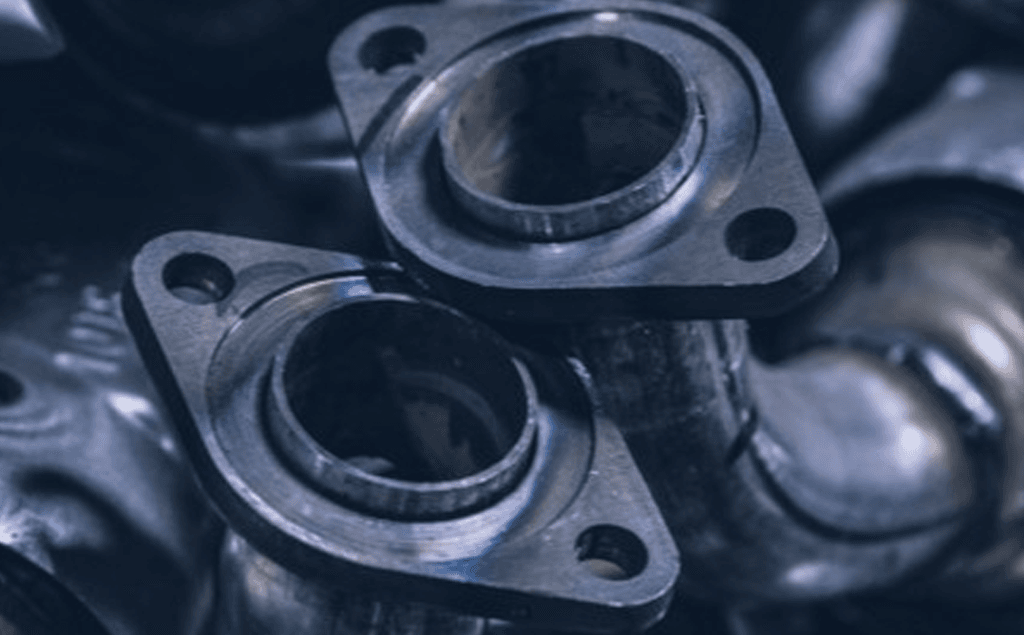
- Lắp đặt: Nó cung cấp các mặt bích và kết nối cần thiết để tích hợp vào hệ thống xả.
- Lớp đệm phồng bên trong: Giữa lớp nền gốm và vỏ thép không gỉ, một thảm phồng lên Vật liệu được đóng gói. Lớp phủ này thường được làm từ sợi gốm (ví dụ: sợi alumina-silica) được thiết kế để giãn nở đáng kể khi được gia nhiệt. Các chức năng của nó rất quan trọng đối với độ bền và hiệu suất của bộ chuyển đổi:
- Bảo vệ cơ học và đệm: Nó hoạt động như một bộ giảm xóc, giúp lớp nền gốm giòn chống lại các rung động và ứng suất cơ học từ chuyển động của xe và rung động của ống xả. Điều này giúp lớp nền không bị nứt hoặc vỡ.
- Cách nhiệt: Lớp đệm này cung cấp khả năng cách nhiệt bổ sung, giảm thất thoát nhiệt từ chất xúc tác và giúp nó đạt đến nhiệt độ hoạt động nhanh hơn (nhiệt độ tắt đèn).
- Lắp đặt an toàn: Khi nở ra khi gia nhiệt, lớp đệm trương nở sẽ tạo ra lực nén lên gạch gốm, giữ chặt gạch tại chỗ bên trong lớp vỏ thép và ngăn ngừa sự chuyển động hoặc rung lắc.
- Niêm phong: It also provides a seal, preventing exhaust gases from bypassing the catalyst brick and ensuring that all gases flow through the active catalytic channels. Other vibration damping layers, such as metal mesh pads or ceramic gaskets, may also be used [9].
Việc lựa chọn và tích hợp cẩn thận các vật liệu vỏ và bao bì này là rất cần thiết để đảm bảo độ tin cậy và hiệu suất lâu dài của bộ chuyển đổi xúc tác 3 chiều, đảm bảo bộ chuyển đổi có thể chịu được môi trường vận hành khắc nghiệt của hệ thống ống xả ô tô.
6. Hiệu suất vật liệu tích hợp, độ bền và cân nhắc về chi phí
Hiệu quả của bộ chuyển đổi xúc tác 3 chiều là kết quả trực tiếp của sự tương tác hiệp đồng giữa tất cả các vật liệu thành phần: lớp nền, lớp phủ, kim loại quý và vỏ. Hiệu suất tổng thể của chúng quyết định hoạt tính xúc tác tổng thể, độ bền nhiệt, độ bền cơ học và cuối cùng là hiệu quả chi phí của toàn bộ hệ thống.
Hoạt động và hiệu quả xúc tác: The primary goal is to achieve high conversion efficiency for CO, HC, and NOx across a wide range of operating conditions. This is largely driven by the precious metals (Pt, Pd, Rh) and their dispersion on the high-surface-area washcoat [1]. The washcoat’s oxygen storage capacity, provided by ceria-zirconia, is crucial for maintaining high efficiency under fluctuating air-fuel ratios, acting as an oxygen buffer [1][2]. Computer models are extensively used to optimize catalyst loadings and layouts, enabling high performance even with reduced PGM content [1][3].
Độ bền nhiệt: Nhiệt độ khí thải ô tô có thể lên tới hơn 1000°C, khiến độ bền nhiệt trở thành mối quan tâm hàng đầu.
- Chất nền: Cordierite’s low thermal expansion and high thermal shock resistance prevent cracking and structural degradation [6].
- Áo choàng tắm: The incorporation of zirconia into ceria (CeO₂-ZrO₂) significantly enhances the thermal stability of the oxygen storage component, preventing sintering and loss of surface area [7]. Advanced washcoat designs, such as double layers, can also help prevent sintering of PGMs at high temperatures [1][3].
- Kim loại quý: PGM sintering (agglomeration of nanoparticles into larger, less active particles) is a major cause of catalyst deactivation at high temperatures. The washcoat’s ability to disperse and stabilize PGMs is critical. Novel perovskite-based catalysts, for example, have shown superior thermal stability and resistance to activity loss even after hydrothermal aging at 1273K(1000°C), compared to standard dispersed metal catalysts [3][8]. This enhanced stability is often attributed to the substitution of palladium into the perovskite structure, which makes it less prone to sintering [8].
Độ bền cơ học: Bộ chuyển đổi phải chịu được ứng suất cơ học đáng kể, bao gồm rung động từ động cơ và mặt đường, cũng như tác động vật lý.
- Nhà ở: The stainless steel shell provides the primary structural integrity and protection [9].
- Thảm trương nở: This material is vital for cushioning the brittle ceramic substrate, absorbing vibrations, and securely holding the catalyst brick in place, preventing mechanical damage [9].
Hiệu quả về chi phí: Chi phí là động lực chính trong sản xuất ô tô. Yếu tố chi phí quan trọng nhất trong một TWC là hàm lượng kim loại quý [6]. The market for automotive three-way catalytic converters was valued at USD 11.2 billion in 2024, with the platinum-based segment alone projected to exceed USD 7 billion by 2034 [6].
- Biến động giá PGM: The fluctuating prices and secure supply of platinum, palladium, and rhodium directly impact manufacturing costs [6].
- Đổi mới công nghệ: Manufacturers are continuously innovating to enhance fuel economy and reduce PGM loadings while maintaining or improving conversion efficiency and durability [6]. Projects like PROMETHEUS aim to reduce PGM content, potentially cutting production costs by up to 50% while maintaining or enhancing performance [1][4].
- Tối ưu hóa quy trình sản xuất: The design and preparation techniques for catalyst supports, such as cost-effective methods for creating mesoporous materials, also contribute to overall cost reduction [7].
- Độ bền so với chi phí: There is a constant trade-off between achieving high durability (which often requires more robust, sometimes more expensive, materials or higher PGM loadings) and managing production costs. The development of more thermally stable catalysts, like perovskites, can extend the converter’s lifespan, offering long-term cost benefits despite potentially higher initial material costs [3][8].
The overall market growth for TWCs is driven by increasing vehicle sales, stricter emissions regulations, and the demand for fuel-efficient vehicles, all of which necessitate continuous material and process innovation [6]. On-road monitoring of TWC performance, often via oxygen storage capacity measurements, further ensures that these complex material systems meet real-world emission targets throughout their operational life [3].
7. Vật liệu mới nổi và hướng đi trong tương lai
The landscape of catalytic converter technology is continuously evolving, driven by increasingly stringent global emission standards and the imperative to reduce reliance on expensive and scarce Platinum Group Metals (PGMs) [1][6]. Future directions in 3-way catalytic converters focus on novel materials, advanced manufacturing techniques, and integrated systems to achieve superior performance, enhanced durability, and improved sustainability.
Giảm sự phụ thuộc vào PGM và các chất xúc tác không phải PGM: The high cost and limited supply of Pt, Pd, and Rh are major motivators for research into PGM-free or low-PGM alternatives [1][6].
- Oxit kim loại chuyển tiếp: Vật liệu như zeolit, niken oxit và các oxit kim loại khác are being extensively explored as potential replacements for PGMs [1]. These materials offer lower cost and greater abundance.
- Chất xúc tác gốc Perovskite: Các oxit kim loại phức tạp có cấu trúc perovskite (ví dụ, ABO3 là một lớp chất xúc tác không phải PGM đầy hứa hẹn. Ví dụ, pha tạp đồng LaCo₁−xCuxO₃ perovskite are under investigation as PGM-free catalysts for TWCs [1][4]. These materials can exhibit high thermal stability and catalytic activity, sometimes even surpassing traditional PGM catalysts in specific conditions [3][8]. Mechanochemical synthesis, including high-energy ball milling, is being used to create such perovskites [1].
- Tích hợp công nghệ nano: Projects like NEXT-GEN-CAT have focused on incorporating low-cost transition metals into advanced ceramic substrates using nanotechnology to develop efficient catalysts [1][5]. Prototypes with low-PGM and no-PGM formulations have demonstrated compliance with Euro III emission standards, showcasing the viability of these approaches [1][5].
Phát triển lớp phủ rửa tiên tiến: Washcoat and catalyst development remain critical focus areas [1].
- Hỗ trợ oxit mesoporous: Research continues into developing mesoporous oxide supports with optimized pore geometries. These structures can significantly increase the active surface area and improve the dispersion of catalytic components, potentially allowing for further reductions in metal loadings while maintaining or enhancing performance [7].
- Phương pháp chuẩn bị mới: Các phương pháp chuẩn bị tiên tiến đang được nghiên cứu để tạo ra các chất xúc tác hiệu quả và bền vững hơn. Các phương pháp này bao gồm:
- Xử lý siêu âm kết hợp với mạ điện: Để lắng đọng và phân tán chính xác các vật liệu hoạt động.
- Phương pháp citrate: Một phương pháp sol-gel phổ biến để tổng hợp oxit kim loại hỗn hợp có độ đồng nhất cao.
- Oxy hóa điện phân plasma (PEO): For creating porous oxide layers on metallic substrates, which can then be functionalized with catalytic materials [1].
Giải quyết các quy định về phát thải trong tương lai: Global emission standards are becoming progressively stricter, pushing the boundaries of current TWC technology [1][6].
- Khí thải khi khởi động lạnh: Một thách thức đáng kể là giai đoạn "khởi động nguội", khi chất xúc tác chưa đạt đến nhiệt độ tắt lửa và phần lớn không hiệu quả. Nghiên cứu vật liệu trong tương lai hướng đến việc phát triển các chất xúc tác hoạt động ở nhiệt độ thấp hơn nhiều hoặc tích hợp với chất xúc tác gia nhiệt bằng điện (EHC) hoặc bẫy hydrocarbon để giảm thiểu phát thải khởi động nguội.
- Lượng khí thải thực tế khi lái xe (RDE): Regulations are increasingly focusing on real-world driving emissions rather than just laboratory tests. This necessitates catalysts that perform robustly and efficiently across a wider range of temperatures, speeds, and load conditions. On-road monitoring of oxygen storage capacity is already a step in this direction [3].
- Kiểm soát bụi mịn (PM): Trong khi TWC chủ yếu nhắm vào các chất ô nhiễm dạng khí, các quy định trong tương lai có thể yêu cầu các giải pháp tích hợp cho PM, có khả năng dẫn đến việc áp dụng rộng rãi hơn các bộ lọc hạt xăng (GPF) kết hợp với TWC hoặc phát triển các chất xúc tác có khả năng khử PM vốn có.
Tính bền vững và nền kinh tế tuần hoàn: The transition to “green” mobility and the increasing focus on sustainability are driving efforts in recyclability and life cycle assessment (LCA) [1][5].
- Khả năng tái chế: The NEXT-GEN-CAT project, for instance, investigated the recyclability of TWCs, examining end-of-life scenarios and using LCA to determine the environmental impact of developed materials [1][5]. Pyro-metallurgical treatment (smelting in an inert atmosphere) was explored for efficient PGM recovery from spent catalysts [1][5]. Future research will likely focus on more energy-efficient and environmentally friendly recycling processes for both PGMs and base metals.
Giải pháp chủ động và suy đoán: Ngoài nghiên cứu hiện tại, các hướng đi trong tương lai có thể bao gồm:
- Chất xúc tác thông minh: Các chất xúc tác có khả năng điều chỉnh linh hoạt các đặc tính của chúng (ví dụ: cấu trúc bề mặt, khả năng lưu trữ oxy) để đáp ứng với điều kiện khí thải theo thời gian thực, có khả năng sử dụng các cảm biến nhúng và hệ thống điều khiển do AI điều khiển.
- Hệ thống xử lý khí thải tích hợp: Một bước tiến tới hệ thống xả nhỏ gọn hơn, đa chức năng kết hợp chức năng TWC với các công nghệ kiểm soát khí thải khác (ví dụ, giảm xúc tác chọn lọc cho NOx, bộ lọc hạt tiên tiến) thành một đơn vị duy nhất được tối ưu hóa cao.
- Sản xuất bồi đắp: Việc sử dụng công nghệ in 3D hoặc các kỹ thuật sản xuất bồi đắp khác để tạo ra các cấu trúc nền và lớp phủ được tùy chỉnh và tối ưu hóa cao, cho phép kiểm soát chưa từng có đối với phân bố kích thước lỗ rỗng, hình dạng kênh dẫn và vị trí đặt chất xúc tác. Điều này có thể dẫn đến cải thiện đáng kể hiệu suất truyền khối và xúc tác.
- Xúc tác lấy cảm hứng từ sinh học: Khám phá các cơ chế xúc tác được tìm thấy trong hệ thống sinh học để thiết kế các chất xúc tác mới, hiệu quả cao và có tiềm năng bền vững hơn.
Sự đổi mới liên tục trong khoa học vật liệu và kỹ thuật hóa học sẽ tiếp tục mở rộng ranh giới hiệu suất của bộ chuyển đổi xúc tác 3 chiều, đảm bảo rằng xe chạy xăng có thể đáp ứng các mục tiêu môi trường ngày càng nghiêm ngặt trong khi giảm thiểu dấu chân sinh thái của chúng.