Giới thiệu
The rising cost of precious metals has become a common challenge for nhà sản xuất bộ chuyển đổi xúc tác and automotive parts suppliers.
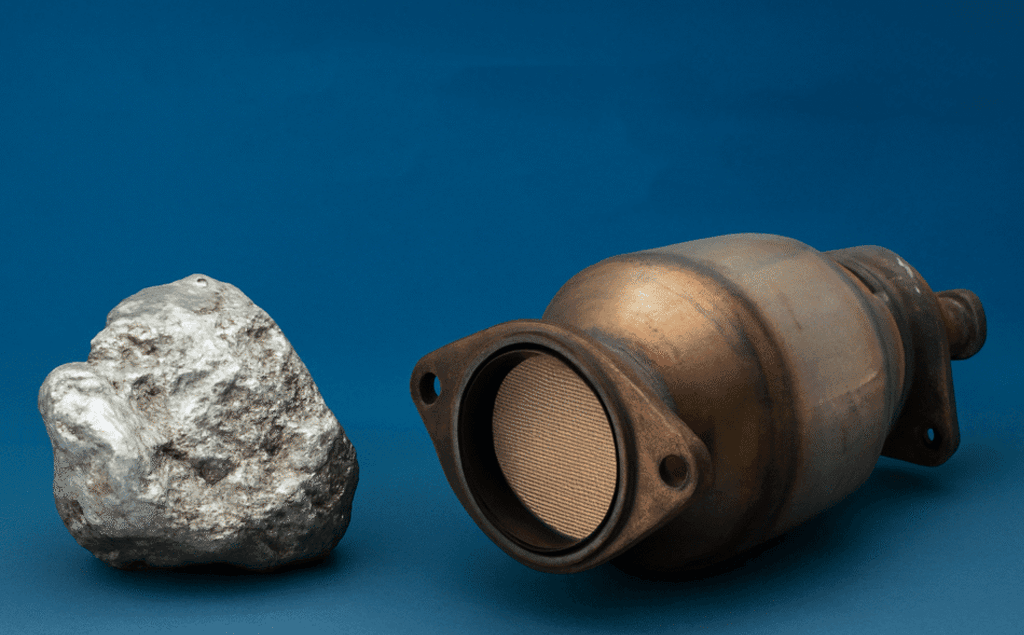
A catalytic converter relies on precious metals such as platinum, palladium, and rhodium to reduce harmful emissions from vehicle exhaust. These materials provide excellent catalytic performance, but their high prices also increase production costs.
For manufacturers, material cost control has become an important part of maintaining competitiveness. A change in precious metal prices can influence product pricing, supply planning, and customer purchasing decisions.
Many suppliers are now looking for solutions that can balance emission performance and production cost. This is where Platinum Replacement Technology is gaining attention.
Instead of depending on higher precious metal loading, this technology focuses on improving catalyst efficiency and optimizing material usage.
For a modern bộ chuyển đổi xúc tác ba chiều, the goal is not only to meet emission requirements but also to provide a reliable and affordable solution for global customers.
Why Precious Metal Prices Affect Catalytic Converter Costs
Inside a catalytic converter, the catalyst coating is responsible for converting harmful exhaust gases into less harmful substances.
The main precious metals used in automotive catalysts bao gồm:
| Vật liệu | Chức năng |
|---|---|
| Bạch kim (Pt) | Helps oxidize carbon monoxide and hydrocarbons |
| Paladi (Pd) | Widely used in gasoline engine emission systems |
| Rhodium (Rh) | Helps reduce nitrogen oxide emissions |
Each metal has a specific role in emission control.
However, these materials are rare and expensive. Their prices are affected by factors such as mining supply, market demand, and automotive industry changes.
For catalytic converter suppliers, higher precious metal prices can lead to:
- Increased manufacturing costs
- Higher product prices
- Reduced profit margins
- More pressure from buyers
This is especially important for aftermarket suppliers. Customers usually want competitive pricing, but they also expect stable quality and reliable emission performance.
As a result, manufacturers are exploring ways to reduce material dependence while maintaining product performance.
The Need for More Cost-Effective Catalytic Converters
The global automotive aftermarket is becoming more competitive.
Wholesalers and distributors are not only comparing prices. They are also looking for suppliers that can provide:
- Stable product quality
- Consistent supply
- Technical support
- Tuân thủ các tiêu chuẩn khí thải
Traditional catalytic converters achieve good performance through precious metals, but the cost of these materials creates challenges for suppliers.
A more cost-effective approach is not simply using cheaper materials. Instead, manufacturers are improving catalyst design to make better use of existing materials.
Current catalyst development focuses on:
- Reducing unnecessary precious metal consumption
- Improving catalyst efficiency
- Optimizing manufacturing processes
- Maintaining durability
For international buyers, this means they can access products with a better balance between price and performance.
What Is Platinum Replacement Technology?
Platinum Replacement Technology is an advanced approach designed to reduce dependence on expensive platinum materials while maintaining catalytic converter performance.
It does not always mean completely removing platinum from the catalyst system. In many applications, platinum still provides important catalytic functions.
The main purpose is to improve how catalyst materials work together.
By optimizing catalyst design, manufacturers can achieve reliable emission control with more efficient material usage.
The technology mainly focuses on three areas:
1. Optimized Precious Metal Usage
Traditional catalyst systems may increase precious metal loading to improve performance.
However, higher loading also means higher production costs.
Modern catalyst development focuses on improving the distribution and utilization of precious metals.
This helps manufacturers reduce material waste while maintaining emission performance.
2. Improved Catalyst Materials
Besides platinum group metals, supporting materials are also used to improve catalyst stability.
These materials help the converter perform under different driving conditions, including:
- Cold starts
- City driving
- Highway operation
- High-temperature environments
Better material combinations allow manufacturers to improve efficiency without relying only on expensive metals.
3. Better Coating Technology
The catalyst coating process directly affects converter performance.
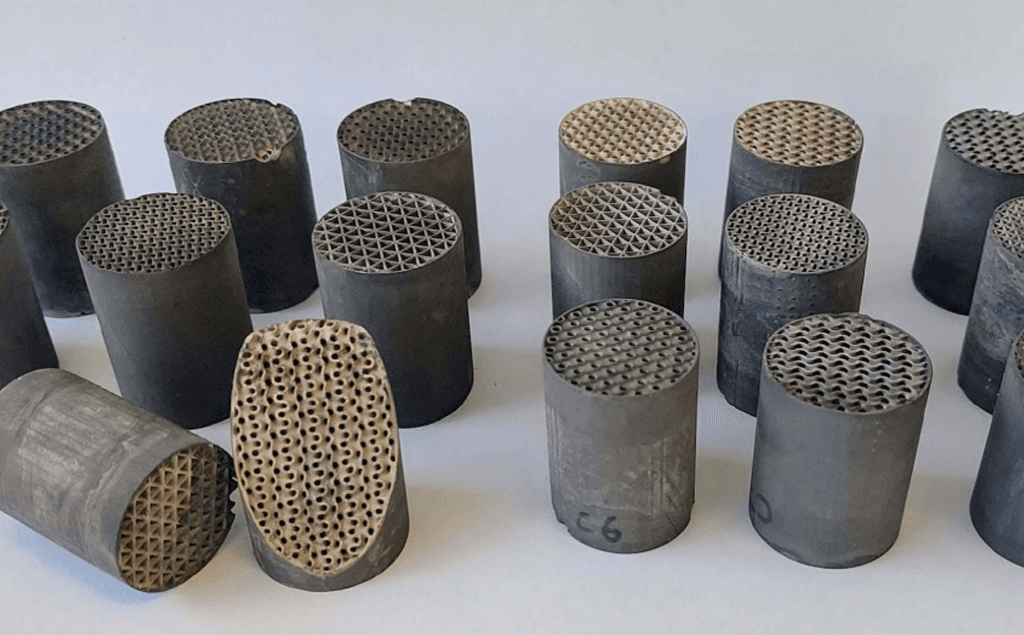
Inside the ceramic substrate, thousands of small channels allow exhaust gases to contact catalyst materials.
Improved coating technology helps distribute catalyst materials more evenly, which can enhance:
- Reaction efficiency
- Emission control
- Material utilization
For manufacturers, better coating methods provide another way to produce competitive catalytic converter solutions.
Platinum Replacement Technology in Three Way Catalytic Converter
MỘT bộ chuyển đổi xúc tác ba chiều is designed to control three major pollutants produced by gasoline engines:
- Cacbon monoxit (CO)
- Hiđrocacbon (HC)
- Oxit nitơ (NOx)
The catalyst coating inside the converter helps transform these harmful gases into less harmful emissions.
For manufacturers, the challenge is maintaining high conversion efficiency while controlling production costs.
Traditional catalyst solutions often rely on higher amounts of kim loại nhóm bạch kim. However, simply increasing precious metal loading is not always the best option because it increases product cost.
Platinum replacement technology provides a different approach.
By improving catalyst efficiency and optimizing material usage, manufacturers can develop more competitive bộ chuyển đổi xúc tác ba chiều without sacrificing basic emission performance.
For global automotive parts buyers, this technology can bring practical benefits:
- More stable product pricing
- Better cost control
- Competitive market advantages
- Flexible solutions for different vehicle applications
The future of catalytic converter development is not only about using more expensive materials. It is about using resources more efficiently.
Supporting Euro 6 and Euro 7 Emission Requirements
Emission regulations continue to become stricter in many markets.
Euro 6 standards require vehicles to achieve lower emissions of harmful pollutants, creating higher requirements for exhaust after-treatment systems.
A reliable Euro 6 catalytic converter needs to provide stable performance under different driving conditions.
For manufacturers, meeting these requirements while controlling costs is a major challenge.
Platinum replacement technology helps suppliers achieve a better balance by focusing on:
- Improved catalyst efficiency
- Better material utilization
- Optimized converter design
Instead of solving emission challenges only by increasing precious metal content, manufacturers can improve the overall catalyst system.
Looking ahead, Euro 7 requirements will place even more attention on durability and long-term emission performance.
Future catalytic converters will need to maintain efficiency during:
- Cold starts
- Daily urban driving
- High-temperature operation
- Long-term vehicle use
This makes efficient catalyst technology increasingly important.
Benefits of Platinum Replacement Technology for Global Buyers
For wholesalers, distributors, and automotive parts importers, choosing the right catalytic converter supplier is an important decision.
Price is one factor, but long-term cooperation also depends on quality consistency and supply reliability.
Platinum replacement technology provides several advantages for international buyers.
1. Better Cost Control
Precious metals represent a significant part of catalytic converter production costs.
By improving catalyst efficiency and reducing unnecessary material usage, manufacturers can better control production expenses.
For buyers, this can create opportunities to:
- Purchase products at more competitive prices
- Improve profit margins
- Offer better market pricing
In the aftermarket industry, cost advantage is often an important factor when customers compare different suppliers.
2. More Stable Supply Planning
Precious metal prices can change due to global market conditions.
Large price fluctuations may affect product quotations and purchasing plans.
With optimized catalyst technology, manufacturers can reduce the influence of material price changes.
This helps buyers with:
- Inventory planning
- Long-term purchasing decisions
- Market price management
For international distributors, stable supply and predictable pricing are valuable advantages.
3. Stronger Market Competitiveness
The automotive parts market is highly competitive.
Customers usually compare suppliers based on:
- Product quality
- Price level
- Delivery capability
- Technical support
A supplier that can provide cost-effective catalytic converter solutions has better opportunities to compete.
Platinum replacement technology allows manufacturers to offer products that meet market needs while maintaining reasonable pricing.
Future Trends of Automotive Catalyst Technology
The automotive industry is changing quickly.
Although electric vehicles are growing, gasoline and hybrid vehicles will continue to be used in many regions.
This means catalytic converters will remain an important part of emission control systems.
Future catalyst development will focus on several areas.
More Efficient Precious Metal Usage
Reducing dependence on expensive metals will remain a major direction.
Manufacturers will continue improving catalyst design to achieve better performance with optimized material consumption.
The goal is not simply replacing platinum, but making every material work more effectively.
Better Durability Performance
Modern vehicles require emission systems that can operate reliably for longer periods.
Future catalytic converters will need improved resistance against:
- High temperatures
- Long-term operation
- Different driving environments
Durability will become an important factor when buyers evaluate supplier quality.
More Sustainable Manufacturing
Sustainability is becoming increasingly important in the automotive industry.
Future catalyst solutions will focus on:
- Better resource utilization
- Precious metal recycling
- More efficient production methods
These developments will help create cleaner and more economical emission control solutions.
Phần kết luận
Platinum replacement technology is becoming an important solution for reducing catalytic converter costs while maintaining reliable emission performance.
By improving catalyst efficiency, optimizing material usage, and developing better manufacturing processes, suppliers can provide more competitive products for global markets.
For a modern bộ chuyển đổi xúc tác ba chiều, balancing cost, quality, and emission compliance is the key challenge.
As Euro 6 and Euro 7 standards continue to influence automotive development, advanced catalyst solutions will become increasingly valuable.
For wholesalers and distributors, working with suppliers that understand catalyst technology can help improve competitiveness and build long-term business opportunities.