Giới thiệu
Modern automotive engineering prioritizes the reduction of tailpipe emissions. The bộ chuyển đổi xúc tác ba chiều serves as the core technology for this purpose. This component functions as a chemical laboratory within the exhaust system. It effectively neutralizes toxic gases before they enter the atmosphere. However, the system requires extreme precision to maintain high efficiency. The exhaust gas temperature (EGT) sensor provides the necessary data to achieve this precision. This sensor acts as the primary monitor for the thermal health of the bộ chuyển đổi xúc tác ba chiều.
The Technical Role of the Three Way Catalytic Converter
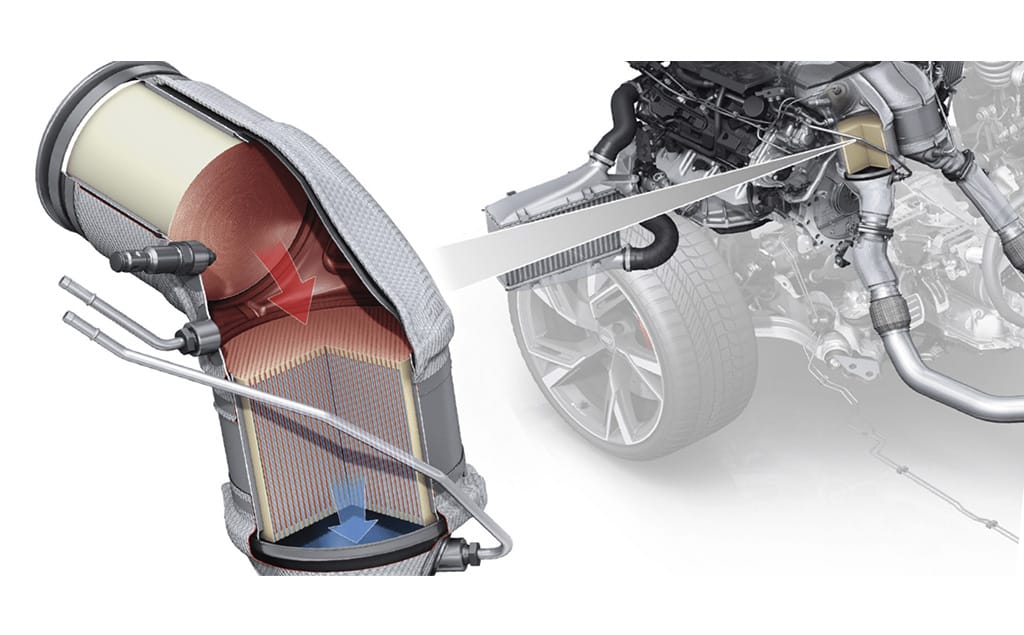
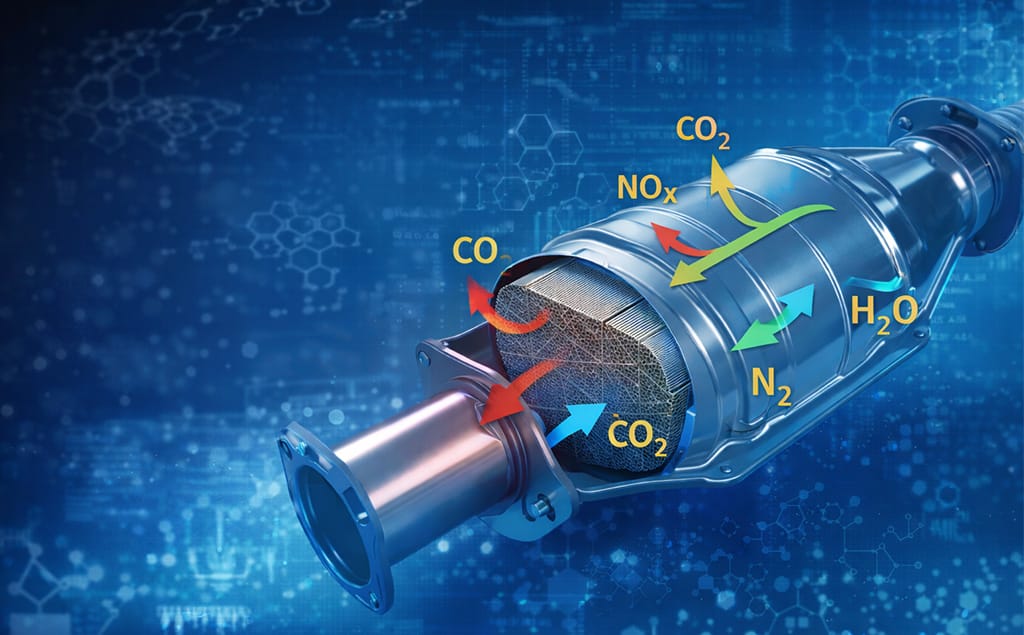
Các bộ chuyển đổi xúc tác ba chiều utilizes a honeycomb structure made of ceramic. Manufacturers coat this structure with precious metals such as platinum and palladium. These metals act as catalysts for three specific chemical reactions. First, the unit reduces nitrogen oxides into simple nitrogen and oxygen. Second, it oxidizes carbon monoxide into carbon dioxide. Third, it converts unburnt hydrocarbons into water vapor and carbon dioxide. These reactions require a specific temperature range to occur effectively. The light-off temperature typically starts at 300 degrees Celsius. Optimal efficiency usually occurs between 400 and 800 degrees Celsius. The EGT sensor ensures the three way catalytic converter stays within this thermal window.

Critical Thermal Management Strategies
The ECU manages the bộ chuyển đổi xúc tác ba chiều by adjusting engine parameters. It uses the EGT sensor data to determine the current state of the catalyst. During a cold start, the ECU may retard ignition timing to heat the exhaust quickly. This action brings the bộ chuyển đổi xúc tác ba chiều to its light-off temperature faster. Under high-load conditions, the EGT sensor might detect excessive heat. The ECU responds by enriching the fuel-to-air ratio. The extra fuel absorbs heat as it evaporates, cooling the exhaust gas. This protects the bộ chuyển đổi xúc tác ba chiều from permanent thermal degradation.
Symptoms of Sensor and Catalyst Malfunctions
A malfunctioning EGT sensor or bộ chuyển đổi xúc tác ba chiều produces specific warning signs. Technicians must recognize these symptoms early to avoid costly repairs.
- Activation of the Check Engine Light: The ECU constantly monitors sensor voltages. Any reading outside the calibrated range triggers a diagnostic trouble code.
- Poor Engine Performance: A faulty sensor causes the ECU to enter a fail-safe mode. This mode restricts turbocharger boost and engine timing. The driver will experience sluggish acceleration and a lack of power.
- Decreased Fuel Efficiency: Incorrect temperature data leads to poor fuel management. The engine often runs rich, which increases fuel consumption significantly.
- Unpleasant Exhaust Odors: A failing three way catalytic converter cannot process sulfur compounds. This results in a strong “rotten egg” smell from the tailpipe.
- Excessive DPF Regeneration: In diesel engines, the EGT sensor manages the cleaning of the particulate filter. A bad sensor causes the system to run regeneration cycles too often or not at all.
Advanced Sensor Technology: PTC vs NTC
Automotive manufacturers utilize two main types of temperature sensing technology. Both types rely on the principle of variable resistance. However, they react to temperature changes in opposite ways.
The Positive Temperature Coefficient (PTC) sensor is the modern industry standard. In a PTC sensor, the electrical resistance increases as the temperature rises. This design offers high durability and stability at extreme temperatures. Most bộ chuyển đổi xúc tác ba chiều systems use PTC sensors due to their reliability.
The Negative Temperature Coefficient (NTC) sensor operates differently. In this design, the resistance decreases as the temperature increases. NTC sensors provide excellent sensitivity at lower temperatures. However, they may struggle with the intense heat produced by a high-performance bộ chuyển đổi xúc tác ba chiều. Technicians must identify the sensor type before performing electrical tests.
Technical Comparison of EGT Sensor Characteristics
| Property | PTC Sensor Technology | NTC Sensor Technology |
|---|---|---|
| Primary Reaction | Resistance rises with heat | Resistance falls with heat |
| Maximum Range | Up to 1000 Degrees Celsius | Up to 700 Degrees Celsius |
| Ứng dụng điển hình | Three Way Catalytic Converters | Intake Air or Coolant Monitoring |
| Sensitivity | Higher at high temperatures | Higher at low temperatures |
| Failure Mode | Often reads “out of range” | Often shorts to ground |
Systematic Troubleshooting Procedures
Diagnosing the bộ chuyển đổi xúc tác ba chiều system requires a logical approach. Technicians should follow these steps to isolate the fault.
Step 1: Perform a Full System Scan. Use an OBD-II diagnostic tool to retrieve error codes. Look for P0420 (Catalyst Efficiency) or P0544 (EGT Sensor Circuit). These codes provide the starting point for the investigation.
Step 2: Conduct a Visual Inspection. Raise the vehicle and inspect the exhaust system. Look for cracks in the bộ chuyển đổi xúc tác ba chiều housing. Check the wiring for the EGT sensor. Look for signs of melting, fraying, or corrosion at the electrical connector.
Step 3: Test Voltage Supply. Disconnect the sensor from the harness. Turn the vehicle ignition to the “on” position. Use a digital multimeter to measure the voltage at the harness connector. The ECU should supply a steady 5-volt reference signal. A lack of voltage indicates a wiring break or a faulty ECU.
Step 4: Execute the Infrared Thermal Test. Start the engine and let it reach operating temperature. Use an infrared thermometer to measure the temperature of the pipe before the Bộ chuyển đổi xúc tác ba chiều. Then, measure the temperature of the pipe immediately after the converter. A functional bộ chuyển đổi xúc tác ba chiều should show a temperature increase of at least 100 degrees Fahrenheit. If the outlet is cooler than the inlet, the catalyst is likely dead.
Bước 5: Kiểm tra điện trở của cảm biến. Sử dụng đồng hồ vạn năng để đo điện trở giữa các chân của cảm biến. So sánh giá trị này với thông số kỹ thuật trong bảng dữ liệu của nhà sản xuất. Nếu đồng hồ vạn năng hiển thị “OL” hoặc 0 ôm, cảm biến đã bị hỏng bên trong.
Common Failure Points in the Exhaust System
Có nhiều yếu tố dẫn đến sự hỏng hóc của cảm biến EGT và... bộ chuyển đổi xúc tác ba chiềuHiểu rõ những nguyên nhân này giúp ngăn ngừa các vấn đề trong tương lai.
- Mệt mỏi do nhiệt: Hệ thống ống xả phải chịu sự thay đổi nhiệt độ cực độ. Các chu kỳ này gây ra sự giãn nở và co lại của kim loại. Theo thời gian, ứng suất này làm hỏng các bộ phận bên trong mỏng manh của cảm biến.
- Hư hỏng do rung động: Động cơ và mặt đường tạo ra các rung động liên tục. Những rung động này có thể làm lỏng các bộ phận gốm bên trong bộ chuyển đổi xúc tác ba chiều. Chúng cũng khiến dây cảm biến cọ xát vào khung xe, dẫn đến đoản mạch.
- Ô nhiễm hóa chất: Dầu hoặc chất làm mát bị rò rỉ có thể xâm nhập vào dòng khí thải. Các chất lỏng này sẽ bám vào bề mặt bên trong của... bộ chuyển đổi xúc tác ba chiềuLớp phủ này ngăn khí thải tiếp xúc với chất xúc tác. Quá trình này, được gọi là "che chắn", làm cho bộ chuyển đổi trở nên vô dụng.
- Hiện tượng bỏ lửa ở động cơ: Một xi lanh bị lỗi sẽ đẩy nhiên liệu chưa cháy hết vào ống xả. Nhiên liệu này sẽ cháy bên trong... bộ chuyển đổi xúc tác ba chiềuNgọn lửa sinh ra có thể đạt đến 1400 độ C. Nhiệt độ này làm tan chảy lớp nền gốm và phá hủy thiết bị ngay lập tức.
Interpreting Diagnostic Trouble Codes (DTCs)
| Mã DTC | Sự miêu tả | Ý nghĩa kỹ thuật |
|---|---|---|
| P0544 | Mạch cảm biến EGT Ngân hàng 1 | ECU phát hiện sự cố đứt mạch. |
| P0546 | Cảm biến EGT đầu vào cao | Điện áp tín hiệu quá cao |
| P0420 | Hiệu suất hệ thống xúc tác | Bộ chuyển đổi xúc tác ba chiều đang bị hỏng. |
| P2033 | Mạch cảm biến EGT cao | Có thể bị chập điện trong hệ thống dây dẫn. |
| P247A | Cảm biến EGT nằm ngoài phạm vi cho phép. | Tín hiệu cảm biến không hợp lý. |
Replacement and Calibration Guide
Nếu quá trình chẩn đoán xác nhận cảm biến bị lỗi, bạn phải thay thế nó. Hãy làm theo các bước hướng dẫn tốt nhất sau đây để sửa chữa thành công.
Đầu tiên, xịt dầu bôi trơn chất lượng cao vào các ren của cảm biến. Để dầu ngấm ít nhất ba mươi phút. Các bộ phận của hệ thống ống xả thường bị rỉ sét dính chặt vào nhau do nhiệt độ cao. Sử dụng dụng cụ tháo cảm biến chuyên dụng để tránh làm tròn đầu lục giác. Tháo cảm biến cũ một cách cẩn thận.
Thứ hai, làm sạch lỗ lắp đặt trên ống xả. Sử dụng bàn chải sắt để loại bỏ cặn carbon hoặc rỉ sét. Điều này đảm bảo độ kín khít cho cảm biến mới.
Thứ ba, bôi một lượng nhỏ chất chống kẹt chịu nhiệt cao lên các ren của cảm biến mới. Không để bất kỳ chất bôi trơn nào dính vào đầu cảm biến. Lắp đặt cảm biến và siết chặt theo thông số mô-men xoắn do nhà sản xuất quy định.
Thứ tư, nối lại bó dây điện. Cố định dây điện tránh xa các ống xả nóng hoặc các bộ phận chuyển động. Sử dụng dây buộc chịu nhiệt nếu cần.
Cuối cùng, hãy xóa các mã lỗi chẩn đoán bằng máy quét của bạn. Khởi động động cơ và lái thử. Theo dõi dữ liệu trực tiếp để biết thêm chi tiết. bộ chuyển đổi xúc tác ba chiềuCác chỉ số nhiệt độ nên dao động tự nhiên theo tải trọng của động cơ.
The Importance of the Drive Cycle
ECU không xác nhận việc sửa chữa ngay lập tức. Nó phải thực hiện một "Chu kỳ lái thử" để xác minh. bộ chuyển đổi xúc tác ba chiều sức khỏe. Chu trình này bao gồm các điều kiện lái xe cụ thể. Bạn nên lái xe với tốc độ ổn định trong vài dặm. Sau đó, để xe chạy trôi dần cho đến khi dừng hẳn. Cuối cùng, thực hiện một vài lần tăng tốc vừa phải. Những hành động này cho phép ECU kiểm tra cảm biến mới so với các cảm biến oxy. Sau khi ECU hoàn tất quá trình tự kiểm tra, "Giám sát" sẽ hiển thị là "Sẵn sàng". Trạng thái này là cần thiết để vượt qua các cuộc kiểm tra khí thải chính thức.
Phần kết luận
Các bộ chuyển đổi xúc tác ba chiều Hệ thống kiểm soát nhiệt độ khí thải (EGT) vẫn là nền tảng của việc bảo vệ môi trường trong ngành công nghiệp ô tô. Cảm biến EGT đóng vai trò là người bảo vệ quan trọng cho bộ phận này. Thông qua việc giám sát nhiệt độ chính xác, nó đảm bảo hiệu quả và tuổi thọ của hệ thống khí thải. Khắc phục sự cố các hệ thống này đòi hỏi sự kết hợp giữa kiểm tra cơ khí và kiểm tra điện. Kỹ thuật viên phải sử dụng các công cụ như đồng hồ vạn năng và nhiệt kế hồng ngoại để xác minh dữ liệu. Bằng cách hiểu sự khác biệt giữa cảm biến PTC và NTC, bạn có thể tránh được các lỗi chẩn đoán. Luôn luôn giải quyết nguyên nhân gốc rễ của sự cố, chẳng hạn như động cơ bị bỏ lửa hoặc rò rỉ dầu. Duy trì tình trạng hoạt động tốt của hệ thống. bộ chuyển đổi xúc tác ba chiều Bảo vệ hiệu suất của xe và sự trong lành của không khí.