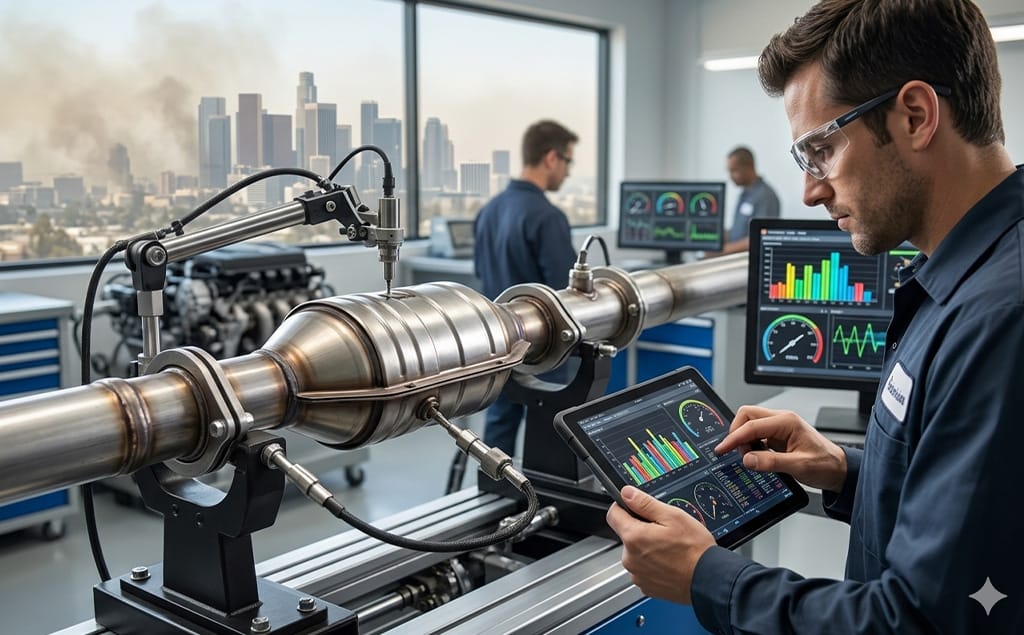
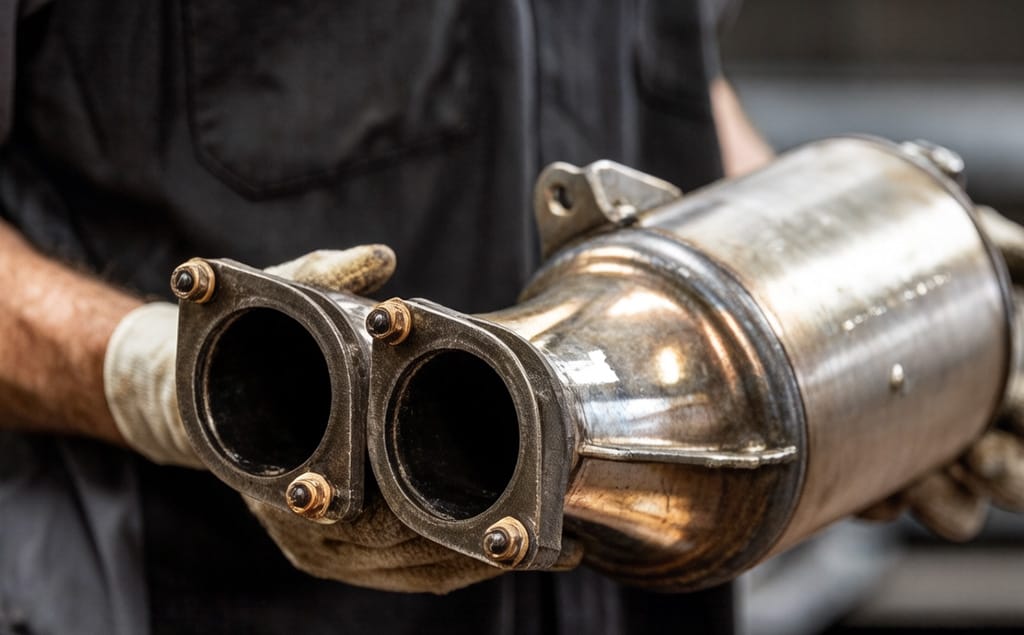
As emission regulations grow stricter across the globe, particularly in Europe and China, modern vAs emission regulations grow stricter across the globe, particularly in Europe and China, modern vehicles must adopt advanced exhaust aftertreatment systems. One such innovation is the Gasoline Particulate Filter Catalytic Converter—a dual-function component that blends the benefits of both a catalytic converter and a gasoline particulate filter (GPF).
In this article, we break down exactly what this combined system is, how it works, and why it’s now essential for gasoline engines—especially Gasoline Direct Injection (GDI) types.

Breaking It Down: Two Technologies, One Purpose
A Gasoline Particulate Filter Catalytic Converter is essentially a hybrid emissions control device. It includes:
- A Three-Way Catalytic Converter (TWC) section to eliminate harmful gases.
- A GPF (also called Otto Particulate Filter) section to capture fine particulate matter (soot).
Let’s explore the two components in more detail.
Catalytic Converter – Gaseous Emissions Under Control
Function: The catalytic converter’s role is to transform toxic gases into less harmful substances. It does this through a process called catalysis, involving a chemical reaction triggered by high-temperature exhaust gases.
Pollutants Removed:
- Carbon Monoxide (CO)
- Hydrocarbons (HC)
- Nitrogen Oxides (NOx)
How It Works: The converter contains precious metals like platinum, palladium, and rhodium, which act as catalysts. These materials speed up reactions that convert:
- CO → CO₂
- HC → CO₂ + H₂O
- NOx → N₂ + O₂
Why It Matters: Reducing these gases is essential not just for meeting emission regulations, but for reducing smog and protecting public health.
Gasoline Particulate Filter – Tackling Fine Soot Pollution
Function: The GPF is designed to trap particulate matter (PM), especially the dangerous PM2.5 (particles smaller than 2.5 microns), which are produced during combustion in modern engines.
Pollutants Removed:
- Soot
- Fine carbon particles
- Ash
Structure: The GPF is made of a porous ceramic or metal matrix, with a honeycomb design. As exhaust passes through, soot is trapped in the walls of the filter.
Key Insight: Unlike older port-fuel injection engines, GDI engines produce more PM due to their combustion characteristics—making GPFs not optional but mandatory for emissions compliance in many countries.
GPF Regeneration – Self-Cleaning in Action
To prevent clogging, GPFs regularly regenerate, meaning they burn off the accumulated soot.
There are two types of regeneration:
| Type | Description | Trigger |
|---|---|---|
| Passive | Occurs naturally during high-speed driving when exhaust temperature is high | Highway driving |
| Active | Initiated by the engine control unit (ECU) through late fuel injection to raise exhaust temperature | City driving or short trips |
The regeneration process ensures that the GPF doesn’t restrict exhaust flow or reduce engine performance.
How Do GPFs and Catalytic Converters Work Together?
In many vehicle exhaust systems, especially in European GDI vehicles like the Peugeot 307 1.6L, the catalytic converter is placed upstream, while the GPF is downstream. This setup allows:
- Optimal chemical conversion of gases first
- Efficient soot filtration afterward
Some advanced systems combine both elements into a single integrated unit, known as a Gasoline Particulate Filter Catalytic Converter.

Comparison Chart: Catalytic Converter vs GPF
| Feature | Catalytic Converter | Gasoline Particulate Filter (GPF) |
|---|---|---|
| Primary Function | Converts gases (CO, HC, NOx) | Captures solid particles (PM) |
| Target Pollutants | Gaseous | Particulate |
| Key Materials | Platinum, Palladium, Rhodium | Porous ceramic or metal substrate |
| Regeneration Required? | No | Yes (active or passive) |
| Found In | All gasoline vehicles | GDI gasoline vehicles (mostly) |
Why the Peugeot 307 1.6L Needs This System
The Peugeot 307 1.6L GDI engine is compact, efficient, and widely used across Europe. But like all GDI engines, it produces more particulate emissions than older port-injected designs. The Gasoline Particulate Filter Catalytic Converter tailored for this model offers:
- Direct-fit design – bolts onto the existing exhaust system without welding.
- Emission compliance – meets Euro 6 and China 6 regulations.
- Durability – features stainless steel housing and precious metal-coated substrates.
- Fuel economy support – improves efficiency by optimizing exhaust flow.

This system ensures that the Peugeot 307 remains road-legal, eco-friendly, and mechanically reliable for years to come.
Replacement & Maintenance Tips
Here’s what to consider when replacing your GPF catalytic converter:
✅ Check Compatibility
Make sure the part matches your model year, engine code, and emissions spec (Euro 4, 5, or 6).
✅ OEM vs Aftermarket
OEMs ensure warranty compliance, but high-quality aftermarket converters can offer better value and performance.
✅ Regulatory Compliance
For drivers in California, Germany, or Beijing, CARB or EU Type Approval may be mandatory.
✅ Driving Habits
Frequent city driving may require more frequent active regeneration, while highway driving supports passive soot burn-off.
Conclusion: Cleaner Gasoline Engines Start Here
The Gasoline Particulate Filter Catalytic Converter isn’t just an emissions device—it’s a technological milestone. It combines chemical and physical filtration to address the full range of pollutants emitted by modern GDI engines.
For vehicles like the Peugeot 307 1.6L, this component ensures:
- Legal roadworthiness
- Enhanced fuel economy
- Reduced environmental impact
- Long-term engine health
As emission standards continue to tighten, investing in high-quality GPF + catalytic converter systems is not only wise—it’s necessary.